


Stevia Market Size, Share, Trends, and Forecast to 2034 | CAGR 6.39%
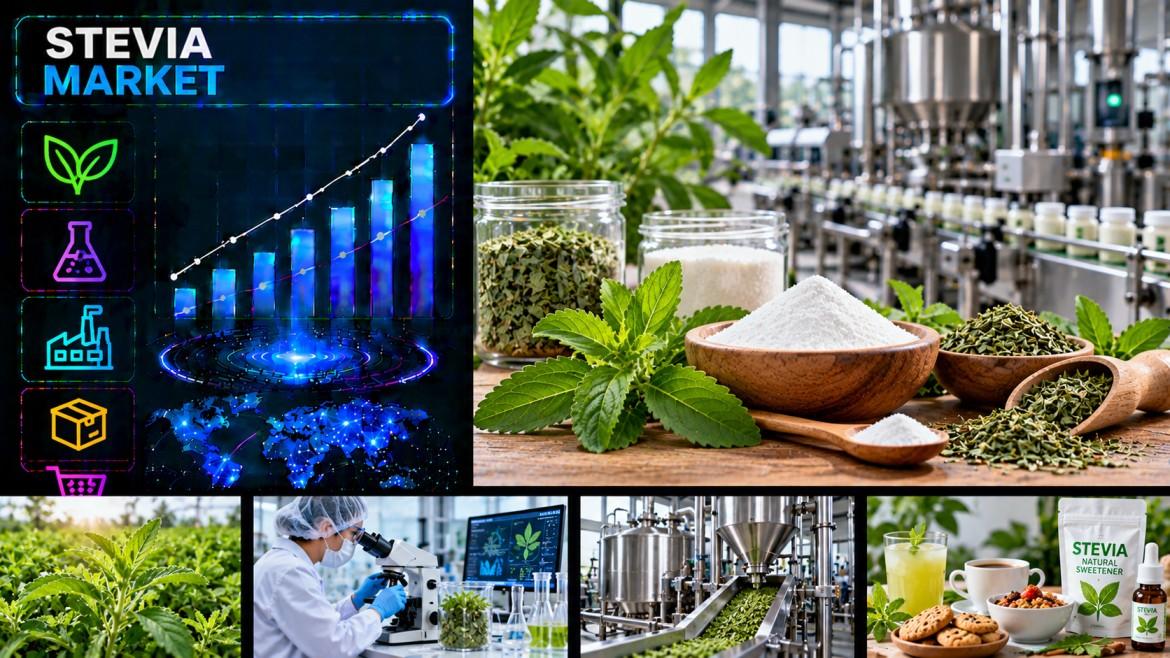
IMARC Group, a leading global market research and management consulting firm, has published its latest market intelligence report on the stevia market. The global stevia market grew from USD 873.8 Million in 2025 to USD 929.6 Million in 2026. Looking forward, IMARC Group estimates the market to reach USD 1,525.6 Million by 2034, exhibiting a CAGR of 6.39% from 2026-2034, driven by rising consumer preference for natural zero-calorie sweeteners, expanding use of stevia across beverages, food products, and tabletop formats, supportive sugar reduction policies in major economies, and continuous advances in extraction and bioconversion technologies that improve taste and cost performance worldwide.
The market is experiencing strong growth momentum as food and beverage manufacturers work to cut added sugar without sacrificing taste, a challenge stevia is increasingly well placed to solve. Steviol glycosides extracted from the leaves of the stevia rebaudiana plant deliver sweetness roughly 40 to 300 times that of sucrose with zero calories, so formulators can replace large volumes of sugar with very small quantities of ingredient. The lingering bitter aftertaste of early extracts once limited use in high sugar replacement applications. Advances in purification, enzymatic bioconversion, and fermentation have since made next-generation molecules such as rebaudioside M and rebaudioside D commercially accessible. Soft drink makers, dairy and bakery brands, tabletop sweetener marketers, and nutraceutical companies are widening stevia usage, while large ingredient groups invest in supply security, traceability, and blended sweetener systems that pair stevia with fibers, rare sugars, and monk fruit. At the same time, sugar taxes, labeling rules, and national dietary guidance are turning reformulation from a marketing choice into a compliance priority.
How AI is Reshaping the Future of the Stevia Market
- AI-Aided Predictive Modeling for Sensory-Optimized Stevia Blends: Ingredion has applied an AI-aided predictive modeling tool to analyze beverage samples built from 20 different steviol glycoside compounds, linking each compound mix to measured sensory performance and consumer preference. The approach was validated through sensory and consumer research involving more than 1,000 consumers across the United States, the United Kingdom, India, Mexico, and Brazil. It has supported sugar reduction solutions that lower sugar content by up to 50% without artificial sweeteners, and it shortens the path from concept to commercially viable formulation.
- Generative AI Protein Design Supporting High-Purity Reb M Supply: Arzeda, a company built on generative AI-driven design of proteins and enzymes, has expanded production of its ProSweet Reb M stevia, a 95% purity sweetener made from genuine stevia leaf extract, to a capacity above 250 metric tons. That volume is equivalent to replacing about 75,000 tons of sugar annually, or 18.75 billion servings. It shows how AI-native biotechnology firms are entering the stevia value chain to improve the cost and availability of the best-tasting steviol glycosides.
- Automated Laboratories and AI-Enabled Sensory Tools Compressing Formulation Cycles: Tate & Lyle operates ALFIE, an Automated Laboratory for Ingredient Experimentation in Singapore, which combines robotics, predictive modeling, and data analytics to accelerate ingredient development. Cargill uses AI-enabled ingredient informatics and sensory science tools to predict sweetener blend performance across applications, and its leaders report that AI tools can compress formulation cycles from months to days. This lets brands test stevia-based sugar reduction systems virtually before committing to costly bench prototyping.
Grab a sample PDF of this report: https://www.imarcgroup.com/stevia-market/requestsample
Stevia Market Trends and Drivers:
The global stevia market is expanding steadily as health-driven demand, beverage reformulation, and technology innovation reposition stevia from a niche tabletop product into a mainstream sugar reduction platform. Health consciousness is the foundational demand driver. A consulting firm survey of more than 5,000 consumers across the United Kingdom, China, and the United States found that around 60% consider products supporting healthy aging and longevity very or extremely important, and about 85% of respondents in China reported buying such products. According to the International Diabetes Federation, roughly 537 million people live with diabetes worldwide. The US Centers for Disease Control and Prevention reports that over 40% of American adults have obesity, and 23% of those adults also have diabetes. Americans consume about 17 teaspoons of added sugar a day on average, and six in ten say they are concerned about their sugar intake, which steers demand toward zero-calorie, plant-based sweeteners in beverages, snacks, dairy, and desserts.
Technology and supply chain evolution is the second structural differentiator. Purification and bioconversion now convert abundant glycosides such as rebaudioside A into premium rebaudioside M, narrowing the taste gap with sugar and lowering cost in use. The Joint FAO and WHO Expert Committee on Food Additives has set an acceptable daily intake of 4 mg per kg of body weight for steviol glycosides, expressed as steviol, which equates to 280 mg per day for a 70 kg adult. The European Food Safety Authority has aligned with this level. The World Health Organization advises keeping free sugars below 10% of total energy intake, roughly 50 grams a day on a 2,000 calorie diet, and at least 116 countries now tax sugary drinks. Trade flows add another dimension. China, the largest producer, exports more than 80% of its stevia, and Paraguay, the plant’s native home, remains a leading producer and exporter. This is pushing manufacturers toward regionalized, traceable supply chains.
Government policy is the third and increasingly powerful driver. The United Kingdom will lower the sugar threshold of its Soft Drinks Industry Levy from 5 grams to 4.5 grams per 100 ml and extend the levy to sugary milk-based and milk-alternative drinks, with an estimated GBP 40 Million to GBP 45 Million in annual revenue and a multi-year runway for reformulation. Mexico raised its excise tax on sugar-sweetened beverages from MX$1.64 to MX$3.08 per liter, an increase of about 87% expected to generate roughly MX$41 Billion for health programs. Residents there drink about 166 liters of sugary beverages per person each year, and drinks sweetened with non-caloric sweeteners are taxed at a lower MX$1.5 per liter. In the United States, the latest federal Dietary Guidelines, released in January, cap added sugar at no more than 10 grams per meal. They also advise against non-nutritive sweeteners, which makes transparent, science-backed positioning of plant-derived options increasingly important. In the European Union, the Commission has authorized rebaudioside M produced by fermentation as E 960b at a minimum purity of 95%, adding to the E 960a to E 960d group of approved steviol glycosides.
Ask an analyst for customized report: https://www.imarcgroup.com/request?type=report&id=573&flag=E
Stevia Industry Segmentation:
The report has segmented the market into the following categories:
Breakup By Extract Type:
- Powder
- Liquid
- Leaf
Powder accounts for the largest extract type segment, holding 67.3% share. Consumers seeking healthier alternatives to sugar value its zero-calorie profile and convenient form for everything from baking to beverage preparation. Advances in processing have reduced the bitter aftertaste traditionally associated with earlier powdered versions. Its long shelf life and ease of storage further strengthen its appeal across domestic kitchens and commercial food production.
Breakup By End Use:
- Beverages
- Food Products
- Table Top Sweeteners
- Pharmaceuticals
- Others
Beverages account for the largest end use share at 36.1%. Stevia is widely used in soft drinks, flavored water, teas, and juices, where its natural origin, zero-calorie content, and ability to replicate sugar’s taste meet evolving consumer preferences. Sugar taxes and lower levy thresholds, such as those in the United Kingdom and Mexico, are pushing beverage makers to reformulate, and major beverage companies including PepsiCo and Coca-Cola have added stevia to their portfolios.
Breakup By Region:
- Asia Pacific (China, Japan, India, South Korea, Australia, Indonesia, Others)
- North America (United States, Canada)
- Europe (Germany, France, United Kingdom, Italy, Spain, Russia, Others)
- Middle East and Africa (Turkey, Saudi Arabia, Iran, United Arab Emirates, Others)
- Latin America (Brazil, Mexico, Argentina, Colombia, Chile, Peru, Others)
Asia Pacific dominates the global stevia market with the largest regional share, at over 33%. Its leadership is driven by its position as both the leading producer and a fast-growing consumer base. Rising diabetes prevalence, with about 90 million people in South-East Asia living with the condition, is pushing consumers across China, India, Japan, and South Korea toward lower-sugar choices. Government support is reinforcing downstream demand. India’s Production Linked Incentive Scheme for the Food Processing Industry, backed by an outlay of INR 10,900 Crore, has approved 165 applications covering 274 project locations. It has attracted INR 9,207 Crore of investment against a committed INR 7,722 Crore and generated about 3.39 lakh jobs, supporting processed food manufacturers that form a core customer base for sweeteners such as stevia. Expanding beverage industries in China and India, spanning flavored water, iced tea, and diet soda, along with stevia-sweetened dairy products in South Korea and Australia, further anchor regional leadership.
Competitive Landscape:
The report provides a comprehensive analysis of the competitive landscape in the stevia market with detailed profiles of all major companies, including:
- Archer-Daniels-Midland Company
- Cargill Incorporated
- GLG Life Tech Corporation
- Guilin Layn Natural Ingredients Corp.
- Hunan NutraMax Inc.
- Ingredion Incorporated
- Morita Kagaku Kogyo Co. Ltd.
- Pyure Brands LLC
- Sunwin Stevia International Inc
- Tate & Lyle PLC
- The Real Stevia Company AB
- Wisdom Natural Brands
- Zhucheng Haotian Pharm Co. Ltd.
What Does The Full Report Cover?
If you are tracking the stevia market for investment decisions, market entry planning, competitive benchmarking, or strategic advisory, IMARC Group’s report gives you everything in one place:
- Complete market sizing in value (Million USD) and volume (Metric Tons) covering the full historical and projection period
- Quantified analysis of growth drivers, challenges, and opportunities across extract type, end use, and regional markets
- Segment-level assessment for powder, liquid, leaf, beverages, food products, table top sweeteners, and pharmaceuticals
- Country-level data for China, Japan, India, South Korea, Australia, Indonesia, the United States, Canada, Germany, France, the United Kingdom, Italy, Spain, Russia, Turkey, Saudi Arabia, Iran, the United Arab Emirates, Brazil, Mexico, Argentina, Colombia, Chile, and Peru
- Competitive profiles of 13 leading companies with strategic landscape assessment
- Porter’s Five Forces analysis to evaluate new entrants, competitive rivalry, supplier power, buyer power, and the threat of substitution
- Latest innovation trends covering high-purity rebaudioside M, bioconversion and fermentation-based production, blended sweetener systems, and regulatory approvals shaping competition and consumer preference across key regional markets
Recent News and Developments in Stevia Market
- June: Ingredion agreed to acquire Tate & Lyle in a recommended all-cash deal at 595 pence per share, valuing the equity at about £2.7 Billion (roughly USD 3.6 Billion). Holders representing 98.64% of votes cast at the shareholder meeting later backed the scheme. The combination of Ingredion’s PureCircle stevia and Tate & Lyle’s rebaudioside M portfolio remains subject to antitrust clearances in jurisdictions including the United States, the United Kingdom, the European Union, and China. It signals accelerating consolidation among large stevia suppliers.
- June: Cargill’s Truvia brand launched Allulose Plus Stevia Sweetener & Monk Fruit Sweetener, a tri-blend that measures 1:1 like sugar and delivers zero calories per serving. Available at Target and rolling out across Albertsons, Kroger, and other grocery retailers, the launch reflects the shift from single-ingredient swaps toward blended sweetener systems built around stevia.
- February: Tate & Lyle and Manus launched Yume, a new sweetener brand under their Sweetener Alliance, with Yume M Stevia as its first ingredient. It is produced at Manus’s Augusta, Georgia BioFacility, described as the only large-scale stevia bioconversion site in the United States. The all-Americas rebaudioside M supply chain strengthens traceability for customers served by a Tate & Lyle network of around 75 locations in 38 countries.
- March: Arzeda expanded production of ProSweet Reb M stevia into Europe, lifting capacity above 250 metric tons of 95% purity sweetener made from genuine stevia leaf extract. The volume is equivalent to replacing 75,000 tons of sugar annually, or 18.75 billion servings, and supports rising demand from consumer packaged goods companies in North America and beyond.
- April: Ingredion introduced PureCircle Clean Taste Solubility Solution, a non-GMO, 100% stevia sweetener that is more than 100 times more soluble than rebaudioside M. Designed for beverages, syrups, and other applications facing sugar reduction challenges, the additive-free solution enables clean-label sugar reduction without artificial sweeteners.
Note: If you require specific details, data, or insights that are not currently included in the scope of this report, we are happy to accommodate your request. As part of our customization service, we will gather and provide the additional information you need, tailored to your specific requirements. Please let us know your exact needs, and we will ensure the report is updated accordingly to meet your expectations.
Key Questions This Report Answers
- What is the current global stevia market size and what is its projected value?
- Which extract type segment holds the largest share in the global stevia market?
- Which end use segment leads the global stevia market and why?
- What are the key drivers of global stevia market growth?
- Which region dominates the global stevia market and what factors support its leadership?
- How are sugar taxes, dietary guidelines, and regulatory approvals of new production methods reshaping demand and competitive strategies in the stevia industry?
- Who are the top companies in the global stevia market, and what investment and market entry opportunities exist across high-purity rebaudioside M, bioconversion, blended sweetener systems, and beverage reformulation?
About Us:
IMARC Group is a global management consulting firm that helps the world’s most ambitious changemakers to create a lasting impact. The company provides a comprehensive suite of market entry and expansion services. IMARC offerings include thorough market assessment, feasibility studies, company incorporation assistance, factory setup support, regulatory approvals and licensing navigation, branding, marketing and sales strategies, competitive landscape and benchmarking analyses, pricing and cost research, and procurement research.
Media and Sales Contact
IMARC Group
Email: sales@imarcgroup.com
United States: +1-201-971-6302
India: +91-120-433-0800
United Kingdom: +44-753-714-6104

 English
 Arabic
 French
 Spanish
 Deutsch
 Turkish
 Dutch
 Italiano
 Russian
 Romaian
 Portuguese (Brazil)
 Greek