


From Corporate E-Waste to Sustainable Impact: How Responsible Recycling Is Building a Greener India
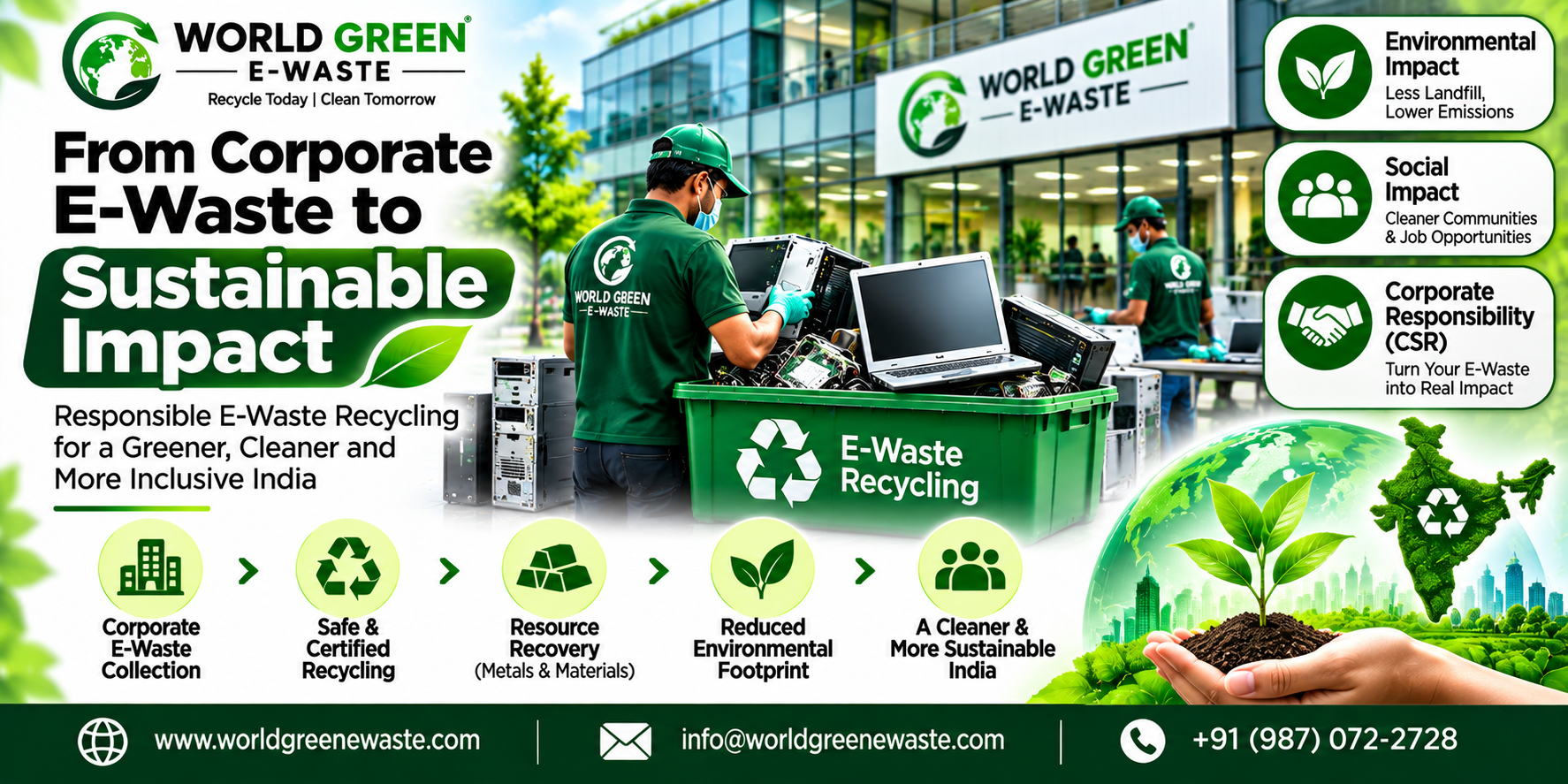
A while ago, I walked into a mid-sized office that was upgrading its systems. In one corner sat a tower of old monitors, keyboards, routers and dusty CPUs. The manager looked at it and sighed, "We've kept this pile for two years. We just don't know what to do with it." I smiled, because I've seen that pile in many offices. What happens next to that pile can make a real difference.
The Hidden Pile in Every Office
Every company, big or small, eventually upgrades its technology. Laptops get replaced, servers are retired, printers stop working and batteries wear out. Individually, these look like ordinary leftovers. Together, they add up to a serious responsibility.
Old electronics contain lead, mercury and cadmium, and they often hold sensitive business data. Leaving them in storage forever, or handing them to the wrong buyer, creates risks for the environment and for the company.
Why Responsible Recycling Matters
Responsible recycling means handling e-waste in a safe, documented and authorised way. In India, the E-Waste (Management) Rules, 2022 encourage proper collection and recycling, and the idea of Extended Producer Responsibility (EPR) makes sure those who put electronics into the market also share responsibility for what happens afterwards.
Responsible recycling isn't only about following rules. It's about making sure that:
- Harmful materials stay out of soil, water and air
- Valuable resources like copper, aluminium and precious metals are recovered
- Data is destroyed so private information doesn't leak
- Records are kept so the company can prove it did the right thing
What Responsible Recycling Looks Like
For a company, a good process usually has a few simple steps:
- Take stock of what devices and batteries are ready to go.
- Back up and erase data, with certified destruction for sensitive drives.
- Choose an authorised recycler, approved by the Central Pollution Control Board (CPCB) or the State Pollution Control Board.
- Arrange safe pickup and get a receipt.
- Collect certificates for recycling and data destruction.
It's a bit like closing a chapter properly instead of leaving pages scattered everywhere.
The Impact Goes Beyond the Office
Here's what I love about this topic: one decision in one office can ripple outward.
- Cleaner environment: Proper recycling keeps toxic materials out of landfills and away from open burning.
- Less mining: Recovered metals and plastics reduce the need for new raw materials.
- Green jobs: Collection, dismantling, processing and compliance create skilled work for many people.
- Stronger reputation: Customers, investors and employees increasingly notice companies that act responsibly.
- Better planning: Clear records make audits and sustainability reports much easier.
What Still Gets in the Way
I won't pretend the road is smooth. A large share of e-waste still moves through informal channels, where unsafe methods like burning wires and acid baths are common. Some companies don't know where to start or worry about cost. Others focus on the quick cash a scrap dealer offers and ignore the paperwork. The cheapest option today can become the most expensive problem tomorrow.
Small Steps Any Business Can Take
- Set a regular schedule for recycling instead of letting e-waste pile up.
- Include batteries, cables and accessories, since they count as e-waste too.
- Train your team on why proper disposal matters.
- Ask questions about how your recycler handles devices and data.
- Keep every document safely for future reference.
If you'd like a simple and responsible way to recycle your corporate e-waste, you can reach out to us at World Green E-Waste and we'll guide you through the process.
Final Thoughts
A greener India won't be built by big announcements alone. It's built by everyday decisions, like what a company does with a pile of old equipment. When businesses recycle responsibly, they protect their data, their reputation and the world around them. So take a look at your own storeroom. That forgotten pile could be your first step toward real, lasting impact.
I kept the article general and didn't include statistics or company details, since I can't verify specific figures. If you'd like to add your own services, certifications or client examples, send them over and I'll work them in. I can also prepare the metadata, meta tags, keywords and a social bookmarking description, as before.
Read another Article: E-Waste Recycling in India 2026

 English
 Arabic
 French
 Spanish
 Portuguese
 Deutsch
 Turkish
 Dutch
 Russian
 Romaian
 Portuguese (Brazil)
 Greek