


How to Start a Career as a Commercial Pilot in India
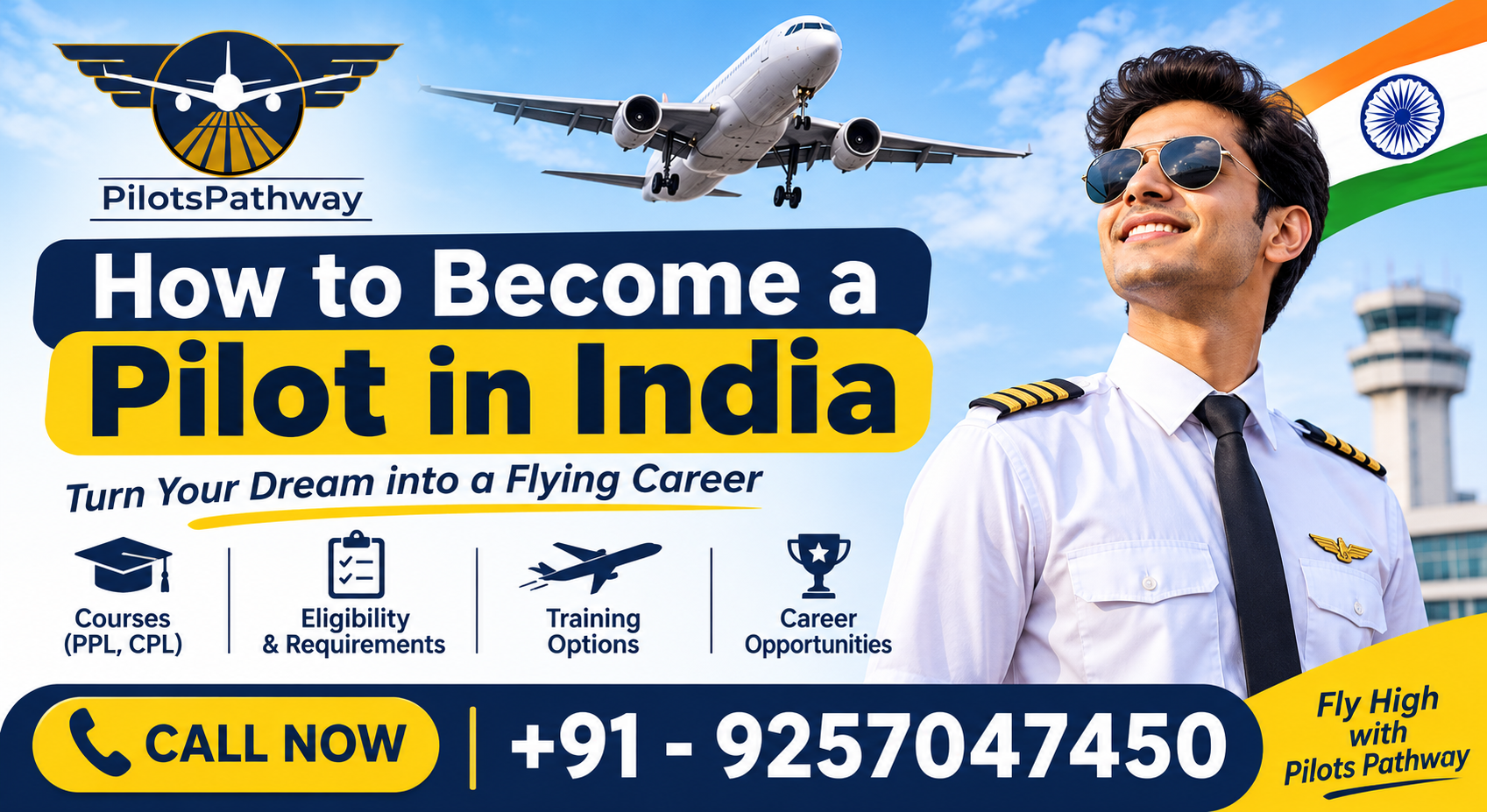
Becoming a commercial pilot is a dream for many students who are interested in aircraft, flying, and the aviation industry. It is a professional career that requires proper education, medical fitness, theoretical knowledge, practical flying experience, and dedication. India offers different opportunities for students who want to build a career in aviation, but understanding the correct training process is important before starting.
If you have completed Class 12 or are planning your career after school, you may have questions about pilot eligibility, flying schools, DGCA examinations, training fees, and the time required to obtain a Commercial Pilot Licence (CPL). Learning about these requirements can help you make better decisions and prepare for your future.
Understanding How to become a commercial pilot in India is the first step towards planning your aviation career. You need to complete the required education, meet medical standards, pass the necessary examinations, and gain practical flying experience through an approved training organisation.
In this blog, we explain the complete process of becoming a commercial pilot, including eligibility, training, licensing, costs, career opportunities, and the importance of choosing the right training guidance. Pilots Pathway provides aviation courses and training programmes for students who want to prepare for a career in the aviation industry.
What Is a Commercial Pilot?
A commercial pilot is a licensed aviation professional who is qualified to fly aircraft for commercial operations within the privileges and limitations of their licence. Commercial pilots may work with passenger airlines, cargo operators, charter companies, and other aviation organisations.
Their responsibilities include operating aircraft, following aviation regulations, checking weather conditions, communicating with air traffic control, monitoring aircraft systems, and maintaining flight safety.
A commercial pilot must have strong technical knowledge and practical flying skills. The profession also requires discipline, patience, communication skills, and the ability to make responsible decisions.
Unlike some other careers, becoming a commercial pilot involves both classroom learning and practical training. Students must understand aviation subjects and gain the required flying experience before receiving their licence.
1. Complete Your Class 12 Education
The first step towards becoming a commercial pilot in India is completing your Class 12 education.
Students must have passed Class 12 or an equivalent examination with Physics and Mathematics from a recognised board or university, according to the applicable DGCA requirements.
Physics and Mathematics are important subjects because they help students understand the technical concepts used in aviation. These subjects are connected with aircraft movement, speed, distance, navigation, pressure, and other flying principles.
If you have completed Class 12 without Physics or Mathematics, you may need to complete the missing subjects through a recognised educational board before proceeding with the licensing process.
Students should also develop good English communication skills because English is widely used in aviation communication, training materials, and operational procedures.
You do not need to complete an engineering degree to become a commercial pilot. However, you must meet the prescribed educational qualifications before applying for the relevant pilot training and examinations.
2. Understand the DGCA Medical Requirements
Medical fitness is one of the most important requirements for aspiring commercial pilots. Before joining a flying school, students should understand the medical standards established by the Directorate General of Civil Aviation (DGCA).
There are two important medical categories for pilot candidates:
DGCA Class 2 Medical: This medical assessment helps determine whether a candidate meets the required medical standards for the relevant pilot licensing process.
DGCA Class 1 Medical: This is required for obtaining a Commercial Pilot Licence. It includes a detailed assessment of the candidate's medical fitness according to DGCA standards.
The medical examination may include checks related to eyesight, hearing, general physical health, and other medical requirements.
Students should complete their medical assessments through the prescribed authorised process. It is advisable to understand your medical eligibility before making a major financial investment in flying training.
3. Apply for a DGCA Computer Number
After understanding your educational and medical eligibility, the next step is to complete the required registration process for DGCA flight crew examinations.
A Computer Number is used to identify candidates appearing for applicable DGCA examinations.
Students generally need to provide personal information, educational documents, identification details, and other required documents during the application process.
The basic steps include:
-
Registering through the DGCA examination portal.
-
Providing accurate personal information.
-
Uploading the required educational certificates.
-
Submitting identification documents.
-
Completing document verification.
-
Following the instructions provided by DGCA.
Make sure your details are correct before submitting the application. Incomplete documents or incorrect information may delay the process.
Obtaining a Computer Number is an important administrative step in preparing for the required flight crew examinations.
4. Prepare for DGCA Ground Training
Ground training is an essential part of becoming a commercial pilot. Before operating an aircraft independently, students must understand the theoretical subjects related to aviation.
DGCA ground training helps students develop the knowledge required to understand aircraft operations, navigation, aviation regulations, and weather conditions.
Some important subjects include:
Air Regulations: Students learn about aviation laws, operational rules, flight procedures, and the responsibilities of pilots.
Air Navigation: This subject covers navigation charts, directions, coordinates, flight planning, and navigation methods used during flying.
Aviation Meteorology: Students study weather conditions, wind, clouds, visibility, temperature, pressure, and other weather-related factors that affect aircraft operations.
Technical General: This subject explains aircraft systems, engines, instruments, and the technical principles of aircraft operation.
Technical Specific: Students learn about the technical details of the aircraft used during their training.
Candidates must also complete the applicable radio telephony requirements and examinations.
Good preparation for these subjects can help students understand the practical side of flying and perform better in their examinations.
At Pilots Pathway, students can explore DGCA ground classes and aviation learning programmes to develop their theoretical knowledge and prepare for different stages of pilot training.
5. Choose a DGCA-Approved Flying Training Organisation
Choosing the right flying school is an important decision in your aviation career.
Students must complete their required practical flying training through a DGCA-approved Flying Training Organisation (FTO). Before taking admission, check the organisation's current approval status and the facilities available at its training base.
You should consider the following factors when selecting a flying school:
-
Current DGCA approval status.
-
Availability of training aircraft.
-
Qualified flying instructors.
-
Aircraft maintenance arrangements.
-
Flying schedules and training availability.
-
Safety procedures.
-
Training facilities.
-
Course structure and fee details.
-
Student support and administrative services.
Do not choose a flying school only because it offers lower fees or makes attractive promises. Check the actual training facilities and understand what is included in the course fees.
Students searching for a top pilot training institute in india should compare different organisations carefully. The right flying school should provide suitable training facilities, qualified instructors, and a structured training programme that follows applicable aviation regulations.
Making an informed decision can help you avoid unnecessary difficulties during your training journey.
6. Begin CPL Training in India
After selecting a suitable flying school, you can begin practical flight training.
CPL training in India involves learning how to operate an aircraft, follow flight procedures, understand navigation, and complete different flying exercises under the supervision of qualified instructors.
During the initial stage, students become familiar with the aircraft cockpit, flight controls, instruments, and basic operating procedures.
As they gain experience, they move towards more advanced flying activities.
Important parts of practical training include:
Basic Aircraft Handling: Students learn how to control an aircraft and understand its movements during different flying conditions.
Take-Off and Landing: These are essential flying skills. Students practise take-offs and landings under the supervision of their instructors.
Navigation Training: Students learn how to plan flight routes, read navigation charts, and follow the correct flight path.
Cross-Country Flying: This training provides experience in flying between different locations while following navigation procedures.
Instrument Flying: Students learn to operate and control aircraft using instruments according to the prescribed training requirements.
Night Flying: Candidates complete the required night flying exercises as part of their practical training.
Each stage helps students develop their flying abilities and understand the responsibilities of operating an aircraft.
Practical training requires regular practice, attention, and patience. Students should focus on understanding every exercise rather than simply completing the required flying hours.
7. Complete the Required Flying Hours
Flying experience is an essential requirement for obtaining a Commercial Pilot Licence in India.
Under the applicable aeroplane CPL requirements, candidates must complete a minimum of 200 hours of flight time, including the required experience in different flying activities.
The training and experience requirements include areas such as:
-
Pilot-in-Command flying experience.
-
Cross-country flying.
-
Instrument flying.
-
Night flying.
-
Required take-offs and landings.
-
Other prescribed practical training activities.
All flying hours must be properly recorded and verified according to the applicable DGCA requirements.
Students should maintain accurate flight records and complete their training exercises under the supervision of qualified instructors.
It is important to understand that completing 200 flying hours alone does not automatically provide a CPL. Candidates must also meet the required educational, medical, examination, training, and skill test conditions.
8. Pass the Required Examinations and Skill Test
After completing the required ground training and practical flying experience, students must fulfil the applicable examination and assessment requirements.
The theoretical examinations test your understanding of aviation regulations, navigation, meteorology, and technical subjects.
The flying skill test assesses your practical abilities and understanding of aircraft operations.
During the practical assessment, candidates may be evaluated on:
-
Aircraft handling.
-
Flight planning and navigation.
-
Understanding of aircraft instruments.
-
Following operational procedures.
-
Communication and decision-making.
-
Safe execution of required flying exercises.
Candidates must successfully complete the prescribed assessments to become eligible for the licensing process.
Students should prepare consistently for both theoretical and practical examinations because both are important for developing professional flying skills.
9. Apply for Your Commercial Pilot Licence
Once you have completed the required examinations, flying experience, medical assessments, and skill tests, you can apply for your Commercial Pilot Licence through the prescribed DGCA process.
The application must include the required documents and evidence of completed training and qualifications.
After verification and fulfilment of all applicable requirements, DGCA can issue the CPL.
A Commercial Pilot Licence is an important qualification that allows you to pursue suitable commercial flying opportunities within the privileges and limitations of the licence.
However, obtaining a CPL does not automatically guarantee employment with an airline. Airlines have their own recruitment requirements and selection procedures.
10. Complete Type Rating Training if Required
Students who want to work with airlines may need additional aircraft-specific training.
Type rating training prepares pilots to operate a particular aircraft type according to the applicable licensing and operator requirements.
For example, some airlines operate aircraft such as the Airbus A320 or Boeing 737. Pilots selected for these aircraft may need the relevant type rating.
Type rating training generally includes:
-
Aircraft systems and technical knowledge.
-
Flight simulator training.
-
Normal operating procedures.
-
Emergency procedures.
-
Crew coordination.
-
Practical aircraft operation training.
The type rating required depends on the aircraft and the employer's requirements.
Students should understand the training costs and employment conditions before enrolling in a type rating programme.
Eligibility Requirements to Become a Commercial Pilot in India
Before starting your training, it is important to understand the basic eligibility requirements.
|
Requirement |
Details |
|
Education |
Class 12 with Physics and Mathematics |
|
Minimum age for CPL |
18 years |
|
Medical fitness |
Required DGCA medical fitness |
|
Examinations |
Applicable DGCA flight crew examinations |
|
Flying experience |
Minimum 200 hours for aeroplane CPL, with prescribed experience |
|
Training |
Through an approved flying training organisation |
|
Skill test |
Required practical assessment |
|
Licence |
Commercial Pilot Licence issued by DGCA |
These are key requirements, and students should check the latest DGCA regulations for complete licensing conditions.
What Is the Cost of Commercial Pilot Training in India?
The total cost of commercial pilot training depends on the flying school, aircraft type, training location, flying hours, and additional expenses.
There is no single fixed fee for every student because different flying schools have different fee structures.
Some important expenses include:
Ground Training Fees: These cover classroom sessions and theoretical preparation for aviation examinations.
Flying Training Fees: Practical flying training is generally one of the major expenses in the CPL process.
Medical Examination Fees: Students must pay for the required medical assessments.
DGCA Examination Fees: These are associated with the applicable flight crew examinations.
Study Materials: Students may need books, charts, training materials, and other educational resources.
Accommodation and Transportation: Students who move to another city for flying training may have additional living expenses.
Additional Training Expenses: Extra flying hours, skill tests, and other required training activities may increase the overall cost.
Type Rating Fees: If required for an intended airline position, type rating training involves additional expenses.
Before taking admission, ask the flying school for a detailed fee breakdown. Check what is included, what is charged separately, and whether additional flying hours may increase the total cost.
Proper financial planning can help students manage their training journey more effectively.
How Long Does It Take to Become a Commercial Pilot?
The time required to become a commercial pilot varies from student to student.
The overall duration depends on several factors, including:
-
Completion of educational requirements.
-
Medical examination and document verification.
-
DGCA examination preparation.
-
Availability of aircraft and instructors.
-
Weather conditions.
-
Flying training schedules.
-
Examination and skill test completion.
Some students may complete their training within a shorter period, while others may need more time because of examination schedules or flying delays.
Students should focus on completing every training requirement properly rather than choosing a flying school only because it promises a shorter course duration.
Career Opportunities After Obtaining a CPL
After obtaining a Commercial Pilot Licence and meeting the additional requirements for specific positions, candidates can explore different opportunities in the aviation industry.
Passenger Airlines: Commercial pilots may apply for suitable airline positions after meeting the company's recruitment and qualification requirements.
Cargo Airlines: Cargo operators employ pilots to transport goods and shipments between different locations.
Charter Operations: Pilots may work with companies providing private charter flights and specialised aviation services.
Corporate Aviation: Some organisations operate aircraft for business travel and other professional purposes.
Other Commercial Flying Operations: Depending on their qualifications and experience, pilots may explore other opportunities permitted under their licence.
Career opportunities depend on qualifications, experience, recruitment requirements, and the availability of suitable positions.
Important Skills Every Commercial Pilot Should Develop
Becoming a commercial pilot requires more than passing examinations and completing flying hours. Students should also develop professional skills that are important in aviation.
Communication Skills: Pilots must communicate clearly with air traffic controllers, other pilots, and crew members.
Decision-Making Skills: They must make responsible decisions while following aviation procedures.
Technical Understanding: Knowledge of aircraft systems, navigation, instruments, and weather is important.
Discipline: Pilots must follow checklists, operating procedures, and aviation regulations.
Teamwork: Commercial aviation requires coordination between pilots, cabin crew, and ground staff.
Situational Awareness: Pilots must remain aware of their surroundings and understand changing flight conditions.
Developing these skills during training can help students prepare for professional responsibilities.
How Pilots Pathway Helps Aspiring Pilot Students
Starting a pilot career can involve many questions about eligibility, DGCA examinations, medical requirements, flying schools, and training expenses. Students need to understand the different stages before selecting a suitable training programme.
Pilots Pathway provides aviation courses and training programmes for students interested in pilot education and professional aviation preparation.
Its training areas include:
-
Private Pilot Licence (PPL) Training.
-
CPL Ground Training.
-
CPL Flight Training.
-
Flight Simulator Training.
-
Airline Preparation.
-
Cadet Pilot Course.
-
Foundation Course.
-
DGCA Ground Classes.
These programmes cover different areas of pilot education and preparation. Students can explore the available courses according to their educational background and career goals.
If you are planning pilot training in india, understanding the licensing process and selecting suitable training guidance can help you prepare for the different stages of your aviation journey.
Before enrolling in any programme, check the course details, training facilities, applicable approvals, and the specific services included.
Conclusion
Becoming a commercial pilot in India requires proper planning, education, medical fitness, theoretical knowledge, and practical flying experience. Students should begin by completing Class 12 with Physics and Mathematics, understanding the DGCA medical requirements, preparing for the required examinations, and selecting a DGCA-approved flying training organisation.
The journey also includes completing the required flying hours, passing the skill test, obtaining a Commercial Pilot Licence, and meeting additional qualifications for suitable airline positions.
If you are researching How to become a commercial pilot, make sure you understand every stage of the process before investing in training. Choosing the right flying school, preparing consistently, and developing strong aviation knowledge can help you work towards your career goal.
Pilots Pathway provides different aviation courses, including CPL Ground Training, CPL Flight Training, PPL Training, Flight Simulator Training, and Airline Preparation, to support students interested in pilot education.
With proper preparation, regular practice, and a clear understanding of DGCA requirements, you can take the right steps towards your dream of becoming a commercial pilot in India.

 English
 Arabic
 French
 Spanish
 Portuguese
 Deutsch
 Turkish
 Dutch
 Italiano
 Romaian
 Portuguese (Brazil)
 Greek