


Understanding Neck Skin Laxity: Causes, Care and Treatment Options
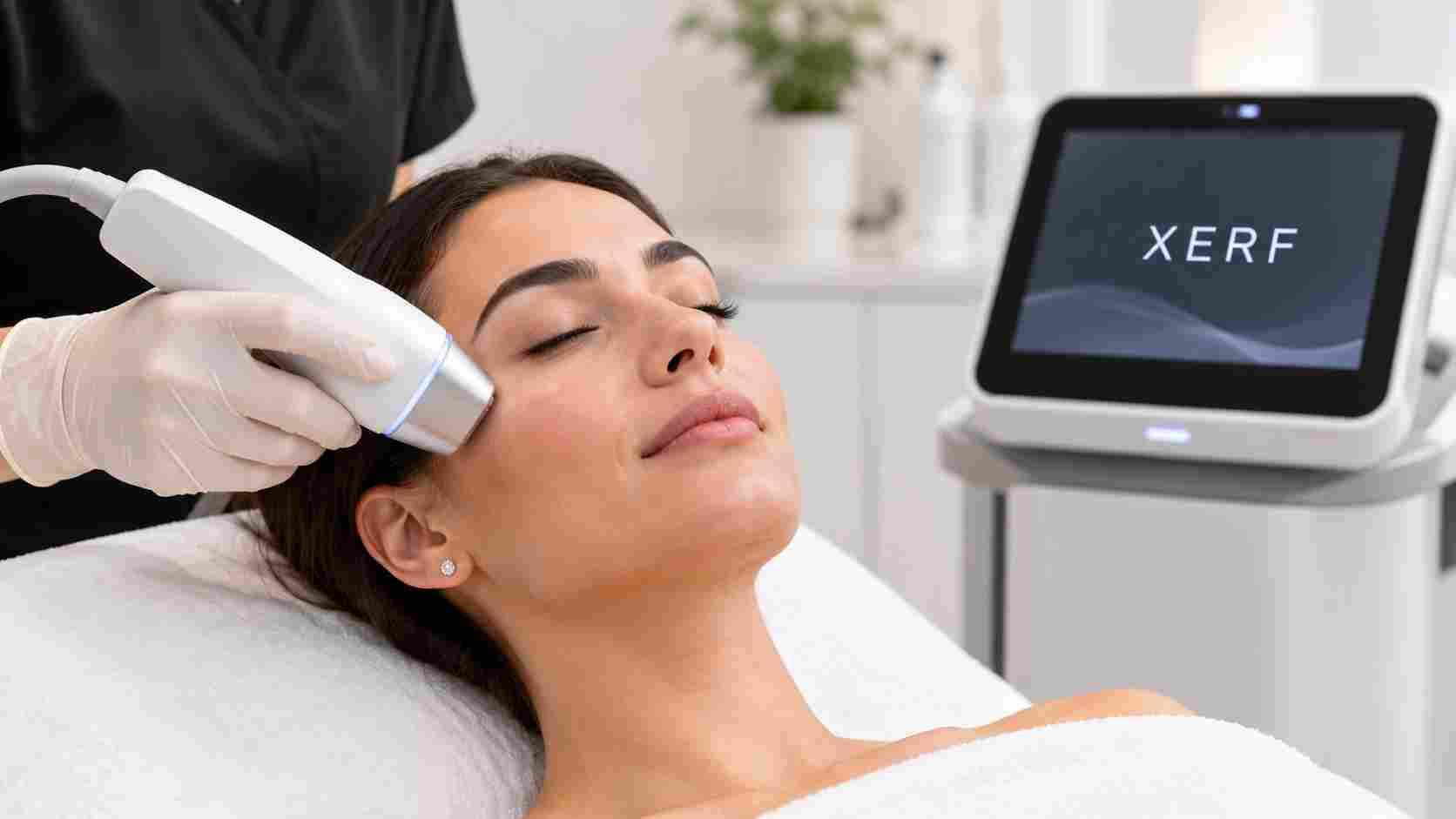
The neck is often one of the first places people notice ageing. The skin there is thin, it moves constantly, and it gets plenty of sun over a lifetime. Many people find that their face and neck no longer seem to match, which raises a practical question: is there anything worth doing about it?
The answer depends on what is actually causing the change. Loose skin, softened muscle bands and fat under the chin can look similar in the mirror, but they respond to different approaches. This guide explains why neck skin loosens, what everyday care can and cannot do, and how non-surgical neck skin tightening options compare.
Why neck skin loosens
Skin gets its firmness from collagen and elastin, two proteins in the dermis. From adulthood, the body gradually produces less of both, and existing fibres break down more easily. Several factors speed this up:
-
Sun exposure. Cumulative UV damage is a major driver of visible skin ageing, and the neck is frequently missed when applying sunscreen.
-
Smoking. It is consistently linked with premature skin ageing.
-
Weight changes. Skin that has been stretched may not fully recoil after significant weight loss.
-
Genetics. Some people simply have thinner or less elastic skin, or carry laxity earlier than others.
-
Natural ageing. Underlying fat pads and muscles also change over time, which alters the neck contour.
You may see "tech neck" blamed for neck lines from looking down at screens. Repeated folding of the skin may contribute to creasing, but the evidence for it causing laxity is limited, so treat it as a possible minor factor rather than the main cause.
Working out what you are actually seeing
This step is often skipped in online articles, yet it shapes which options make sense. Neck changes usually involve one or more of these:
-
Skin laxity: the skin itself is thinner, crepey or loose.
-
Platysmal bands: vertical cords that appear when the neck muscle separates or tightens.
-
Fat under the chin: fullness that sits beneath the skin rather than in it.
-
Jowling: changes along the jawline that blur the border between face and neck.
A treatment that firms skin will not remove fat, and it will not fix muscle bands. A practitioner can help you work out which combination applies to you. You can do a rough check at home by pinching the skin gently and noting whether it feels thin and loose or whether there is a fuller layer underneath, but this is not a diagnosis.
Everyday care that supports skin firmness
Home care will not reverse established laxity, but it can protect what you have and improve texture.
-
Apply sunscreen to the neck and chest every day. Prevention matters more here than any product.
-
Moisturise. Hydration improves how skin looks and feels, though it does not rebuild collagen.
-
Consider a topical retinoid. Retinoids have reasonable evidence for improving photoaged skin, but they can irritate thin neck skin, so introduce them slowly and ask a pharmacist or doctor first.
-
Be sceptical of "neck firming" creams. Few have strong evidence for a visible tightening effect.
Treatment options at a glance
|
Approach |
What it mainly addresses |
Things to consider |
|
Radiofrequency (RF) |
Mild to moderate skin laxity |
Gradual change; results vary; several sessions may be suggested |
|
Ultrasound-based devices |
Deeper tissue tightening |
Different mechanism; comfort and suitability vary |
|
Microneedling, with or without RF |
Skin texture and firmness |
Involves puncturing the skin, so there is some downtime |
|
Injectables |
Platysmal bands (muscle-relaxing injections); skin quality (some products) |
Used for specific concerns, not general laxity |
|
Surgery (for example, a neck lift) |
Significant laxity, bands or excess skin |
Greater cost, recovery and risk, with generally larger change |
No single option is best for everyone. Moderate laxity may respond to non-surgical treatment, while pronounced sagging often does not.
How radiofrequency fits into neck skin tightening
Radiofrequency treatments use controlled heat to stimulate the skin's repair response. The aim is to encourage new collagen over the following weeks and months, which is why change tends to be gradual rather than immediate.
One option offered in Sydney is a non-invasive, no-needle radiofrequency treatment called XERF. Information from its manufacturer and clinics describes it as a monopolar device that delivers two frequencies of radiofrequency energy, with surface cooling to protect the skin. Technical documentation lists frequencies of 6.78 MHz and 2 MHz. For readers who want to see what this involves in practice, the details of <a href="https://soraclinic.au/treatments/xerf-sydney/">XERF treatment Sydney CBD</a> are set out on the clinic's treatment page.
It helps to read the claims carefully. The manufacturer notes that "skin tightening" refers to tightening effects achieved through soft tissue coagulation, which is a heat-based mechanism. Published support includes a porcine (pig) model study and a clinical article on dual-frequency monopolar radiofrequency. Independent commentary also notes that XERF-specific long-term durability has not yet been shown, because it is a newer device iteration, even though radiofrequency in general has been studied for years. In short, the technology is plausible and established in principle, but long-term outcomes for this particular device are still being built up.
Realistic expectations and limits
-
Change is usually modest to moderate. Radiofrequency is generally discussed for mild to moderate laxity, not for significant excess skin.
-
Timing varies. Some people notice an early tightening feeling, but collagen-related change builds over weeks to months, and the number of sessions depends on the individual and the practitioner's protocol.
-
Results are not permanent. Ageing continues, so any improvement may need maintenance.
-
Heat-based treatments carry risks. Burns, texture changes and uneven results are possible if settings or technique are inappropriate, and treatment is not risk-free.
-
Comfort differs. People describe a warming sensation, but tolerance varies by area and setting.
Suitability also varies. People who are pregnant, have certain implanted devices, active skin conditions or particular medical histories may be advised against heat-based treatment. A qualified practitioner needs to assess this individually.
Questions to ask at a consultation
A good consultation should leave you better informed, whether or not you proceed. Consider asking:
-
Is my concern mainly skin laxity, muscle bands or fat?
-
Is radiofrequency likely to help, or would another option suit me better?
-
What qualifications and training does the person treating me hold?
-
How many sessions might I need, and how will progress be assessed?
-
What are the risks, and what happens if I am unhappy with the result?
-
What does the total cost look like, including follow-up?
Choosing a clinic with a transparent, assessment-first approach matters more than any particular device. Services such as Sora Clinic in Sydney offer consultations where these questions can be raised before any treatment decision is made.
Conclusion
Neck skin laxity usually reflects a mix of collagen loss, sun damage, genetics and changes in the tissue beneath the skin. Daily sunscreen and sensible skincare protect what you have, while non-surgical treatments such as radiofrequency may help mild to moderate laxity when expectations are realistic. If the changes are more advanced, a conversation about surgical options may be worthwhile.
The most useful next step is a proper assessment. Knowing exactly what is causing your neck changes will help you choose the approach that fits, or decide to do nothing at all.
This article is general information and not personal medical advice. Speak to a qualified health professional about your own circumstances.

 Arabic
 French
 Spanish
 Portuguese
 Deutsch
 Turkish
 Dutch
 Italiano
 Russian
 Romaian
 Portuguese (Brazil)
 Greek