


Aircraft and Aerospace Industry: Engineering Precision, Safety, and Modern Flight
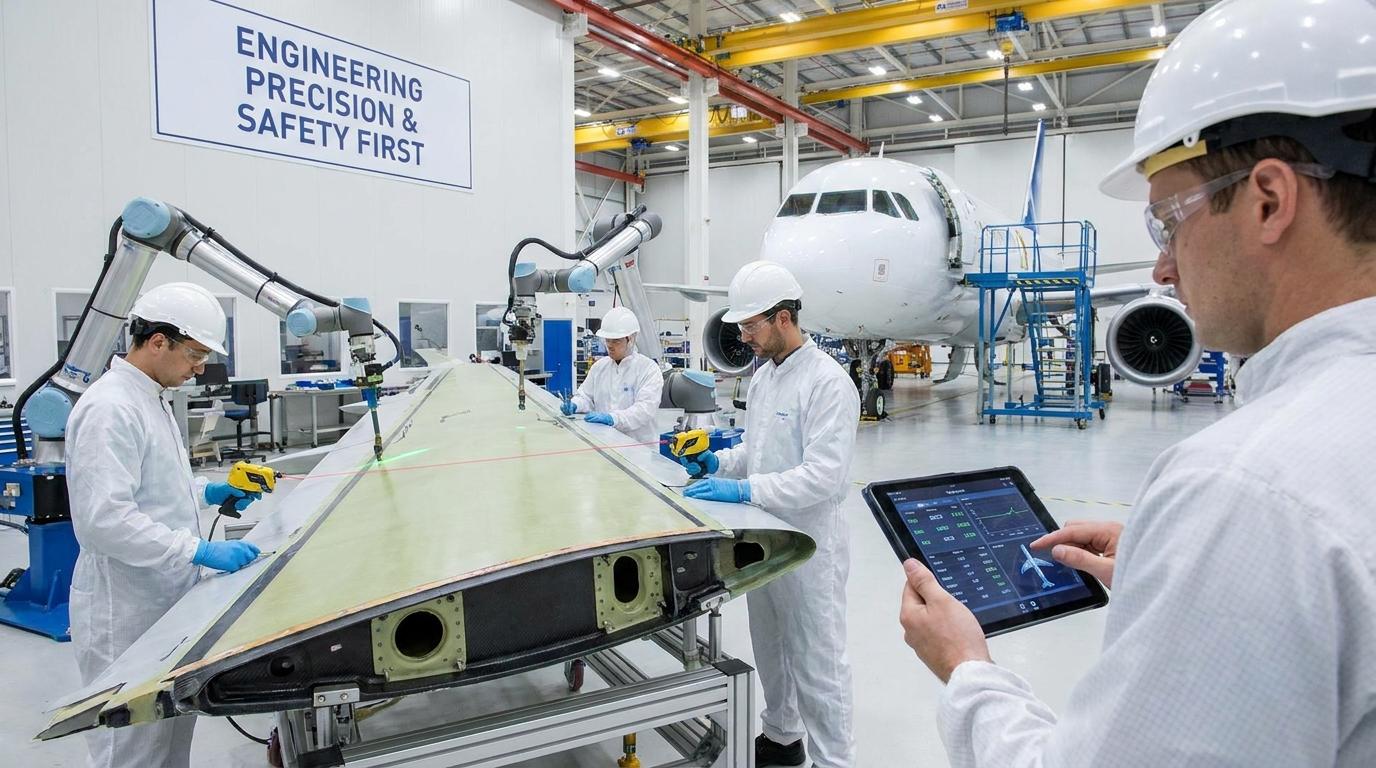
The global aircraft and aerospace industry stands at the forefront of modern engineering, merging advanced aerodynamics, propulsion technology, and high-performance materials science to enable commercial aviation, defense operations, and deep-space exploration.
Every flight relies on thousands of interconnected subsystems operating simultaneously under extreme atmospheric pressure differentials, rapid thermal cycling, and intense mechanical vibration.
From wide-body passenger jets cruising in the stratosphere to reusable orbital launch vehicles, manufacturers and tier-one suppliers must meet uncompromising safety, reliability, and regulatory compliance standards.
Within this demanding ecosystem, the integrity of fluid handling, pneumatic controls, fuel delivery, and environmental containment systems depends heavily on precision sealing technologies engineered to prevent failure where maintenance is impossible mid-mission.
Core Sectors of the Aircraft and Aerospace Industry
Commercial aviation forms the largest economic pillar of the sector, encompassing narrow-body regional airliners, long-haul wide-body aircraft, and business jets designed for fuel efficiency and passenger safety.
Defense and military aviation run parallel to commercial manufacturing, focusing on tactical fighter aircraft, heavy transport planes, unmanned aerial vehicles, and rotorcraft built for extreme agility and battlefield durability.
Beyond Earth's atmosphere, the spaceflight and satellite segment continues to expand rapidly through commercial launch providers, orbital habitats, and deep-space probes that demand ultra-lightweight structures and vacuum-grade component resilience.
Supporting all three sectors is an extensive Maintenance, Repair, and Overhaul (MRO) network alongside specialized component suppliers.
Aircraft engines, landing gear assemblies, hydraulic actuators, and avionics enclosures require continuous lifecycle support to maintain airworthiness certifications granted by authorities such as the Federal Aviation Administration and the European Union Aviation Safety Agency.
Because a single grounded aircraft costs operators tens of thousands of dollars per hour, supply chain reliability and component longevity directly influence global fleet readiness.
Extreme Operating Environments and Material Science Challenges
Components operating inside aerospace platforms encounter environmental extremes rarely seen in any other industrial sector.
Jet turbine engines generate internal combustion temperatures exceeding several hundred degrees Celsius, while external fuselage surfaces and cryogenic propellant lines experience sub-zero temperatures well below freezing.
Rapid altitude transitions subject airframes and internal fluid systems to sudden pressure drops, necessitating materials that maintain structural elasticity without cracking, hardening, or losing sealing force.
Chemical exposure presents an equally critical engineering hurdle. Modern aviation fuels, synthetic turbine lubricants, phosphate-ester hydraulic fluids, and aggressive rocket propellants like hydrazine or liquid oxygen can rapidly degrade standard polymers.
Engineers must therefore specify advanced elastomers, fluorocarbons, perfluoroelastomers, and polytetrafluoroethylene compounds capable of resisting chemical swelling, outgassing in hard vacuum environments, and explosive decompression.
Precision Sealing Components in Flight-Critical Systems
Sealing technology acts as the invisible safeguard across virtually every mechanical and fluid subsystem in modern aerospace engineering. In turbine propulsion units, high-temperature O-rings, spring-energized seals, and custom-molded gaskets isolate fuel nozzles, lubrication circuits, and bleed-air manifolds, preventing leaks that could trigger engine fires or thrust loss.
Hydraulic flight control systems, which translate pilot commands into aerodynamic surface movements, depend on low-friction dynamic seals to maintain instantaneous pressure response without rod wear or fluid weeping.
Airframe structures and cabin pressurization systems also rely on specialized elastomeric profiles and conductive gaskets.
Door and window seals preserve breathable cabin pressure at cruising altitudes above thirty-five thousand feet, while electromagnetic interference shielding gaskets protect sensitive fly-by-wire avionics and radar arrays from lightning strikes and radio frequency disruption.
Companies like Austin Seal Co support aerospace manufacturers and maintenance teams by supplying precision O-rings, custom gaskets, perfluoroelastomer components, and specialized sealing solutions tailored to strict industry tolerances.
Quality Standards, Traceability, and Regulatory Compliance
Zero-defect manufacturing defines the regulatory framework governing aerospace component production. Suppliers operating within the aviation supply chain adhere to rigorous quality management systems such as AS9100, alongside National Aerospace and Defense Contractors Accreditation Program (NADCAP) accreditations for specialized processes.
Every elastomer batch, spring-energized seal, and precision gasket requires full material traceability back to raw polymer lots, ensuring complete accountability during audits and failure investigations.
Cleanroom processing, specialized surface coatings, and vacuum baking further ensure that components meet contamination limits required for oxygen systems and satellite assemblies.
Even microscopic particulate matter or volatile outgassing residues can foul optical sensors in orbital spacecraft or ignite high-pressure oxygen lines aboard crewed aircraft.
Rigorous dimensional inspection, shelf-life management, and specialized packaging protect seal integrity from the manufacturing floor to final installation on the assembly line.
Future Innovations Shaping Aerospace Manufacturing
The next decade of aerospace engineering is being reshaped by decarbonization initiatives, electric propulsion, and advanced additive manufacturing.
Sustainable Aviation Fuels (SAF) and hydrogen propulsion systems introduce new chemical compatibility challenges, prompting material scientists to develop next-generation sealing compounds capable of containing small hydrogen molecules at cryogenic temperatures without embrittlement.
Simultaneously, electric vertical takeoff and landing (eVTOL) aircraft and hybrid-electric regional planes require lightweight thermal management seals to regulate high-density battery packs and power electronics.
Digital twin simulations and predictive maintenance sensors are also transforming how engineers monitor component health.
By embedding smart diagnostic models into hydraulic and propulsion subsystems, operators can forecast seal wear based on actual thermal and pressure cycles rather than fixed flight-hour intervals, reducing unscheduled downtime while elevating overall flight safety.
FAQs
What makes aerospace sealing requirements different from standard industrial applications?
Aerospace components must perform reliably across extreme temperature swings, rapid pressure changes, high vibration, and exposure to aggressive aviation fuels and hydraulic fluids, all while meeting strict weight limits and full material traceability standards.
Which materials are most commonly used for high-temperature aerospace seals?
Fluorocarbons (FKM), fluorosilicones (FVMQ), perfluoroelastomers (FFKM), and spring-energized polytetrafluoroethylene (PTFE) are widely utilized because they retain elasticity, resist chemical attack, and withstand severe thermal stress without degrading.
Why is outgassing a critical concern in space and satellite engineering?
In the hard vacuum of space, trapped gases inside standard polymers can vaporize and condense onto sensitive optical lenses, solar arrays, or electronic sensors, making low-outgassing, vacuum-baked elastomers essential for spacecraft reliability.
How do conductive elastomers protect modern aircraft avionics?
Conductive elastomers incorporate metal-coated fillers into silicone or fluorosilicone bases to create environmental seals that simultaneously block electromagnetic interference (EMI) and radio frequency interference (RFI), safeguarding navigation and communication systems.
What role does material traceability play in aviation safety?
Material traceability links every finished seal or component back to its specific raw material batch, cure date, and testing records, allowing aerospace manufacturers to verify compliance with safety specifications and quickly isolate any potential quality discrepancies.
To explore how precision sealing components are engineered and tested for high-stakes flight environments, watch Aerospace Sealing Solutions and Components, which highlights specialized manufacturing standards for the aerospace and defense sector.

 English
 Arabic
 French
 Spanish
 Portuguese
 Deutsch
 Turkish
 Dutch
 Italiano
 Russian
 Romaian
 Greek