


Can an HOA Restrict Commercial Truck Parking in California?
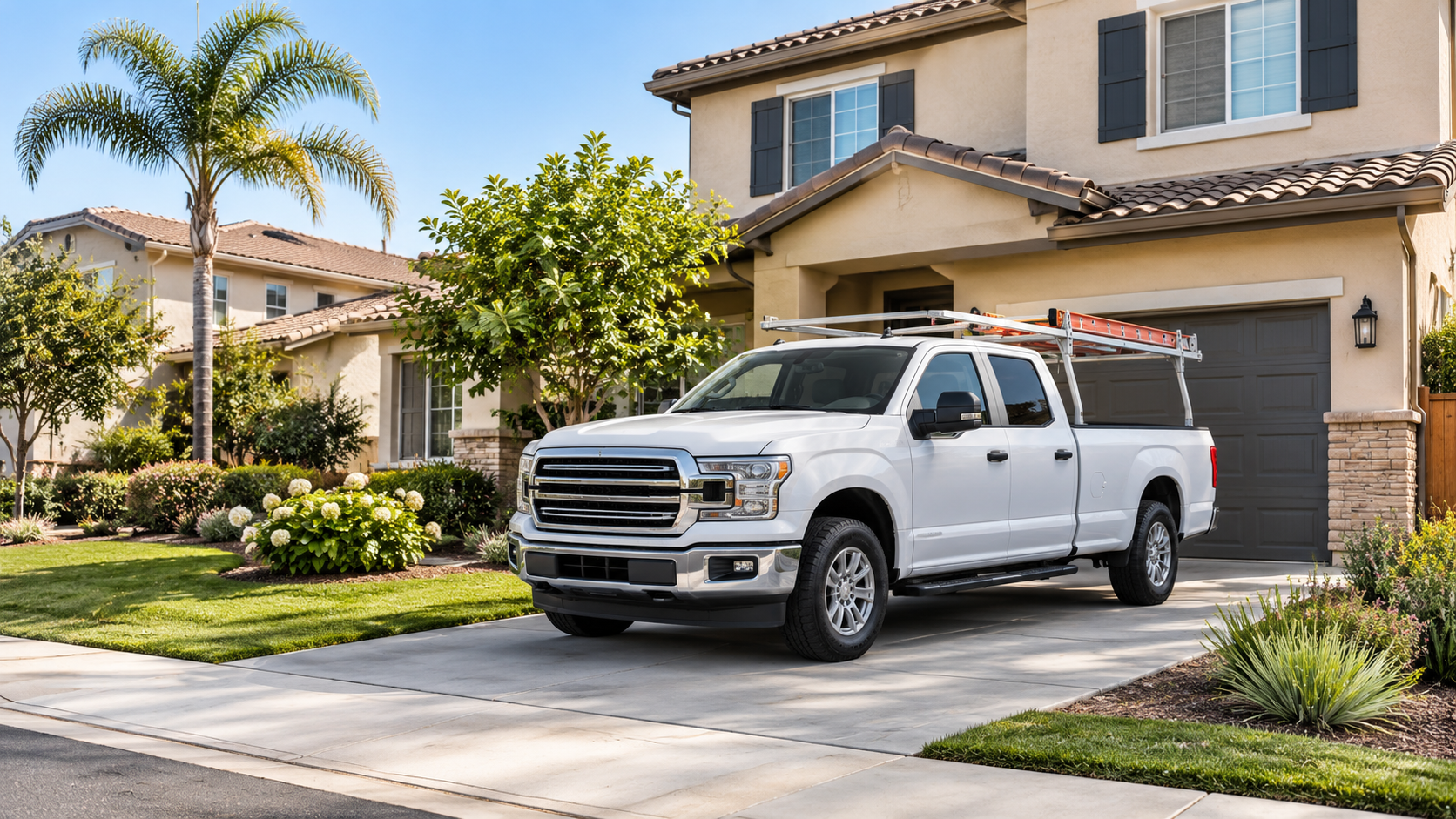
Parking a commercial truck at home can be a practical necessity for contractors, business owners, delivery drivers, and other professionals who rely on work vehicles every day. A residential driveway offers convenient access and eliminates the expense of finding separate commercial parking. However, homeowners living in communities governed by homeowners associations (HOAs) may encounter restrictions on keeping commercial vehicles at their properties.
In California, HOA parking policies can regulate the types of vehicles permitted in driveways, garages, and shared parking areas. These restrictions are generally intended to maintain neighborhood appearance, protect property values, reduce congestion, and promote consistent community standards. Whether an association can prohibit a commercial truck depends on its governing documents, applicable state laws, and the specific circumstances surrounding the vehicle.
Why Do California HOAs Restrict Commercial Truck Parking?
Many residential communities establish parking regulations that distinguish between personal vehicles and commercial vehicles. While a standard passenger car or personal pickup truck may be permitted, a large work truck, service vehicle, or commercial van might fall under a different classification.
There are several reasons an HOA may introduce these restrictions:
- Neighborhood appearance: Large commercial vehicles, especially those displaying business advertisements, equipment racks, or specialized modifications, may conflict with community appearance standards.
- Limited parking space: Oversized trucks can occupy multiple parking spaces or interfere with access to driveways and nearby streets.
- Safety concerns: Certain vehicles may obstruct visibility, restrict pedestrian movement, or interfere with emergency access.
- Property maintenance: Heavy vehicles may contribute to driveway deterioration or damage shared pavement.
- Community consistency: Associations may establish uniform parking standards to maintain an organized residential environment.
These considerations can influence how an HOA develops its parking policies. However, neighborhood preferences alone do not automatically give an association unlimited authority to prohibit every commercial vehicle.
Can an HOA Legally Prohibit Commercial Trucks in Driveways?
An HOA may have the authority to restrict commercial truck parking, but its enforcement powers generally depend on the community's governing documents and applicable California regulations.
The primary documents to review include the Covenants, Conditions, and Restrictions (CC&Rs), association bylaws, and adopted rules and regulations. These documents may contain provisions addressing commercial vehicles, vehicle dimensions, driveway use, overnight parking, and exterior property standards.
For example, an association might prohibit vehicles exceeding a specified weight or length from being parked in residential driveways. Another community may restrict vehicles displaying commercial signage or equipment that conflicts with its residential parking standards.
California's Davis-Stirling Common Interest Development Act provides an important legal framework for homeowners associations. The California Civil Code governing common interest developments outlines provisions addressing HOA governance, enforcement authority, and homeowner rights.
Homeowners should understand that restrictions must be consistent with applicable law and the association's governing authority. An HOA cannot simply invent a parking violation without an appropriate legal or governing-document basis.
Does the Type of Commercial Truck Matter?
Not every vehicle used for business purposes necessarily receives the same treatment under HOA parking policies. The vehicle's physical characteristics, intended use, and classification can all influence whether restrictions apply.
Consider some common examples:
Pickup trucks: A standard pickup used for personal transportation may be treated differently from a heavily modified commercial work truck. Business advertising or permanently installed equipment may also be relevant if the governing documents address these features.
Work vans: Electricians, plumbers, HVAC technicians, and other contractors often use vans to transport tools and supplies. Some associations permit ordinary-sized vans while restricting larger or visibly commercial vehicles.
Box trucks: These vehicles generally have a larger footprint and may create parking or access concerns in residential communities. They are more likely to fall under restrictions concerning vehicle dimensions or commercial use.
Heavy-duty trucks: Vehicles with substantial weight, specialized equipment, or trailers may face additional limitations because of their impact on residential infrastructure and available parking.
The distinction between personal and commercial use is not always straightforward. A vehicle registered to a business does not necessarily become prohibited simply because of its ownership or purpose. Homeowners should examine the exact language of their association's regulations before assuming a restriction applies.
What Should Homeowners Check Before Parking a Commercial Vehicle?
Before regularly parking a work truck in a residential driveway, homeowners should review their community's parking requirements. Taking this step can help prevent misunderstandings, violation notices, and unnecessary disputes.
Start by obtaining a current copy of the CC&Rs and parking regulations. Search for terms such as commercial vehicle, business vehicle, recreational vehicle, oversized vehicle, truck, and driveway parking.
Next, determine whether the restrictions apply to all commercial vehicles or only specific categories. Some associations distinguish between vehicle size, weight, exterior appearance, and overnight parking. Others may establish exceptions for temporary loading, unloading, or service-related activities.
It is also useful to determine whether the vehicle is parked entirely within the homeowner's driveway or extends into a sidewalk, private road, or common area. Different rules may apply depending on property ownership and the location of the vehicle.
Homeowners looking for a broader explanation of community parking requirements can review California HOA parking rules to better understand parking restrictions, enforcement practices, and homeowner responsibilities.
Can an HOA Fine a Homeowner for Parking a Commercial Truck?
Yes, an HOA may impose a fine when a homeowner violates an enforceable parking restriction. However, associations must follow applicable procedures when handling alleged violations and imposing penalties.
In California, Civil Code Section 5855 establishes procedural requirements for disciplinary actions. Generally, an association must provide the homeowner with notice and an opportunity to be heard before imposing disciplinary penalties.
The process typically involves several steps:
- Violation notice: The association informs the homeowner about the alleged parking violation and identifies the relevant rule.
- Opportunity to respond: The homeowner receives an opportunity to explain the circumstances or challenge the alleged violation.
- Hearing: The association considers the homeowner's response through the applicable disciplinary process.
- Decision: The association determines whether a violation occurred and whether a penalty is appropriate.
Homeowners should not assume that every warning or fine is automatically valid. The association must have proper authority, follow its governing documents, and comply with applicable procedural requirements.
The California Attorney General's guidance on homeowners associations also provides useful information about HOA governance and homeowner responsibilities.
What Can Homeowners Do If They Receive a Parking Violation Notice?
Receiving a violation notice does not necessarily mean that the HOA's decision is correct. Homeowners have several practical options for addressing a commercial vehicle parking dispute.
Review the cited rule. Ask the association to identify the specific CC&R provision or parking regulation that allegedly prohibits the vehicle. A general reference to neighborhood standards may not adequately explain the restriction.
Request clarification. If the rule is unclear, request a written explanation of how it applies to the truck in question. Ask whether the restriction concerns vehicle dimensions, commercial markings, weight, or overnight parking.
Gather supporting evidence. Photographs of the driveway, vehicle dimensions, parking position, and relevant governing-document provisions may help clarify the situation.
Attend the hearing. If the association schedules a disciplinary hearing, use the opportunity to explain why the vehicle should be permitted or why the alleged violation is inaccurate.
Explore possible accommodations or exceptions. Some communities may consider temporary permissions, reasonable exceptions, or alternative parking arrangements when circumstances justify them.
If the disagreement involves substantial fines, inconsistent enforcement, or questions about the association's legal authority, consulting a California attorney experienced in HOA matters may be worthwhile.
How Can HOAs Create Fair Commercial Vehicle Parking Policies?
Associations also have responsibilities when developing and enforcing parking regulations. Clear policies can reduce disagreements while helping communities maintain safe and attractive residential environments.
An effective parking policy should define what qualifies as a commercial vehicle and identify any relevant size, weight, or appearance restrictions. Vague language can create confusion, particularly when homeowners use ordinary pickup trucks and vans for work.
HOAs should also communicate changes to parking requirements, explain enforcement procedures, and apply rules consistently. Selective enforcement can damage relationships between residents and association boards and may lead to avoidable disputes.
Where appropriate, associations can consider limited exceptions for contractors, temporary service vehicles, and homeowners whose employment requires access to commercial transportation.
Final Thoughts
California HOAs may restrict commercial truck parking in residential driveways, but their authority is not unlimited. The applicable CC&Rs, association regulations, vehicle characteristics, and California law all play a role in determining whether a particular restriction is enforceable.
Homeowners should review their governing documents before regularly parking a commercial vehicle at home and seek clarification whenever a rule is unclear. Likewise, HOA boards should establish reasonable, clearly written policies and follow the required enforcement procedures.
A balanced approach helps protect neighborhood standards without unnecessarily interfering with homeowners who depend on commercial vehicles for their livelihoods.

 Arabic
 French
 Spanish
 Portuguese
 Deutsch
 Turkish
 Dutch
 Italiano
 Russian
 Romaian
 Portuguese (Brazil)
 Greek