


ISI Certification Without the Hassle: Discover EVTL India's Expert BIS Consultancy
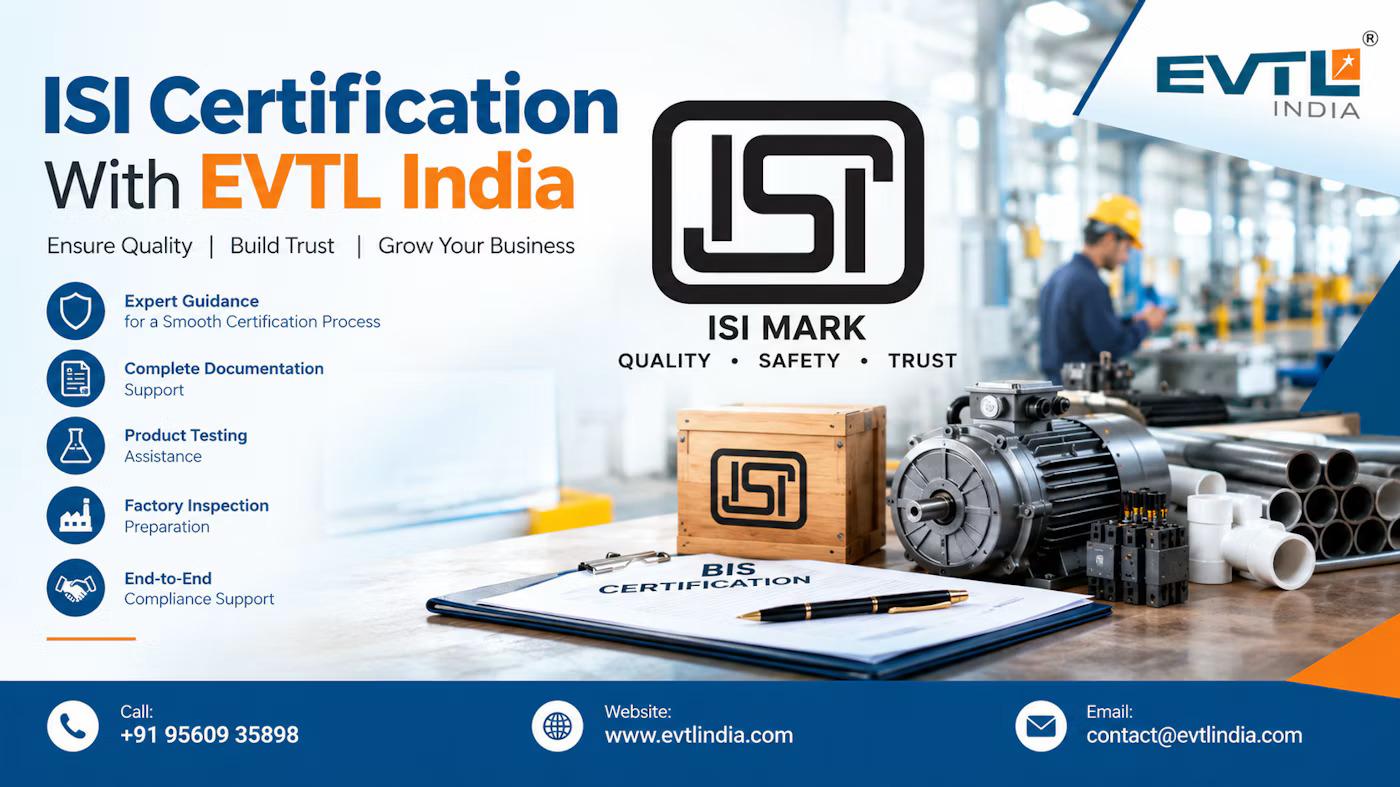
ISI Certification is an important requirement for manufacturers who want to sell quality products in the Indian market. It shows that a product meets the safety, quality, and performance standards set by the Bureau of Indian Standards (BIS). For manufacturers, obtaining an ISI mark is not just about following government rules; it is also about building customer trust and improving product credibility.
However, understanding the certification process, preparing documents, arranging product testing, and completing BIS formalities can be challenging. This is where professional guidance becomes helpful. EVTL India supports manufacturers throughout the ISI Certification process and helps them understand the requirements for BIS compliance.
What Is ISI Certification?
ISI Certification is a product certification scheme managed by the Bureau of Indian Standards (BIS). It confirms that a product complies with the relevant Indian Standard (IS).
Products covered under the applicable certification schemes must meet the prescribed quality and safety requirements before they can be sold in India.
The ISI Mark is a symbol of product quality and compliance. It helps customers identify products that have been assessed against the applicable Indian Standards.
Key points about ISI Certification:
-
It confirms that a product meets the applicable Indian Standard.
-
It helps ensure product safety and quality.
-
It builds trust among customers and business partners.
-
It supports compliance with applicable government regulations.
-
It allows manufacturers to use the ISI Mark after obtaining the required BIS licence.
Why Is ISI Certification Important for Businesses?
ISI Certification plays an important role in maintaining product quality and protecting consumers. It also helps manufacturers operate according to applicable regulatory requirements.
Here are some major benefits:
1. Builds Customer Trust
Customers prefer products that meet recognised quality standards. The ISI Mark gives buyers confidence that the product has been assessed under the relevant BIS certification requirements.
2. Ensures Product Quality
The certification process involves product testing according to applicable Indian Standards. This helps manufacturers identify quality issues and maintain consistent product performance.
3. Supports Legal Compliance
For products covered under mandatory BIS certification requirements, obtaining the relevant licence is necessary before manufacturing, importing, distributing, or selling them in India, as applicable.
4. Improves Brand Reputation
ISI Certification helps businesses demonstrate their commitment to quality and safety. It can improve brand credibility among customers, distributors, and business partners.
5. Creates Better Business Opportunities
Certified products may have better acceptance among institutional buyers, distributors, and customers who prefer products that meet recognised quality standards.
Which Products Require ISI Certification?
ISI Certification applies to different product categories covered under relevant Indian Standards and government Quality Control Orders (QCOs).
Some examples of products that may require ISI Certification include:
-
Electrical appliances and equipment
-
Cement and construction materials
-
Steel and iron products
-
Pressure cookers
-
Household products
-
Certain chemicals and industrial products
-
Automotive components
-
Other products notified under applicable BIS requirements
Important: Not every product requires ISI Certification. The requirement depends on the product category, applicable Indian Standard, and relevant government notifications. Manufacturers should verify the latest BIS requirements before starting production or importing products.
Step-by-Step Process to Obtain ISI Certification
The ISI Certification process involves several steps. Understanding these steps helps manufacturers prepare properly and avoid unnecessary delays.
1. Identify the Applicable Indian Standard
The first step is to identify the Indian Standard applicable to your product. Different products have different technical and quality requirements.
2. Check BIS Certification Requirements
Manufacturers must check whether their product falls under mandatory BIS certification or another applicable certification scheme.
3. Prepare the Required Documents
Applicants need to arrange the necessary documents before submitting their application.
Common documents include:
-
Business registration certificate
-
Factory address proof
-
Manufacturing process details
-
Product specifications
-
Testing equipment details
-
Quality control documents
-
Factory layout
-
Details of technical staff
-
Relevant product test reports, where applicable
The exact document list depends on the product and certification requirements.
4. Submit the BIS Application
After preparing the documents, the manufacturer must submit the application through the applicable BIS process along with the prescribed fees.
5. Product Testing
Product samples are tested according to the relevant Indian Standard. Testing checks whether the product meets the required safety, quality, and performance parameters.
6. Factory Inspection
BIS may conduct a factory inspection to assess manufacturing facilities, quality control systems, testing arrangements, and production capabilities.
7. Grant of BIS Licence
If the application, inspection, and testing requirements are successfully completed, BIS may grant the licence. The manufacturer can then use the ISI Mark according to the licence conditions.
Common Challenges Faced by Manufacturers
Many manufacturers face difficulties while applying for ISI Certification, especially when they are unfamiliar with BIS procedures.
Some common challenges include:
-
Selecting the correct Indian Standard.
-
Understanding the latest BIS requirements.
-
Preparing accurate application documents.
-
Meeting product testing requirements.
-
Maintaining suitable factory testing facilities.
-
Managing factory inspection formalities.
-
Avoiding mistakes during application submission.
-
Understanding licence renewal and ongoing compliance requirements.
Proper preparation and professional guidance can help businesses manage these challenges more effectively.
How EVTL India Helps Businesses Achieve BIS Compliance
EVTL India provides consultancy support to manufacturers who want to obtain ISI Certification and meet applicable BIS requirements. Its guidance helps businesses understand the certification process and manage the necessary formalities.
Here is how EVTL India can assist:
1. Product Requirement Guidance
EVTL India helps manufacturers understand the applicable Indian Standards and identify the relevant BIS certification requirements for their products.
2. Documentation Support
Proper documentation is an important part of the application process. EVTL India assists businesses in understanding and preparing the required documents.
3. Application Assistance
The consultancy provides guidance during the BIS application process and helps applicants understand the necessary submission formalities.
4. Testing Guidance
EVTL India helps manufacturers understand applicable product testing requirements and the importance of meeting the relevant quality parameters.
5. Factory Inspection Preparation
Manufacturers receive guidance on factory inspection requirements, quality control arrangements, and other important compliance aspects.
6. Post-Licence Compliance Guidance
Obtaining a BIS licence is not the final step. Manufacturers must continue to follow applicable BIS requirements, maintain product quality, and comply with licence conditions. EVTL India can help businesses understand these ongoing responsibilities.
Tips to Make the ISI Certification Process Easier
Manufacturers can make the certification process more organised by following these practical tips:
-
Identify the correct Indian Standard before applying.
-
Check the latest BIS notifications and QCO requirements.
-
Keep all business and manufacturing documents ready.
-
Maintain proper quality control procedures.
-
Ensure that products meet the required technical specifications.
-
Prepare factory testing facilities as required.
-
Take professional guidance whenever necessary.
-
Follow BIS licence conditions after certification.
These steps can help reduce documentation errors and improve the overall application experience.
Conclusion
ISI Certification is an important step for manufacturers who want to demonstrate product quality, maintain regulatory compliance, and build customer confidence. Understanding the applicable Indian Standards, completing documentation, arranging product testing, and preparing for factory inspection are essential parts of the process. EVTL India is one of the leading BIS Consultant in India, helping manufacturers obtain their BIS licences hassle-free. With professional consultancy support, businesses can better understand BIS procedures, manage certification formalities, and work towards achieving the required compliance.
If you are planning to obtain ISI Certification for your product, EVTL India can guide you through the process and help you understand the necessary requirements.
Contact EVTL India
For expert guidance and assistance with ISI Certification and BIS compliance, contact EVTL India:
-
📞 Call: +91 95609 35898
-
🌐 Website: www.evtlindia.com
-
📧 Email: contact@evtlindia.com

 English
 Arabic
 Spanish
 Portuguese
 Deutsch
 Turkish
 Dutch
 Italiano
 Russian
 Romaian
 Portuguese (Brazil)
 Greek