


Global Wild Pollock Market Set to Hit USD 3.98 Billion by 2035, Led by Norebo Holding, Trident Seafoods and American Seafoods Group
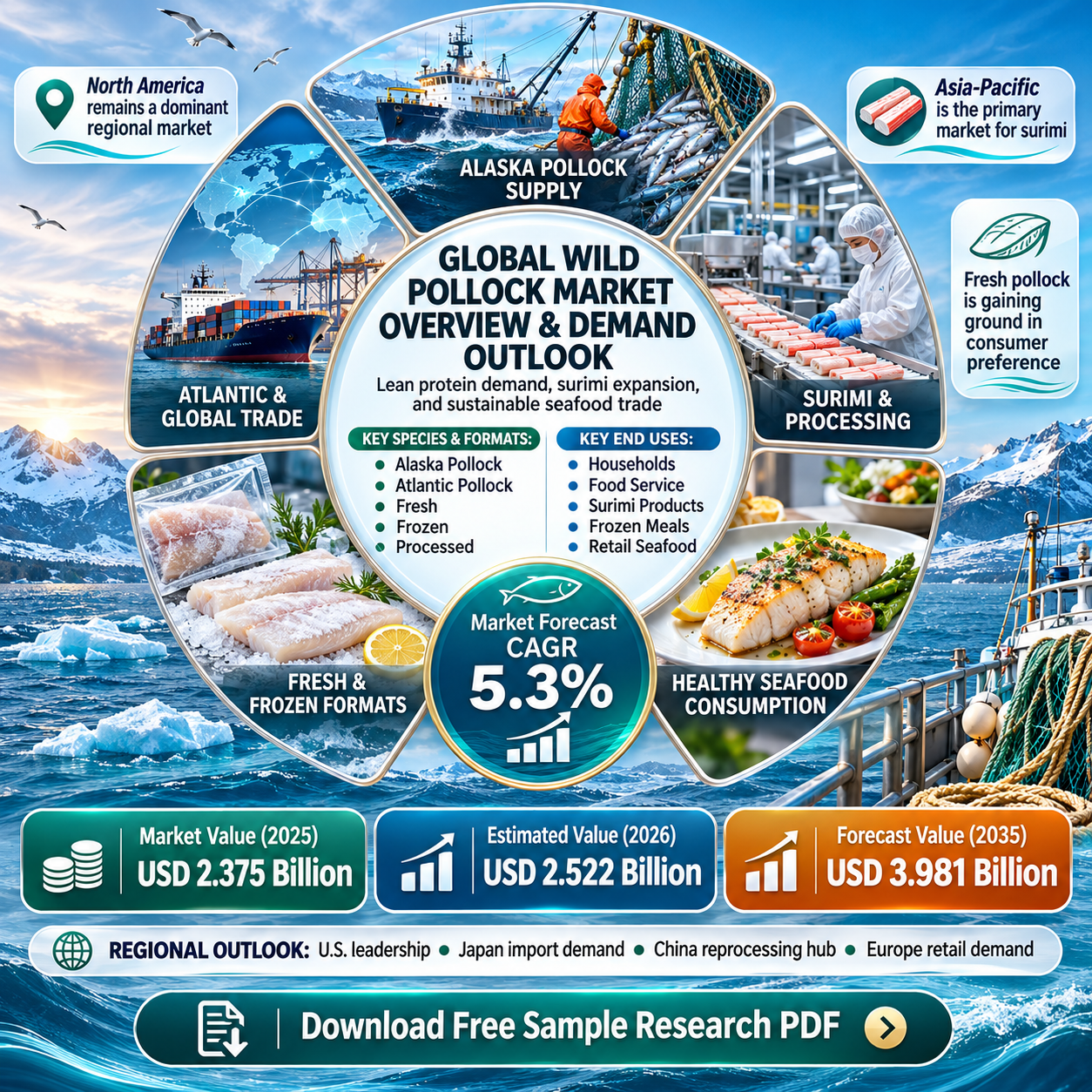
The global wild pollock market is projected to reach USD 3.98 billion by 2035, up from USD 2.28 billion in 2024, expanding at a 5.3% CAGR during the forecast period, according to Fact.MR. The market is estimated at USD 2.52 billion in 2026, with demand supported by growing consumer preference for lean protein, increasing consumption of omega-3-rich seafood, and rising use of pollock in surimi, frozen meals, and foodservice products.
Wild pollock is also benefiting from its positioning as a lower-cost alternative to cod. Its mild flavor and versatility allow processors to supply frozen fillets, breaded products, seafood sticks, surimi, and ready-to-cook formats across retail and foodservice channels.
Request full Report Pricing and sample Report: https://www.factmr.com/connectus/sample?flag=S&rep_id=2086
Wild Pollock Market Outlook
Health-conscious consumers are increasingly seeking seafood that provides high protein with relatively low fat. Wild pollock meets this demand while also offering omega-3 fatty acids, supporting its use in health-oriented diets.
Sustainability is another important purchasing factor. Alaska pollock harvested through certified fisheries can benefit from Marine Stewardship Council (MSC) credentials, helping suppliers address growing consumer interest in responsibly sourced seafood. Traceability and origin labeling are becoming increasingly important as retailers and consumers seek greater visibility into seafood supply chains.
Demand from Asia is also supporting market expansion through the growing production and consumption of surimi. Wild pollock is widely used in seafood sticks, processed seafood products, and other surimi-based applications. Convenient frozen and ready-to-cook products are further supporting consumption across North America and Europe.
However, climate change and warming ocean conditions can affect fishing yields and seasonal availability. Catch quotas, sustainability regulations, price fluctuations, and competition from plant-based seafood alternatives remain important challenges for producers and processors.
Alaska Pollock Maintains a Strong Market Position
Alaska pollock remains the dominant species within the wild pollock market, supported by its abundance, mild flavor, versatility, and sustainability credentials. Primarily harvested from the Bering Sea and North Pacific, it is widely used in frozen and processed seafood applications.
Fresh pollock is also gaining attention as consumers seek minimally processed seafood and chefs increasingly prioritize traceable ingredients. Its shorter shelf life, however, requires reliable cold-chain infrastructure, making fresh formats more suited to coastal and well-developed urban markets.
Household consumption is another important demand channel. Consumers are incorporating pollock into dishes such as baked fillets, fish tacos, and stir-fries as they seek affordable sources of lean protein for home cooking.
United States Remains a Key Production and Supply Hub
North America, particularly the United States, remains a dominant region for wild pollock. Most U.S. production comes from Alaskan waters, supported by regulated fisheries, scientifically managed quotas, and established processing infrastructure.
The United States also supplies significant quantities of surimi-grade pollock to Asian markets, including Japan and South Korea. Technology adoption is becoming increasingly relevant, with AI-based tools for bycatch reduction, precision trawl equipment, and digital traceability platforms supporting more efficient fishing and supply-chain management.
Japan remains a major consumer and importer, particularly for pollock roe and surimi products. China plays a different role by importing pollock for high-volume processing and re-export through established seafood-processing hubs such as Qingdao and Dalian.
Competitive Landscape
Competition in the wild pollock market centers on securing sustainable fishing quotas, maintaining traceable supply chains, optimizing processing costs, and developing convenient seafood formats.
Key companies profiled by Fact.MR include Norebo Holding, Russian Fishery Company, Trident Seafoods, Eastern Fish Company, Glacier Fish Company LLC, American Seafoods Group, Ocean Peace, Inc., and Aleutian Spray Fisheries.
Product innovation is increasingly focused on convenience and health positioning. In March 2024, GAPP partnered with Trident Japan to promote Kanikama surimi products made from Wild Alaska Pollock in Costco Japan stores. In September 2023, Gorton's introduced Air Fried Wild Alaska Pollock Fillets at Sam's Clubs, targeting consumers seeking convenient seafood with reduced oil content.
To View Related Reports
https://sportgalax.com/read-blog/27513
https://afgbfh.blogspot.com/2026/11/global-reinforced-thermoplastic-pipes.html
About Fact.MR
Fact.MR is a market research and competitive intelligence provider delivering market intelligence, competitive analysis, and forecasting across global industries. Its research helps businesses evaluate market demand, understand competitive developments, and identify growth opportunities.

 English
 Arabic
 French
 Portuguese
 Deutsch
 Turkish
 Dutch
 Italiano
 Russian
 Romaian
 Portuguese (Brazil)
 Greek