


Geocell DOT Approved: What Contractors Should Check Before Project Use
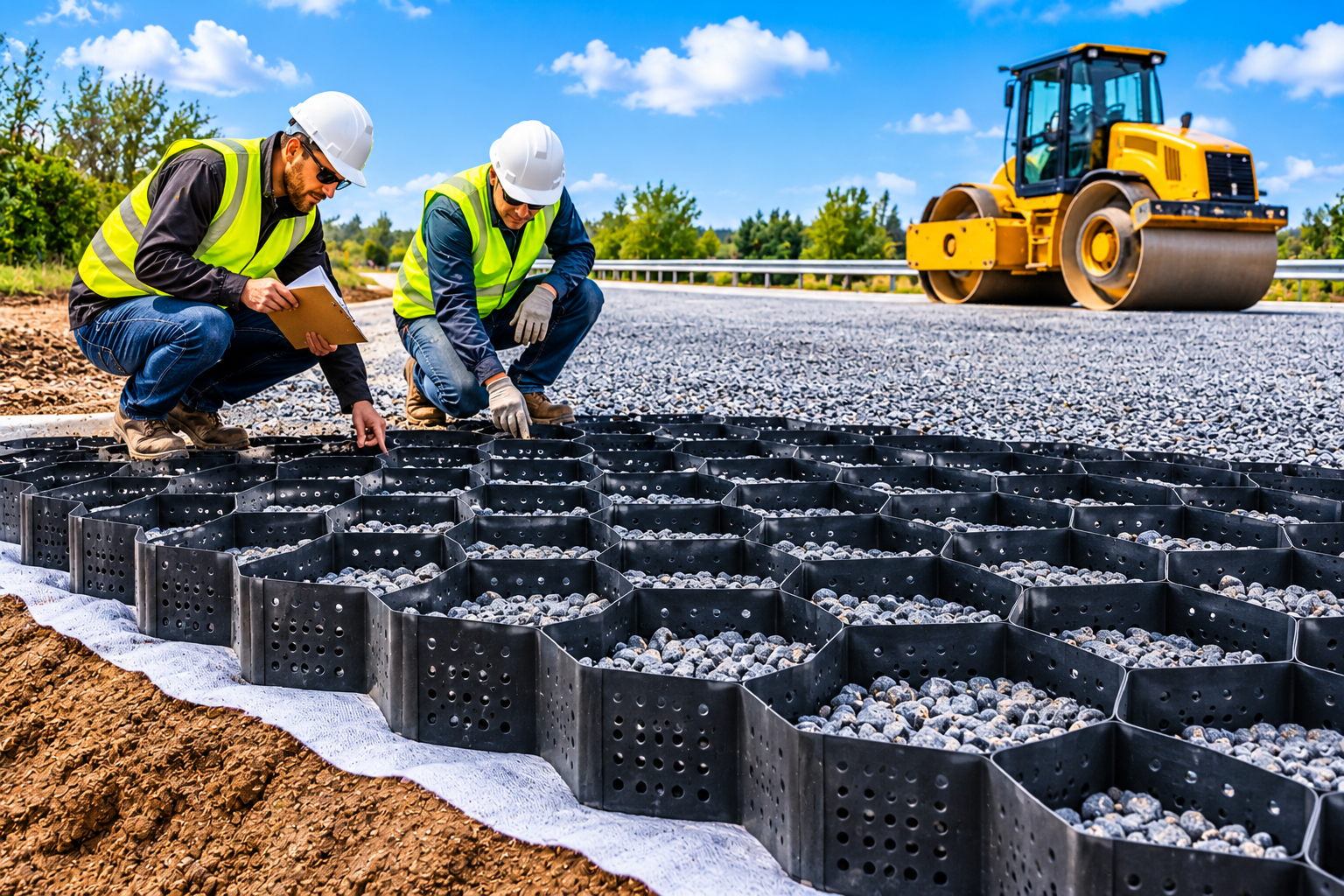
Construction projects involving roads, parking areas, access routes, and ground stabilization require materials that can handle demanding site conditions. Contractors and engineers must consider soil strength, vehicle loads, drainage, durability, and applicable construction standards before selecting a ground reinforcement system.
One technology gaining attention in civil engineering is geocell. It uses a three-dimensional honeycomb structure to confine infill materials and improve foundation stability.
However, when searching for geocell DOT approved products, contractors should understand an important point: not every geocell product automatically has approval from every Department of Transportation (DOT). Approval requirements vary by state, agency, application, and project specifications. Checking the product documentation and confirming compliance before installation can help avoid costly project delays.
What Does Geocell DOT Approved Mean?
DOT approval generally refers to a product or material being accepted for use under the requirements of a particular transportation department or public infrastructure project.
Geocell products may be considered for applications such as road construction, embankment stabilization, erosion control, and access roads. However, acceptance depends on the agency's material requirements, engineering specifications, and supporting test documentation.
A product being manufactured from high-density polyethylene (HDPE) does not automatically make it DOT approved.
Contractors should verify the following before selecting a product:
-
Applicable state DOT material specifications.
-
Product technical data sheets.
-
Independent testing reports.
-
Material strength and durability information.
-
Project-specific engineering requirements.
-
Written acceptance or approval from the responsible agency when required.
These checks help ensure the selected system meets the actual requirements of the project.
Why Are Contractors Considering Geocell for Road Construction?
1. Improved Ground Stabilization
Weak soil can create problems for roads and construction surfaces. Repeated vehicle movement may cause rutting, uneven surfaces, and aggregate displacement.
Geocell panels create interconnected cells that confine infill materials. This confinement helps limit sideways movement and distribute loads across a wider area.
When properly designed, the system can improve the performance of road foundations, access routes, and other ground stabilization applications.
2. Better Load Distribution
Heavy vehicles place significant pressure on road surfaces. Without a suitable foundation, repeated loading can gradually damage the supporting soil.
Geocell technology helps distribute applied loads through the confined infill structure. BaseCore HD Geocell is designed with increased panel height to support load distribution across the foundation.
The appropriate panel height and cell dimensions should be selected according to soil conditions, wheel loads, and engineering calculations.
3. Improved Drainage Performance
Water is one of the major challenges in road construction. Poor drainage can weaken the foundation and contribute to surface deterioration.
BaseCore HD Geocell panels feature perforations that allow water to pass between cells. When used with suitable permeable aggregate and an appropriate drainage design, the system can help reduce water pooling.
Proper site grading and drainage planning remain essential for long-term performance.
Important BaseCore HD Geocell Specifications
Choosing the right geocell requires more than looking at the product name. Contractors should review technical specifications to determine whether the system is suitable for their application.
HDPE Material Construction
BaseCore HD Geocell uses high-density polyethylene (HDPE). This geosynthetic material is designed for ground reinforcement applications and offers flexibility during transportation and installation.
The material specifications and test reports should be reviewed to confirm suitability for the intended project.
Multiple Panel Height Options
According to BaseCore, its HD Geocell panels are available in heights ranging from 2 inches to 8 inches.
Different panel heights and cell dimensions can support different foundation requirements. The correct configuration depends on expected traffic, soil strength, and the required load-support performance.
Testing and Technical Documentation
BaseCore provides technical data sheets and information about industrial product testing. Its website also describes UV resistance and testing related to load support and other applications.
Contractors working on public infrastructure should request the relevant documentation and compare the reported test methods and results against the applicable DOT specifications.
How to Select the Right Geocell for DOT Projects
1: Understand the Project Requirements
Start by reviewing the project drawings, soil investigation reports, traffic requirements, and applicable DOT specifications.
Identify the expected vehicle loads and the type of ground stabilization required.
2: Review Product Documentation
Request technical data sheets, material properties, testing reports, and installation instructions from the manufacturer.
Check whether the available documentation addresses the specific requirements of the project.
3: Evaluate Load Requirements
Consider wheel loads, traffic frequency, subgrade strength, and infill material. A geotechnical or civil engineer should determine the appropriate geocell configuration.
4: Confirm Agency Acceptance
Before purchasing materials for a public infrastructure project, confirm whether the relevant state DOT or project authority accepts the proposed product.
Never assume that approval in one state or application automatically applies elsewhere.
5: Follow Proper Installation Procedures
Prepare the subgrade, install geotextile when required, expand and secure the panels, and fill the cells using approved materials.
Proper installation is essential to achieving the expected performance of the complete foundation system.
Where Can Geocell Be Used?
Depending on engineering requirements and agency acceptance, geocell systems can be considered for several applications:
-
Road construction and roadway foundations.
-
Commercial and industrial parking lots.
-
Heavy equipment access roads.
-
Slope protection and embankments.
-
Erosion control projects.
-
Driveways and ground reinforcement.
-
Construction access routes.
Each application requires suitable product selection and site-specific engineering.
Frequently Asked Questions
1. Is every geocell product DOT approved?
No. DOT acceptance depends on the relevant transportation agency, product documentation, material specifications, and intended application. Contractors should verify approval before using a product on a public project.
2. What material is used in BaseCore HD Geocell?
BaseCore HD Geocell is manufactured using high-density polyethylene (HDPE). Contractors should review the product's technical data sheets for detailed material properties.
3. Can geocell support heavy vehicle traffic?
Geocell systems can be designed for applications involving heavy vehicles. However, the panel specifications, infill, subgrade, and complete foundation design must meet the expected loading requirements.
4. What documents should contractors request before using geocell on a DOT project?
Contractors should request technical data sheets, material testing reports, installation instructions, relevant certifications, and written agency acceptance where required.

 English
 Arabic
 French
 Portuguese
 Deutsch
 Turkish
 Dutch
 Italiano
 Russian
 Romaian
 Portuguese (Brazil)
 Greek