


How to Remove Moldy Smell From Drywall Without Hiding the Problem
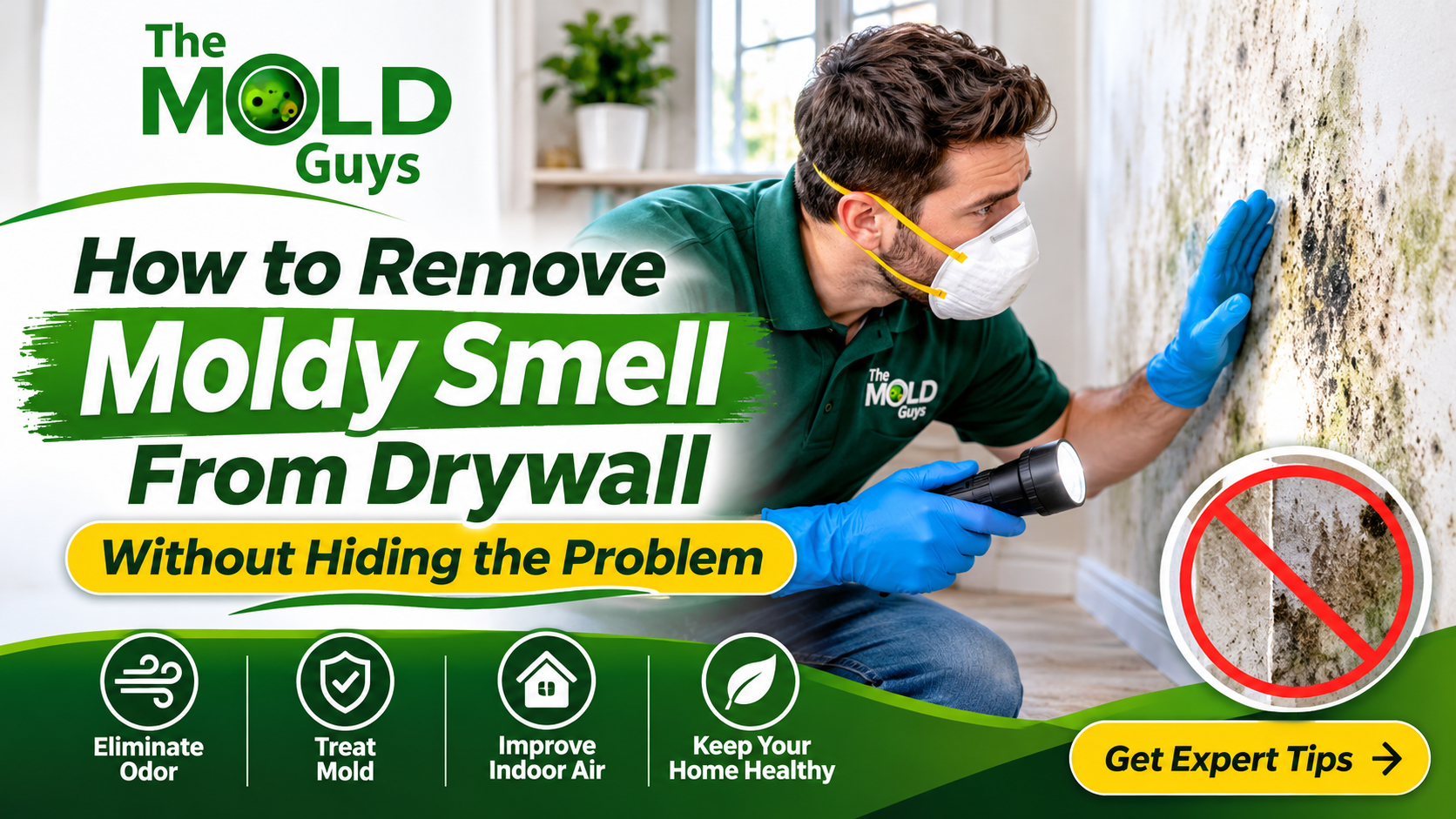
A musty smell is easy to notice and hard to ignore. Most people reach for an air freshener first. Some try a spray or a fresh coat of paint. The odor often returns within days because it is only a symptom and the cause is still sitting in the wall. This guide explains how to remove moldy smell from drywall by dealing with the source instead of covering it. It covers why drywall holds odor, how to confirm mold, what you can clean on your own, when drywall has to be replaced, and what a professional job includes. It ends with simple habits that keep the smell from coming back.
The Quick Answer
A musty smell from drywall almost always points to moisture. Mold grows on the paper face of drywall when it stays damp and the smell comes from the gases it gives off. You can clean a small surface spot on sealed and painted drywall yourself once the water source is fixed. You cannot clean your way out of mold that has soaked into soft or wet drywall. That material needs to be cut out and replaced.
If the smell stays after cleaning or you find damp or crumbly spots, bring in help. A wall that stays wet or keeps smelling is a job for trusted mold removal services rather than another bottle from the hardware store. The sections below explain how to tell which situation you are in.
Why Drywall Holds a Musty Odor
Drywall looks solid but it behaves more like a sponge. A gypsum core is wrapped in paper on both sides and that paper is organic material. Mold feeds on organic material so a damp sheet of drywall gives it everything it needs.
How Mold Grows on Paper and Gypsum
Mold spores are in every home. They are harmless while they stay dry and dormant. When humidity stays high or a leak keeps the wall wet for more than a day or two the spores settle on the paper facing and start to grow. As the colony spreads it releases gases called microbial volatile organic compounds. Those gases are the damp and earthy smell you notice in the room.
Growth often starts where you cannot see it. The back of the wall board, the cavity behind the drywall, and the bottom edge near the floor stay wet longer than the painted surface. By the time a stain appears the colony may already be well established.
Why the Smell Lingers After You Wipe the Wall
Gypsum and paper are porous so they absorb both moisture and odor. Wiping the surface removes what sits on top but leaves whatever has soaked in. The wall keeps releasing that smell, especially on humid days or when the air conditioner cycles off. Insulation, wood studs, and baseboards behind the wall can hold moisture too, which is why one patch of cleaning rarely fixes a strong odor.
A smell with no visible mold is useful information. It usually means growth is hidden. Treat it as a reason to investigate rather than something to mask.
Common Moisture Sources Behind the Wall
Mold needs water first. Remove the water and the mold loses its supply. Skip that step and any cleanup will fail within weeks. A few sources show up again and again in Florida homes.
Plumbing and Roof Leaks
Slow leaks are the most common cause. A supply line behind a sink, a loose shower valve, a washing machine hookup, or a drain that weeps a little each day can keep a wall damp for months. Roof and flashing leaks do the same thing from above. Water runs down inside an exterior wall and shows up as a stain or a smell far from the actual leak.
AC Condensation and Humidity
Air conditioning systems create a lot of water. A clogged condensate line can overflow into a ceiling or wall. Cold ductwork in humid air can sweat enough to wet nearby drywall. Gulf Coast humidity adds to the problem because closets, garages, and rooms where the AC runs on a timer can stay damp all summer even with no leak at all.
Storm Water and Old Water Damage
Flooding and wind driven rain are part of life in Southwest Florida. Water that gets into a wall during a storm and is never fully dried can feed mold long after the weather clears. The same goes for an old repair that looked finished on the surface while the cavity stayed wet.
How to Confirm Mold Is Behind the Smell
You do not need special equipment to start. A flashlight and a few minutes of careful looking will tell you a lot. A moisture meter helps if you own one.
What to Look For
Walk the room slowly and notice where the smell is strongest. Baseboards, corners, closet walls, and the area under windows are common trouble spots. Look for discoloration, bubbling or peeling paint, warped sections, and dark or fuzzy patches. Hold the flashlight at a low angle against the wall because it shows changes in texture that are hard to see in normal light.
Press gently on suspect areas. Drywall that feels soft, crumbly, or cool and damp has been compromised. Also check the other side of the wall. A bathroom, kitchen, or attic space behind the smell often shows where the water is coming from.
What to Measure
A basic hygrometer from a hardware store shows the humidity in your home. The EPA suggests keeping indoor humidity between 30 and 50 percent. Readings above 60 percent for long stretches create the right conditions for growth. If the numbers look fine but the smell is strong a hidden leak is the likelier cause, and a professional inspection with moisture mapping can find it without opening the wall.
What You Can Clean Yourself
Being fair to the do it yourself approach, a small patch of surface mold on sealed and painted drywall can often be handled by a careful homeowner. The EPA draws the general line at about 10 square feet. Anything larger or anything caused by sewage or contaminated water should go to a professional.
Safe Steps for a Small Spot
Fix the water source first or the spot will return. Put on an N95 respirator along with gloves and goggles because disturbed spores irritate the lungs and eyes. Close off the room and shut down fans and the HVAC while you work so spores do not travel through the house.
Wipe the area with a damp cloth and a mild detergent solution. Do not soak the wall because extra water pushes moisture deeper. Then dry the area completely with a dehumidifier and a fan aimed at the wall for at least 48 hours. Seal the used cloths in a bag and take them outside.
Why Bleach Is a Poor Choice for Drywall
Household bleach is mostly water. A porous surface absorbs that water and leaves the roots of the mold alive. You end up with a clean looking wall and a problem that returns. The fumes also irritate the lungs and bleach mixed with ammonia or vinegar creates a toxic gas.
Choosing a Cleaner
People often ask about the best mold remover for drywall and the honest answer is that no single product fixes every case. For light growth on painted drywall a detergent solution does most of the work and some products labeled for mold cleanup help lift stains. None of them can reach mold inside the paper layer or the wall cavity. A cleaner treats what it touches. It does not dry a wall or repair a leak.
Read the label before you buy. Check that the product is meant for the surface and what ventilation it needs. Be cautious with anything that promises instant results or leaves a protective film because a film can hold moisture against the wall and hide early warning signs.
Why Covering the Smell Makes Things Worse
Masking an odor feels productive because the room smells better for a while. The mold keeps growing the whole time.
Paint and Primer
Ordinary paint and even stain blocking primer seal the surface and trap moisture against the drywall. The growth continues underneath. Within a few months you often see bubbling paint, new stains, or the same smell pushing through. By then the damage reaches deeper into the wall and the repair costs more.
Sprays, Candles, and Ozone Machines
Air fresheners and scented candles change what you smell for an hour or two and nothing more. Ozone machines and fogging products may dull the odor briefly but they do not remove the growth and high ozone levels can irritate the lungs. If you ever sell the home an inspector with a moisture meter will find the problem anyway.
Hidden moisture also weakens drywall and framing and ruins insulation. People with allergies or asthma may notice coughing or congestion in rooms with active mold. A small repair becomes a large one when it is left alone.
When Drywall Has to Be Replaced
Cleaning only works on surfaces that mold sits on. Once growth reaches the paper and gypsum wiping cannot get to it. Replacement is the right call when the wall has stayed wet for more than a day or two or when the material is soft, sagging, crumbling, or stained all the way through. It also applies when mold shows up on both sides of the wall or behind wallpaper, baseboards, or cabinets. An affected area larger than about 10 square feet and an odor that stays after cleaning point the same way.
Professional crews cut out the damaged section along with a margin past the visible edge so no contaminated material stays behind. They bag it before carrying it out because dragging loose debris through the house can spread spores to clean rooms. New drywall goes in only after the cavity is completely dry and the moisture source has been repaired.
What Professional Mold Removal Includes
The Mold Guys describe a four step process on their mold removal page. It shows why professional work solves the odor instead of quieting it for a few weeks.
Assessment and Containment
A certified technician inspects the site and looks for the moisture source. The technician defines the scope of the job and provides a bid. Testing is recommended only when it adds value and the reason is explained first. Before work begins the crew sets up barriers and negative air pressure so spores do not drift into the rest of the home. Fans and the HVAC may be shut off during the work.
Removal and Air Filtration
Salvageable surfaces are cleaned and treated. Soaked drywall, insulation, and carpeting are removed and disposed of. HEPA vacuums and air scrubbers capture airborne spores and fine dust so the air in the home is cleaner when the crew leaves than when they arrived.
Drying and Repair
Removal is only half of the job. A wall that grew mold almost always got wet first so the drying and rebuilding stages matter as much as the cleanup. Mold and water damage repair work dries the structure, corrects the source, and restores the wall so the problem does not start again. The leak or humidity source is shown to the homeowner so the fix makes sense.
Soft Items Near an Affected Wall
A musty wall rarely keeps its smell to itself. Clothes in a closet against an affected wall, towels in a bathroom cabinet, and fabric stored in a garage all soak up the same odor and sometimes show spotting.
Cleaning Clothes and Fabric
A mould stain on clothes usually looks like small gray, green, or black freckles near seams and hems and it often comes with that damp smell. Act quickly because the longer fabric stays damp the more the stain sets. Take the items outside and shake them out so loose spores do not land on other surfaces. Wash in the hottest water the care label allows and add a cup of white vinegar to the rinse cycle. Never combine it with bleach.
Dry the items fully in sunlight or on a high heat setting if the fabric can handle it because damp fabric invites regrowth. Send delicate or valuable pieces to a dry cleaner. Discard anything badly affected or anything that still smells after two washes.
Checking the Wall Behind Them
If spotting keeps appearing on items stored in the same closet the wall is likely still wet and the fabric is only a signal. Press on the wall behind the clothes and look along the baseboard. Fix that source before you put clean items back.
How to Keep the Odor From Coming Back
Once the wall is dry and repaired a few habits protect it. Keep indoor humidity between 30 and 50 percent with your air conditioner and add a dehumidifier to closets or rooms with low airflow. Dry any wet area within 24 to 48 hours because the first two days matter most.
Run bath exhaust fans during showers and for about 20 minutes afterward. Make sure they vent outdoors and not into the attic. Have your AC serviced each year and check that the condensate line drains freely. Leave a few inches between furniture and exterior walls so air can move. After storms look over the roof, windows, and gutters. Every few months check under sinks and around appliances for slow leaks.
Common Mistakes to Avoid
The first mistake is treating the smell instead of the source. The second is painting over a stain before the wall is dry. The third is using bleach on porous drywall. The fourth is cleaning without protective gear. The fifth is ignoring a smell that has no visible cause because hidden growth rarely goes away on its own.
Another common mistake is hiring a company that quotes a price over the phone without seeing the wall. Mold work depends on what sits behind the surface so an honest bid starts with an inspection.
Questions to Ask Before You Hire a Company
Not every company works to the same standard. A few questions help you tell the difference before anyone steps inside your home. When you compare trusted mold removal services look for a written scope of work and a clear bid after an on site visit. Ask whether they use containment, negative air pressure, and HEPA filtration. Ask how they find and show you the moisture source.
Ask for proof of licensing and insurance and about certifications such as IICRC. Ask whether the crew stays until the area has been confirmed safe and clean. Read recent reviews from sources you can verify such as Google and HomeAdvisor. Request the answers in writing so you can compare companies on equal terms.
Working With The Mold Guys
The Mold Guys are a Florida mold assessment and remediation company based in Venice. They serve homes and businesses across Southwest and Central Florida from Tampa to Naples and have more than 25 years of experience. Their services include mold inspection and testing, mold removal, and water damage restoration. The team is available around the clock for emergencies.
If a spot keeps coming back or the smell lingers after you clean you can call (941) 416 4113 or send a message through the contact page. Bring photos of the wall and note where the smell is strongest. That information helps the team plan the visit and give you a fair bid.
Final Thoughts
A musty smell in drywall is a signal that something is wet. Covering it with paint or fragrance only delays the repair and often makes it larger. Find the moisture source first. Clean small surface spots with care and replace any drywall that is soft or soaked through. For larger areas or odors with no visible cause rely on professionals who contain the work and finish the job properly. Mold and water damage repair that includes complete drying is what keeps the smell from returning.
Frequently Asked Questions
Q: Why does my wall smell musty even though I cannot see mold?
A: A musty odor usually means mold or moisture is hiding inside the wall, under paint, or behind baseboards. The gases from growth travel through drywall long before stains show. Check for leaks, humidity, and soft spots and consider a professional inspection if the smell stays.
Q: Can I paint over moldy drywall to stop the smell?
A: No. Paint and primer trap moisture against the wall which lets mold keep growing underneath. The smell and stains usually return within a few months. Clean small surface spots, fix the moisture source, and replace any drywall that is soft or soaked through.
Q: What is the best mold remover for drywall?
A: For light surface growth on sealed drywall a mild detergent and water solution works well. No product reaches mold inside the paper or gypsum. If the wall is soft, wet, or the patch is larger than 10 square feet removal beats cleaning.
Q: How do I treat a mould stain on clothes that came from a musty closet?
A: Shake the clothes outside and wash them in the hottest water the care label allows with a cup of white vinegar in the rinse. Dry fully in sunlight or on high heat. Check the closet wall because a wet wall will stain the next batch.
Q: When should I call a professional about a musty wall?
A: Call when the affected area is larger than about 10 square feet, the drywall is wet or soft, mold returns after cleaning, or the smell stays without a visible cause. Water from sewage or flooding should always go to professionals.

 English
 Arabic
 French
 Spanish
 Portuguese
 Deutsch
 Turkish
 Dutch
 Italiano
 Russian
 Portuguese (Brazil)
 Greek