


Which Composite Mould Features Matter for Industrial Projects?
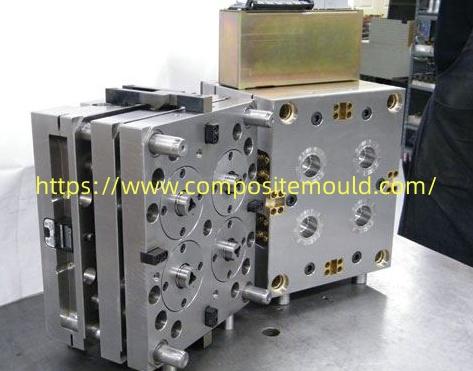
Composite Mould selection requires careful evaluation when developing reinforced industrial components for automotive, electrical, construction, and transportation applications. For overseas buyers, purchasing decisions should involve more than comparing quotations. Tool structure, production methods, equipment compatibility, material requirements, and long-term maintenance arrangements can all influence manufacturing results. As a manufacturer, compositemould works with customers to review technical drawings and production conditions before developing customized tooling solutions.
Prepare Complete Product Information
A successful tooling project begins with a clear understanding of the intended product. Buyers should prepare technical drawings, three-dimensional models, dimensional tolerances, wall thickness information, and functional requirements.
These documents help engineers evaluate product geometry and identify areas that may require additional design consideration.
For example, components with curved surfaces, reinforcing ribs, mounting holes, and deep cavities may require specific structural arrangements. Parting line positions, draft angles, and internal details should also be reviewed during the engineering stage.
Buyers should explain the intended application and expected production quantity. This information allows manufacturers to evaluate whether the project is intended for sample development, small-batch manufacturing, or continuous industrial production.
Providing accurate information at the beginning can make technical discussions more efficient and reduce unnecessary design changes.
Examine Material Selection and Structural Strength
Tooling materials should be selected according to working conditions, production requirements, and expected service life.
Different steel grades have different mechanical properties, machining characteristics, and heat treatment requirements. Buyers should ask manufacturers about proposed material specifications and whether they match the intended manufacturing conditions.
Structural design also deserves attention. Cavity depth, wall thickness, insert arrangements, supporting structures, and parting surfaces can influence machining complexity and operational requirements.
For projects involving large components, engineers may need to consider structural support and deformation under operating pressure.
Before approving the design, purchasing teams should request relevant technical information and confirm that the proposed construction matches the application.
Confirm Compatibility With Production Equipment
Customized tooling must fit the customer's available production equipment. Differences in press dimensions, clamping systems, opening height, and heating connections may affect installation and operation.
Buyers should provide the following information:
Press working area and available capacity
Maximum operating temperature
Required pressure conditions
Heating and cooling arrangements
Installation dimensions and connection details
Available space for loading and unloading
For projects using heated compression processes, temperature control and distribution should also be reviewed.
These details help engineers evaluate the relationship between the tool structure and the customer's production machinery. Confirming compatibility before manufacturing can reduce the possibility of modifications after delivery.
Review Material Flow and Venting Arrangements
Material movement inside the cavity can influence the formation of finished components. Product geometry, resin characteristics, reinforcement distribution, temperature, and pressure may all affect filling behavior.
Buyers should discuss how engineers plan the cavity structure and identify areas where material movement may become difficult.
Air evacuation is another important consideration. Trapped air can contribute to surface defects, incomplete filling, or internal irregularities, depending on processing conditions.
The venting structure should therefore be considered during engineering development rather than treated as an afterthought.
For complicated products, buyers can provide sample parts or reference drawings to help engineers evaluate potential filling difficulties and discuss suitable structural adjustments.
Evaluate Surface Finishing and Demolding
The appearance of a finished part may influence machining and polishing requirements.
Some industrial applications require smooth external surfaces, while others involve specific textures or additional finishing processes. Buyers should explain their expectations clearly before production begins.
Release arrangements are equally important. Draft angles, ejector positions, surface conditions, and component geometry can affect removal after molding.
For products with deep cavities or detailed structures, engineers should evaluate whether the proposed release arrangement is suitable for repeated production.
It is also helpful to discuss access for cleaning and routine maintenance. Removable inserts and accessible working areas may simplify certain servicing tasks.
Establish Sample Testing and Inspection Standards
Before approving completed tooling, buyers should establish a clear sample testing and acceptance procedure.
Trial production allows both parties to evaluate actual manufacturing conditions and identify possible adjustments.
The inspection plan may cover:
Overall dimensions and critical tolerances
Surface appearance and finishing conditions
Material filling and curing behavior
Flash conditions and release performance
Compatibility with assembly requirements
Buyers should also confirm how inspection results will be documented and how design changes will be approved.
If a sample requires modification, updated drawings and technical records can help maintain consistency throughout the development process.
Clear acceptance requirements make communication easier and provide a reference for evaluating the completed project.
Compare Manufacturing Services and Project Costs
When comparing suppliers, buyers should look beyond the initial quotation. Engineering support, machining capabilities, material selection, inspection procedures, sample development, and delivery arrangements should all be considered.
It is useful to ask whether the manufacturer can coordinate design review, machining, assembly, surface finishing, and trial production within its production workflow.
Future maintenance and product modifications should also be discussed. Certain projects may require replaceable inserts, revised cavity structures, or additional configurations when product designs change.At compositemould, discussions about technical drawings, equipment parameters, production quantities, and customization requirements help establish a clearer manufacturing plan. Buyers should also confirm production schedules, packaging details, documentation, and communication arrangements before placing an order.For businesses developing automotive components, electrical housings, transportation parts, and industrial products, careful preparation can help organize tooling procurement and production planning. Visit https://www.compositemould.com/product/ to review available products and contact the manufacturing team about your drawings, technical specifications, and customized tooling requirements.

 English
 Arabic
 French
 Spanish
 Portuguese
 Deutsch
 Turkish
 Dutch
 Italiano
 Russian
 Romaian
 Portuguese (Brazil)