


Precision Drive Technology for Linear Movement
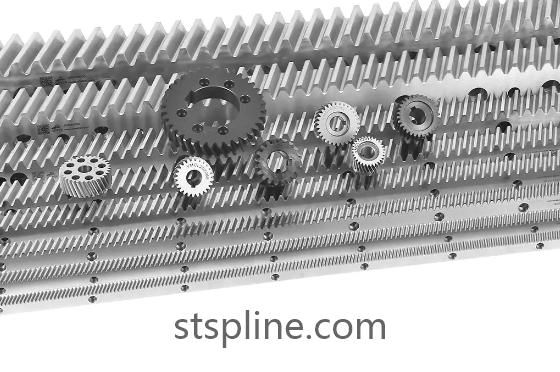
Linear movement is an essential function in modern industrial machinery. From CNC machining centers to automated handling equipment, machines require mechanical structures that can move components along controlled paths. A Rack And Pinion Linear Slide combines a rack and pinion transmission mechanism with a linear guidance arrangement to support this type of movement. The system connects rotational power with straight-line displacement while allowing machine designers to configure the sliding structure according to their equipment requirements.
The rack and pinion mechanism consists of a straight toothed rack and a circular pinion gear. When the pinion rotates, its teeth engage with the rack and generate linear movement. Depending on the machine design, the rack may be fixed to the supporting structure while the pinion moves with the sliding assembly. Alternatively, the rack can travel while the pinion remains mounted in a fixed position. Both configurations can be considered according to the equipment layout, available installation space, and required movement direction.
The linear slide structure performs a different but complementary function. While the rack and pinion transmit mechanical power, the guide components support and direct the movement of the machine assembly. Linear guides, rails, carriages, and supporting surfaces help maintain the intended travel path. Their arrangement should be coordinated with the transmission mechanism to avoid unnecessary mechanical interference and uneven loading. The complete assembly therefore needs to be considered as an integrated motion system rather than a collection of independent components.
Material selection influences the manufacturing and operating characteristics of the system. Steel is commonly used for rack components because of its mechanical properties and suitability for gear machining. Depending on the application, carbon steel or alloy steel may be considered. Linear guide components may use different materials and surface treatments according to their structural functions. The selection process should account for operating loads, environmental conditions, lubrication requirements, and compatibility between the assembled components.
Manufacturing accuracy is particularly important for the rack and pinion pair. Tooth pitch, profile geometry, straightness, and surface condition influence how smoothly the components engage during movement. Depending on the product design, rack teeth may be produced through cutting, milling, grinding, or other suitable machining processes. The pinion must have compatible tooth geometry to maintain proper engagement throughout the working range. Consistent inspection helps identify dimensional deviations that could affect assembly and operation.
The relationship between the rack and linear guide system also requires attention during mechanical design. The transmission force should be transferred through an appropriate structural arrangement, while the guide components maintain the movement direction. If the rack is mounted at an unsuitable position or the supporting structure lacks sufficient stability, the system may experience uneven loading. Machine designers should therefore coordinate rack placement, guide alignment, mounting surfaces, and motor installation before finalizing the equipment structure.
CNC machining centers are an important application area for rack-driven linear movement. Depending on their mechanical configuration, rack and pinion assemblies may be used to move machine structures along selected axes. The linear guidance system supports the moving assembly, while the transmission mechanism converts motor rotation into displacement. These components need to work together with the machine's control system, motor, and supporting frame.
Laser cutting machines also use linear motion systems to move cutting assemblies and machine structures. The arrangement of racks and guides depends on the equipment design and travel requirements. Industrial robots and truss manipulators provide additional applications, particularly where mechanical assemblies need to move between defined working positions. In automotive automation production lines and lithium battery manufacturing equipment, linear slides may support material handling, positioning, and automated processing operations.
Installation quality has a direct influence on the assembled system. Mounting surfaces should be properly prepared, and the linear guides should be aligned according to the equipment design. Rack sections must be installed with attention to straightness and tooth continuity. The pinion position should provide suitable engagement without unnecessary interference. When several rack sections are joined, alignment at the connection points deserves particular attention because inconsistent transitions may influence the movement of the sliding assembly.
Maintenance should cover both the transmission components and the linear guidance structure. Rack teeth and pinion surfaces require suitable lubrication according to the equipment manufacturer's recommendations. Linear guides may have separate lubrication and cleaning requirements. Dust, metal particles, and other contaminants can affect the sliding surfaces and gear engagement. Regular inspection helps identify unusual noise, increased resistance, loose fasteners, or visible wear before these conditions interfere with machine operation.
For equipment manufacturers, selecting a suitable supplier involves evaluating machining experience, product compatibility, inspection procedures, and customization capabilities. Buyers should provide technical drawings, installation dimensions, travel requirements, and information about the intended application. These details help manufacturers understand the relationship between the rack, pinion, and linear guide structure. It is also useful to confirm whether the supplier can provide matching gear components and customized rack lengths for the complete assembly.
A properly designed Rack And Pinion Linear Slide depends on the coordination of mechanical transmission, linear guidance, structural support, and manufacturing accuracy. Zhejiang Soter Transmission Technology Co., Ltd. has specialized in rack and gear manufacturing since 2006, providing transmission components for CNC machinery, laser cutting equipment, industrial robots, and automated production systems. Its production and inspection capabilities support customization according to customer drawings and samples. Buyers can explore the company's https://www.stspline.com/product/straight-teeth-rack/ for further product information.

 English
 Arabic
 French
 Spanish
 Portuguese
 Deutsch
 Turkish
 Dutch
 Italiano
 Russian
 Romaian
 Portuguese (Brazil)