


Loft Insulation Birmingham: What to Expect From a Professional Installation

Many homeowners know their loft needs better insulation but put off the job because they are unsure what it involves. Will the house be disrupted? Does the loft need emptying? What happens to stored belongings? Understanding the process makes it far easier to plan. Professional loft insulation Birmingham work is usually straightforward, with careful preparation and very little impact on daily life.
This guide walks through each stage, from the first survey to the finished loft, and explains how to prepare your home so everything runs smoothly.
Before the Work: The Survey
Every good installation starts with a survey. This visit helps the installer understand your loft and recommend the right solution.
What the Installer Checks
During the survey, the installer looks at several key areas:
- The depth and condition of any existing insulation
- Signs of damp, leaks or condensation
- The spacing and condition of the joists
- Cables, junction boxes and recessed downlights
- Water tanks and pipework
- Ventilation around the eaves
- Any boarded areas used for storage
Agreeing the Plan
Once the survey is complete, you receive a fixed quote. This should explain whether a top-up or full replacement is recommended, which material will be used and whether any other work is needed first.
How to Prepare Your Home
A little preparation helps the installation team work safely and efficiently. It also protects your belongings.
Clear the Loft
Remove stored items from the loft wherever possible, especially from the areas being insulated. If some belongings must stay, move them to one side so the team can reach the joists.
Clear the Area Below the Hatch
Move furniture and valuables away from the landing or room beneath the hatch. Installers will usually lay dust sheets, but a clear space makes access easier.
Mention Any Concerns
Tell the installer about any previous leaks, cracked ceilings or electrical work. These details help them plan around potential problems.
The Installation Process Step by Step
A professional installation follows a clear sequence. The table below summarises each stage.
| Stage | What happens | Why it matters |
|---|---|---|
| Protection | Dust sheets are laid around the hatch | Keeps your home clean |
| Preparation | Old damaged material is removed if needed | Gives a clean base for new insulation |
| Safety checks | Cables and downlights are identified | Prevents overheating and damage |
| First layer | Insulation is laid between the joists | Fills the main spaces evenly |
| Second layer | A layer is laid across the joists | Covers the timbers to reduce heat loss |
| Finishing | Eaves are checked and waste is removed | Keeps ventilation clear and the loft tidy |
Laying the First Layer
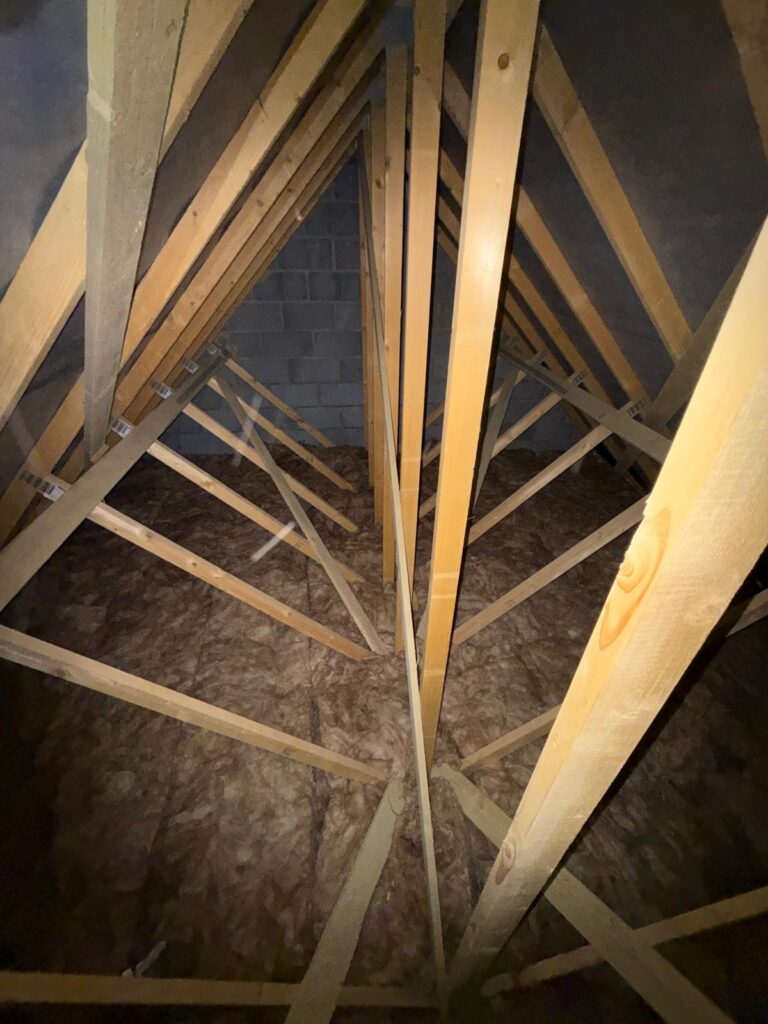
Mineral wool rolls are usually laid between the joists first. Installers make sure the material fits snugly, without gaps or compression.
Adding the Second Layer
A second layer is rolled across the joists, at right angles to the first. This covers the timbers, which would otherwise allow heat to escape, and brings the total depth up to the recommended 270mm.
Working Around Obstacles
Cables are kept on top of the insulation where possible, so they do not overheat. Recessed downlights are fitted with protective covers or loft lids, and water tanks and pipes are lagged to protect them from the colder loft.
Insulating Around Loft Storage
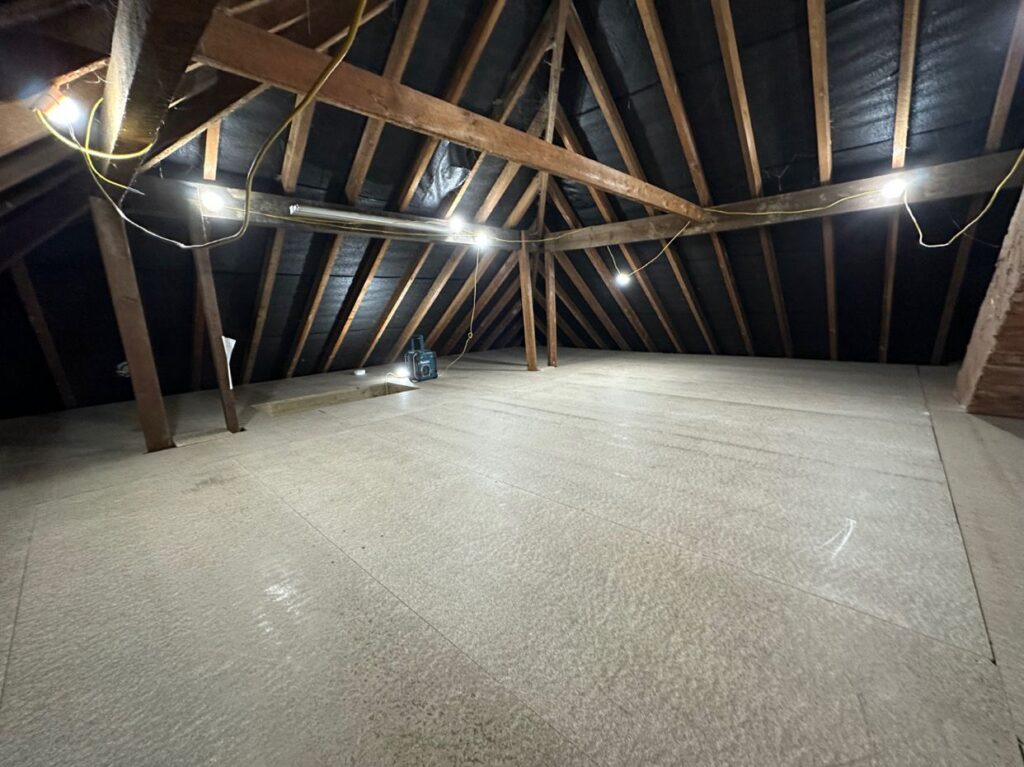
If your loft is already boarded for storage, you may not need to remove the floor. Insulation can be fitted around existing raised loft boards, and an experienced loft insulation Birmingham installer will explain the best approach for your loft.
However, boards fixed directly onto the joists squash any insulation beneath them. In this case, the installer may recommend lifting the boards and fitting raised supports, so the insulation can reach its full depth.
Keeping Ventilation Clear
Good ventilation is essential in an insulated loft. Once insulation is added, the loft becomes colder, which can increase the risk of condensation if air cannot move freely.
Professional installers keep the eaves clear, so fresh air can enter the roof space. In some lofts, they may use eaves ventilators to make sure insulation does not block the airflow.
After the Installation
Once the work is complete, the installer will clean up and remove all waste. Before they leave, it is worth checking a few things.
- Insulation is laid evenly with no obvious gaps
- The eaves remain clear for ventilation
- Cables sit safely above the insulation
- Tanks and pipes are lagged
- The hatch area has been left clean
Insulating the Hatch
The loft hatch is often forgotten. Adding insulation to the back of the hatch and a draught seal around its edge helps complete the job, as a bare hatch board lets warm air escape.
Looking After Your Insulation
Once installed, loft insulation needs very little attention. Still, a few simple habits will help it keep working well for many years.
Avoid Compressing It
Do not place boxes or other items directly on top of the insulation. If you need storage, use a raised floor that keeps the boards clear of the material.
Put It Back After Other Work
Electricians, plumbers and aerial installers sometimes move insulation to reach cables or pipes. After any work in the loft, check that the insulation has been replaced evenly with no gaps.
Check for Damp
Take a quick look once a year, and again after storms or roof repairs. Wet or stained insulation can point to a leak that should be fixed promptly.
Common Questions About Disruption
Most homeowners are pleased by how little disruption insulation work causes. The team works mainly inside the loft, so you can usually continue with your day as normal. There may be some noise as materials are carried through the house, and a little dust around the hatch, but professional teams protect the area and leave it tidy.
Why Choose a Professional Installer?
Mineral wool fibres can irritate skin, eyes and lungs, and working on narrow joists near electrical cables carries real risks. Mistakes such as blocking the eaves or covering downlights can also cause problems later.
A professional loft insulation Birmingham service reduces these risks. Reputable installers are fully insured, use the right protective equipment and follow good practice throughout. When comparing loft insulation Birmingham quotes, ask how each company will handle ventilation, cables and any existing boards.
Frequently Asked Questions
Do I need to be at home during installation?
Someone should be there to give access at the start and check the work at the end.
Do I need to empty my whole loft?
Ideally, yes, at least in the areas being insulated. Your installer will confirm what needs moving.
Will insulation be laid over my cables?
Cables are kept on top of the insulation where possible, to prevent overheating.
Can insulation go under my existing loft boards?
Insulation can be fitted around existing raised boards. Boards fixed directly to the joists may need lifting first.
Do I need planning permission?
No. Insulating a loft does not normally need planning permission.
Final Thoughts
Professional loft insulation is a simple, low-disruption way to make your home warmer. With a proper survey, a little preparation and careful installation, the job can be done neatly and safely.
If you are ready to insulate your loft, FIXIT Renovation offers loft insulation Birmingham homeowners can book with a free survey and a fixed, no-obligation quote.

 English
 Arabic
 French
 Spanish
 Portuguese
 Deutsch
 Turkish
 Dutch
 Italiano
 Russian
 Romaian
 Greek