


Your First Sound Bath: A Beginner's Guide to Sound Bath Meditation in Charlotte, NC
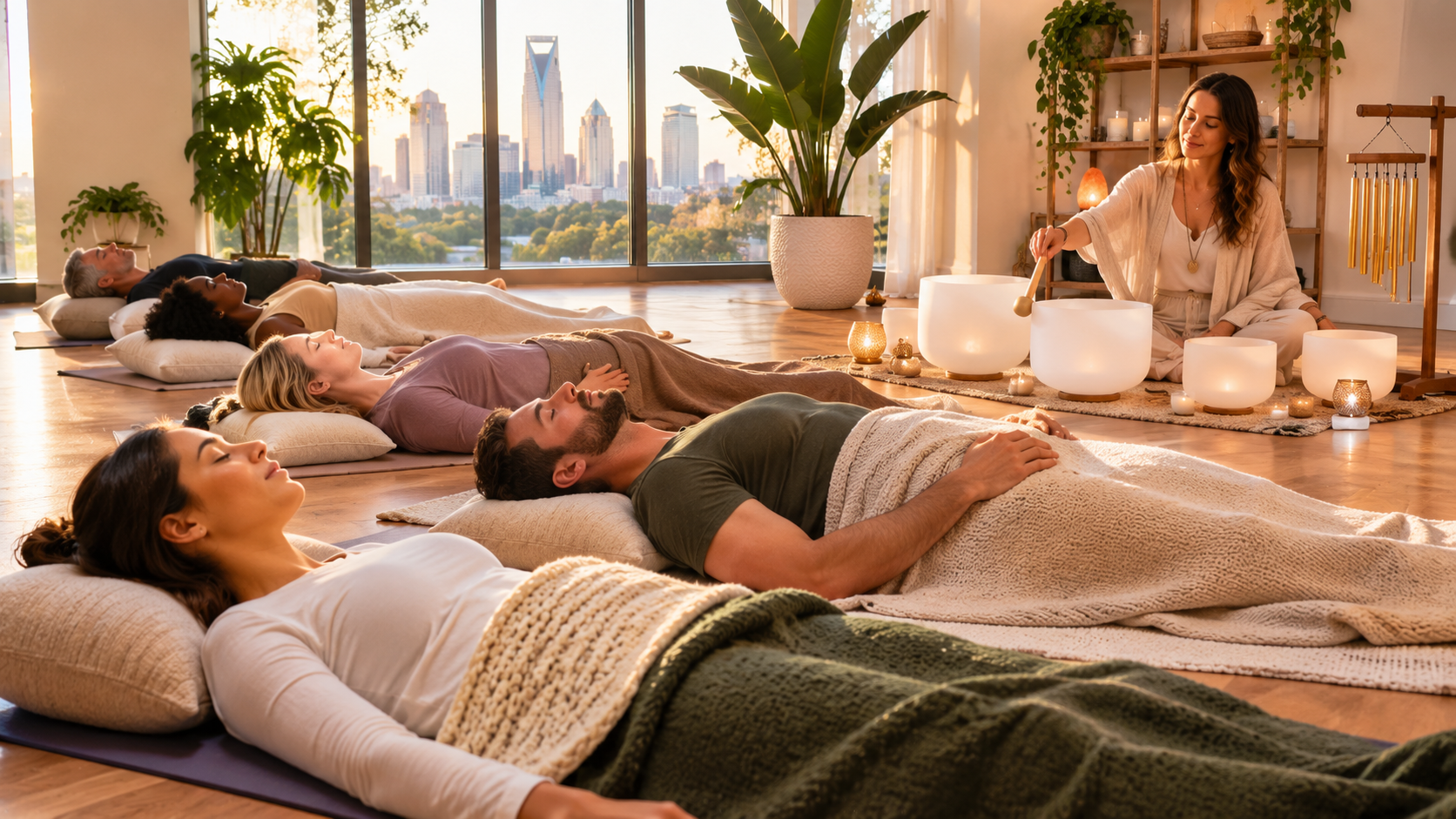
A sound bath is a guided relaxation session where you lie down and listen to slow, layered tones from instruments like crystal singing bowls and chimes, with no talking and nothing you have to do except rest. That's it. No experience, no special breathing, no sitting cross-legged for an hour.
I talk with a lot of people who are curious about sound baths but a little unsure. Some imagine something mystical. Others assume it's just music on a speaker. Most simply want to know whether they'll feel awkward, whether they'll fall asleep, and whether it's worth an evening.
This guide answers those questions for anyone thinking about trying sound bath meditation in Charlotte, NC for the first time. I'll cover what a sound bath is, what happens before, during and after, how to prepare, what people commonly feel, what the research actually says, and how to get the most from your first session.
If you're near University City or Mallard Creek, Trinity Family Chiropractic is planning small group sessions and shares details about its upcoming sound bath meditation in Charlotte, NC, including what the sessions are designed to support and how to join the waitlist.
What is a sound bath?
A sound bath is a form of sound meditation in which a facilitator plays resonant instruments while participants lie still and let the sound wash over them. The word "bath" refers to being surrounded by sound, not water. You stay fully clothed and usually lie on a mat with a blanket and pillow.
The goal is simple: give your mind something gentle to focus on so it can stop racing, and give your body a chance to settle. Many people find it easier than silent meditation, because the sound gives their attention somewhere to rest instead of looping back to emails, errands and worries.
What instruments are used?
Every facilitator has their own setup, but common instruments include:
- Crystal singing bowls. Clear, sustained tones made by circling or tapping a mallet around the rim. Each bowl is usually tuned to a different note.
- Chimes. Light, shimmering sounds that often mark the start or end of a section.
- Metal singing bowls. Warmer, more complex tones with lots of overtones.
- Gongs. Deep, rolling sound that builds and fades slowly.
- Drums, rain sticks and ocean drums. Softer textures used in some sessions.
Trinity's sessions are described as using crystal singing bowls and chimes, which tend to create a calm, clear soundscape that works well for beginners.
How is a sound bath different from music or meditation?
A sound bath sits between listening to music and practicing meditation: you're listening, but there's no song to follow, and you're meditating, but the sound does most of the guiding. That combination is what makes it approachable for people who struggle with either one alone.
Here's how I usually explain the difference:
- Music has melody, rhythm and often lyrics. Your brain follows it, predicts what comes next and attaches memories and emotions to it.
- Silent meditation asks you to hold your attention on your breath or a phrase, which can be hard when your mind is busy.
- A sound bath uses long, overlapping tones with no fixed rhythm or melody. There's nothing to follow or predict, so your mind tends to drift into a slower, quieter state.
In my experience, people who say "I can't meditate" often do surprisingly well at a sound bath. The sound fills the space that would otherwise be taken up by thoughts.
Who is a sound bath for?
A sound bath is for almost anyone who wants a structured way to slow down, especially people who feel stressed, wired or tired but find it hard to relax on their own. No meditation experience is needed.
The people I see most interested include:
- Busy professionals who spend all day on screens and calls
- Parents who rarely get an hour to themselves
- People dealing with everyday stress, tension or poor sleep
- Anyone curious about meditation but intimidated by sitting in silence
- Patients who want something calming to pair with their regular care
It isn't a medical treatment, and it isn't a replacement for care from your doctor or a mental health professional. It's a relaxation practice, and that's exactly where its value lies.
Where do sound baths come from?
Using sound for relaxation and ritual is very old, with singing bowls, gongs, chanting and drumming used in many cultures for centuries, while the modern group "sound bath" is a much newer wellness format. Today's sessions borrow from those traditions but are usually presented as relaxation and mindfulness practice rather than religious ritual.
Crystal singing bowls are a more recent addition. They're made from quartz and produce very pure, sustained tones, which is part of why they're popular in modern sessions. Metal bowls, often associated with Himalayan traditions, have a warmer, more complex sound.
You don't need to believe anything in particular to enjoy a session. Some facilitators talk about energy or chakras, others keep things purely practical and talk about breathing and relaxation. If you prefer one style over the other, ask before you book. When I describe sound bath meditation in Charlotte, NC to first-timers, I keep it simple: it's an hour of lying down, listening and letting your body slow down.
How should you prepare for your first sound bath?
To prepare for a sound bath, wear comfortable layers, eat lightly, drink some water, arrive a few minutes early, and let the facilitator know about any injuries, pregnancy or sound sensitivity. That's most of it. The less you have to think about once you lie down, the better.
What to wear
Think yoga class or lazy Sunday: soft, loose clothing you can lie down in for an hour. Layers are smart, because your body temperature often drops as you relax. Many people bring socks, since shoes usually come off. Skip anything tight around the waist or with hard buttons on the back.
What to bring
Most studios and offices provide mats, but it's worth checking. Useful extras include:
- A blanket or light throw
- A small pillow or rolled towel for under your head or knees
- An eye mask if you like darkness
- A water bottle for afterward
- Earplugs, if you're sensitive to sound and want to soften the volume
What to eat and drink
A light meal an hour or two beforehand works well. A heavy dinner right before can make you uncomfortable lying flat, and arriving hungry can make it hard to settle. Go easy on caffeine and skip alcohol before a session.
What to tell the facilitator
Let them know if you're pregnant, have back or neck pain, have trouble lying flat, use hearing aids, have tinnitus or sound sensitivity, or have a history of trauma or anxiety that might be affected by sound or lying in a dim room. A good facilitator will suggest positions and set you up somewhere comfortable.
What happens during a sound bath?
During a typical sound bath, you settle onto a mat, the facilitator gives a short introduction and maybe a few breathing cues, then plays instruments continuously for most of the session while you rest. Sessions often run between 45 and 75 minutes, though this varies by facilitator.
Here's a common flow:
- Arrival and setup. You choose a spot, arrange your mat, blanket and pillow, and get comfortable. Phones go on silent and out of sight.
- Introduction. The facilitator explains what will happen, reminds you that you can shift positions any time, and may offer an intention or theme.
- Grounding. A few slow breaths or a short body scan to help you arrive.
- The sound. Bowls, chimes and other instruments are played in waves. Some tones are soft and close, others fill the room. There's no talking during this part.
- Return. The sound fades, you're invited to wiggle your fingers and toes, roll to one side, and sit up slowly.
- Closing. Often a few minutes to sit quietly, sip water and, if you like, share how it felt.
Trinity describes its planned sessions as small, relaxing group sessions where you lie comfortably while calming sound fills the room. Smaller groups tend to feel less intimidating for first-timers.
Where should my mind go?
Nowhere in particular. You don't have to empty your mind. If you notice you're planning tomorrow's to-do list, simply bring your attention back to the sound. Some people focus on a single tone, others notice where they feel the vibration in their body, and others just drift. All of that is fine.
What if I fall asleep?
That's normal. Many people drift off, especially if they're short on sleep. If you snore, no one will mind. The facilitator is used to it.
What happens after a sound bath?
Right after a sound bath, most people feel calm, a little slow and sometimes sleepy, so give yourself a few minutes before getting up and driving. It's a lot like waking from a deep nap.
A few tips for afterward:
- Sit up slowly. Roll to your side first, then push up with your arms.
- Drink water. Lying still for an hour can leave you a bit dry.
- Take your time. Sit for a few minutes before you leave. Don't jump straight onto I-85 or I-485 in a fog.
- Keep the evening light. If you can, plan a quiet night instead of a busy one.
- Notice your sleep. Many people report sleeping well the night after a session.
I usually suggest jotting down a few notes in your phone: how you felt before, how you felt after, and anything that came up. Over a few sessions, those notes show you whether sound bath meditation in Charlotte, NC is actually helping you or just feels nice in the moment. Both are fine reasons to go, but it helps to know which.
What do people commonly feel during a sound bath?
Most people feel deeply relaxed, heavy or sleepy during a sound bath, and some notice tingling, warmth, a sense of floating, or emotions rising to the surface. Others feel restless for the first ten minutes before settling. All of these are common, and none of them mean you're doing it wrong.
Here's what people tend to describe:
- Heaviness. Arms and legs feel like they're sinking into the mat.
- Vibration. Some tones seem to be felt in the chest or belly as much as heard.
- Time distortion. An hour can feel like 20 minutes.
- Mental quiet. Thoughts slow down and space out.
- Emotion. Occasionally, people feel teary or emotional without a clear reason. That's okay. Let it pass, or quietly sit up if you need to.
- Restlessness. Especially at the start, or for people who rarely sit still. It usually fades.
If anything feels uncomfortable, like a sound that's too loud or a position that hurts, you can always move, cover your ears, sit up or step out. The session is for you, and a good facilitator wants you comfortable.
Sound bath etiquette for beginners
Good sound bath etiquette is simple: arrive on time, silence your phone, stay quiet during the session, and move gently if you need to shift. It's a shared space, and small courtesies keep it relaxing for everyone.
A few more pointers:
- Arrive 10 to 15 minutes early so you're settled before it starts.
- Leave your phone in your bag, on silent, not vibrate.
- Skip strong perfume, since some people are sensitive to scent.
- Use the restroom first, so you're not getting up mid-session.
- If you need to leave, do it quietly and don't worry about it.
- Don't touch the instruments unless you're invited to.
What does the research say about sound baths?
Research on sound baths is still early, but small studies suggest that singing bowl sound meditation may reduce feelings of tension, anxiety and low mood in the short term. It's promising, and it's also limited.
The most cited example is a singing bowl sound meditation study published in 2017 in the Journal of Evidence-Based Complementary and Alternative Medicine. The researchers followed 62 adults with an average age of 49.7 through a session that used singing bowls and other instruments. Afterward, participants reported significantly less tension, anger, fatigue and depressed mood compared with before the session. People who were new to this type of meditation had a bigger drop in tension than those with experience.
That's encouraging for beginners. But it's important to be honest about what that kind of study can and can't tell us. It was an observational study without a comparison group, so we can't say how much of the effect came from the sound itself versus lying down quietly for an hour. Larger, controlled studies are still needed.
Here's how I'd sum it up:
- Sound baths are a low-cost, low-effort way to practice relaxation.
- Early research suggests short-term improvements in mood and tension.
- They aren't a treatment for medical or mental health conditions.
- If you have ongoing anxiety, depression, pain or sleep problems, talk to your doctor or a mental health professional, and think of a sound bath as a possible extra, not a replacement.
How to get the most from your first session
To get the most from a sound bath, come with low expectations, set yourself up comfortably, and let the experience be whatever it is. People who try hard to "do it right" often relax the least.
A few practical tips:
- Set a simple intention. Something like "rest" or "let go of the week" is plenty.
- Get physically comfortable. A pillow under your knees helps if your lower back gets sore lying flat.
- Let thoughts come and go. Don't fight them. Return to the sound when you notice you've drifted.
- Notice the body. Where do you feel tension? Does it soften as the session goes on?
- Protect the after-glow. Plan a quiet evening if you can.
- Try more than once. The first session can feel unfamiliar. Many people find the second or third more relaxing.
If stress is a big part of why you're interested, it can help to look at the bigger picture of how stress shows up in your body. Trinity Family Chiropractic has a page on stress relief in Charlotte that explains how stress can affect the body and the nervous system.
Group or private: which is better for a first-timer?
For most first-timers, a small group session is a comfortable starting point because it's usually more affordable, the setup is simple, and there's less pressure than a one-on-one session. Private sessions can be useful if you have specific needs, like a health condition that requires a particular position, or if you feel self-conscious in groups.
The sessions Trinity is planning are small group sessions, which many people find a good middle ground: quiet and personal, without the crowd of a large studio event. When you look for sound bath meditation in Charlotte, NC, ask how many people usually attend and whether there's space to spread out.
Questions to ask before you book
A quick message or phone call before you book helps you find a session that fits, especially if it's your first. Here's what I'd ask about any sound bath meditation in Charlotte, NC:
- Who leads the session, and what's their background? Experience with groups and with beginners matters.
- What instruments do you use? Crystal bowls and chimes feel different from gongs and drums.
- How long is the session, and how many people attend?
- What's provided? Mats, blankets, pillows, eye masks.
- Is there a quieter spot if I'm sensitive to sound?
- Can I adjust my position if I'm pregnant or have back pain?
- What's the cost, and how do I reserve a spot?
- Is parking easy, and where do I enter?
A host who answers clearly and kindly is usually the kind of host who runs a calm, well-organized session. If you're looking at the small group sessions Trinity is planning near Mallard Creek, the office can answer these questions and add you to its waitlist, since space is limited and dates are announced when they're finalized. However you choose, a little planning makes your first experience of sound bath meditation in Charlotte, NC much easier to enjoy.
How often should you go to a sound bath?
There's no set schedule for sound baths: some people go once a month as a reset, others go weekly during stressful stretches, and many simply go when they feel they need it. What matters most is that it fits your life and you look forward to it.
If you're curious about making it a habit, here's an easy way to start:
- Try two or three sessions over a month or two before deciding how you feel about it.
- Pick a regular slot, like the first Friday of the month, so it doesn't get squeezed out.
- Track how you feel before and after, and how you sleep that night.
- Pair it with small daily habits, like five minutes of slow breathing or a walk on the greenway, so the calm carries over between sessions.
In my experience, the people who get the most out of sound bath meditation in Charlotte, NC treat it as one part of looking after themselves, alongside sleep, movement and support from the people and providers in their lives.
Frequently asked questions
1. What is sound bath meditation in Charlotte, NC like for beginners?
You lie on a mat in a calm room while a facilitator plays crystal singing bowls, chimes or similar instruments. There's nothing to learn ahead of time, and no meditation experience is needed.
2. How long does a sound bath last?
Many sessions run between 45 and 75 minutes, including a short introduction and a few quiet minutes at the end. Ask the host for the exact length.
3. What should I wear to a sound bath?
Soft, loose clothing you can lie down in, plus layers and socks. Your body often cools as you relax.
4. Is it okay to fall asleep during a sound bath?
Yes. Many people drift off, especially if they're tired. It's completely normal.
5. Do I need meditation experience?
No. One reason sound baths are popular with beginners is that the sound does much of the guiding for you.
6. Can a sound bath reduce stress?
Small studies suggest sound meditation may reduce feelings of tension and improve mood in the short term. It's a relaxation practice, not a medical treatment.
7. Is a sound bath safe during pregnancy?
Many pregnant people find sound baths relaxing, but check with your OB or midwife first, avoid lying flat on your back later in pregnancy, and tell the facilitator so they can help you get comfortable.
8. What if a sound is too loud for me?
You can move farther from the instruments, use earplugs, cover your ears or sit up. Let the facilitator know before the session if you have sound sensitivity or tinnitus.
9. Can I bring my own blanket and pillow?
Yes, and many people prefer to. Check whether mats are provided when you sign up.
10. How do I find upcoming sessions?
Ask local wellness studios and practices about their schedules, and join their event lists so you hear about new dates. Space in small group sessions is often limited.
Final thoughts
A first sound bath can feel a little unfamiliar, but most people are surprised by how easy it is. You lie down, you listen, and you let yourself rest for an hour. There's no performance, no right way to do it, and no experience required.
Come comfortable, come curious, and keep your expectations light. Notice how you feel before and after, and give it a few sessions before you decide whether it's for you. If you're dealing with ongoing stress, sleep problems or anxiety, keep your doctor or a mental health professional in the loop too.
For many people, sound bath meditation in Charlotte, NC becomes a small, steady habit that makes a busy life feel a little more manageable. If you're near University City or Mallard Creek and want to try it in a small, calm group, keep an eye out for upcoming dates, and give yourself permission to do nothing for an hour. That might be the most useful thing on your calendar this month.

 English
 Arabic
 French
 Spanish
 Portuguese
 Deutsch
 Turkish
 Italiano
 Russian
 Romaian
 Portuguese (Brazil)
 Greek