


What Should Buyers Ask carbidebursfactory About Tool Sizes?
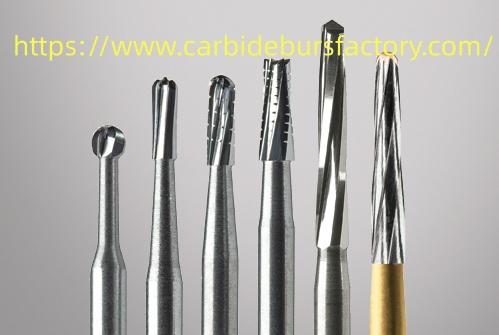
Carbide Rotary Burs are widely used in metalworking, mold production, automotive component processing, and surface preparation. For industrial buyers, selecting suitable tools involves more than comparing dimensions or purchase prices. Head geometry, tooth configuration, shank size, material compatibility, and manufacturing consistency all deserve attention. Understanding these details can help purchasing teams identify suitable products for their machining requirements and communicate more effectively with suppliers.
Identify the Right Head Shape for Your Application
Head geometry determines how a cutting tool accesses a workpiece and interacts with different surfaces. Common profiles include cylindrical, ball-shaped, oval, tree-shaped, flame-shaped, and conical designs.
Each profile serves different machining purposes. Cylindrical heads can be used for working on flat surfaces and removing material along edges. Ball-shaped profiles are suitable for curved areas and internal contours. Tree-shaped designs can provide access to certain narrow sections, while conical profiles are useful for chamfering and angled surfaces.
Before ordering, buyers should identify the geometry of their workpieces and the areas that require machining. Providing drawings, photographs, or sample components can help manufacturers understand the required profile and recommend suitable dimensions.
Compare Tooth Patterns and Cutting Requirements
Tooth configuration influences chip removal, cutting behavior, and surface conditions. Different patterns are designed for different materials and machining operations.
Single-cut designs feature relatively straightforward cutting grooves and can be considered for applications requiring directional material removal. Double-cut designs have intersecting grooves that help break material into smaller chips. Aluminum-specific patterns use a different groove arrangement to accommodate softer materials and reduce chip accumulation.
Buyers should consider the material being processed, the amount of material to remove, and the required surface finish. A suitable tooth pattern can make daily machining operations easier to manage.
It is also helpful to discuss the intended working conditions with the supplier, especially when the tools will be used for repeated production tasks.
Check Head Diameter, Shank Size, and Overall Length
Dimensions are essential when confirming a tool specification. Buyers should pay attention to head diameter, head length, shank diameter, and overall length rather than focusing on a single measurement.
A larger head may be suitable for broader working areas, while a smaller profile can provide access to narrow spaces. Overall length is another consideration when machining deep cavities or components with restricted access.
Shank compatibility deserves particular attention. The shank must match the collet or chuck of the intended grinding equipment. Buyers should confirm whether metric or inch-based dimensions are required before placing bulk orders.
A detailed dimensional drawing can reduce communication errors and help purchasing teams verify that the selected products fit their existing equipment.
Consider Workpiece Materials and Operating Conditions
Different materials create different cutting conditions. Steel, stainless steel, cast iron, aluminum, copper, and other alloys may require different tool configurations.
Material hardness, workpiece geometry, cutting depth, and machining speed should all be considered during product selection. Softer non-ferrous materials may require a groove design that supports chip evacuation, while certain harder materials may need a different tooth arrangement and operating approach.
Buyers should also pay attention to the recommended rotational speed and feed pressure. Operating parameters should correspond with the tool dimensions and the equipment manufacturer's instructions.
Discussing the intended material and machining process with a supplier can help narrow down the available specifications.
Examine Manufacturing Processes and Product Consistency
Manufacturing quality is an important consideration for distributors and industrial purchasing teams. Buyers should understand how the cutting heads are produced, how dimensions are controlled, and what inspection procedures are used during production.
Relevant details include raw material selection, grinding processes, cutting edge formation, shank connection, and dimensional inspection. Consistency between production batches is particularly important for customers who purchase tools regularly or distribute products under their own brands.
At carbidebursfactory, buyers can discuss product specifications, available profiles, and manufacturing requirements for different applications. Clear technical communication helps both parties confirm product details before production begins.
For customized orders, it is useful to provide drawings, sample references, packaging requirements, and expected order quantities.
Review Customization and Supplier Communication
Standard product dimensions may not cover every industrial application. Some buyers need specific head lengths, diameters, shank configurations, or packaging arrangements to match their customers' requirements.
Before confirming a customized order, purchasing teams should ask about available production options, sample arrangements, minimum order quantities, and delivery schedules.
Technical communication is equally important. A supplier should be able to explain product specifications and clarify whether the requested configuration is suitable for the intended machining conditions.
carbidebursfactory works with buyers seeking different tool specifications and product arrangements. Discussing drawings and application details in advance can help make the ordering process clearer and reduce misunderstandings during production.
Evaluate Long-Term Purchasing Requirements
For wholesalers, distributors, and manufacturing facilities, purchasing decisions often extend beyond a single order. Product availability, batch consistency, packaging, inspection arrangements, and communication efficiency can influence ongoing cooperation.
Buyers should compare quotations according to the specifications included rather than relying only on unit prices. They should also consider how suppliers handle repeat orders, product identification, and requests for customized packaging.
Maintaining clear product records can simplify future purchasing. A specification sheet containing head dimensions, tooth patterns, shank measurements, and material applications gives both parties a consistent reference.
For businesses planning to expand their product range, discussing additional profiles and OEM arrangements may also help with future purchasing plans.
Planning Your Next Industrial Tool Order
Selecting suitable cutting tools requires a practical understanding of machining applications, workpiece materials, product dimensions, and manufacturing requirements. Buyers who prepare these details before requesting quotations can compare specifications more effectively and communicate their expectations with greater clarity. Reviewing samples, checking dimensional drawings, and discussing customization arrangements can also support a more organized purchasing process. carbidebursfactory provides product options for different industrial cutting and finishing applications. Visit https://www.carbidebursfactory.com/product/ to review the available range and discuss your tooling requirements with the manufacturing team.

 English
 Arabic
 French
 Spanish
 Portuguese
 Deutsch
 Turkish
 Dutch
 Italiano
 Russian
 Portuguese (Brazil)
 Greek