


What Should Buyers Know About a KSD 301 Steam Iron Thermostat?
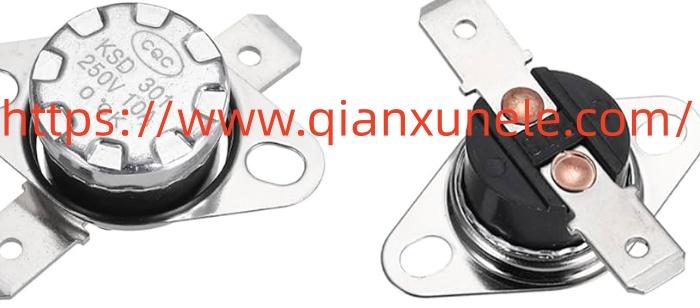
KSD 301 Steam Iron Thermostat selection requires careful evaluation of operating temperature, electrical specifications, installation structure, and manufacturing requirements. For household appliance manufacturers and wholesale buyers, choosing an appropriate temperature control component involves more than comparing model numbers. Its technical characteristics must correspond with the heating system, internal layout, and expected working conditions. Reviewing these details before purchasing helps buyers communicate their requirements clearly and make suitable decisions for their production projects.
Confirm the Required Temperature Range
The operating temperature is an important starting point when evaluating a temperature control component. Different ironing appliances have different heating capacities, plate structures, and temperature requirements. Buyers should therefore identify the expected working range before requesting product quotations.
Three parameters deserve particular attention: operating temperature, switching temperature, and reset temperature. These values describe when the internal contacts change their electrical state and when the component returns to its original position.
The temperature difference between switching and resetting should also be considered. It influences the heating cycle and needs to match the intended equipment design.
Manufacturers should provide their actual application requirements instead of selecting a product based solely on its external appearance. This allows suppliers to evaluate the technical specifications more accurately.
Evaluate Electrical Ratings and Connections
Electrical compatibility is another essential purchasing consideration. Buyers should check the rated voltage, current capacity, contact configuration, and terminal arrangement before confirming an order.
These parameters must correspond with the appliance circuit and heating element. An unsuitable electrical configuration may affect switching behavior and the operation of the complete equipment.
Contact materials also deserve attention. Since the internal contacts repeatedly open and close the circuit during normal operation, their construction and switching characteristics are relevant to product performance.
Purchasing teams can prepare an electrical specification sheet containing the required voltage, current, and connection details. Sharing this information with the supplier makes technical communication more efficient and helps reduce misunderstandings during product selection.
Examine Dimensions and Installation Compatibility
Physical compatibility should never be overlooked. Even when a component meets the required electrical and temperature specifications, differences in mounting dimensions may create difficulties during appliance assembly.
Buyers should review the overall size, fixing holes, terminal positions, housing structure, and available installation space.
The position of the sensing area is another important factor. Its relationship with the heating plate can influence how temperature changes are detected. Therefore, manufacturers should evaluate the installation location as part of the overall thermal design.
For customized projects, technical drawings and physical samples can help suppliers understand the required structure. Confirming these details before mass production may reduce unnecessary adjustments and improve coordination between component sourcing and appliance development.
Understand Material Selection and Internal Construction
The materials used in a temperature control component influence its mechanical and electrical characteristics. Buyers can ask about the bimetal element, contact materials, metal housing, terminals, and insulating parts.
A bimetal mechanism responds to temperature changes through the different expansion characteristics of two bonded metals. This movement activates the switching mechanism and changes the electrical connection.
Besides material selection, assembly consistency is worth discussing. Buyers may request information about component positioning, manufacturing procedures, and inspection arrangements.
For products used in household ironing equipment, repeated heating cycles make material suitability an important consideration. Manufacturers should ensure that the selected configuration corresponds with the actual working environment and relevant product requirements.
Ask About Product Testing and Quality Inspection
Before placing a bulk order, buyers should understand how the supplier evaluates finished components. Testing procedures may include temperature response checks, electrical continuity inspections, contact operation tests, and dimensional measurements.
These procedures should be established according to the agreed specifications and intended application. Buyers can also request samples to evaluate installation compatibility and product characteristics before approving larger quantities.
Documentation is another useful subject for international purchasing projects. Product specifications, inspection records, and batch identification can help purchasing departments maintain clear records and coordinate repeat orders.
Rather than discussing quality requirements only after delivery, buyers should communicate their expectations during the quotation and sample confirmation stages.
Review Customization and Manufacturing Capabilities
Different appliance models may require different temperature settings, terminal arrangements, mounting structures, and electrical ratings. Standard configurations may not always correspond with the requirements of a particular product design.
For this reason, buyers should ask which parameters can be customized and what information is needed to evaluate a special request.
Manufacturers may need technical drawings, reference samples, electrical specifications, or details about the heating assembly. Providing these materials helps suppliers assess the project and discuss possible product configurations.
At qianxunele, communication about component specifications and application requirements can support purchasing discussions for different electrical appliance projects. Buyers should also review sample arrangements, production schedules, packaging details, and order quantities when evaluating a potential supplier.
Establish Clear Purchasing Requirements
A well-prepared purchasing specification helps prevent misunderstandings between buyers and manufacturers. Before confirming an order, both parties should agree on operating temperature, electrical ratings, physical dimensions, connection methods, and inspection requirements.
For long-term sourcing projects, consistent product documentation is particularly useful. It gives purchasing teams and engineers a shared reference when managing repeat orders or introducing new appliance models.Buyers should also consider how efficiently a supplier responds to technical questions and handles specification changes. Clear communication can make product development, sample evaluation, and production coordination easier. qianxunele offers temperature control component options for electrical appliance applications. Buyers looking for product information, available configurations, and manufacturing support can visit https://www.qianxunele.com/product/ to review the product range and discuss their project requirements with the company.

 English
 Arabic
 French
 Spanish
 Portuguese
 Deutsch
 Turkish
 Dutch
 Russian
 Romaian
 Portuguese (Brazil)
 Greek