


What Should Buyers Check Before Buying a Compact CNC Lathe?
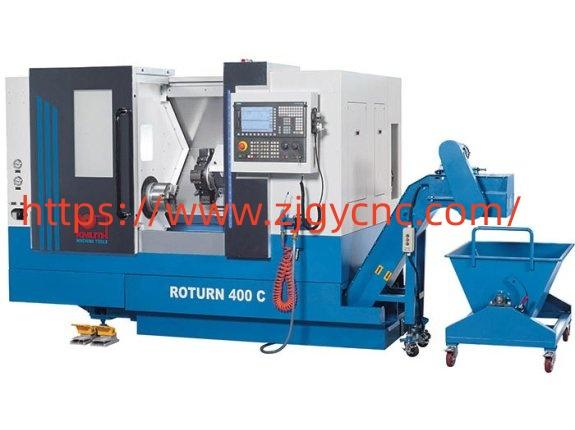
Compact CNC Lathe purchasing decisions should begin with the actual parts a factory plans to produce. Rather than selecting equipment based only on appearance or catalogue specifications, buyers need to examine workpiece dimensions, machining procedures, material types, and expected production quantities. These details help manufacturers identify suitable equipment configurations and avoid paying for functions that do not match their daily operations.
List the Parts You Plan to Manufacture
Before contacting a machine tool supplier, prepare a list of representative workpieces. Include their maximum diameter, total length, material, drawing requirements, and expected monthly quantity. These details provide a practical basis for comparing different machine models.
For example, a workshop producing small shafts may have different requirements from a factory making threaded fittings, bushings, or metal connectors. Some components require external turning and facing, while others involve boring, grooving, drilling, or threading. The number and sequence of these operations can influence the required tool arrangement.
Buyers should also consider whether their production involves a single product family or frequent changes between different parts. A machine configured for repeated batches may not be equally suitable for a workshop handling varied orders. Defining the production mix early helps narrow the selection process.
Examine Spindle Performance and Workholding
The spindle plays an important role in machining stability and cutting capability. Buyers should review its speed range, power, torque characteristics, and bore dimensions according to the materials and workpiece sizes involved.
Maximum spindle speed alone does not explain whether a machine suits a particular application. Cutting conditions also depend on material hardness, tool selection, workpiece diameter, and the required surface finish. Buyers can ask the supplier for detailed spindle information and discuss how it relates to their production samples.
Workholding deserves careful attention as well. Chuck dimensions, clamping arrangements, and available fixtures should match the shape and size of the intended parts. If long or slender components are involved, additional support may be needed to reduce vibration during machining.
Review Tooling and Operation Requirements
Tool configuration affects how many operations can be completed within a single setup. Buyers should identify the cutting tools required for their typical workpieces and compare them with the available tool positions and holder specifications.
A component involving turning, grooving, and threading may require a different tool arrangement from a simple cylindrical part. If the production process includes drilling or milling features, buyers should discuss whether additional functions or another machining process will be necessary.
It is also worth reviewing tool replacement and setup procedures. Clear access to tool holders, practical adjustment methods, and suitable tool storage can make daily production easier to organize. Before confirming an order, request a configuration drawing so the engineering team can review the proposed arrangement.
Check Accuracy Through Practical Machining Tests
Technical specifications provide an initial reference, but buyers should also consider how the equipment performs when machining representative parts. Positioning accuracy, repeatability, surface finish, and dimensional stability should be evaluated against the drawings and tolerances of the intended products.
A sample machining test can help answer several practical questions. Does the finished part meet the required dimensions? Is the surface condition acceptable? Can the selected cutting process be repeated under similar operating conditions?
Buyers can provide drawings and material samples to the supplier for a machining discussion. The test results should be reviewed with the engineering team, and any changes to tooling, cutting parameters, or workholding should be recorded. This process gives both parties a clearer understanding of the equipment requirements before delivery.
Consider Workshop Space and Daily Operation
Machine dimensions are only part of the installation assessment. Buyers should also consider the space needed for loading workpieces, opening access panels, removing chips, and carrying out routine maintenance.
The planned installation area should provide suitable access for operators and technicians. Electrical supply, foundation conditions, coolant handling, and chip collection should also be checked before the machine arrives. These preparations can reduce installation difficulties and help the production team organize its working area.
Operator familiarity with the control system is another practical factor. Buyers should confirm the controller configuration, programming methods, available manuals, and training arrangements. If the workshop already uses particular programming practices, discussing compatibility in advance can make the transition easier.
Calculate the Full Purchasing and Maintenance Requirements
The purchase quotation should be reviewed together with the costs of tooling, fixtures, installation, transportation, operator training, and routine maintenance. Optional accessories may be useful for certain production tasks, but buyers should evaluate each one according to actual operating needs.
Maintenance access and spare parts availability also deserve attention. Ask which components require periodic inspection, what maintenance documentation is supplied, and how replacement parts can be requested. These details help production managers prepare a maintenance schedule and estimate ongoing operating expenses.
For overseas buyers, it is useful to confirm packaging arrangements, shipping information, technical documents, and communication procedures before placing an order. Written confirmation of the machine configuration and included accessories can also help prevent misunderstandings between the purchasing team and supplier.When discussing a new project with a manufacturer, clear technical information makes equipment selection more practical. zjgycnc works with buyers to discuss machining requirements, machine configurations, and production applications. By sharing workpiece drawings, material details, and expected output, customers can begin a focused discussion about suitable equipment. To review available machine information and contact the company, visit https://www.zjgycnc.com/ and provide your project requirements for further communication.

 English
 Arabic
 French
 Spanish
 Portuguese
 Deutsch
 Dutch
 Italiano
 Russian
 Romaian
 Portuguese (Brazil)
 Greek