


CRM for Real Estate Industry: Common Problems and Practical Solutions
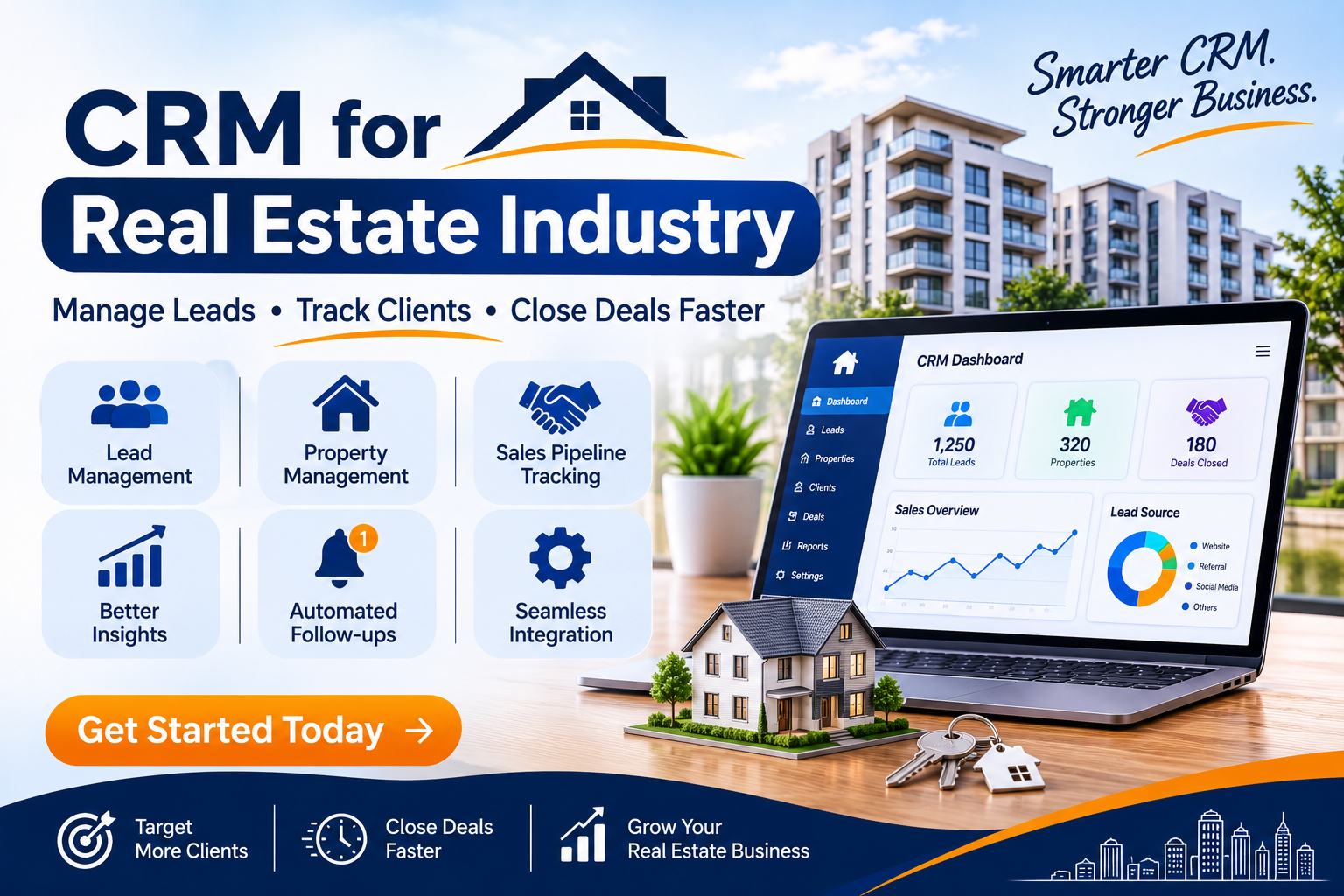
CRM for Real Estate Industry: Problems, Challenges, and Practical Solutions
Managing a real estate business involves more than showing properties and closing deals. Agents and property consultants handle enquiries, schedule site visits, communicate with buyers, coordinate with sellers, and maintain records of multiple properties. When these activities are managed through spreadsheets, phone calls, and scattered messages, important information can easily get lost.
For example, a potential buyer may enquire about a residential property but never receive a follow-up call. Another customer may visit a property without their preferences being properly recorded. These small management gaps can affect customer experience and create difficulties for sales teams.
This is where a CRM for Real Estate Industry becomes useful. It provides a centralised system for managing customer information, property enquiries, communication, and sales activities. Understanding the common problems in real estate operations can help businesses identify where CRM software can make a practical difference.
1. Losing Potential Leads Due to Poor Enquiry Management
Real estate businesses receive enquiries through websites, property portals, social media, advertisements, and direct phone calls. Managing all these enquiries separately can become difficult, particularly when the number of leads increases.
Some enquiries may remain unanswered, while others may be forgotten because the sales team does not have a clear record of previous conversations.
How CRM Solves This Problem
A real estate CRM collects and organises leads in one place. It can help businesses record customer names, contact details, property preferences, budgets, and enquiry sources.
Sales teams can view incoming leads, assign them to the appropriate agents, and track their progress. This makes it easier to manage enquiries systematically and reduces the chances of overlooking potential customers.
2. Delayed Follow-Ups Affect Customer Relationships
Buying or renting property often involves several discussions before a customer makes a decision. Buyers may need additional information, compare multiple properties, or arrange another site visit.
When agents manage follow-ups manually, they may forget scheduled calls or fail to contact customers at the right time.
How CRM Solves This Problem
CRM software allows agents to schedule follow-up activities, set reminders, and maintain communication records. Team members can check when a customer was last contacted and what information was discussed.
Automated reminders can also help sales representatives manage their daily tasks. This creates a more organised communication process and helps businesses maintain consistent contact with interested customers.
3. Difficulty Tracking Multiple Property Listings
Real estate companies often manage several residential, commercial, and rental properties simultaneously. Each property may have different details, including location, pricing, size, availability, facilities, and ownership information.
Maintaining these records separately can lead to outdated information and confusion among sales representatives.
How CRM Solves This Problem
A CRM system with property management functionality can maintain organised property records. Agents can access relevant details such as:
-
Property location and category.
-
Selling or rental price.
-
Property size and available facilities.
-
Current availability status.
-
Images and property descriptions.
-
Assigned sales representative.
Having this information in a centralised system makes property searches and customer discussions easier.
4. Poor Coordination Between Sales Teams
In a real estate business, multiple agents may work with different customers and property listings. Without a shared system, team members may not know who is handling a particular enquiry or whether another agent has already contacted the customer.
This can result in duplicated communication, unclear responsibilities, and unnecessary delays.
How CRM Solves This Problem
A CRM helps businesses assign leads, define responsibilities, and maintain shared records. Managers can monitor lead ownership, check sales activities, and understand the progress of individual enquiries.
Role-based access can also help ensure that employees view and manage information according to their responsibilities.
5. Lack of Visibility into Sales Performance
Real estate managers need to understand how many enquiries are being received, how many customers are interested, and how many deals are progressing towards completion.
When sales information is stored in separate files, preparing reports and identifying performance gaps can take considerable time.
How CRM Solves This Problem
CRM dashboards and reports can provide an overview of important sales activities, including:
-
Total leads received.
-
Lead sources and enquiry trends.
-
Follow-up activities.
-
Site visits scheduled.
-
Deals in different sales stages.
-
Conversion rates.
These insights help managers evaluate team performance, identify delays, and make more informed business decisions.
6. Customer Preferences Are Difficult to Remember
Property buyers usually have specific requirements. They may be looking for a particular location, budget, property size, number of bedrooms, or type of investment.
If these preferences are not recorded properly, agents may repeatedly suggest unsuitable properties or ask customers for the same information.
How CRM Solves This Problem
A CRM allows agents to maintain detailed customer profiles. Their preferences, previous enquiries, communication history, and property interests can be recorded for future reference.
When a suitable property becomes available, agents can use this information to identify customers whose requirements match the listing.
7. Managing Customer Information Across Different Platforms
Real estate teams often use separate applications for emails, calls, advertising, property listings, and internal communication. Switching between these platforms can make daily work less organised.
It may also become difficult to maintain consistent customer records across different channels.
How CRM Solves This Problem
Depending on its capabilities, a real estate CRM can integrate with websites, email platforms, calling systems, advertising channels, and other business applications.
These integrations help bring relevant information into a more connected workflow. Businesses should select integrations according to their actual operational requirements rather than adding unnecessary features.
What Features Should a CRM for Real Estate Industry Include?
The right CRM features depend on the size of the business and its working process. However, some capabilities are particularly useful for property-related operations.
| CRM Feature | Business Purpose |
|---|---|
| Lead Management | Records and organises customer enquiries |
| Property Management | Maintains property details and availability |
| Follow-Up Reminders | Helps agents manage scheduled communication |
| Customer Profiles | Stores buyer preferences and interaction history |
| Sales Pipeline | Tracks enquiries through different sales stages |
| Reporting Dashboard | Provides visibility into sales activities |
| Task Management | Organises agent responsibilities and daily work |
| Integration Support | Connects the CRM with relevant business tools |
A CRM should be easy to use and flexible enough to accommodate changes in business operations.
How to Choose the Right Real Estate CRM Software
Before selecting a CRM, businesses should evaluate their existing processes and identify the problems they want to solve.
Consider the following factors:
-
Business Requirements: Identify whether the system is needed for lead management, property tracking, sales coordination, or all these activities.
-
Ease of Use: Choose an interface that agents and managers can use without unnecessary complexity.
-
Customisation: Check whether fields, workflows, reports, and user roles can be adjusted according to business needs.
-
Data Security: Evaluate access controls, backup facilities, and data protection practices.
-
Scalability: Consider whether the system can support additional users, properties, and enquiries as the business expands.
-
Integration Options: Check whether it can connect with the platforms already used by the organisation.
A careful evaluation helps prevent businesses from investing in software that does not match their actual requirements.
Conclusion
Real estate operations involve continuous communication, property management, lead tracking, and coordination between sales teams. When these activities are handled manually, businesses may experience missed enquiries, delayed follow-ups, disorganised records, and limited visibility into sales performance.
A CRM for Real Estate Industry helps address these challenges by bringing customer information, property records, communication history, and sales activities into one organised system.
The real value of CRM software lies in how effectively it solves everyday business problems. By selecting suitable features and establishing clear workflows, real estate companies can improve operational efficiency, maintain better customer relationships, and manage their sales processes more effectively.

 English
 Arabic
 French
 Spanish
 Portuguese
 Deutsch
 Turkish
 Dutch
 Italiano
 Russian
 Portuguese (Brazil)
 Greek