


Reliable Solutions for Mechanical Level Regulation
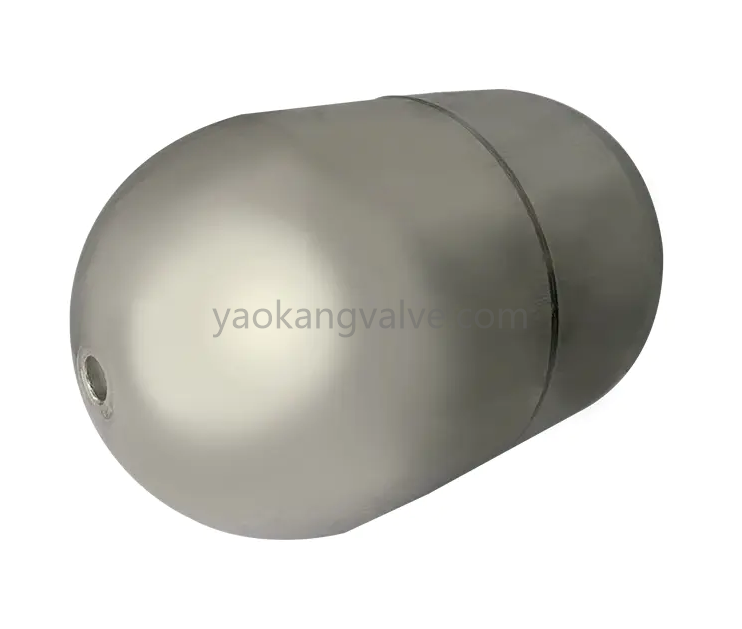
Reliable liquid level regulation is essential for many types of industrial and commercial equipment. From water storage tanks to automatic filling systems, mechanical floating components help control the movement of valves as liquid levels change. When evaluating a Float Ball Manufacturer, equipment producers and purchasing teams should consider product design, material quality, manufacturing experience, and customization capabilities. These factors influence whether the finished component can integrate correctly with the intended valve assembly and maintain consistent operation in its working environment.
The basic operating principle is based on buoyancy. When a floating component is placed in liquid, the displaced liquid generates an upward force that supports its weight. As the liquid level rises or falls, the component moves accordingly. This movement can be transmitted through a connecting rod, lever, or other mechanical structure to operate a valve. In a conventional water tank, the rising liquid level can lift the floating element and gradually close the inlet valve. When the level drops, the mechanism moves in the opposite direction and allows the tank to refill.
Material selection is an important part of product development. Stainless steel is widely used in industrial floating components because of its mechanical strength, corrosion resistance, and practical surface characteristics. SS304 is often suitable for general water-related applications and many standard operating environments. SS316 may be considered when greater resistance to certain corrosive substances is needed. The correct grade should be selected according to liquid composition, temperature, cleaning conditions, and the expected service environment. Manufacturers should provide clear material information to help customers evaluate compatibility.
Product structure also influences performance. Many metal floating components use hollow construction to create the displacement needed for buoyancy while maintaining a relatively low overall weight. The external shape, internal cavity, and wall construction should be considered together during design. If the structure is too heavy or does not provide sufficient displacement, the component may not operate as expected. Similarly, unsuitable dimensions can cause interference with tank walls or surrounding mechanical parts.
Manufacturing methods depend on the product design and required production volume. Common processes may include metal cutting, stamping, drawing, forming, welding, trimming, and polishing. Forming operations need appropriate tooling and process control to maintain a consistent shape. Welding is especially important for hollow structures because the joints must provide adequate strength and maintain the integrity of the internal cavity. Poorly controlled welding may lead to deformation or leakage, potentially affecting the product's ability to float.
Quality control should cover both production processes and finished components. Dimensional inspection helps verify that the product matches the approved drawing or sample. Visual checks can identify surface defects, dents, scratches, and uneven finishing. Leak testing may be used to evaluate welded hollow structures. Depending on customer requirements, manufacturers may also maintain material records, inspection reports, and production batch information. These measures help support more consistent supply for equipment manufacturers and distributors.
Surface finishing is another consideration when evaluating industrial components. Polished stainless steel can offer a consistent appearance and make routine cleaning easier. However, the appropriate finish depends on the intended application and customer expectations. Buyers should communicate requirements for surface condition, welding appearance, and any additional treatment before production begins. For applications involving specialized hygiene or corrosion requirements, the complete product specification and relevant manufacturing controls should be reviewed.
Application knowledge is valuable when developing customized products. Mechanical floating components are used in water storage tanks, automatic filling equipment, industrial fluid systems, agricultural water installations, and cooling equipment. Each application may involve different liquid properties, installation dimensions, movement ranges, and valve connection arrangements. A manufacturer that understands these differences can help customers assess structural requirements and avoid unnecessary design changes during assembly.
Customization is particularly important for international B2B projects. OEM customers may need components manufactured according to existing drawings, while ODM customers may require assistance in developing a new design. Buyers can improve project communication by supplying physical samples, technical drawings, annual demand estimates, and detailed application information. Important details may include material grade, external dimensions, wall thickness, connection structure, surface finish, and inspection requirements. Sample approval before mass production can further reduce procurement risks.
When selecting a supplier, purchasing managers should evaluate manufacturing facilities, production experience, material sourcing, quality inspection, technical communication, and delivery management. A competitive price is only one consideration. Consistent batch quality, flexible production planning, and the ability to respond to technical requirements are equally important for long-term cooperation. Buyers should also clarify packaging, order quantities, and quality acceptance criteria before confirming a purchase.
For equipment brands, valve producers, and industrial distributors, cooperation with an experienced Float Ball Manufacturer can support dependable component sourcing and customized product development. Yongjia County Yaokang Technology Co., Ltd. focuses on floating components and related liquid level control products, providing manufacturing support for different industrial applications and purchasing requirements. International customers can review available products and discuss OEM, ODM, and wholesale cooperation through https://www.yaokangvalve.com/product/ when planning their next procurement project.

 English
 Arabic
 French
 Spanish
 Portuguese
 Deutsch
 Turkish
 Dutch
 Italiano
 Romaian
 Portuguese (Brazil)
 Greek