


Vehicle Condition Report: What to Include and How AI Builds One
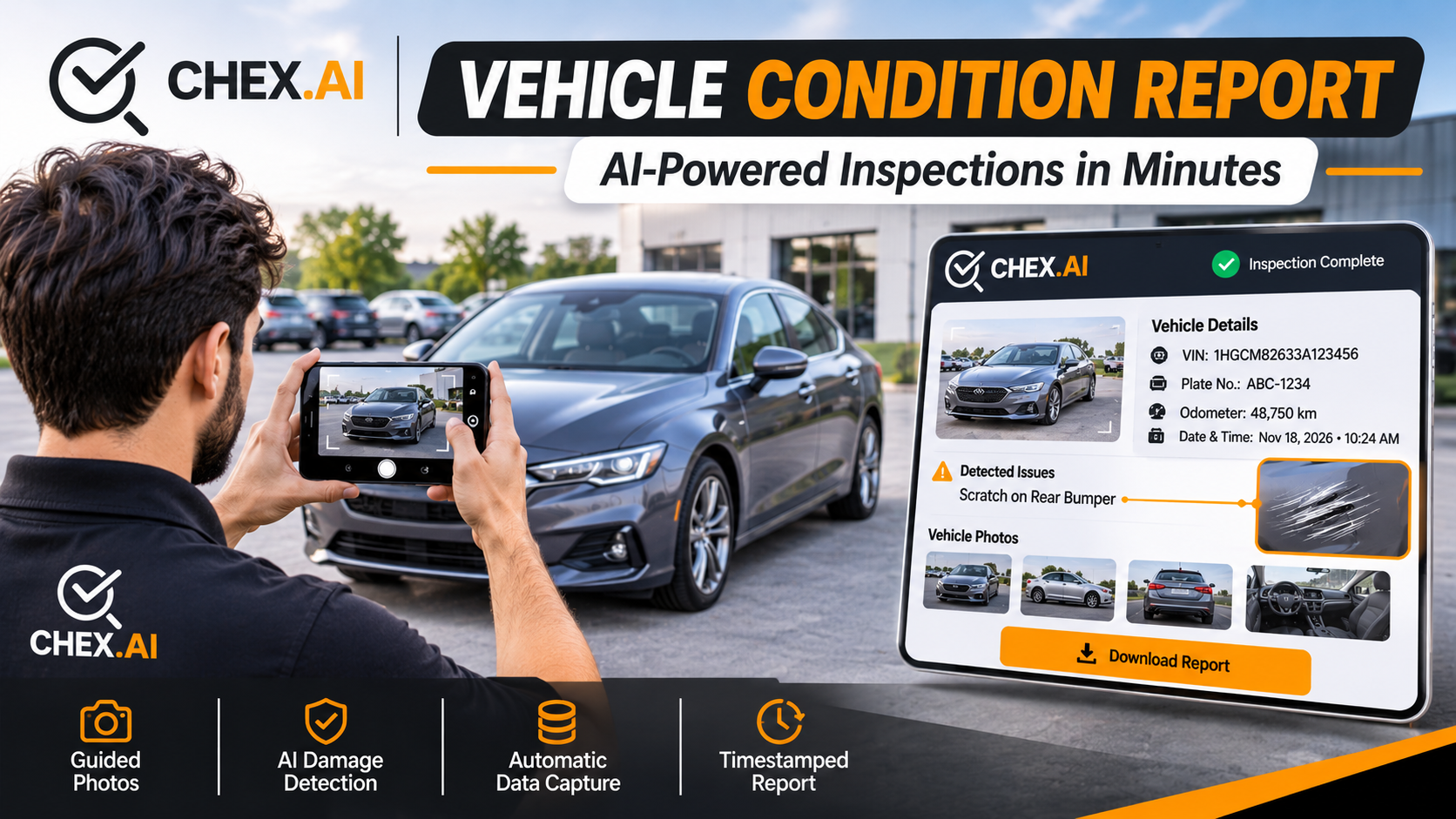
Quick answer: A vehicle condition report is a dated record of a vehicle’s state, usually made up of photos, notes, mileage and a list of any damage. The best reports are consistent, timestamped and hard to dispute. Paper forms and basic photo apps leave gaps, while AI vehicle inspection tools such as Chex.AI guide the driver through a set of photos, detect damage automatically, read the VIN, plate and odometer, and produce a standard report in minutes from a smartphone.
Every vehicle business eventually has the same argument. A car comes back from a rental with a new scratch. A van returns from a route with a dented door. A rideshare driver is told their car no longer meets the platform’s standards. In each case, the first question is the same: what condition was the vehicle in before, and what condition is it in now? Without a reliable record, nobody can answer, and the cost lands on whoever has the weakest evidence.
That is why a good vehicle condition report matters. It turns a vague memory into a fact. Done well, it protects drivers, renters, fleet operators and insurers alike, and it saves hours that would otherwise be spent on disputes and repeat inspections.
This guide explains what a condition report is, why you need one, what it should contain, how paper, photo apps and AI compare, how an AI vehicle inspection builds a report step by step, and how rideshare, rental and fleet businesses use them. You will also find a photo guide, a ready-to-use checklist, common mistakes to avoid and answers to the questions people ask most.
What Is a Vehicle Condition Report?
A vehicle condition report is a structured record that documents the state of a vehicle at a specific moment. It normally includes identifying details such as the VIN and licence plate, the odometer reading, the date and time, photos of every side of the vehicle, a list of existing damage and sometimes notes on tyres, glass, lights and the interior.
You may see it called by other names. A vehicle inspection report, a vehicle damage report, a pre-rental inspection, a check-in and check-out sheet or a walkaround report all describe the same basic idea: a snapshot of the vehicle that someone can point to later.
There are two broad uses.
Condition at a Handoff
When a vehicle changes hands, such as a rental pickup, a fleet driver starting a shift or a car being delivered to a customer, the report records the condition at the start and again at the end. The difference between the two is what matters.
Condition for Compliance
Sometimes the report exists to prove that a vehicle was safe and eligible. Rideshare platforms ask drivers for an inspection before approval, and commercial operators keep inspection records to satisfy safety rules and audits.
A strong report does both jobs: it shows what is wrong and it proves when it was recorded.
Why You Need a Vehicle Condition Report
It is easy to treat inspection paperwork as a chore. The cost of skipping it shows up later, usually when money is on the line.
Fewer Damage Disputes
Without evidence, damage disputes become one person’s word against another’s. A timestamped vehicle condition report with clear photos ends the argument quickly. The renter, driver or contractor can see what was recorded, and so can you.
Faster, Fairer Insurance Claims
Insurers and claims teams ask the same questions each time: what was damaged, when and how badly. A standard report with consistent photos and a clear list of damage lets them assess the claim without weeks of back and forth.
Compliance and Audit Readiness
In the United States, the FMCSA rule at 49 CFR §396.11 governs Driver Vehicle Inspection Reports. It requires carriers to keep the original report, the certification of repairs and the review certification for three months, and it allows carriers to use any type of DVIR as long as it contains the required information and signatures. That is why a digital DVIR is now standard for growing fleets: reports are stored, searchable and timestamped. Always check the current rules that apply to your operation.
Less Downtime
Defects found at the start of a shift can be fixed before the vehicle goes out. Defects found only after a breakdown cost far more. A clear report sends issues to the right person immediately.
Accountability
A record shows who inspected which vehicle and when. That visibility encourages thorough checks and makes skipped inspections obvious.
Better Handovers and Resale
A documented history of a vehicle’s condition gives buyers, lessors and dealers confidence. It also helps you decide when a vehicle needs repair or replacement.
What a Complete Vehicle Condition Report Should Include
Not every report needs every field, but a complete one covers the following.
|
Section |
What to record |
Why it matters |
|
Vehicle identity |
VIN, licence plate, make, model, colour |
Proves the report belongs to this exact vehicle |
|
Odometer |
Mileage at the time of inspection |
Tracks use and supports maintenance and billing |
|
Date, time and location |
Timestamp, ideally automatic |
Shows exactly when the condition was recorded |
|
Exterior photos |
All four sides plus corners |
Shows the overall state and any visible damage |
|
Close-ups of damage |
Scratches, dents, cracks, chips |
Documents size and position for later comparison |
|
Glass and lights |
Windscreen, mirrors, headlights, tail lights |
Safety items that often fail inspections |
|
Tyres and wheels |
Tread, sidewalls, rim damage |
Safety and cost item that is easy to miss |
|
Interior |
Seats, trim, dashboard, cleanliness |
Matters most for rentals and rideshare |
|
Notes |
Anything unusual, such as odours or warning lights |
Fills gaps photos cannot show |
|
Who and what |
Inspector or driver, signature or confirmation |
Creates accountability |
Add one more habit: record the same things in the same order every time. Consistency is what makes two reports comparable.
Paper Forms, Photo Apps and AI: How They Compare
Not all reporting methods are equal. This table shows where each one tends to succeed or fall short.
|
|
Paper form |
Basic photo app |
AI vehicle inspection |
|
Speed |
Slow |
Moderate |
Fast, usually minutes |
|
Consistency between people |
Low |
Medium |
High, same standard every time |
|
Damage spotted by |
The person looking |
The person looking |
AI plus guided photos |
|
VIN, plate and odometer |
Typed by hand |
Often typed by hand |
Read automatically from images |
|
Photo quality control |
None |
Limited |
Flags blurry, duplicate or manipulated images |
|
Timestamp and tamper resistance |
Weak |
Moderate |
Strong |
|
Searchable history |
Difficult |
Moderate |
Easy |
|
Audit-ready |
Often a scramble |
Partly |
Yes |
Paper is cheap but fragile. Basic photo apps are an improvement, but they still depend on a person noticing every issue. An AI vehicle inspection applies the same standard to every vehicle, which is why many operators move to it as volumes grow. For a deeper comparison, read our guide to AI vehicle inspection vs manual inspection.
How an AI Vehicle Inspection Builds a Condition Report
Chex.AI is an AI vehicle inspection platform that turns a smartphone camera into a damage detection and reporting tool. Here is how a typical inspection works.
Step 1: Start the Inspection
The driver or inspector opens the app on their own phone and selects the vehicle. No special hardware is required.
Step 2: Capture Guided Photos
The app shows exactly which angles and close-ups are needed, with example images, so the driver always captures the same shots in the same order.
Step 3: Quality Checks Happen Immediately
Before the report is submitted, the system checks the images. Chex.AI flags blurry, duplicate or manipulated photos and guides the driver to recapture incomplete shots, so weak evidence does not end up in the final record.
Step 4: AI Damage Detection
The system analyses each image. Chex.AI states that its AI damage detection covers 163 vehicle parts with 95 to 99% accuracy and identifies 21 distinct damage types.
Step 5: Automatic Data Capture
The VIN, licence plate and odometer are read from the images, which removes typing errors and speeds up every inspection.
Step 6: A Standard Report in Minutes
The result is a standardised report with the photos, detected damage and vehicle details. Detected damage can also be converted into a repair cost estimate automatically, which helps with claims and maintenance planning.
The outcome is a vehicle damage report that looks the same for every vehicle and every driver, which is exactly what makes it useful when it is needed.
If you want a full explanation of the technology, see what an AI vehicle inspection is and how it works.
Vehicle Condition Reports by Industry
The same idea serves very different businesses. Here is how it applies to the main ones.
Rideshare Drivers
Rideshare platforms require vehicles to pass an inspection before a driver is approved, and to renew it regularly. A rideshare inspection is both a compliance step and a condition record. Chex.AI’s rideshare inspection is accepted by Lyft, Uber, Turo and HopSkipDrive in supported states, takes about 30 minutes and starts at $29.99, with the certificate typically completed within 4 hours. Your first re-inspection is free if the car does not pass, and one inspection can cover every platform you drive for. You can learn more on the rideshare inspection service page, or read our guides to the Uber inspection form and the Lyft inspection form.
Rental Companies and Car Hire
Rental businesses hand vehicles to strangers every day. A condition report at pickup and return is the only fair way to decide who is responsible for new damage. Rental car inspection records that are consistent and timestamped reduce disputes, speed up check-in and make it easier to charge for real damage and not for existing wear. Explore the rental inspection service and our comparison of AI inspection software for rental car companies.
Commercial Fleets
Delivery fleets, trucking companies and service vans depend on uptime. Commercial fleet inspection records show which vehicle has which defect, who found it and when it was fixed. With a digital DVIR and AI damage documentation from a smartphone, fleets keep audit-ready records and catch maintenance problems early. See the commercial fleet inspection service and our fleet vehicle inspection checklist. If you are new to the term, our guide explains what a DVIR is.
Dealerships and Insurers
Dealerships use condition reports for trade-ins and handovers. Insurers use standard reports for underwriting and claims. In the UK, our article on AI vehicle inspection for dealerships and fleets explains how this works in practice.
Car Sharing and Peer-to-Peer Hosts
Hosts on car sharing platforms rely on condition records to resolve damage questions and to meet platform requirements. A consistent report taken before and after each trip is the best protection.
How to Take Photos That Make a Report Hold Up
A report is only as strong as its photos. Whether you use a paper form, a photo app or an AI tool, these habits make the evidence stronger.
• Photograph in good light, ideally in daylight. Avoid heavy shadows and glare.
• Clean obvious dirt from damage areas. Mud can hide a scratch or look like one.
• Shoot all four sides, then the four corners, so nothing is missed.
• Take a wide shot and a close-up of every damage point, with something small in frame for scale if possible.
• Always follow the same order. A consistent order makes comparisons simple.
• Capture the odometer and the VIN or plate clearly.
• Photograph the interior, including seats, dashboard and any warning lights.
• Hold the phone steady. A blurry photo proves nothing.
• Take the photos at the time of handover, not later.
AI tools help with most of these automatically by guiding the angles and flagging poor-quality images, but it still pays to know what good evidence looks like.
Common Mistakes That Weaken a Vehicle Condition Report
These errors turn a useful record into a weak one.
• Skipping the inspection when you are in a hurry. The one time you skip is the one that causes a dispute.
• Taking only a few photos. Missing angles invite arguments.
• Relying on memory. Notes written days later are easy to challenge.
• Letting different people use different formats. Inconsistent reports are hard to compare.
• Not recording the odometer. Mileage is often central to billing and maintenance disputes.
• Ignoring small damage. Small marks become expensive arguments if they are not documented early.
• Storing reports in a drawer or a phone gallery. If you cannot find it, it does not exist.
• Accepting poor-quality photos. Blurry or reused images undermine the whole record.
• Forgetting to record the return. A report at pickup without one at return only tells half the story.
How to Choose Vehicle Condition Report Software
If you are comparing tools, these are the questions that matter most. This is the same logic behind selecting any vehicle inspection software.
Does It Fit Your Biggest Problem?
If damage disputes are costing you money, prioritise AI damage detection and photo quality. If maintenance delays are the issue, prioritise defect routing. If audits worry you, focus on digital DVIR and record retention.
Is It Easy for Drivers?
The best software is the one people actually use. A guided, mobile-first workflow with clear photo prompts leads to better data and fewer skipped inspections.
Does It Check Photo Quality?
Look for tools that flag blurry, duplicate or manipulated images before the report is submitted.
Does It Capture Data Automatically?
Reading the VIN, plate and odometer from images removes typing errors and saves time on every inspection.
Can You See Everything in One Place?
A central dashboard should show inspection status, open defects, history and compliance across your whole business.
Does It Work With What You Already Use?
Inspection data is more valuable when it connects to your maintenance, telematics or fleet systems, so check what integrates before you commit.
What Is the Total Cost?
Compare pricing against the time saved, the disputes avoided and the repairs caught early. Tools that run on any smartphone usually cost less to roll out across a large number of vehicles.
Can You Try It First?
Test the platform on a few real vehicles before committing, and ask for a demo.
A Simple Vehicle Condition Report Checklist
Use this list as a quick reference for any inspection. It works as a starting point for paper forms and as a prompt for what an AI tool should capture.
Before You Start
• ☐ Vehicle parked on level ground in good light
• ☐ Obvious dirt removed from damage areas
• ☐ Date, time and location noted or recorded automatically
Identity and Mileage
• ☐ VIN or chassis number captured
• ☐ Licence plate captured
• ☐ Odometer reading photographed
Exterior
• ☐ Front, rear, left and right photographed
• ☐ All four corners photographed
• ☐ Every scratch, dent or crack photographed close up and wide
• ☐ Bumpers, mirrors and trim checked
Glass, Lights and Tyres
• ☐ Windscreen and windows checked for chips and cracks
• ☐ Headlights, brake lights and indicators checked
• ☐ Tyres and wheels photographed, including sidewalls
Interior
• ☐ Seats, trim and dashboard photographed
• ☐ Warning lights noted
• ☐ Cleanliness and any odours noted
Finish
• ☐ Report saved in one searchable place
• ☐ Inspector or driver confirmed
• ☐ Matching report created at return or end of shift
Frequently Asked Questions
What is a vehicle condition report?
It is a dated record of a vehicle’s condition, normally including identifying details, mileage, photos and a list of any damage. It is used to settle disputes, support insurance claims and prove compliance.
What is the difference between a vehicle condition report and a vehicle inspection report?
In practice the terms overlap. A condition report focuses on the visible state of the vehicle at a point in time, while an inspection report often adds safety checks such as brakes, tyres and lights. Many tools produce both in one flow.
Why is a vehicle condition report important for rentals?
It shows what condition the car was in when the customer took it and when they returned it. That makes it much easier to decide who is responsible for any new damage.
Is an electronic DVIR allowed by the FMCSA?
Yes. FMCSA guidance states that carriers may use any type of DVIR as long as it contains the required information and signatures. Electronic DVIRs are widely used to meet 49 CFR §396.11 requirements.
How long must DVIR records be kept?
Under 49 CFR §396.11, carriers must keep the original DVIR, the certification of repairs and the driver’s review certification for three months from the date the report was prepared. Check the current rules that apply to you.
How does AI vehicle inspection work?
A driver captures guided photos of the vehicle with a smartphone. The AI analyses each image, detects damage, reads the VIN, plate and odometer, and generates a standardised digital report in minutes.
How accurate is AI damage detection?
Chex.AI states that it detects damage across 163 vehicle parts with 95 to 99% accuracy and identifies 21 types of damage. It also flags low-quality or manipulated images before they reach the final report.
Do I need special hardware for an AI vehicle inspection?
No. Chex.AI works from a standard smartphone, so drivers do not need extra devices or training sessions.
Can one inspection work for several rideshare platforms?
Chex.AI’s rideshare inspection is accepted by Lyft, Uber, Turo and HopSkipDrive in supported states, and one inspection can cover every platform you drive for. Confirm availability for your state before you book.
How much does it cost?
Rideshare inspections with Chex.AI start at $29.99. Commercial fleet and rental pricing depends on volume and features, so contact the Chex.AI team for a quote.
How long should I keep a vehicle condition report?
Keep it at least as long as any dispute, claim or audit period that could apply. Regulations differ by country and industry, so check your own requirements. Storing reports in a searchable system makes this easy.
Final Thoughts
A vehicle condition report is one of the simplest ways to protect your money, your reputation and your time. It answers the question that every dispute starts with: what condition was the vehicle in, and when? The more consistent and timestamped your reports are, the faster those disputes end.
Paper and basic photo apps are a start, but they depend on people noticing everything and doing it the same way every time. AI changes that. Guided photos, automatic damage detection, automatic data capture and quality checks give you a standard report in minutes, and they work from a smartphone.
If you drive for Uber or Lyft, start with Chex.AI’s rideshare inspection service. If you run rentals, see the rental inspection service. If you manage vehicles for a business, explore the commercial fleet inspection service. To see AI inspections in action, request a demo with Chex.AI and inspect every vehicle in minutes, not hours. For more insights, explore the Chex.AI blog.

 English
 Arabic
 French
 Spanish
 Portuguese
 Turkish
 Dutch
 Italiano
 Russian
 Romaian
 Portuguese (Brazil)
 Greek