


How a Music Clipping Company Helps Artists Test Song Hooks Before Official Release
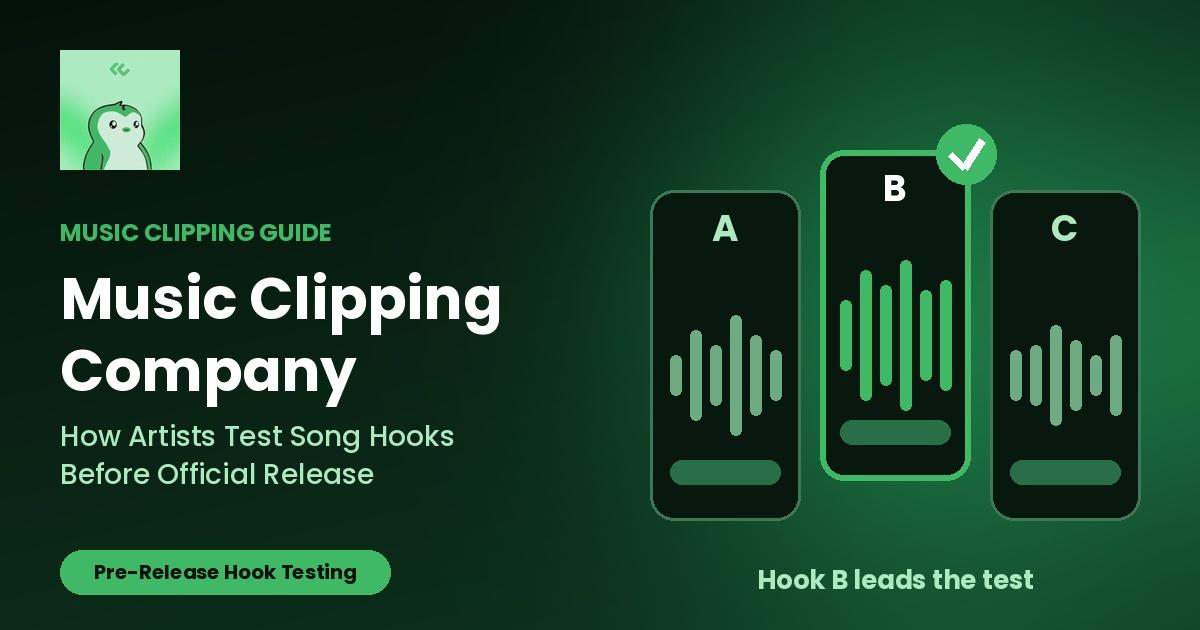
A clipping company helps artists answer a simple question before launch day: which part of this song will people remember? Instead of guessing, the artist posts short test clips and watches how real viewers react. The results often change which lyric, melody, or moment leads the release campaign.
I have spent more than twenty years in music and media marketing. In that time, I have seen great songs fail because the wrong moment was promoted. I have also seen modest tracks take off after one small hook found its audience. This guide explains how a music clipping company runs hook tests, what the data can and cannot tell you, and how to protect unreleased music along the way.
Why Song Hooks Matter More Than Ever
Listeners decide fast. On TikTok, Instagram Reels, and YouTube Shorts, a song gets a few seconds to earn attention. Therefore, the opening line of a clip often matters more than the full track.
A hook is the part of a song that sticks. It might be a chorus, a bassline, a spoken phrase, or a single lyric. Labels and artists have always chased hooks. However, short-form video changed the process. Now, audiences select hooks for them, and they do it publicly.
This shift creates a chance. Artists can see which moment resonates before spending a full release budget. A good clipping company turns that chance into a repeatable test.
What a Clipping Company Does for Music
A clipping company takes source material and turns it into short clips for social platforms. For music, the source might be a studio recording, a live performance, a lyric video, or behind-the-scenes footage. Editors cut it into vertical clips with captions and strong opening moments.
Next, the clips move into distribution. Creators and fan pages post them from their own accounts. Finally, the team tracks results and reports what worked.
You will see this work described in several ways. Some teams call themselves a music clipping agency. Others offer clipping services or act as clipping providers. The names differ, but the model is similar. What matters is whether the team handles editing only, or also manages posting and reporting. In short, a clipping company acts as the bridge between a finished clip and a real audience.
How Artists Test Hooks Before Release
Testing works best as a structured process. Here is how most campaigns run.
Step 1: Choose Hook Candidates
First, the artist and team pick three to five moments from the song. Each should feel strong on its own. For example, a chorus line, a bridge, a beat drop, and a catchy ad-lib might each become a candidate.
Step 2: Cut Several Versions of Each Hook
Next, editors build multiple clips per candidate. They test different lengths, captions, and visual styles. One version might show the artist performing. Another might use animated lyrics. A third might use a simple studio shot.
This variety matters. Otherwise, you cannot tell whether the hook or the format drove the result.
Step 3: Seed the Clips Across Accounts
Then comes clipping distribution. Creators post the clips across many accounts and audiences. Because each account has its own viewers, the test reaches different listener groups at the same time.
Posting should follow a plan. Each hook gets a similar number of posts, similar timing, and similar creator types. That balance keeps the comparison fair.
Step 4: Measure What Viewers Do
After a few days, the data starts to show patterns. The team compares clips by watch time, replays, shares, saves, and comments. It also notes whether viewers use the sound in their own videos.
Step 5: Decide and Double Down
Finally, the artist reviews the results. The winning hook often shapes the single's marketing, the opening of the official video, and the lead teaser for launch day. Weaker hooks may still serve as secondary content.
Which Signals Matter Most
Raw views alone can mislead. Better signals include:
- Watch-through rate. Do viewers stay until the hook ends?
- Replays. A repeated play suggests the moment is catchy.
- Saves and shares. These show strong interest.
- Comments asking for the song. Questions like "when does this drop?" are valuable.
- Sound reuse. Viewers who add the audio to their own videos confirm real appeal.
Together, these signals reveal intent. Views simply show reach.
Reading the Data Without Overreacting
Data helps, but it does not replace judgment. Several cautions apply.
First, sample sizes can be small. A single viral post can distort the picture. Therefore, look for patterns across many clips, not one standout.
Second, platforms behave differently. A hook that works on TikTok may land differently on YouTube Shorts. Compare results by platform before drawing conclusions.
Third, audience fit matters. A hook might win with casual scrollers but miss your core fans. Check who is engaging, not only how many.
Finally, remember that taste is human. If a hook tests well but feels off-brand, trust your artistic instincts. A clipping company supplies evidence. The artist makes the call.
Protecting Unreleased Music
Testing unreleased songs carries real risks. Careful teams plan for them from day one.
Rights and approvals. Confirm ownership of the master recording and the composition. Get written approval from the label, publisher, and any co-writers before posting a snippet.
Leak prevention. Share full tracks only with trusted people under agreement. Use short, partial clips for testing. Avoid releasing the complete chorus if the song needs a surprise.
Embargo timing. Align the test window with the release schedule. Posting too early can weaken the launch.
Disclosure. If creators receive payment, they should label posts clearly. In many countries, regulators expect visible disclosure of paid relationships. Rules vary, so consult a legal advisor.
Because of these risks, a trustworthy clipping company works from approved assets and a signed brief. Careful clipping providers ask for these approvals before they cut a single clip.
Common Mistakes in Pre-Release Hook Testing
Even good teams stumble. Watch for these errors:
- Testing only one hook, which leaves nothing to compare
- Changing format and hook at the same time
- Judging results after only a few hours
- Ignoring audience fit in favor of raw views
- Posting full-length unreleased audio without approval
Each mistake is easy to avoid. A clear plan and a patient review window fix most of them.
When to Start the Test
Timing shapes results. In general, begin hook tests several weeks before release. That window leaves room to test, review the data, and adjust the rollout.
A simple timeline looks like this:
- Six to eight weeks out: Choose hook candidates and prepare clips.
- Four to five weeks out: Run the first test round.
- Three weeks out: Review data and select the lead hook.
- Release window: Scale the winning clips and keep testing secondary ones.
Every song differs, so adjust the schedule to your plan. A clipping company can also revise the schedule if early results look unclear.
Who Benefits From Hook Testing
Different artists use the same method in different ways. Independent artists use small tests to find direction without a large budget. Labels run broader tests across several songs to choose a lead single. Producers and DJs test drops and samples to see which sound grabs attention. Meanwhile, songwriters pitching to other artists can show how a hook performs with real viewers.
In each case, the clipping company acts as a research partner, not just an editor.
Trends Shaping Music Clipping Marketing
Music discovery keeps shifting toward short-form video. Listeners find songs through clips first, then move to streaming apps. Because of this, clipping marketing has become a standard part of many release plans.
Three trends stand out. First, artists release teasers earlier and test more often. Second, fans expect behind-the-scenes content alongside the song. Third, platforms reward clips that spark reuse, such as dances, lip-syncs, and lyric challenges.
Short-form clipping fits all three. It gives artists a low-risk way to try ideas, learn from viewers, and refine the rollout before the song goes public.
How a Clipping Company Fits Into a Larger Music Plan
Hook testing works alongside, not instead of, other marketing. It supports pre-save campaigns, playlist pitching, press outreach, and live shows.
For example, a strong test result can guide which lyric appears in a pre-save graphic. It can also inform the opening scene of a music video. In this way, clipping marketing connects creative choices with audience evidence.
The approach also helps independent artists. Smaller teams rarely have large research budgets. A modest test can reveal useful direction without heavy spending.
How to Brief a Clipping Company on Your Song
A strong brief saves time and prevents mistakes. Before testing begins, give your clipping company clear information:
- The song's goal, such as streams, saves, or sync interest
- The target audience and key markets
- Approved audio, video, and lyric assets
- Moments that must stay secret until release
- The release date and any embargo rules
- Tone and visual style guidelines
With this brief, editors know what to cut and what to avoid. As a result, fewer revisions are needed, and tests start sooner.
How to Choose the Best Clipping Company for Music
Many artists search for the best clipping company, the best clipping agency, or the best clipping providers. Price is often the first filter. However, music campaigns need more than a low rate. Ask these questions before you commit:
- Have you worked with music before? Look for examples that show real release campaigns.
- How do you protect unreleased tracks? Ask about approvals, access limits, and embargo rules.
- How do you structure tests? A fair test uses balanced posting and clear comparisons.
- How do you count views? Reports should filter bot traffic.
- What will I receive? Expect clip-level data, not just a total number.
The best clipping services pair strong editing with real distribution. The best clipping marketing connects every test to a decision, such as which hook to promote. Likewise, the best clipping distribution relies on real accounts and honest reporting.
Be careful with any clipping company that guarantees a hit. Nobody controls a feed. An honest partner promises a clear process, transparent data, and careful handling of your music instead.
Final Thoughts
Hook testing gives artists something rare: evidence before launch. A clipping company cannot write a hit, but it can show which moment listeners already love. With careful rights checks, fair testing, and honest reading of the data, artists can promote the right part of the right song.
Lumina Clippers is a clipping company that runs music and entertainment campaigns across TikTok, Instagram Reels, YouTube Shorts, and X, working from approved assets and reporting verified views. Artists who want to try this approach can start with one song, test a few hooks, and review the results before planning a wider rollout.

 English
 Arabic
 Spanish
 Portuguese
 Deutsch
 Turkish
 Dutch
 Italiano
 Russian
 Romaian
 Portuguese (Brazil)
 Greek