


Cast Steel Valve Solutions for Oil and Gas Projects
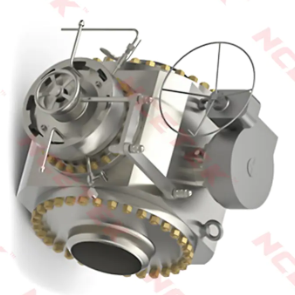
Large industrial pipeline systems require valves that can provide dependable isolation while handling specified pressure conditions and operating demands. A Cast Steel Trunnion Mounted Ball Valve combines a cast pressure-containing body with a mechanically supported ball structure. This configuration is commonly considered for pipeline applications where valve size, pressure requirements, and operating torque make trunnion support suitable. Its performance depends on the quality of the casting, internal component design, sealing arrangement, and manufacturing controls applied throughout production.
The basic operating principle involves a spherical closure element with a central flow passage. When the ball rotates to align the passage with the pipeline, fluid can move through the valve. Rotating the ball by approximately a quarter turn places the solid section across the flow path to isolate the pipeline. Unlike a floating ball structure, a trunnion-mounted design uses mechanical supports to hold the ball in position. These supports help control ball movement and transfer operating loads into the valve body.
Cast steel is used for the pressure-containing body because the casting process can accommodate a range of complex shapes and body configurations. The selected steel grade should match the required mechanical properties, operating temperature, pressure conditions, and fluid compatibility. Carbon steel and other suitable alloy compositions may be considered according to the project specification. The casting process must be controlled to support material consistency and structural integrity. Casting quality, heat treatment where required, machining allowance, and inspection procedures all influence the suitability of the finished component.
The trunnion support system is an important structural feature. The ball is supported by upper and lower trunnions or equivalent bearing arrangements, reducing the degree to which line pressure moves the ball toward the downstream seat. This differs from a floating ball valve, where line pressure contributes to pushing the ball against the downstream seat. By supporting the ball mechanically, the trunnion design can help manage operating torque in suitable larger-size or higher-pressure applications. The final structure should be selected according to the valve's dimensions and service requirements.
Seat design determines how the valve establishes its sealing function. Trunnion-mounted valves commonly use movable seat arrangements that respond to pressure conditions and the valve's internal geometry. Seat materials may include suitable polymer-based materials or metal seating components, depending on temperature, fluid characteristics, and leakage requirements. Soft-seated configurations can provide tight shutoff within their specified operating limits, while metal-seated designs may be considered for particular demanding services. The appropriate selection requires evaluation of the medium, pressure direction, temperature, and expected operating frequency.
Stem and bearing components also contribute to reliable operation. The stem transfers rotational force from the operating device to the ball, while bearings and support components help maintain the intended mechanical relationship. Stem materials and surface finishes should be selected according to mechanical loads and environmental conditions. Packing and sealing arrangements are designed to help prevent leakage around the stem. Their material selection must consider temperature, pressure, fluid compatibility, and the requirements of the applicable design.
Manufacturing quality begins with the preparation and inspection of cast components. After casting, the body may undergo cleaning, heat treatment where specified, dimensional checks, and non-destructive examination according to project requirements. Machining then establishes critical surfaces, including flange faces, body joints, seat pockets, and stem interfaces. Precision machining is essential because dimensional deviations can affect component alignment, assembly quality, and sealing performance. The ball and seat contact surfaces require particular attention to geometry and surface finish.
Assembly involves fitting the ball, trunnions, bearings, seats, stem, packing, and other internal components into the body. The installation sequence and component positioning should follow controlled procedures. After assembly, operating checks can help identify unusual resistance, interference, or inconsistent movement. Manual gearboxes or powered actuators may be selected depending on valve size, operating torque, and control requirements. For automated installations, the actuator interface and control arrangement should be coordinated with the wider pipeline system.
Inspection and testing should be based on the applicable design standards and purchase specifications. Common quality procedures include material verification, dimensional inspection, visual examination, operating tests, and pressure testing. Additional non-destructive testing may be specified for selected castings or critical components. The scope of testing should be confirmed during procurement, including applicable acceptance criteria and required documentation. Buyers should avoid assuming that every valve configuration follows the same inspection plan.
These valves are used in oil and gas transmission, petrochemical facilities, power generation, and other industrial pipeline networks. Different applications require different combinations of body material, seat construction, end connections, operating methods, and protective coatings. A valve for a general process line may not be suitable for a corrosive or elevated-temperature application without a proper engineering review. Providing accurate operating data allows manufacturers to recommend a configuration that aligns with the intended service conditions.
When selecting a Cast Steel Trunnion Mounted Ball Valve, buyers should assess casting quality, trunnion support design, seat materials, machining accuracy, testing procedures, and compatibility with the pipeline system. These factors contribute to a more informed purchasing decision and help reduce specification gaps during installation. Zhejiang Naishi Valve Co., Ltd. provides industrial valve solutions for different pipeline requirements. Buyers can explore product categories and discuss suitable configurations through https://www.ncevalve.com/product/.

 Arabic
 French
 Spanish
 Portuguese
 Deutsch
 Turkish
 Dutch
 Italiano
 Russian
 Romaian
 Portuguese (Brazil)
 Greek