


Understanding Plunger Design and Pump Performance
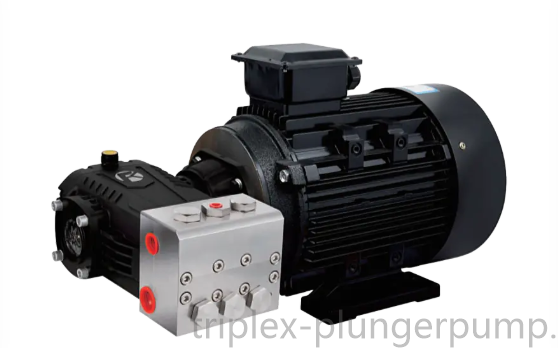
Industrial pumping equipment must accommodate different liquid characteristics, operating pressures, and mechanical requirements across a wide range of applications. When evaluating a Plunger Pump, engineers and purchasing professionals should pay particular attention to the relationship between plunger movement, sealing performance, pump head construction, and the properties of the transferred liquid. These factors influence the equipment's ability to maintain consistent hydraulic output and determine whether a particular design is appropriate for industrial cleaning, water jetting, or other fluid handling operations.
The operating principle is based on reciprocating displacement. A plunger moves forward and backward through a pumping chamber, changing the available volume and generating the pressure difference required for liquid intake and discharge. During the suction stroke, the chamber fills through an inlet valve. During the discharge stroke, the moving plunger reduces the chamber volume and forces liquid through the outlet valve. This cycle continues as the mechanical drive rotates.
One important characteristic of this construction is the relationship between the moving plunger and the stationary sealing arrangement. Unlike a conventional piston, which normally carries a sealing element around its outer surface, a plunger passes through packing or sealing components positioned around its path of movement. This arrangement can provide a different approach to pressure containment and maintenance. The suitability of the design depends on the operating pressure, plunger dimensions, sealing material, and characteristics of the pumped medium.
The main mechanical assembly generally includes a crankshaft, connecting rods, plungers, packing components, a pump head, and inlet and outlet valves. The crankshaft converts rotary movement into reciprocating motion. Connecting rods transmit mechanical force to the plungers, while the pump head contains the liquid chambers and internal flow passages. The valves regulate the direction of liquid movement and help prevent unwanted reverse flow during operation.
The plunger surface is particularly important because it repeatedly passes through the sealing arrangement. Dimensional accuracy, surface finish, hardness, and wear resistance influence the contact conditions between the moving component and its packing. Poor surface quality or unsuitable tolerances may increase friction, accelerate seal wear, or contribute to leakage. Material selection should therefore be based on the intended working environment rather than appearance or initial purchase cost alone.
Different materials can be considered for different component requirements. Ceramic plungers may be used in designs where hardness and wear resistance are important. Metallic materials can provide mechanical strength and structural support. Stainless steel is another option for components where corrosion resistance is required. Packing materials must also be compatible with the operating temperature, liquid composition, and mechanical movement. Buyers should verify the actual material specifications for each component.
Industrial cleaning equipment is a common application for reciprocating displacement technology. Pressurized water is used to remove dirt, oil, deposits, and other contaminants from machinery and industrial surfaces. The pump supplies the hydraulic energy, while the nozzle determines the shape and distribution of the water jet. Cleaning performance depends on pressure, flow rate, spray geometry, surface distance, and the type of contamination being removed.
Water jetting systems may also be used for equipment maintenance and selected surface preparation tasks. Different applications require different combinations of pressure and flow. A concentrated jet may be suitable for removing stubborn deposits, whereas a larger flow volume may be more appropriate for flushing or general cleaning. System designers must match the pump output with the nozzle, hose, fittings, valves, and other accessories to avoid operating outside their specified limits.
Another important consideration is the number of pumping elements. Single-element configurations provide a relatively simple arrangement, while multiple-plunger designs can distribute the discharge cycle across several chambers. A triplex arrangement uses three plungers operating at different points in the cycle. This can reduce output fluctuations and support more consistent delivery, depending on the mechanical and hydraulic design.
Before selecting equipment, buyers should identify the required pressure, flow rate, operating speed, duty cycle, and liquid properties. Installation dimensions, motor compatibility, inlet conditions, and maintenance access should also be considered. For machinery manufacturers, these specifications are essential when incorporating a pump into an existing product design. For distributors, clear technical information makes it easier to match equipment with different customer requirements.
Maintenance should include inspection of packing, plunger surfaces, valves, lubrication, and fluid connections. Seal wear may become evident through leakage, while damaged valves can cause unstable discharge or reduced output. Operators should investigate abnormal vibration, noise, and temperature changes rather than continuing operation without checking the underlying cause. Replacement components should match the original design requirements.
International procurement teams should additionally evaluate spare parts availability, component identification, technical documentation, packaging, and supplier communication. These factors influence after-sales support and inventory management, especially when products are supplied through wholesale or distribution channels. A correctly specified Plunger Pump should be assessed according to its mechanical construction and application requirements, with available product information provided at https://www.triplex-plungerpump.com/product/pumps/.

 English
 Arabic
 French
 Spanish
 Portuguese
 Deutsch
 Turkish
 Dutch
 Italiano
 Russian
 Portuguese (Brazil)
 Greek