


Disruptive Business Models - Redefining Competition and Business Growth
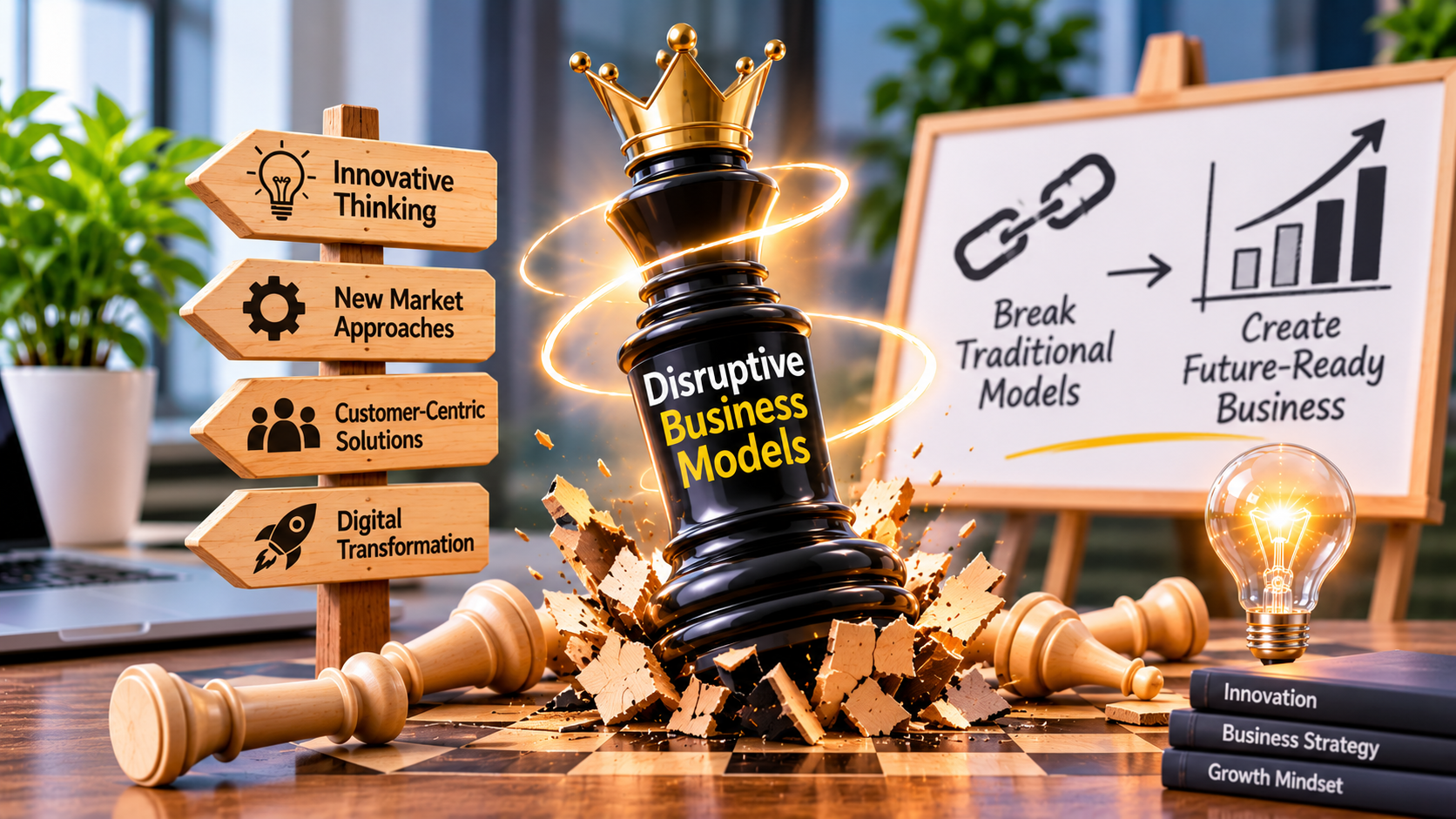
Modern industries are experiencing significant changes as technology advances and customer expectations continue to develop. Businesses can no longer depend entirely on traditional operating methods to maintain their competitive positions. Consumers increasingly expect convenient services, flexible pricing, faster delivery, and solutions that address their individual requirements.
These changing expectations create opportunities for organizations willing to reconsider established practices. Companies can reach new audiences, simplify purchasing processes, and introduce alternative revenue strategies. Success often depends on identifying problems that existing providers have overlooked and developing practical ways to solve them.
Disruptive Business Models are an important part of this transformation. They introduce alternative methods of delivering products and services, challenging established industry practices and encouraging organizations to rethink how they compete. Their long-term value comes from solving customer problems while maintaining a financially sustainable business structure.
Understanding Disruptive Business Models
A business model describes how an organization creates value, delivers its offerings, and generates revenue. A disruptive approach changes important parts of this structure to provide customers with a different experience or a more accessible alternative.
For example, online streaming platforms changed the entertainment industry by allowing viewers to access large content libraries through subscriptions. Customers gained greater control over what they watched and when they watched it. This approach gradually influenced consumer expectations and encouraged traditional providers to reconsider their services.
Disruption does not always require advanced technology. A company may introduce a simpler purchasing process, offer more affordable services, or reach customers who previously had limited access to a particular product. The essential factor is providing a meaningful alternative that responds to an existing market need.
How New Business Approaches Transform Industries
Industry transformation often begins when customers discover a better way to access a product or service. Businesses that understand these changing preferences can introduce alternatives that challenge established competitors.
Retail provides a clear example. Online marketplaces allow consumers to compare products, check customer reviews, and complete purchases without visiting several physical stores. In transportation, digital platforms connect passengers with available drivers through mobile applications. Educational organizations also use online learning systems to reach students beyond traditional classroom locations.
These changes affect established companies as well. Traditional organizations may introduce digital ordering, improve customer support, revise pricing, or develop new delivery options to remain relevant.
The result is often increased competition and greater customer choice. Businesses must continue improving their offerings rather than depending exclusively on historical reputation or market position.
Popular Types of Disruptive Business Strategies
Different commercial structures can change how companies interact with customers and generate income. Several approaches have become particularly influential.
Subscription-Based Services
Subscription businesses provide ongoing access to products or services through recurring payments. This approach is widely used by software providers, entertainment platforms, online publications, and membership organizations.
Recurring revenue can improve financial predictability and encourage longer customer relationships. Customers may also appreciate convenient access without making repeated individual purchases. However, companies must maintain quality and provide consistent value to reduce cancellations.
Digital Marketplace Platforms
Digital marketplaces connect buyers and sellers through online platforms. Operators provide the infrastructure for product discovery, communication, payments, and transactions.
These platforms may generate revenue through commissions, advertising, seller subscriptions, or additional services. Their success depends on user trust, platform reliability, and the ability to attract active buyers and sellers.
Direct-to-Consumer Businesses
Direct-to-consumer companies sell products through their own websites, applications, or stores. This reduces dependence on traditional retail intermediaries and gives businesses greater control over branding, pricing, and customer communication.
Direct relationships also provide useful information about purchasing behavior and customer preferences. Organizations can use these insights to improve products and service delivery.
On-Demand Service Platforms
On-demand businesses allow customers to request services when required. Transportation, food delivery, and home maintenance applications are common examples.
Convenience, availability, reliable service providers, and transparent pricing are important factors behind this structure.
The Role of Technology in Business Transformation
Technology makes it possible for organizations to develop services and operating systems that were previously difficult to implement. Artificial intelligence, cloud computing, automation, mobile applications, and data analytics are changing business activities across numerous industries.
Artificial intelligence can support customer communication, information processing, and routine administrative tasks. Automation reduces repetitive work, while cloud platforms help employees collaborate and access information remotely.
Data analytics provides insight into purchasing patterns, customer preferences, and operational performance. Businesses can use these findings to identify market opportunities and make informed decisions.
However, technology should not be adopted simply because it is popular. Organizations must understand their requirements, evaluate investment costs, and select solutions that produce measurable benefits.
Benefits for Customers and Organizations
Alternative commercial structures can create advantages for both businesses and consumers. Customers may receive more convenient services, flexible payment arrangements, wider product selections, and improved access to previously unavailable solutions.
Companies can explore new revenue sources, reach different audiences, and reduce dependence on traditional distribution channels. Digital operations may also improve efficiency by simplifying communication, order processing, and customer support.
Disruptive Business Models can encourage established organizations to improve their offerings and respond more effectively to customer expectations. This can create healthier competition based on accessibility, service quality, affordability, and convenience.
Another potential advantage is adaptability. Businesses that regularly evaluate their operations are better positioned to respond to market developments and changing economic conditions.
Challenges of Introducing New Commercial Structures
Developing an alternative business approach involves several risks. Customer acceptance is one of the most important considerations. People may hesitate to adopt unfamiliar services, especially when financial transactions or personal information are involved. Clear communication and dependable customer support can help build confidence.
Financial investment can also become a barrier. Market research, technology development, employee training, and marketing activities may require considerable resources. Companies should evaluate expected costs before committing to major changes.
Internal resistance is another challenge. Employees may be comfortable with existing procedures and uncertain about new responsibilities. Management should provide appropriate training and explain how proposed changes support organizational objectives.
Competition creates additional pressure. When a new approach becomes successful, other organizations may introduce similar offerings. Continuous improvement and strong customer relationships are therefore essential.
Building a Sustainable Strategy for Future Growth
A successful strategy begins with understanding customer problems. Organizations should conduct market research, examine competitor activities, and identify areas where existing services fail to meet expectations.
The next step is evaluating financial feasibility. Businesses should calculate development expenses, operating costs, pricing options, and potential revenue before introducing a new initiative.
Testing a small version of a service can reduce uncertainty. Pilot projects allow companies to collect feedback, identify weaknesses, and make improvements before expanding operations.
Disruptive Business Models are more likely to produce lasting results when organizations establish measurable objectives. Important indicators include customer retention, revenue performance, operating expenses, customer satisfaction, and service reliability.
Businesses should also encourage employee participation and maintain responsible management practices. Protecting customer information, communicating prices transparently, and delivering consistent quality can support long-term trust.
Frequently Asked Questions
1. What are disruptive business models?
They are alternative commercial structures that change how organizations create, deliver, and generate value, often by offering customers more accessible or convenient solutions.
2. What is a common example of business disruption?
Subscription-based streaming services are a common example because they changed how audiences access entertainment compared with traditional broadcasting and physical media.
3. Can small companies introduce disruptive strategies?
Yes. Small businesses can serve overlooked customer groups, use digital platforms, introduce specialized services, or improve purchasing experiences.
4. How does technology support business disruption?
Technology enables digital transactions, automation, data analysis, online communication, and new service delivery methods that can improve efficiency and customer access.
5. What makes a disruptive business strategy sustainable?
A sustainable strategy addresses genuine customer needs, manages costs carefully, maintains service quality, protects customer trust, and adapts through regular performance evaluation.

 English
 French
 Spanish
 Portuguese
 Deutsch
 Turkish
 Dutch
 Italiano
 Russian
 Romaian
 Portuguese (Brazil)
 Greek