


Business Model Innovation - Strategies for Sustainable Business Growth
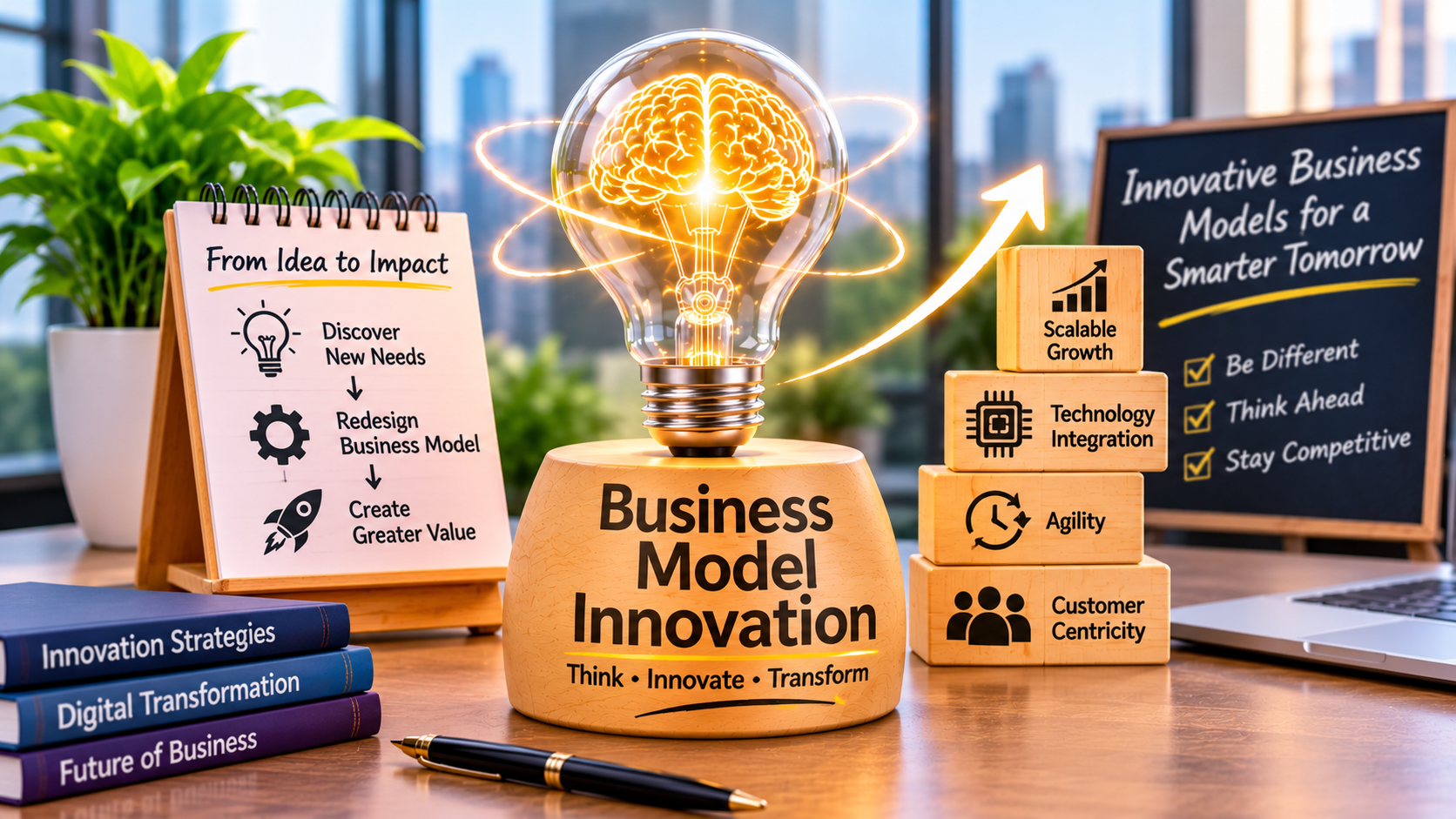
Businesses operate in an environment where customer expectations, technology, and market conditions are constantly changing. Traditional methods that once delivered strong results may gradually become less effective as competitors introduce new services and consumers demand greater convenience. Organizations must therefore review their operations and identify better ways to serve customers while maintaining financial stability.
Growth is not always achieved by developing entirely new products. Companies can also improve their performance by changing how they deliver services, manage resources, establish partnerships, or generate revenue. These adjustments can help organizations respond to emerging opportunities and remain competitive.
Business Model Innovation provides a practical framework for rethinking how a company creates value and operates in its market. It encourages decision-makers to examine existing structures, identify weaknesses, and develop approaches that support customer satisfaction and long-term performance.
Understanding Business Model Innovation
A business model explains how an organization creates value, delivers products or services, and earns revenue. It includes several connected elements, such as target customers, pricing methods, distribution channels, operational resources, and strategic partnerships.
Improving this structure may involve changing one element or redesigning several activities together. For example, a retailer might introduce online ordering and home delivery to reach customers who cannot easily visit its physical locations. A software provider may replace one-time purchases with subscriptions that provide continuous access to its services.
The objective is not simply to introduce something different. A successful approach must solve a genuine customer problem while remaining financially practical for the organization. Careful planning helps businesses distinguish meaningful improvements from changes that create unnecessary costs.
Why Companies Need to Rethink Traditional Strategies
Market conditions can change because of new technology, economic developments, consumer preferences, and increased competition. Organizations that depend entirely on established practices may struggle when customers begin expecting faster service, flexible payment options, or more personalized experiences.
Reviewing existing operations helps management recognize opportunities before competitors take advantage of them. Businesses can identify underserved audiences, improve service delivery, and explore additional sources of income.
Another important reason is operational efficiency. Older procedures may involve duplicated responsibilities, unnecessary expenses, or outdated systems. Reassessing these activities can help organizations use their resources more effectively.
Companies that remain open to improvement are also better prepared to manage unexpected market developments. Rather than reacting only when performance declines, they can make informed adjustments based on customer feedback and business results.
Essential Elements of an Effective Business Model
A strong commercial structure depends on several elements working together. Each component should support the organization's objectives and provide a clear benefit to its customers.
Clear Customer Value Proposition
A value proposition explains why customers should select a particular product or service. It identifies the problems a company addresses and communicates the benefits its offerings provide.
Businesses should understand their target audiences before developing this proposition. Surveys, customer interviews, purchasing trends, and market research can reveal important preferences. Clear communication then helps potential buyers understand the organization's advantages.
Suitable Revenue and Pricing Methods
Revenue strategies determine how a business earns money. Common methods include direct sales, subscriptions, licensing, commissions, advertising, and service fees.
Choosing an appropriate method requires consideration of customer budgets, operating expenses, market demand, and profit margins. Pricing should reflect the value delivered while allowing the company to cover costs and maintain sustainable operations.
Reliable Distribution Channels
Distribution channels determine how products and services reach customers. Businesses may use physical stores, websites, mobile applications, online marketplaces, or independent distributors.
The right channels can improve convenience and expand market access. Organizations should examine where their customers prefer to discover, purchase, and receive products.
Productive Strategic Partnerships
Partnerships allow organizations to share resources, expertise, technology, and market access. Cooperation with suppliers, manufacturers, and service providers can strengthen capabilities and reduce operational limitations.
Clear responsibilities and shared objectives are important for maintaining productive business relationships.
The Role of Technology in Modern Business Development
Technology has become an important part of commercial planning. Artificial intelligence, cloud computing, automation, e-commerce, and data analytics provide tools that can improve productivity and customer experiences.
Automation can reduce repetitive administrative work, allowing employees to focus on more complex responsibilities. Cloud-based platforms support collaboration, while analytics tools help management understand purchasing behavior and evaluate performance.
Digital channels also make it possible to reach audiences beyond traditional geographical boundaries. Companies can promote products, accept payments, provide customer assistance, and collect feedback through online platforms.
However, technology should support a clearly identified business requirement. Investing in expensive systems without understanding their practical value may increase costs without producing meaningful improvements.
Benefits of Adopting New Business Approaches
A carefully planned commercial transformation can create several advantages. One major benefit is stronger competitiveness. Organizations that improve convenience, service quality, and pricing flexibility may attract customers who are dissatisfied with existing alternatives.
Business Model Innovation can also help companies identify additional revenue opportunities. A business might introduce complementary services, create membership packages, or expand into digital distribution. Diversifying income sources can reduce dependence on a single product or customer group.
Operational efficiency is another potential advantage. Reviewing internal processes may help reduce unnecessary expenses, improve coordination, and make better use of available resources.
Customer relationships can become stronger when services are designed around genuine needs. Reliable support, transparent pricing, and convenient purchasing methods can encourage trust and repeat business.
Common Challenges and How to Manage Them
Changing established operations requires preparation. Employees and managers may resist unfamiliar procedures, particularly when existing systems appear reliable. Clear communication, practical training, and leadership support can make the transition easier.
Financial limitations may also affect implementation. Market research, technology development, staff training, and promotional activities require investment. Businesses should assess available resources and estimate potential costs before committing to major changes.
Customer acceptance is equally important. People may hesitate to adopt unfamiliar services or payment arrangements. Companies should explain the benefits clearly, address concerns, and gather feedback during implementation.
Competition creates another challenge. Successful strategies can attract similar offerings from other organizations. Regular evaluation and continued improvement are necessary to maintain customer interest.
Practical Steps for Long-Term Success
Organizations should begin by reviewing their current operations. This includes examining customer requirements, revenue sources, expenses, distribution channels, and competitor activities. The purpose is to identify specific weaknesses and realistic opportunities.
Next, management should establish clear priorities. Not every proposed change deserves immediate investment. Businesses should focus on improvements that offer measurable customer or operational benefits.
Testing ideas through pilot projects can reduce uncertainty. A limited launch allows the organization to collect feedback, evaluate costs, and identify problems before expanding the initiative.
Business Model Innovation becomes more effective when companies monitor measurable indicators such as revenue, customer retention, operating expenses, and service quality. Regular reviews help management determine whether a strategy is achieving its intended objectives.
Employees should also be encouraged to contribute ideas and participate in improvements. Their practical experience can reveal operational problems that may not be immediately visible through financial reports.
Frequently Asked Questions
1. What does business model innovation mean?
It refers to changing how an organization creates value, delivers products or services, and generates revenue to improve its market position and customer experience.
2. Why is it important for modern businesses?
It helps organizations respond to changing customer expectations, improve efficiency, explore new revenue opportunities, and remain competitive.
3. What are common examples of innovative business models?
Examples include subscription services, digital marketplaces, direct-to-consumer operations, online learning platforms, and on-demand service applications.
4. How can technology support business development?
Technology can simplify transactions, automate routine tasks, improve communication, support data analysis, and help organizations reach wider audiences.
5. How can a company measure the success of a new business model?
Companies can monitor profitability, revenue growth, customer satisfaction, retention rates, operating costs, and the quality of their products or services.

 English
 Arabic
 French
 Spanish
 Portuguese
 Deutsch
 Dutch
 Italiano
 Russian
 Romaian
 Portuguese (Brazil)
 Greek