


Loft Insulation Birmingham: A Guide for Older and Period Homes

Victorian terraces, Edwardian villas and 1930s semis give many streets their character, but these homes were built long before modern insulation standards. As a result, many still have little or no insulation in the loft, or only a thin layer added decades ago. Careful loft insulation Birmingham work can make older homes far warmer, while respecting the features and construction methods that make them special.
This guide explains what makes older lofts different, the checks to make before insulating, and how to improve warmth without causing damp or damage.
Why Older Homes Lose So Much Heat
Older properties were often built with solid walls, single glazing and minimal roof insulation. Over time, many have been improved, but the loft is frequently overlooked.
Little or Outdated Insulation
Some lofts still have no insulation at all. Others have a thin layer laid many years ago, which may have settled or been disturbed.
Draughty Construction
Older homes often have more gaps, from loose hatches to old ceiling fittings. These let warm air rise into the roof space.
What Makes Older Lofts Different
Before insulating, it helps to understand how period lofts differ from those in modern homes.
| Feature | What it means | What to consider |
|---|---|---|
| Traditional rafters | Often a more open loft | Easier access for insulation |
| Uneven or irregular joists | Spacing may vary | Material must be cut to fit snugly |
| Lath and plaster ceilings | Can be fragile | Work carefully to avoid cracking |
| Old wiring | May be dated or damaged | Have it checked before covering |
| Older roof coverings | Greater risk of leaks | Check for damp first |
Checks to Make Before Insulating
Older lofts benefit from a careful inspection before any new insulation goes in. These checks help prevent problems later.
Damp and Leaks
Look for water stains, damp timbers or wet patches. Older roofs may have slipped tiles, worn felt or failed flashing, and these should be repaired before insulating.
Timber Condition
Check for signs of woodworm or rot. Treating timbers before insulation is laid is far easier than doing it later.
Electrical Safety
Old wiring should be checked by a qualified electrician, particularly if cables look brittle or damaged. Cables should never be buried under insulation.
Old Water Tanks
Many period homes still have cold water tanks in the loft. If they are still in use, they need insulating and the pipes need lagging.
Protecting Lath and Plaster Ceilings
Lath and plaster ceilings are common in older homes and can be more fragile than modern plasterboard. Installers need to move carefully across the joists and avoid putting weight between them. If any cracks already exist, note them before work begins.
This is one reason professional installation is especially worthwhile in older properties. Experienced loft insulation Birmingham installers know how to work safely above delicate ceilings.
Ventilation in Older Lofts
Older homes were often designed to breathe, with natural airflow through the roof. Adding insulation changes how warm the loft gets, so ventilation becomes even more important.
Keep the eaves clear so air can still move through the roof space. Avoid sealing the loft completely, as trapped moisture can lead to condensation and damage to timbers. Where needed, eaves ventilators can help maintain airflow.
Choosing the Right Approach
Most older lofts can be insulated using mineral wool rolls laid between and across the joists, reaching the recommended depth of 270mm. However, uneven joists mean the material may need cutting to fit snugly.
Top-Up or Replace?
If the existing insulation is dry and clean, a top-up is usually enough. If it is damp, dirty or damaged by pests, it should be removed and replaced.
Combining Insulation With Storage
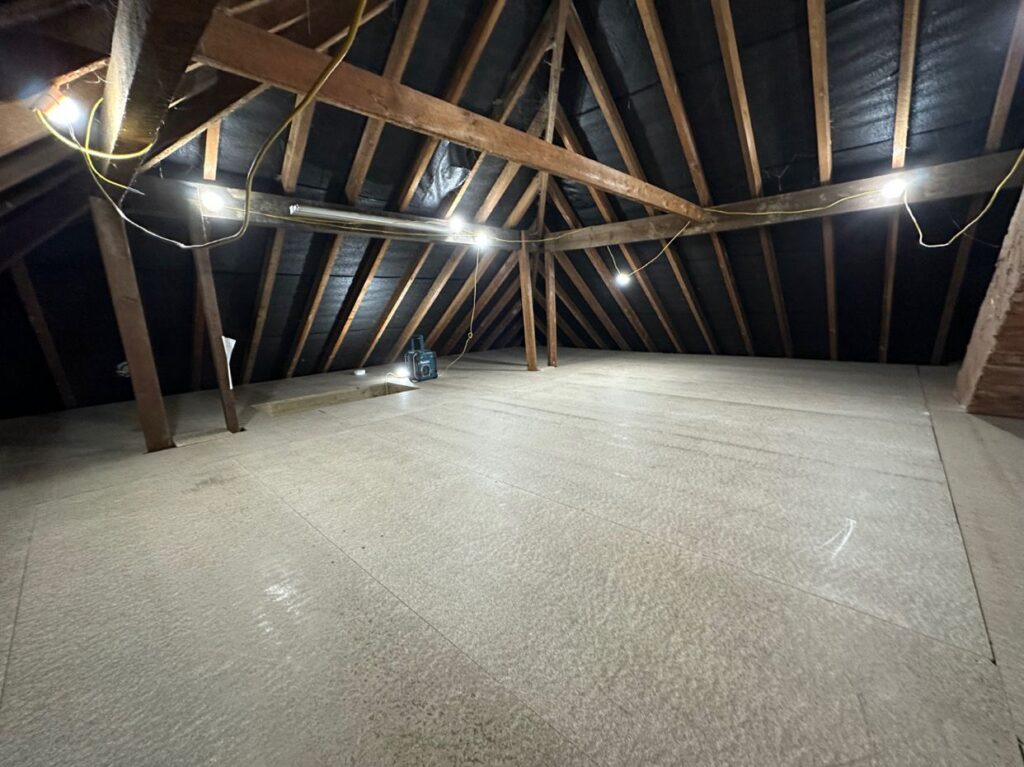
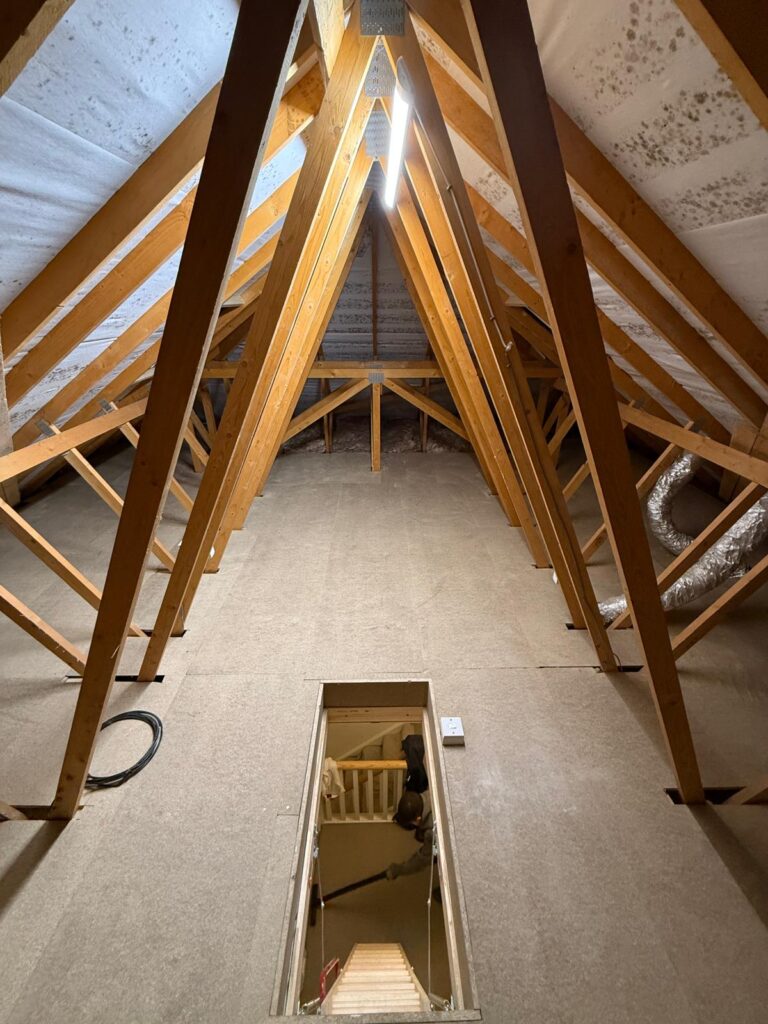
If you want to use the loft for storage, a raised floor keeps the boards above the insulation, so it stays at full depth. Insulation can also be fitted around existing raised boards.
The Loft Hatch in Period Homes
Older homes often have small, uninsulated hatches. Adding insulation to the back of the hatch and a draught seal around its edge helps stop warm air escaping. If you use the loft regularly, a fitted hatch with a loft ladder may be worth considering.
Common Mistakes in Older Lofts
Older homes bring a few specific risks. Avoiding these mistakes helps protect both the house and the new insulation.
- Insulating over damp timbers or an active leak
- Pushing insulation into the eaves and blocking airflow
- Covering old or damaged wiring
- Walking between joists above fragile ceilings
- Laying insulation beneath water tanks, which can then freeze
Looking After Insulation in an Older Home
Once the work is complete, a quick check each year helps keep the insulation working well. Look for damp patches, flattened areas or signs of pests, especially after storms or roof repairs.
After Work by Other Trades
Electricians and plumbers sometimes move insulation aside in older lofts. Check that it has been put back evenly afterwards, with no gaps left behind.
Keeping Ventilation Clear
Make sure stored items, boards or loose insulation never block the eaves. Clear airflow is especially important in older roofs that rely on natural ventilation.
Respecting Your Home's Character
Insulating the loft is usually one of the least intrusive ways to improve an older home, because it does not change the appearance of the house. If your home is listed or in a conservation area, check with the local planning authority before any wider alterations, although loft insulation alone does not normally need planning permission.
What a Professional Service Includes
A professional loft insulation Birmingham service starts with a free survey, which is especially valuable in older homes. The installer checks insulation depth, timbers, ventilation, wiring and any signs of damp. You then receive a fixed quote. During installation, the team lays the material carefully, protects fragile ceilings, keeps the eaves clear and removes all waste.
When comparing loft insulation Birmingham quotes, ask how each installer will handle uneven joists, ventilation and lath and plaster ceilings.
Frequently Asked Questions
Can an old loft be insulated?
Yes. Most older lofts can be insulated, though they may need extra checks for damp, timbers and wiring.
Will insulation damage my lath and plaster ceiling?
Careful installation reduces the risk. Installers avoid putting weight between the joists.
Should I remove old insulation?
Only if it is damp, dirty or damaged. Dry, clean insulation can usually be topped up.
Does insulating an older loft cause damp?
Not if ventilation is maintained. Keep the eaves clear so the roof space can stay dry.
What if my older loft has no insulation at all?
A bare loft usually sees the biggest improvement. After checking for damp and wiring issues, insulation can be laid in two layers to reach the recommended depth.
Do I need planning permission?
No. Loft insulation does not normally need planning permission, even in older homes.
Final Thoughts
Older homes have character, but they often lose heat through the roof. By checking for damp, protecting fragile ceilings and keeping ventilation clear, you can insulate your loft safely and enjoy a warmer home without harming its charm.
If you live in an older property, FIXIT Renovation offers loft insulation Birmingham homeowners can book with a free survey and a fixed, no-obligation quote.

 English
 Arabic
 French
 Spanish
 Portuguese
 Deutsch
 Dutch
 Italiano
 Russian
 Romaian
 Portuguese (Brazil)
 Greek