


Is a hair transplant painful, and what anesthesia is used in Jeddah?
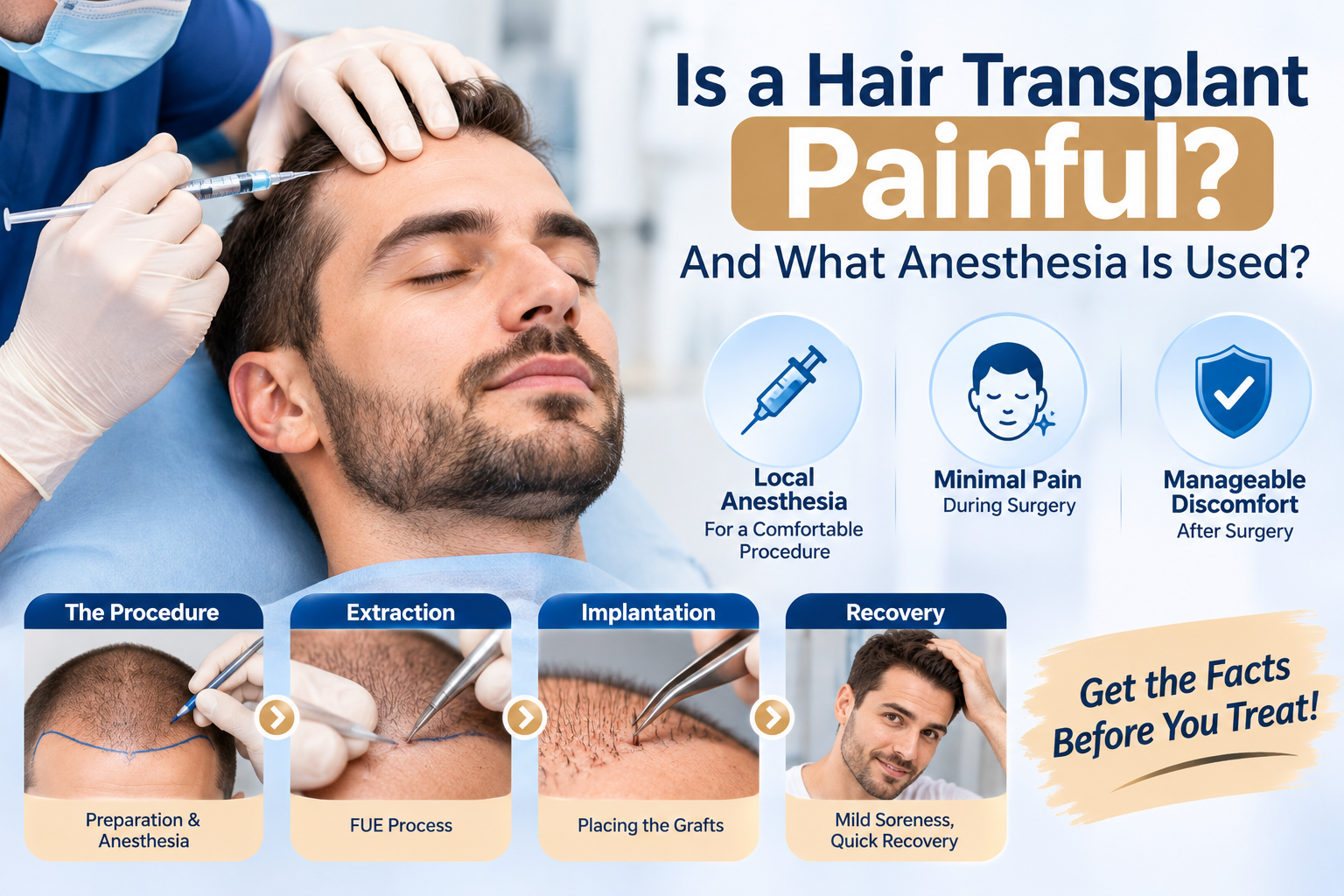
A hair transplant is generally performed under local anesthesia, which numbs the donor and recipient areas so patients can undergo the procedure without significant pain. However, this does not mean the experience is completely sensation-free. Some people feel brief discomfort, pressure, or a stinging sensation when the anesthetic is administered, while mild soreness, tightness, or tenderness may occur after the procedure.
The level of discomfort depends on individual pain sensitivity, the number of grafts, the surgical technique, and the patient's overall health. Understanding how anesthesia works, what sensations to expect, and how recovery is managed can make the decision to undergo hair restoration less stressful.
Does a Hair Transplant Hurt During the Procedure?
For most patients, a Hair Transplant in Jeddah is not significantly painful during the main surgical stages because local anesthesia blocks pain signals in the treated areas.
You may remain awake throughout the procedure, depending on the clinical plan. Although you should not feel sharp pain once the area is adequately numb, you may notice pressure, movement, vibration, or gentle pulling sensations.
The experience can differ between FUE, Sapphire FUE, and DHI procedures because each technique involves different extraction and implantation steps.
What Does the Anesthetic Injection Feel Like?
The initial administration of local anesthesia is often the most uncomfortable part of the procedure.
Patients may experience:
-
A brief stinging or burning sensation.
-
Mild pressure as the anesthetic is injected.
-
Temporary discomfort around the donor or recipient area.
-
A feeling of numbness developing over several minutes.
The sensation usually settles as the anesthetic takes effect. The medical team may use appropriate techniques to make administration more comfortable.
Can You Feel the Hair Extraction?
During Follicular Unit Extraction (FUE), individual follicular units are removed from the donor area using a small punch instrument.
Once the area is adequately numb, patients generally do not feel sharp pain during extraction. However, some may notice pressure, vibration, or movement as the surgeon works.
The same principle applies during implantation. The recipient area is numbed so that follicles can be placed into prepared sites with minimal pain.
If you experience sharp or increasing discomfort, inform the medical team immediately. Additional assessment or anesthetic may be needed.
What Type of Anesthesia Is Used for Hair Transplant Surgery?
Local anesthesia is the standard anesthetic approach for many hair transplant procedures. It temporarily blocks sensation in specific areas of the scalp while allowing the patient to remain conscious.
The surgeon or qualified medical professional administers anesthetic medication around the donor and recipient regions according to the treatment plan.
1. Local Anesthesia
Local anesthesia is commonly used for FUE, Sapphire FUE, and DHI hair transplantation.
It helps numb the areas where follicles are extracted and implanted. Patients generally remain awake and can communicate with the medical team throughout the procedure.
The amount and type of anesthetic depend on the patient's medical history, treatment area, and clinical requirements.
2. Sedation in Selected Cases
Some clinics may offer additional sedation for selected patients who experience significant anxiety or difficulty remaining comfortable during a lengthy procedure.
Sedation is different from local anesthesia. It may help a patient feel relaxed or drowsy, but it does not replace the need for appropriate local numbing of the scalp.
Its use depends on medical suitability, the procedure, available monitoring, and the clinician's assessment. Patients should ask whether sedation is offered and who will administer and monitor it.
3. General Anesthesia
General anesthesia is not routinely required for standard hair transplantation. Most procedures can be completed using local anesthesia, with or without selected additional comfort measures.
General anesthesia involves a different level of medical care and monitoring. It would only be considered when there is a specific clinical reason.
What Happens During a Hair Transplant? Understanding the Comfort Level at Each Stage
Knowing what happens during surgery can help patients understand when discomfort is most likely.
Donor Area Preparation
The donor area, usually at the back or sides of the scalp, is prepared for follicle extraction. The scalp is cleaned, and local anesthetic is administered.
Patients may feel brief injection discomfort before the area becomes numb.
Follicle Extraction
In FUE, individual follicular units are extracted using a small punch instrument. The surgeon works carefully to collect suitable grafts while preserving the surrounding donor hair.
Patients generally experience pressure or vibration rather than sharp pain once adequate anesthesia has taken effect.
Recipient Site Preparation
Small recipient sites are created in the areas where Hair Transplant is needed. Depending on the technique, the surgeon may use specialised blades or an implantation device.
The recipient area is also numbed, helping minimise discomfort during this stage.
Graft Implantation
Extracted follicles are placed into the recipient area according to the planned hairline, direction, and distribution.
Patients may notice movement or pressure, but significant pain should be assessed by the medical team.
Is FUE More Painful Than DHI or Sapphire FUE?
The level of discomfort is not determined by the technique's name alone. All three methods can be performed using local anesthesia, and the patient's experience depends on the surgical plan and individual sensitivity.
| Technique | Main Procedure | Pain Considerations |
|---|---|---|
| FUE | Individual follicle extraction and implantation | Local anesthesia helps minimise discomfort during both stages |
| Sapphire FUE | FUE extraction with sapphire blades used for recipient channels | Comfort depends on adequate numbing and surgical technique |
| DHI | Follicle implantation using an implanter pen | Local anesthesia is used for extraction and implantation |
DHI is an implantation approach rather than a completely separate extraction method. The surgeon generally extracts follicles before placing them using an implanter device.
No method can guarantee a completely painless experience or a faster recovery for every patient. The most appropriate technique should be selected according to donor density, hair-loss pattern, scalp condition, and restoration goals.
Does a Hair Transplant Hurt After Surgery?
After the anesthetic wears off, some discomfort is normal. Patients may experience mild soreness, tightness, tenderness, itching, or sensitivity in the donor and recipient areas.
The level of discomfort is usually manageable, but it varies between individuals.
Common postoperative experiences include:
-
Donor area soreness: The extraction region may feel tender or sensitive.
-
Recipient area tightness: The implanted area may feel slightly uncomfortable.
-
Mild swelling: Some patients develop temporary forehead swelling.
-
Itching: Healing skin may produce an itchy sensation.
-
Scabbing: Small crusts can form around implanted follicles.
Your surgeon may recommend appropriate medication and scalp-care instructions. Avoid taking additional painkillers or applying products without medical advice.
How Long Does Hair Transplant Pain Last?
Most postoperative discomfort is temporary and generally improves during the first several days.
| Recovery Period | What You May Experience |
|---|---|
| First 24 hours | Numbness gradually wears off; tenderness may begin |
| Days 2–3 | Mild soreness, swelling, or sensitivity may occur |
| Days 4–7 | Discomfort often begins improving; itching and scabbing may remain |
| Days 8–14 | Initial healing progresses, although some sensitivity may continue |
| After two weeks | Most patients experience substantially less discomfort |
This is a general guide rather than a guaranteed recovery schedule. Persistent, worsening, or severe pain should be evaluated by your medical team.
What Can Make a Hair Transplant More or Less Comfortable?
Several factors influence how patients experience hair transplant surgery.
Individual pain sensitivity: People respond differently to injections, pressure, and postoperative discomfort.
Procedure duration: Longer sessions may cause fatigue or stiffness from remaining in one position.
Graft requirements: Larger treatment areas may involve more extensive extraction and implantation.
Anesthetic administration: Appropriate medication, dosing, and technique are important for effective pain control.
Anxiety and stress: Feeling nervous can make normal sensations seem more uncomfortable. Discussing concerns with the medical team beforehand may help.
Aftercare: Following instructions and avoiding unnecessary pressure or irritation can support a more comfortable recovery.
Patients should share their medical history, allergies, current medications, and previous reactions to anesthetics before surgery.
Hair Transplant Cost: What Are the Available Options?
The cost of hair transplantation depends on the technique, number of grafts, treatment area, donor hair availability, and surgical requirements.
The previously reviewed treatment information for Enfield Royal Clinic Jeddah listed the following estimated prices:
| Hair Restoration Procedure | Estimated Cost |
|---|---|
| Standard FUE | SAR 8,000–14,000 |
| Sapphire FUE | SAR 10,000–16,000 |
| DHI Hair Transplant | SAR 12,000–20,000 |
| No-Shave FUE | SAR 12,000–18,000 |
| Beard Hair Transplant | SAR 6,000–10,000 |
| FUE with PRP Programme | SAR 9,000–15,000 |
These are procedure-based estimated package prices, not per-graft charges. The final quotation should be confirmed directly with the clinic because the treatment plan and current prices may change.
Tabby and Tamara instalment arrangements were also referenced in the previously reviewed clinic information, subject to applicable terms and availability.
Who Should You Consult Before a Hair Transplant?
A consultation with an appropriately qualified surgeon helps establish whether hair transplantation is suitable and how the procedure can be performed safely.
The previously reviewed clinic profile identifies Dr. Mohamed Elnahas as a Plastic and Reconstructive Surgeon with more than 17 years of clinical experience. His published professional background includes surgical training in South Korea and Egypt, Arab Board training, and education associated with Harvard University.
Before treatment, patients should confirm the operating surgeon's identity, current professional registration, relevant hair restoration experience, and responsibility for the procedure. They should also discuss anesthesia options, expected discomfort, medication allergies, and postoperative pain management.
Frequently Asked Questions:
Is a hair transplant completely painless?
No procedure can be guaranteed to be completely painless. Local anesthesia usually prevents significant pain during surgery, but the initial injections and recovery period may involve temporary discomfort.
Are patients awake during a hair transplant?
Many patients remain awake because local anesthesia is commonly used. Additional sedation may be considered for selected patients when medically appropriate.
How painful are hair transplant injections?
The injections may cause brief stinging, burning, or pressure. These sensations generally decrease as the anesthetic begins working.
Can I feel the FUE extraction process?
With adequate local anesthesia, patients generally do not feel sharp pain during extraction. Pressure or vibration may still be noticeable.
Is hair transplant pain worse at night?
Some patients notice tenderness or discomfort when the anesthetic wears off. Following the surgeon's medication and sleeping instructions can help manage recovery.
When should I worry about pain after a hair transplant?
Increasing pain, spreading redness, unusual discharge, fever, or worsening swelling should be reported promptly. Severe or rapidly worsening symptoms require urgent medical assessment.
Final Verdict: Hair Transplant Surgery Is Usually Manageable With Proper Anesthesia
A hair transplant is generally performed under local anesthesia, allowing patients to remain awake while the donor and recipient areas are numbed. The initial injections may cause brief discomfort, but significant pain during extraction and implantation is usually minimised.
Mild soreness, swelling, itching, and tenderness can occur after surgery and generally improve as the scalp heals. Choosing a qualified surgeon, discussing anesthesia options, and following personalised aftercare instructions can help make the experience more comfortable and predictable.

 English
 Arabic
 French
 Spanish
 Portuguese
 Deutsch
 Turkish
 Dutch
 Italiano
 Russian
 Romaian
 Greek