


Best Jira Alternative for Full Lifecycle Management
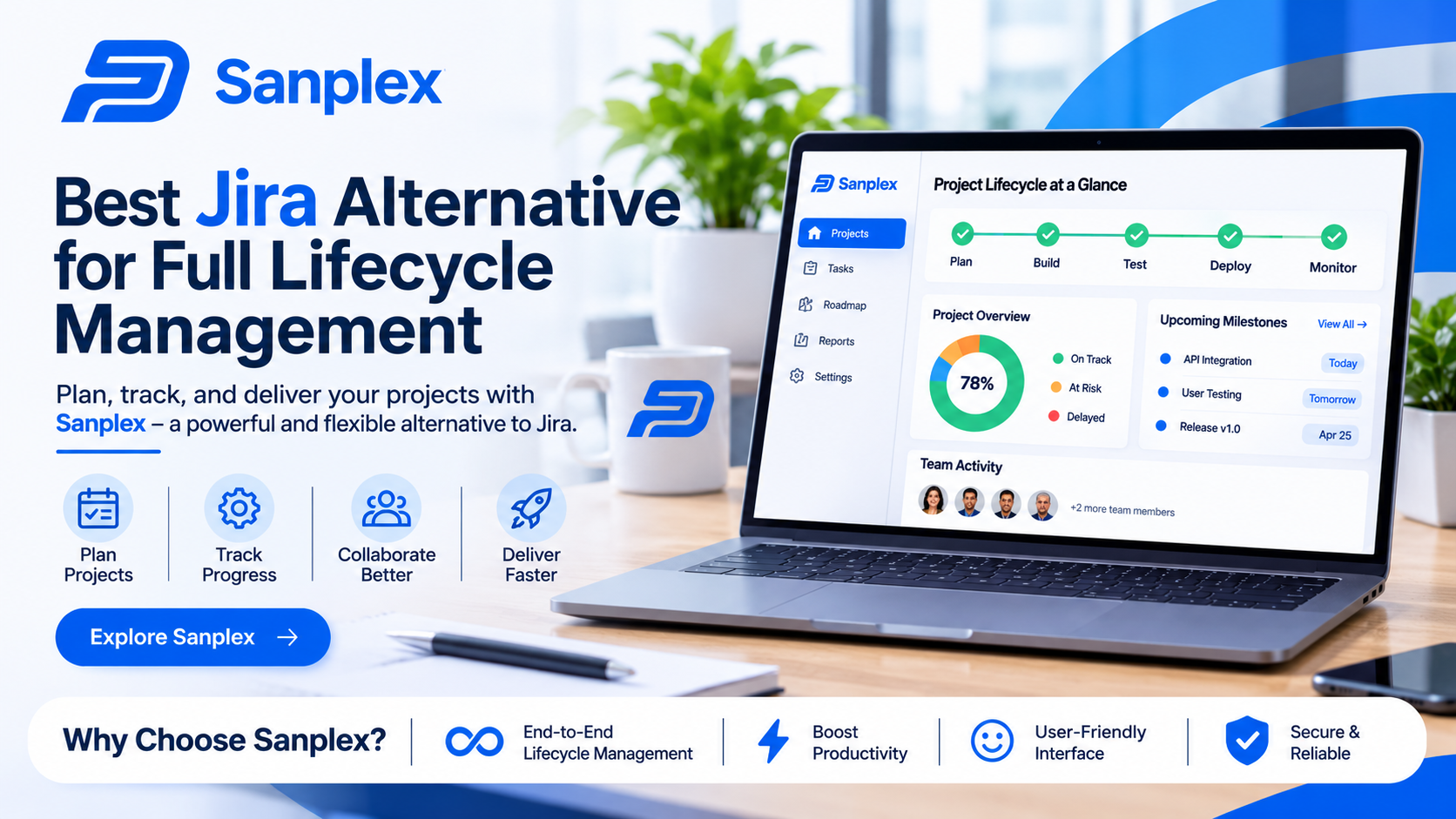
Modern software development requires teams to manage several activities simultaneously. These include collecting requirements, planning projects, assigning resources, developing features, testing functionality, and preparing products for release. When each activity is managed through a different application, businesses can experience communication gaps, duplicated work, and limited project visibility. Finding the Best Jira Alternative for Full Lifecycle Management can help organizations bring these activities together and establish a more consistent development process.
Jira is commonly used for agile project management, sprint planning, and issue tracking. However, organizations managing complex products may need capabilities that extend beyond development task management. They require a solution that connects business requirements with technical execution, quality assurance, deployment, and ongoing maintenance. The right platform should provide practical tools for collaboration, workflow automation, reporting, and resource management while remaining easy for employees to use.
2. What Makes Full Lifecycle Management Important?
Full lifecycle management involves coordinating a product or project through all its major stages. It creates a connection between initial planning, development activities, quality checks, delivery, and future improvements.
This approach helps businesses maintain accurate information throughout the project instead of treating each department's work as an isolated activity.
Better Requirements Management
Every project begins with a business need or customer requirement. Teams must document these expectations clearly so developers understand what they are expected to build.
A lifecycle management platform should allow users to record requirements, prioritize features, assign responsibilities, and track changes. Keeping this information connected to development tasks helps prevent misunderstandings.
For example, a company developing a customer relationship management system may need contact management, sales tracking, reporting, and automated notifications. Each requirement can be divided into smaller development activities and monitored through completion.
Improved Development Coordination
Development projects often involve multiple programmers working on different features. These activities may depend on one another, making task coordination important.
A centralized system allows managers to monitor assignments, dependencies, deadlines, and progress. Developers can also understand which activities require attention before moving forward.
Consistent Testing and Delivery
Testing teams need access to development requirements and information about completed features. Without proper coordination, defects may be reported without sufficient technical context.
Connecting testing with development helps teams document problems, assign corrective actions, and verify fixes before release.
3. Why Organizations Look Beyond Jira
Jira provides useful capabilities for agile development, including Scrum boards, Kanban boards, backlogs, and issue tracking. However, its suitability depends on the complexity of an organization's workflows.
Some businesses require a broader management environment to coordinate activities across technical and nontechnical departments.
Fragmented Work Environments
When employees use separate systems for documentation, testing, communication, and reporting, project information can become scattered.
This makes it difficult to maintain consistent records and understand the relationship between different activities. A connected platform can reduce these problems by providing a common source of project information.
Administrative Complexity
Highly customized workflows can require regular maintenance. Businesses with limited technical resources may prefer alternatives that offer accessible configuration and straightforward project controls.
The objective should be to simplify everyday work rather than introduce additional administrative responsibilities.
Limited Business-Level Insights
Development teams generally focus on technical tasks, while business managers need information about budgets, milestones, delivery schedules, and resource availability.
A suitable alternative should provide reporting capabilities that serve both audiences without requiring extensive manual data collection.
4. Essential Features of a Full Lifecycle Management Platform
When evaluating the Best Jira Alternative for Full Lifecycle Management, businesses should examine how well the platform supports their complete operating process.
Project Planning and Scheduling
Project planning features help teams establish objectives, define milestones, assign tasks, and set realistic deadlines.
Dependency tracking is especially important for complex projects. For instance, a mobile application cannot complete final integration testing until its essential development components are ready.
Flexible Workflow Management
A platform should support different working methods, including Scrum, Kanban, and traditional project management approaches.
Customizable workflows allow businesses to define task statuses, approval stages, responsibilities, and automated notifications.
This flexibility is valuable for organizations where different departments follow different procedures.
Resource and Capacity Planning
Managing employee workloads is essential for meeting project deadlines. Resource planning features help managers understand who is available, which employees have multiple assignments, and where additional support may be required.
For example, if several projects require the same software testing specialists, workload information can help managers distribute assignments more realistically.
Collaboration and Documentation
Teams need a reliable way to share project updates, technical documents, decisions, and feedback.
Useful collaboration features include comments, file attachments, notifications, shared workspaces, and access permissions. These capabilities help keep discussions connected to the relevant project activities.
Performance Reporting and Analytics
Reporting tools provide information about project health and team performance. Important indicators include:
-
Task completion and overdue work.
-
Progress against project milestones.
-
Employee workload and resource utilization.
-
Unresolved bugs and technical issues.
-
Project timelines and delivery risks.
Custom dashboards make these indicators easier to understand and support more informed management decisions.
5. Steps for Choosing the Right Jira Alternative
Selecting a platform should be based on practical requirements rather than promotional claims or the number of available features.
Identify Operational Problems
Review current project management processes and identify where employees experience difficulties. These might include unclear responsibilities, delayed approvals, disconnected documentation, or unreliable reporting.
Prioritize the problems that have the greatest effect on productivity and delivery.
Check Integration Capabilities
Most organizations already use several business applications. A replacement platform should connect with essential tools such as source control systems, communication applications, testing environments, and document storage services.
Confirm whether integrations are native, supported through APIs, or dependent on third-party services.
Evaluate Security and Scalability
Businesses should examine access controls, authentication, data protection, backup arrangements, and relevant compliance requirements.
Scalability also matters. The selected solution should accommodate additional users, projects, and departments without creating unnecessary operational difficulties.
Compare Pricing and Usability
Review subscription plans, user limits, storage allowances, premium features, and implementation costs.
Also evaluate how easily employees can navigate the interface. A platform that is difficult to learn may require extensive training and reduce adoption.
Before committing, test the solution with a real project and collect feedback from different departments.
6. Practical Benefits and Key Insights
A well-selected lifecycle management platform can improve daily operations and support better project outcomes.
-
Stronger collaboration: Shared information makes communication between departments more consistent.
-
Improved accountability: Clear assignments and deadlines establish ownership of project activities.
-
Less repetitive work: Automation reduces manual updates and routine notifications.
-
Better quality assurance: Connected development and testing processes make defects easier to manage.
-
Improved resource utilization: Workload visibility helps prevent uneven task distribution.
-
Greater transparency: Managers can review project status without requesting repeated updates.
-
More reliable planning: Historical project information helps teams estimate future work more realistically.
These improvements depend on appropriate implementation. Organizations should establish clear workflows and review platform usage regularly.
7. Common Challenges When Replacing Jira
Changing project management systems can affect established processes. A structured migration plan helps reduce unnecessary disruption.
Data Migration
Existing projects may contain thousands of issues, comments, attachments, custom fields, and historical records. Not every alternative supports all these elements in the same format.
Businesses should identify essential information, test migration procedures, and verify transferred records before retiring their previous system.
Employee Adoption
Employees accustomed to Jira may initially find a different platform unfamiliar. Providing practical demonstrations, training materials, and internal support can make the transition easier.
Maintaining Existing Workflows
Some organizations depend on specialized workflows and integrations. These should be reviewed before migration to ensure the replacement platform can support essential business activities.
A phased rollout is often a practical approach because it allows teams to identify problems before the entire organization changes systems.
8. Frequently Asked Questions
1. What is the best Jira alternative for full lifecycle management?
The best alternative is a platform that connects requirements, planning, development, testing, deployment, and reporting. The ideal choice depends on business requirements, team size, technical needs, and budget.
2. Can a Jira alternative support Scrum and Kanban?
Yes. Many project management platforms provide Scrum and Kanban functionality, including sprint planning, backlog management, visual boards, and workflow tracking. Available features differ between providers.
3. Why is full lifecycle management better than basic task tracking?
Task tracking focuses primarily on individual assignments and their completion. Full lifecycle management connects requirements, project planning, development, testing, delivery, and maintenance, providing broader visibility into the entire process.
4. What should businesses check before switching from Jira?
Businesses should evaluate migration support, workflow compatibility, integrations, security, pricing, scalability, reporting, and employee training requirements.
5. Can small businesses benefit from lifecycle management software?
Yes. Small businesses can use lifecycle management tools to organize responsibilities, reduce communication gaps, and maintain better project records. They should select a platform that matches their current needs and offers room for growth.
9. Conclusion
Choosing the Best Jira Alternative for Full Lifecycle Management requires a clear understanding of how an organization manages its projects from initial requirements to final delivery. While Jira provides valuable agile project management and issue-tracking capabilities, businesses with broader operational requirements may benefit from a solution that connects development with planning, testing, resource management, and reporting.
The right platform should simplify collaboration, support flexible workflows, provide useful performance insights, and integrate with existing business applications. Organizations should compare solutions through practical testing and consider both immediate requirements and future growth.
With the right system and well-defined processes, businesses can reduce fragmented workflows, improve team accountability, and maintain better control over the complete product development lifecycle.

 English
 Arabic
 French
 Spanish
 Portuguese
 Deutsch
 Turkish
 Dutch
 Italiano
 Russian
 Portuguese (Brazil)
 Greek