


SATB vs SSAA vs TTBB: Which Choir Voicing Is Right for Your Group?
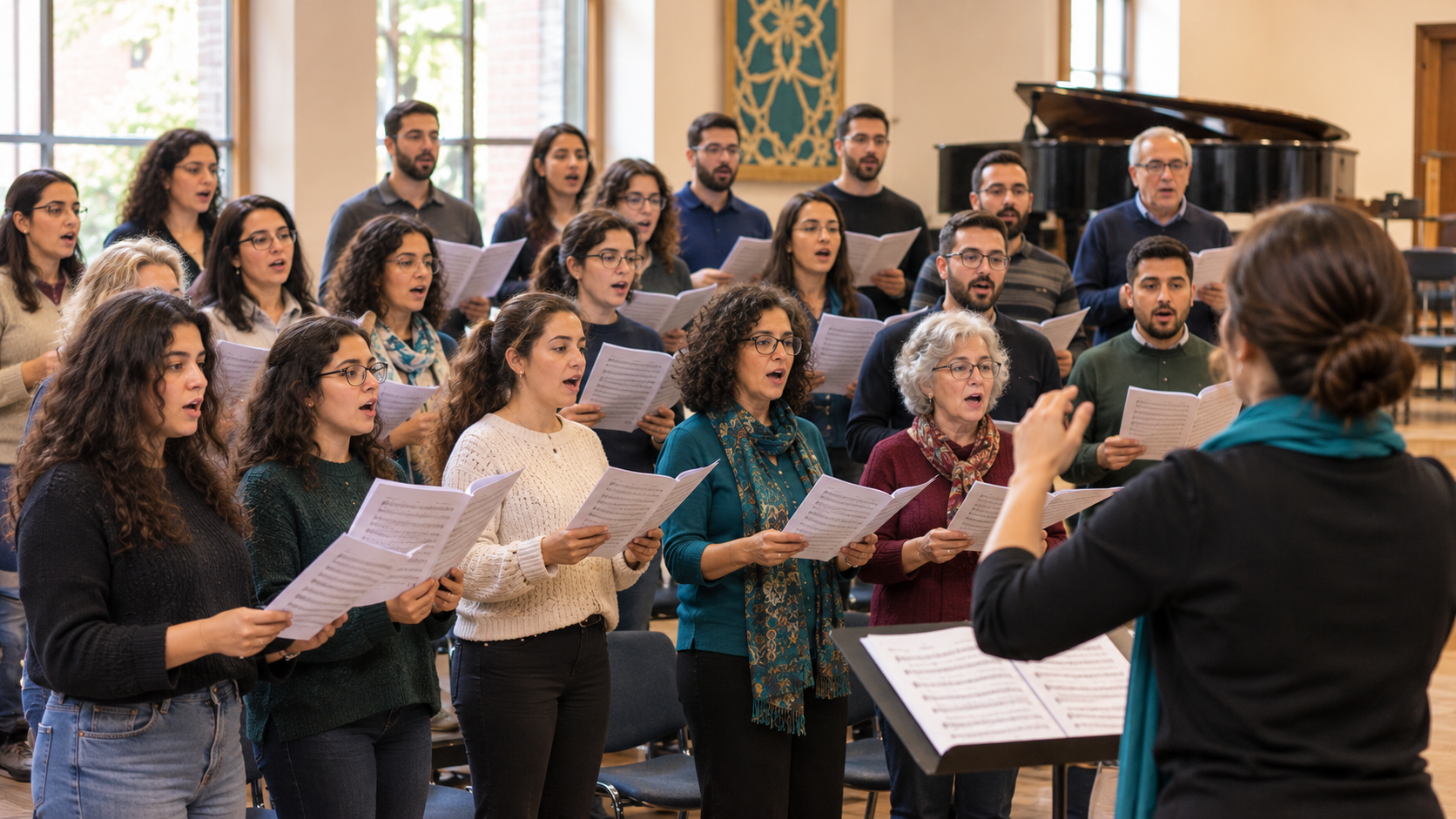
You open a new choral score and see four letters at the top: SATB, SSAA or TTBB. These letters are called the voicing. They tell you which voices the piece is written for. If you pick the wrong voicing, your singers may struggle with notes that are too high or too low, and rehearsals become harder than they need to be.
This guide explains all three choir voicings in simple words. You will learn who sings each part, how the ranges differ, and how to choose the right one for your choir. If you want to browse real scores while you read, visit the Mixed Choir collection at Dozan World.
What Does Choir Voicing Mean?
Voicing means which voice parts a piece uses. Each letter stands for one part:
-
S is soprano, the highest voice.
-
A is alto, a lower voice than soprano.
-
T is tenor, a high adult male voice.
-
B is bass, the lowest voice.
When a letter appears twice, such as SSAA or TTBB, that part is split in two. For example, "SS" means Soprano 1 and Soprano 2. The split gives the composer more notes to use in each chord and gives the choir a fuller sound.
SATB: The Standard Mixed Choir
SATB is the most common voicing in choral music. It has four parts: soprano, alto, tenor and bass. A choir like this is called a mixed choir because it mixes higher and lower voices, usually women and men together. Children can sing in it too. Sopranos and altos are often women or children, and tenors and basses are usually men. Some men also sing alto in a lighter, higher voice.
Here are the commonly taught ranges for each part. A range is the span of notes from the lowest to the highest that a voice can sing comfortably:
-
Soprano: from middle C (C4) up to G5.
-
Alto: from G3 up to D5.
-
Tenor: from C3 up to G4.
-
Bass: from F2 up to D4.
These are general guides. Some pieces go a little higher or lower, and each singer is different, so always check the score against your own singers.
SATB is a good choice when:
-
Your choir has both higher and lower voices in good numbers.
-
You want the widest choice of music, because most published choral music uses this voicing.
-
You want a full sound, from deep bass notes to bright soprano notes.
To learn more about the term itself, read our guide on what SATB means in Arabic choral music.
SSAA: The Treble Choir
SSAA is a four-part treble choir. "Treble" means high voices. The parts are Soprano 1, Soprano 2, Alto 1 and Alto 2. There are no tenors or basses.
SSAA suits:
-
Women's choirs.
-
Children's choirs.
-
Boys' choirs where the voices have not yet changed.
Some singers in an SSAA choir sing in a lower range. These are the Alto 2 singers. They sing parts that act like the lower voices in a mixed choir. So an SSAA piece still has a full, rich sound, even though every singer is on the higher side.
One helpful idea from the barbershop community is to match each singer to a part by their voice range, and not by whether they are a man or a woman. Some women have low voices and sing very well in lower parts. Some men have high voices and sing well in upper parts. The same advice works for any choir.
TTBB: The Men's Chorus
TTBB is a four-part men's chorus. The parts are Tenor 1, Tenor 2, Bass 1 and Bass 2. Bass 1 is often called baritone. It sits between tenor and bass.
A men's chorus is also called a male voice choir. In some groups, the top part is sung in a high, light voice called falsetto. Some people write this as ATBB when the top line sings in the alto range.
TTBB works well for:
-
Men's choirs and glee clubs.
-
School groups with a boys' or men's section.
-
Barbershop-style groups.
TTBB music is written for lower voices, so a women's choir cannot simply sing it as written. Even the lowest women's voices cannot reach the bass notes of a men's choir. If you want to use the piece, ask whether the music can be rewritten in a different voicing.
How to Choose the Right Voicing for Your Group
Use these simple steps.
1. Count your singers by voice type. Write down how many higher voices and lower voices you have. If you have all four types, SATB fits. If you have only women or only children, look at SSAA. If you have only men, look at TTBB.
2. Check the ranges. Look at the lowest and highest notes in each part of the score. Compare them with what your singers can sing without strain. A piece should feel comfortable for most of the choir most of the time.
3. Think about balance. A good choir needs enough singers in each part. If you have many women and only two or three men, a four-part SATB piece can sound uneven. In that case, you can look at SAB. SAB has soprano, alto and baritone parts, and it lets a few men share one lower line. Smaller choirs with few men use this voicing often.
4. Match the piece to the occasion. A worship service, a school concert and a community event may each need a different size and sound. Our sacred choral works fit worship settings, and our secular vocal music fits concerts and community events. You can also read our guide to sacred choral music for modern choirs.
5. Ask about changes. If you love a piece but the voicing does not fit your group, you do not have to give it up. Dozan World offers custom transcriptions, so you can contact us and ask for an arrangement that fits your singers.
Choir Voicing and Arabic and Middle Eastern Music
If you are new to Arabic and Middle Eastern choral music, you may wonder if voicing works the same way. It does. Most scores use standard staff notation, so Western-trained singers can read the parts in the way they already know.
What is different is the music itself. Some pieces use quarter-tones, special pitch patterns called maqamat, and ornaments that decorate the melody. Extra guidance is included where appropriate. If the maqam system is new to you, our guide to the Arabic maqam system is a good place to start before your first rehearsal.
You can also look through the full Human Voices collection, which includes solo and choral works. Check each product page for the voicing and difficulty level before you buy.
Quick Summary
-
SATB is for mixed choirs with soprano, alto, tenor and bass. It is the most common choice.
-
SSAA is for treble voices. It suits women's choirs, children's choirs and boys' choirs with unchanged voices.
-
TTBB is for men's choirs. It has two tenor parts and two bass parts.
-
Always check the range in the score against your singers before you choose.
-
If the voicing does not fit, ask about a custom transcription.
Frequently Asked Questions
Which voice part sings the lowest notes in an SATB choir?
The bass part sings the lowest notes. The commonly taught bass range starts at F2 and goes up to D4. The tenor part sits just above the bass, and the alto and soprano parts are higher still.
Where do the strongest singers go in a choir?
There is no single rule, and the best place depends on your singers and your room. Many directors spread strong singers through each section. This gives the people around them more confidence. Some directors place strong, steady voices in the middle of the choir and weaker voices on the sides. Some place a weaker section in front of a stronger one so that it can hear the stronger section behind it. Try different seating plans and listen to which one sounds best in your space.
What does "TTBB" mean in the context of choir?
TTBB means a four-part choir of men's voices. The parts are Tenor 1, Tenor 2, Bass 1 (often called baritone) and Bass 2. It is also called a men's chorus or male voice choir.
What is the vocal range of an SATB soprano?
The commonly taught soprano range is from middle C (C4) up to G5. Some pieces and some singers go a little higher, up to A5 or beyond. Check the score and your singers' voices before you choose a piece.
Find the Right Score for Your Choir
Once you know your voicing, finding music gets easier. Browse our Mixed Choir collection to find scores for your next rehearsal, or visit the FAQ page to learn about licensing, downloads and printing for your group.

 English
 Arabic
 French
 Spanish
 Portuguese
 Deutsch
 Dutch
 Italiano
 Russian
 Romaian
 Portuguese (Brazil)
 Greek