


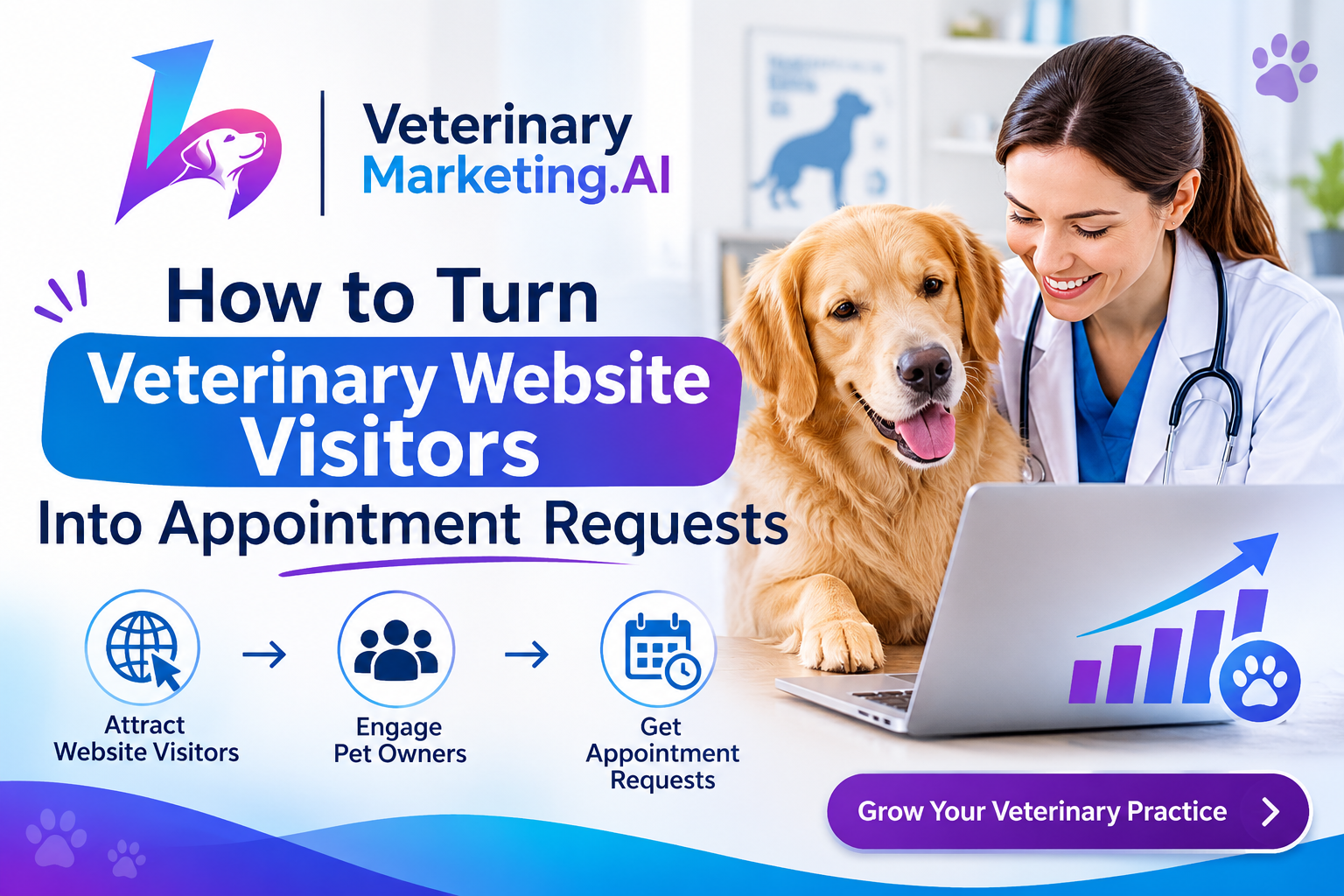
How to Turn Veterinary Website Visitors Into Appointment Requests
A clinic website can earn steady traffic and still produce very few calls. Pet owners arrive, look around for a few seconds, and leave to try the next clinic on the list. The cause is rarely the quality of care. It is usually a website that makes the next step hard to find. Practices that invest in vet digital marketing often focus on getting people to the site, but the visit only matters if it ends in a call or a request. This guide explains what an appointment request looks like, how to design pages that encourage one, and how to measure the results. It also covers common mistakes and a simple plan to begin.
The Quick Answer
Visitors turn into appointment requests when three things are true. They can tell within a few seconds that your clinic offers what they need. They can reach you in one tap or one short form. And they see enough proof, such as reviews and real photos of your team, to feel comfortable choosing you.
Most of the improvement comes from small, practical changes: a visible phone number, clear service pages, a short form, and a confirmation message that tells people what happens next. None of these require a full redesign, and each one can be tested and measured on its own.
What an Appointment Request Looks Like
Before improving anything, decide what counts as success, because digital marketing for vets is easier to judge when every contact type has a clear definition. A request is any action that shows a pet owner wants care from your clinic. Each type deserves its own place on the site.
Phone Calls
For many clinics a phone call is still the most common first contact, especially for urgent concerns. The phone number should be easy to see on every page and should work with a single tap on a mobile device.
Online Forms
A request form suits owners who prefer to write or who are browsing after hours. It lets them share a few details and leaves the scheduling to your team.
Online Booking
If your practice management system supports it, online booking lets clients choose a time directly. This works well for routine visits such as vaccines or wellness exams and less well for situations that need a conversation first.
Chat and Text
Chat and text options help owners with quick questions. Treat them as another path to an appointment and make sure someone is assigned to respond.
First Impressions Matter More Than Most Owners Expect
A visitor decides quickly whether a page looks relevant. The top of your home page and each main service page should answer three questions without scrolling. What do you do, where are you, and how can I reach you?
Use a plain headline that names the service and the area, such as dental care for dogs and cats in your city. Add a clear button for calling or requesting an appointment. Support it with a real photo of your building or team instead of a generic image.
Avoid clutter. Sliders, auto playing video, and pop ups that appear immediately make it harder to find the basics. Pet owners who are worried about an animal do not want to search for your phone number.
Make Contact Easy on a Phone
Most veterinary searches happen on a mobile device, and many of them happen while the owner is concerned about a pet. A site that feels awkward on a phone loses these visitors fast.
Place a call button where the thumb can reach it, and keep it visible as the visitor scrolls. Make sure text is readable without zooming and that buttons are large enough to tap accurately. Test your site on more than one phone and on a slow connection, since real users do not always have strong signal.
Speed matters just as much. Large uncompressed images are a common reason clinic sites load slowly. Compress photos, avoid heavy plugins, and check performance after each update.
Build Service Pages That Lead to Action
Service pages are where interest becomes intent, and digital marketing for vet clinics leans on them heavily. Someone searching for a dental cleaning or a spay appointment wants specific information before they call.
Explain the Visit
Describe what happens before, during, and after the service. Mention how long it usually takes, how pets should prepare, and what follow up care looks like. Detail reduces anxiety and makes a phone call feel easier.
Answer Common Questions
Include a short section for the questions clients ask most often. This helps visitors who are not ready to call and gives search engines useful content to understand the page. It is also a good place to be honest about what you cannot promise, since outcomes vary from pet to pet.
Place the Next Step Clearly
Every service page should end with an obvious action. Repeat the phone number and offer a short request form. Link to related services so visitors who are comparing options stay on your site instead of returning to the search results.
Design Forms That People Finish
A long form is one of the most common reasons visitors give up. Each extra field makes completion less likely.
Ask only for what you need to follow up: owner name, phone number, pet name, species, and a brief reason for the visit. A preferred contact time is helpful. Leave detailed history for the first appointment.
Label fields clearly and show errors in plain words. Use a button that says what will happen, such as request an appointment, instead of a vague word like submit. Add one sentence near the form explaining how quickly you will respond and how the person will hear from you.
Take privacy seriously. Tell visitors how their information is used, and avoid asking for sensitive details through an online form. Remind them that urgent situations need a phone call or a visit to an emergency hospital.
Confirmation and Follow Up
What happens after someone submits a request shapes whether they keep the appointment. A confirmation page or message should thank them, repeat what to expect, and share your phone number in case they need to change something.
Respond quickly. A pet owner who submits a request in the evening is often comparing two or three clinics. A reply the same day, or first thing the next morning, can decide who wins the appointment. Assign one team member to check requests on a set schedule and track how long replies take.
If your system allows it, send an automatic text or email that confirms the request has arrived. This small step reassures owners and reduces repeat calls.
Show Proof That Builds Trust
Pet owners want evidence that your clinic is careful and kind. Trust signals do this work quietly across the site.
Place recent reviews near calls to action, along with your overall rating if it is strong. Use photos of your actual team and facility, with short bios that mention training and interests. Show memberships or accreditations only if they are current and accurate. These quiet details are a real part of veterinary digital marketing, even though they rarely appear in a campaign report.
Be specific about what makes your clinic comfortable. Mention low stress handling techniques, separate waiting areas for cats and dogs, or extended hours if they are real. Statements that are specific and true are more persuasive than general praise.
Handle Urgent and Emergency Visitors Carefully
Visitors with urgent concerns need a different path from those booking a routine visit. Make that path obvious.
Add a short notice on the home page and contact page explaining what to do if a pet is in an emergency, including your hours and where to go after hours. Do not ask an urgent visitor to fill out a long form. A clear phone number and address matter more than anything else on the page.
Be careful with medical statements. Avoid advice that could replace an examination, and encourage owners to call when they are unsure.
Support Conversions With Helpful Content
Articles and guides do more than attract traffic. They prepare readers to choose your clinic. A pet owner who reads a clear article about puppy vaccines or senior pet care sees your team as knowledgeable.
Close each article with a relevant next step, such as a link to the related service page or a short invitation to request a visit. Keep the tone helpful instead of pushy. Review all health content with a veterinarian before it is published and update older posts when guidance changes.
Connect Your Website to the Rest of Your Marketing
A website performs best when it matches what visitors saw before they arrived. Strong digital marketing for vet clinics keeps the message consistent across search results, ads, social posts, and the site itself. If an ad promises new client exams, the landing page should say the same thing and offer an easy way to book.
Pay attention to the first click. Visitors from a map listing usually want hours and directions. Visitors from an educational article want more information. Visitors from an ad want to act. Tailoring the first page they see to that intent raises the chance of a request.
Measure What Your Website Produces
A rate that compares visitors with requests is called a conversion rate. Divide the number of calls, form submissions, and bookings by the number of visitors to find it. Even a rough number helps you notice whether changes work.
Set up tracking for each contact type. That means call tracking for phone numbers, a thank you page or event for forms, and a record of online bookings. Review results by page, because your most visited page may not be your best performer.
Also ask new clients how they found you and what made them choose your clinic. Their answers often reveal details that numbers cannot, such as a review that stood out or a page that answered a worry.
Compare the same months across years since demand follows the seasons. Look at direction over several weeks and avoid judging a change from a single day.
Test Changes One at a Time
Improvement works best as a series of small tests, and digital marketing for vets is no exception. Change one element, such as the wording of a button or the length of a form, and watch the result for a few weeks. Changing many things at once makes it impossible to know what helped.
Keep a simple log of each change, the date, and the outcome. Over a year this record becomes a practical guide to what your clients respond to.
Common Mistakes to Avoid
The first mistake is hiding the phone number or burying it in a menu. The second is using long forms that ask for details nobody needs yet. The third is writing service pages that list a procedure in one line and say nothing more. Others include slow pages caused by oversized images, generic stock photos, and no clear message for urgent visitors.
A less obvious mistake is treating the website as finished. Hours change, staff come and go, and services expand. Review key pages every quarter so the information stays accurate. Another is separating website work from the rest of your marketing. Steady veterinary digital marketing connects the site, the listings, and the campaigns so that each supports the others.
Working With an Outside Team
Some clinics manage their sites in house. Many prefer an outside team that handles design, content, and tracking while the practice supplies photos and approvals.
Look for real veterinary experience and ask to see examples of pages that led to appointments. Ask how calls and forms will be tracked and how often you will receive reports. Confirm that your domain, website, and accounts belong to your practice. A good provider will also ask about your services, your capacity, and your goals before proposing changes.
Where to Start
Begin by visiting your own site on a phone as if you were a new client. Try to find your phone number, your hours, and a way to request an appointment. Note how many taps it takes and what feels confusing.
Then choose two or three fixes that remove the biggest obstacles. That might be a call button, a shorter form, or a clearer top section on your busiest service page. Track the results for a full month before making further changes. Over time, careful vet digital marketing and a website built to convert work together, and the visits you earn turn into appointments you can count.
Frequently Asked Questions
Q: What is a good way to get more appointment requests from my clinic website?
A: Make contact easy. Show your phone number on every page, add a short request form, and write service pages that explain the visit clearly. Display recent reviews near calls to action so visitors feel confident choosing your clinic.
Q: How long should a veterinary appointment form be?
A: Keep it short. Ask for owner name, phone number, pet name, species, and a brief reason for the visit. Leave detailed history for the appointment. Shorter forms are completed more often and still give your team enough to follow up.
Q: Should a clinic offer online booking or a request form?
A: It depends on your system and services. Online booking suits routine visits like vaccines. A request form works better when a conversation is needed first. Many clinics offer both along with a clearly visible phone number.
Q: How do I know if my website is converting visitors?
A: Divide calls, form submissions, and bookings by total visitors, and review results by page. Set up call and form tracking first. Also ask new clients how they found you so the numbers have context.
Q: How quickly should a clinic respond to an online request?
A: As soon as practical, ideally the same day. Many owners compare several clinics at once, so a prompt reply improves your chances of booking. Assign one team member to check requests on a schedule.

 English
 Arabic
 French
 Spanish
 Portuguese
 Deutsch
 Dutch
 Italiano
 Russian
 Romaian
 Portuguese (Brazil)
 Greek