


What Causes Veterinary Suture Reactions in Dogs and Cats?
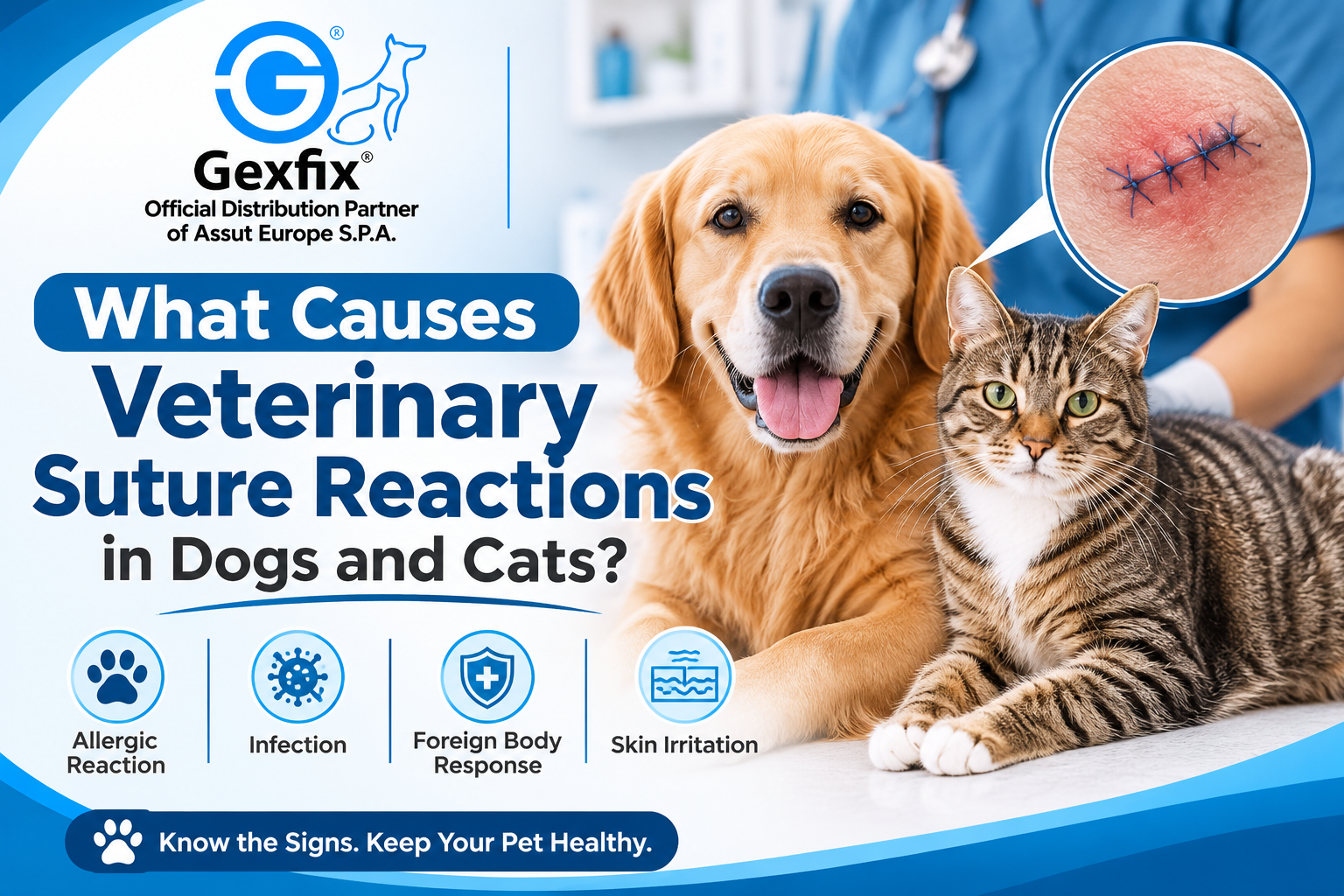
A small lump along an incision or a stitch line that stays red for weeks worries most owners. Sometimes it is an infection. Often it is the body responding to the thread itself. Every veterinary suture is foreign material and some tissues tolerate it better than others. This guide explains what a suture reaction is and what causes it in dogs and cats. It looks at material and technique and timing and patient factors and ends with ways teams lower the risk. It is general educational information and the attending veterinarian diagnoses and treats each patient.
The Quick Answer
Most suture reactions come from a handful of factors. The material and its structure matter first. Braided threads and natural materials tend to provoke more response than smooth monofilaments. The amount of thread left in the tissue matters next and so does how tightly it was tied. Buried knots and pedicle ligatures are common sites. A true allergy to the material is possible but uncommon.
What a Suture Reaction Is
Normal Healing and Reaction
Every wound shows some redness and swelling in the first days because the body is clearing damage and starting repair. A reaction is different. It is a lasting local response to the suture material and it can appear as a firm lump or a draining spot or skin that stays inflamed along the incision.
Reaction and Infection
The two can look alike and they can occur together. A reaction is a response to the thread itself and infection involves bacteria. A veterinarian can tell them apart with an exam and sometimes cytology or culture. This matters because the treatment differs.
The Main Causes
Material and Structure
A dvm360 review explains that tissue reaction depends on the nature of the material and the tissue and the amount of foreign material and the technique and the time until absorption. The surface area exposed to tissue is an important factor. For threads of similar size braided types trigger a more severe inflammatory response than monofilaments because more surface touches the tissue. Most nonabsorbable monofilaments are largely inert while braided silk or polyester becomes walled off by fibrous tissue.
Absorbable materials differ too. A rat study cited in a case report found that polyglyconate and polydioxanone caused less chronic inflammation than polyglactin 910 and chromic gut. A veterinary review adds that poliglecaprone may cause less tissue reaction than polydioxanone and that the difference may be most noticeable in cats. These findings come from specific studies and species so they guide thinking and do not replace the surgeon's judgment. When a team compares a vet suture for a given layer the structure and absorption profile are worth reading in the instructions for use.
Amount of Foreign Material
Size counts. A thicker thread leaves more material behind and more material usually means more inflammation. The same logic applies to knots. Extra throws and long tails add bulk. Choosing the finest thread that holds the tissue and trimming ends neatly helps limit the reaction.
Technique and Tension
Tightness of the suture influences the response. A knot tied too tight squeezes tissue and reduces blood flow and the damaged tissue becomes a focus for inflammation. Too much tension along a closure can have the same effect on a larger scale. A knot that is too loose is also a problem because it leaves a gap where fluid can collect.
Retained Buried Sutures
Buried material stays in the body until it absorbs or the body walls it off. A Japanese study of 40 dogs with post operative suture granuloma found that the lesions contained suture material at their center. More than half of the samples involved silk and the next most common were absorbable multifilament sutures. The lesions were more severe with those two types. The study also reported that the most common surgery behind the granulomas was castration or spaying. In one case report from a pig the suture material from ovarian pedicle ligatures worked its way through the body wall and the skin and caused sterile abscesses. A veterinary review notes that draining tracts linked to pedicle sutures are treated by removing the suture material.
Hypersensitivity
True suture allergy is uncommon. Human medicine describes it as an immune response in which the suture acts as a foreign antigen and reports that chromic gut and nylon and polyglactin are among the materials implicated. Treatment usually means removing the material. Veterinary data are limited so this is a possibility to keep in mind and not a common cause.
Why the Timing Varies
Reactions do not always show up in the first week. Some appear weeks later as the thread absorbs or a buried knot works toward the surface. A case report described suture related inflammation appearing about 6 to 9 weeks after placement. A histology study of dogs noted that granulomas could appear long after surgery. That is why a recheck visit and owner monitoring continue after the sutures or staples are gone.
Patient and Procedure Factors
Some patients may be more likely to react. In the Japanese study 17 of the 40 dogs were miniature dachshunds and the authors concluded that the frequency of suture granuloma differs by suture material and breed. That does not mean every dachshund will react. It does suggest that breed may play a part.
Procedure matters as well. Spays and castrations involve ligatures that stay buried and that makes them the most common source in the study above. Linea alba closure is another buried site. In a feline spay study cited in a case report the least inflammation occurred with a polyglactin closure and no extra subcutaneous layer. Fewer buried layers can mean less foreign material.
Other Foreign Material at the Wound
Thread is not the only material that can trigger a reaction. Tissue adhesive can do it too when it ends up in the wrong place. A product label warns that residual adhesive below the closure site can cause a foreign body reaction. Skin glue for dogs is intended for the skin surface and should not drip into the wound or be applied over hair. Keeping adhesive on the surface protects the closure and avoids adding another source of irritation.
Signs to Watch For
Owners should watch the incision for changes beyond the first week. Warning signs include a firm lump along the line or a spot that drains or a stitch that sticks out through the skin. Persistent redness or swelling and heat or pain are also worth reporting. A dog that keeps licking or chewing at the site may be telling you the area is uncomfortable. Contact the clinic when any of these appear because the cause cannot be judged from the outside.
Lowering the Risk
Teams can reduce the chance of a reaction at several points. Choose a material suited to the tissue and the healing time and consider monofilament where tissue reaction is a concern. Use the finest size that holds the layer. Tie knots with enough throws to hold and no more. Bury as little material as the closure allows. On long straight skin incisions staples from a scalp stapler leave no buried thread in the skin layer although deeper layers still need suture. Keep patients from licking the site and arrange a recheck.
Mistakes to Avoid
Several habits raise the risk. Using a thread heavier than the tissue needs adds foreign material. Tying knots too tight damages tissue. Choosing a braided material for a contaminated field invites trouble. Leaning on surgical glue for dogs to hold a wound that is under tension and then forcing adhesive into the gap is another. Skipping the recheck means a slow reaction may go unnoticed until it is advanced.
Final Thoughts
A suture reaction is the body responding to material left in the tissue. Material and size and technique decide most of that response and patient and procedure factors add to it. A veterinary suture chosen for the tissue and placed with care lowers the odds. When a lump or a draining spot appears the owner should call the clinic and let the veterinarian decide whether it is a reaction or an infection.
Frequently Asked Questions
Q: What does a suture reaction look like?
A: It can appear as a firm lump or a draining spot or persistent redness along the incision. Some appear in the first weeks and others appear later. Only a veterinarian can say whether it is a reaction or an infection.
Q: Are some suture materials more likely to cause reactions?
A: Yes. Braided threads and natural materials such as silk or chromic gut tend to cause more reaction than monofilament synthetics. The surgeon weighs this against strength and handling.
Q: Is a suture reaction the same as an infection?
A: No. A reaction is a response to the suture material and infection involves bacteria. They can look alike and can occur together so a veterinarian should assess the site.
Q: Can a reaction appear months after surgery?
A: Yes. Studies in dogs have described granulomas that appeared long after the procedure. That is one reason owners should report any new lump along an old incision.
Q: Does a reaction mean the surgery failed?
A: Not necessarily. Many reactions are local and resolve once the material is removed or the body clears it. The veterinarian decides what treatment is needed.

 Arabic
 French
 Spanish
 Portuguese
 Deutsch
 Turkish
 Dutch
 Italiano
 Russian
 Romaian
 Portuguese (Brazil)
 Greek