


When Does a Dog Skin Injury Require Stitches or Surgical Closure?
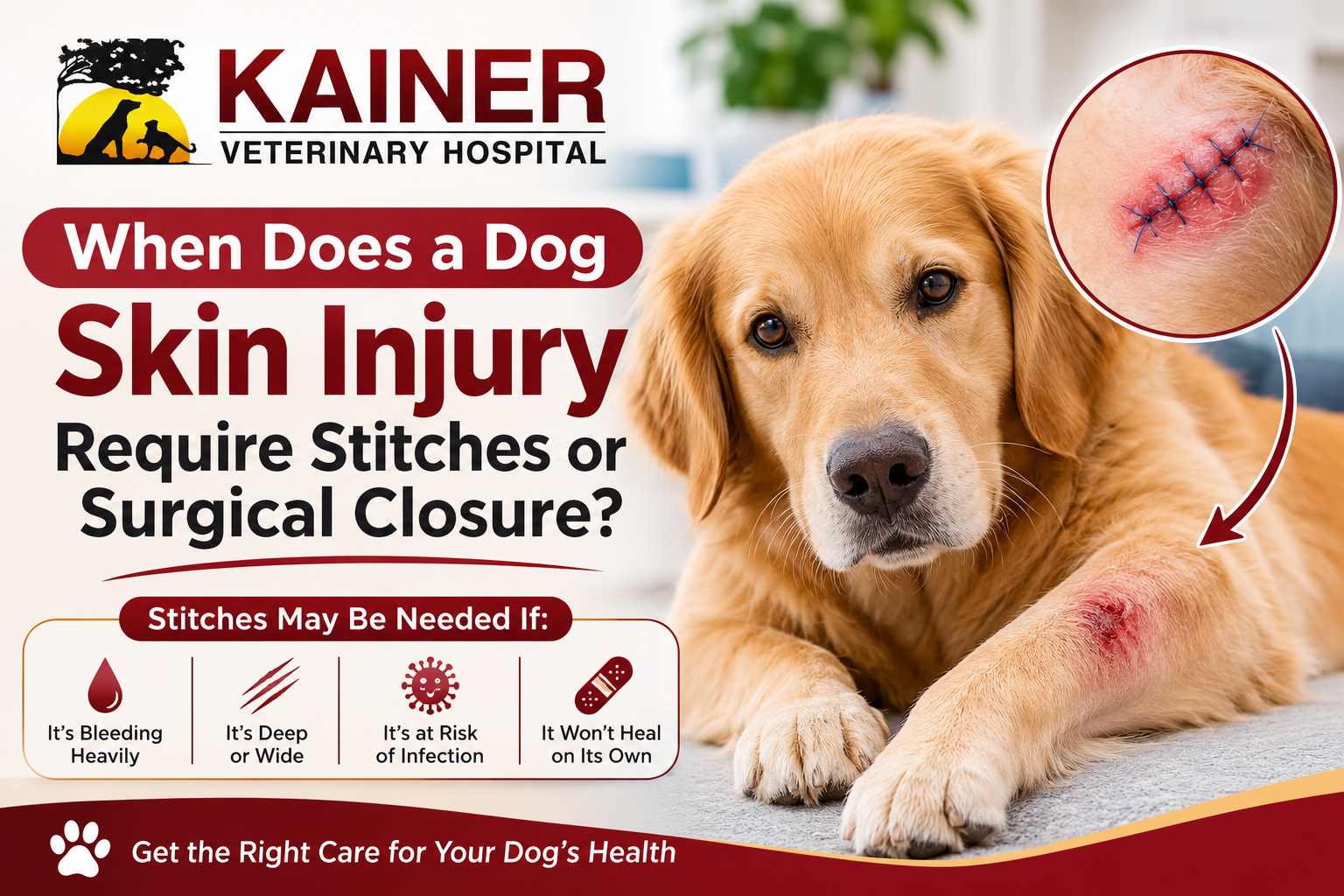
A dog skin injury needs stitches or another form of surgical closure when the wound is deep, gaping, bleeding steadily or caused by a bite or puncture. Small scrapes and shallow cuts often heal on their own with cleaning and rest. The difference isn't always obvious from the surface, and timing matters, because wounds that are closed within the first several hours usually heal more cleanly than wounds that wait.
This guide explains how veterinarians decide whether a wound should be closed, left open or monitored. It covers the signs that point to stitches, the wounds that shouldn't be closed right away and the kinds of closure used. It also explains what happens during sedation, what to do before you reach the clinic and how to care for the area afterward. The aim is to help you make a calm and quick decision when your dog gets hurt.
How Skin Heals After a Cut
Skin has several layers. The outer layer protects the body, the layer beneath holds blood vessels and nerves, and below that sit fat and muscle. A shallow scrape affects only the outer layers. A deep cut can pass through all of them, and that's when closure becomes important.
Healing happens in stages. First the body stops the bleeding and sends immune cells to the area, which is why mild redness and swelling are normal. Then new tissue fills the gap and pulls the edges together. Finally the area strengthens and forms a scar. Stitches hold the edges together while this happens so the wound closes faster with less scarring and less chance of infection.
Signs a Wound Needs Stitches
Several features suggest that a cut should be closed. A wound that gapes open when the dog moves or that shows fat, muscle or bone is too deep to close on its own. A cut longer than about an inch usually needs a veterinarian, and shorter cuts can need closure too if they sit over a joint or a spot that moves a lot. Bleeding that doesn't slow after several minutes of firm pressure is another sign.
Location matters as well. Wounds near the eyes, mouth, genitals or paw pads need professional attention even when they look small. A flap of loose skin that has peeled away from the tissue underneath needs repair. Any wound that's dirty, contains debris or came from an unknown source deserves an exam. When you can't tell how deep a cut goes, it's safer to have it checked.
Why Timing Matters
Fresh wounds can often be closed right after they're cleaned. Veterinarians often describe an early window of several hours in which closure works best, because bacteria multiply quickly and a wound that has been open too long may already be contaminated. Closing a contaminated wound can trap infection under the skin and form an abscess.
That doesn't mean an older wound can't be treated. It means the approach changes. The veterinarian may clean the area thoroughly and leave it open, place a drain or close it a few days later after the tissue looks healthy. Don't wait to see whether a deep cut gets better on its own. Call as soon as you notice it so the team can tell you how urgently your dog needs to be seen.
Wounds That Shouldn't Be Closed Right Away
Bite wounds are the best example. A bite from another dog or animal may leave a small hole in the skin, but the teeth can crush and tear tissue underneath. Bacteria from the mouth are pushed deep into the wound. Closing the hole right away can trap them. Veterinarians usually clean bite wounds, remove damaged tissue, check for deeper injury and often place a drain so fluid can escape.
Puncture wounds from sticks, fence wires or glass behave the same way. They look minor on the outside and can hide deep damage. Wounds that are heavily contaminated, that contain dead tissue or that are several days old are also often left open at first. These wounds heal from the bottom up, and the team uses bandages and regular rechecks to guide the process.
Wounds on the Chest and Belly
Injuries over the chest or abdomen need extra care. A deep wound there may reach the body cavity even when the skin opening looks small. Fighting, car accidents and impalement can damage the lungs, intestines or other organs. Signs of internal trouble include a swollen belly, pale gums, vomiting, weakness and fast or labored breathing.
When the abdomen may be involved the veterinarian may recommend imaging and surgical exploration. Depending on what is found, pet abdominal surgery may be needed to check the organs, repair damage and close the layers of the abdominal wall. Any wound that looks deep near the ribs or belly should be treated as an emergency.
Types of Closure Veterinarians Use
The method depends on the wound's size, depth, location and cleanliness. Sutures are the most common option. Deep layers are often closed with stitches that dissolve, while the skin is closed with stitches or staples that are removed after about 10 to 14 days. Timing varies with the area of the body and the speed of healing, so follow the schedule your veterinarian gives you.
Tissue glue can close small, clean cuts that aren't under tension. A drain is a soft tube that lets fluid leave a wound that has empty space beneath the skin, and it's usually removed after a few days. Some wounds heal best when they're left open and protected with bandages. This approach, called healing by second intention, takes longer but it's the safest choice when closure could trap infection.
Sedation, Anesthesia and Pain Control
Closing a wound properly means cleaning it, trimming damaged tissue and placing stitches precisely. That can be painful, and dogs need to stay still, so many wounds are repaired under sedation or general anesthesia. Small cuts may need only a local numbing medicine. The team decides based on the wound and the dog's temperament and health.
Before anesthesia the veterinarian reviews your dog's history and may recommend bloodwork. Kainer Veterinary Hospital says its surgery services follow AAHA standards, begin with pre surgical bloodwork and include a pain management plan tailored to each pet. Pain control supports healing because a comfortable dog rests better and is less likely to chew at the repair.
Skin Irritation or a True Injury
Not every raw patch is an injury. Allergies, fleas, infections and hot spots can leave red, wet and painful skin that looks like a wound. Dogs also create injuries by scratching and chewing at itchy areas. The two problems overlap, and the right plan depends on telling them apart.
Dog skin irritation treatment targets the cause of the itch, such as fleas, allergy or infection. It won't close a deep cut, and stitches won't solve an allergy. Kainer's dermatology page lists allergies, infections, parasites and hormonal disorders among the conditions it treats. If your dog has a wound that started with scratching, the veterinarian will treat the damage and look for the reason behind the itching.
What to Do Before You Reach the Clinic
Stay calm and keep your dog from licking or chewing the area. A painful dog may bite even when it normally behaves well, so use a muzzle or ask a helper to hold the dog if needed. Press a clean cloth or gauze against a bleeding wound and hold it firmly for several minutes. Don't keep lifting the cloth to check. If blood soaks through, add more layers on top.
Rinse dirt from the surface with sterile saline or clean lukewarm water. Don't use hydrogen peroxide, alcohol or human creams because they can damage healthy tissue or hide signs the veterinarian needs to see. Cover the wound with a clean dry pad and call ahead. When you search for a vet in Woodlands or any nearby clinic, call before you travel so the team can prepare and tell you what to do on the way.
Hours and Emergencies
Planning ahead helps because injuries rarely happen at a convenient time. Kainer sees patients by appointment, Monday through Friday from 7 a.m. to 5 p.m., and is closed on weekends. If your dog has a serious wound outside those hours, such as heavy bleeding, a deep puncture or a wound near the chest or belly, go to an emergency hospital. Save its address and phone number in your phone before you need it.
Caring for Stitches at Home
A closed wound needs steady and simple care. Keep the area clean and dry. Use a cone or a recovery suit so your dog can't lick or chew the stitches. Limit running and jumping because pulling on the skin can open the repair. Take short leash walks for bathroom breaks and avoid baths, ponds and pools until the veterinarian says the wound is healed.
Check the area at least once a day. A thin pink line with mild swelling is normal at first. The same rules apply to incisions from procedures such as pet abdominal surgery, so follow the written instructions you receive and keep every recheck. Take a photo each day in the same lighting so you can notice changes and share them with the team.
Signs of Trouble After Closure
Call the veterinary team if the stitches come out, the wound opens or the area becomes more swollen or red. Yellow or green discharge, a bad smell, warmth and growing pain suggest infection. A soft swelling beneath the skin may be a pocket of fluid called a seroma, and it should be checked. Fever, low energy and loss of appetite can also appear when an infection spreads.
Give antibiotics and pain medicine exactly as prescribed for the full length of time even if the wound looks better. Never give human pain relievers such as ibuprofen or acetaminophen because they can be dangerous for dogs.
Kainer Veterinary Hospital at a Glance
Kainer Veterinary Hospital is AAHA accredited and has served pets since 2005. The hospital cares for dogs and cats from Conroe, The Woodlands, Magnolia, Montgomery, Spring and Oak Ridge. Owners looking for a vet in Woodlands can contact the team with questions about wound care, surgery and recovery. Services include surgery, dermatology, on site diagnostics and pain management, all in one hospital.
Final Thoughts
Most deep, gaping or contaminated wounds need a veterinary exam, and many need stitches or another form of surgical closure. Timing, location and cause all shape the plan, and some wounds such as bites are better left open at first. A dog skin injury that looks small can hide serious damage, so it's wise to have uncertain wounds checked early.
If your dog is hurt, apply pressure, keep the area covered and call the clinic right away. Then follow the aftercare plan and keep every recheck. Contact Kainer Veterinary Hospital to schedule an appointment and bring photos of the wound, a timeline of what happened and a list of your dog's medications.
FAQs
Q: How can I tell if my dog's cut needs stitches?
A: Cuts that gape, show fat or muscle, bleed steadily or run longer than about an inch usually need stitches. Wounds over joints or near the eyes and mouth also need care. If you're unsure, call your veterinarian.
Q: How long can I wait before getting a wound closed?
A: Sooner is better. Wounds closed within several hours often heal more cleanly. Older wounds may be cleaned and left open or closed later. Call as soon as you see a deep cut so the team can advise you.
Q: Do dog bites get stitches?
A: Often not at first. Bites push bacteria deep, so veterinarians usually clean the wound, remove damaged tissue and may place a drain. They close it later if needed. Every bite should be examined promptly.
Q: Is skin irritation the same as a skin injury?
A: No. Irritation from allergies or fleas needs dog skin irritation treatment that targets the cause. A deep cut needs cleaning and often closure. Scratching can turn irritation into a wound, so a veterinarian may need to address both.
Q: How long do stitches stay in?
A: Skin stitches or staples are often removed after about 10 to 14 days, though timing depends on the location and how the wound heals. Keep your dog from licking or running and attend the recheck visit.

 Arabic
 French
 Spanish
 Portuguese
 Deutsch
 Turkish
 Dutch
 Italiano
 Russian
 Romaian
 Portuguese (Brazil)
 Greek