


Dog Mass Removal Surgery Explained From Diagnosis to Recovery
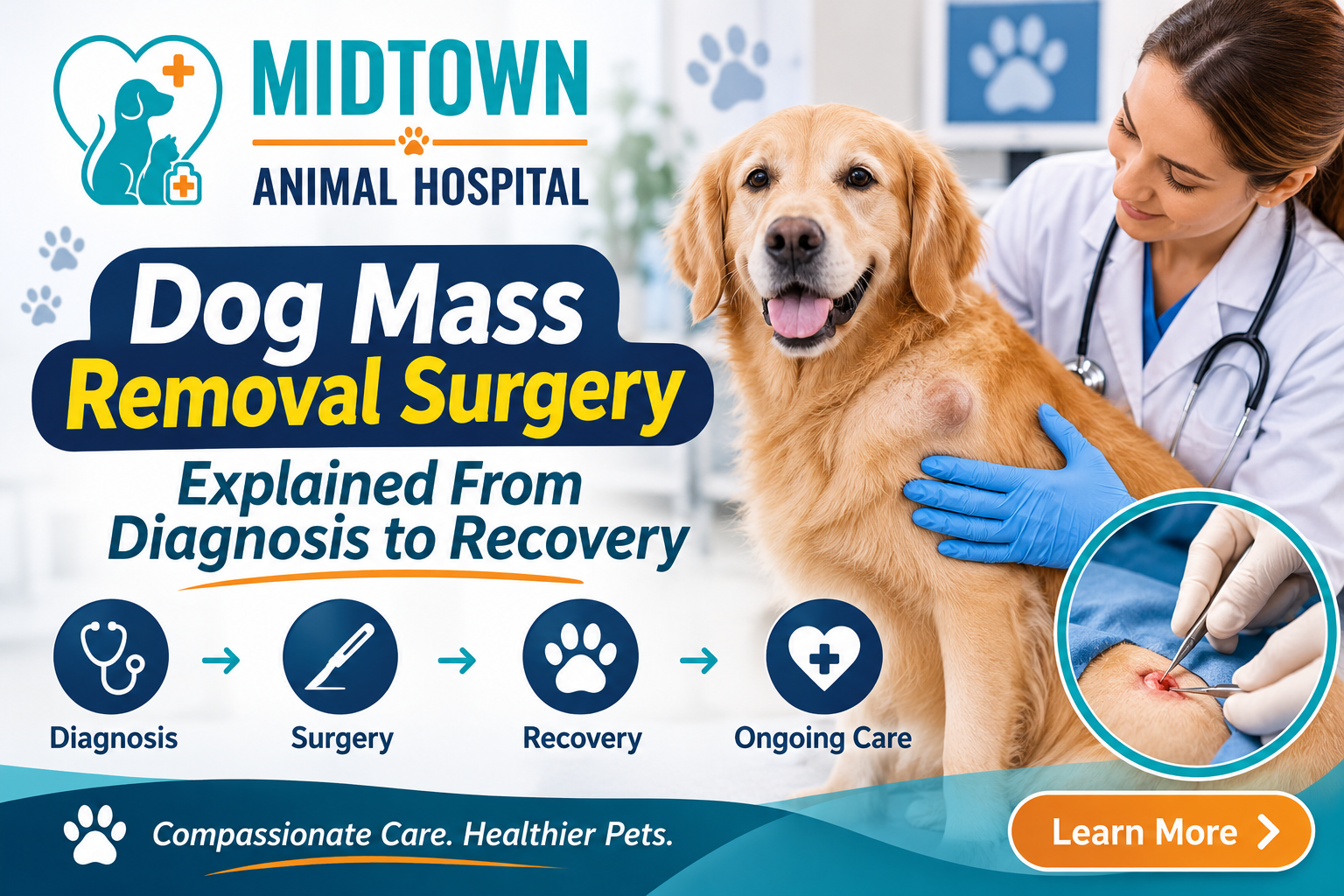
Finding a new lump on your dog brings up a lot of questions at once, and dog mass removal is often one of the first things owners wonder about. They want to know what the lump is and whether it needs surgery and how long recovery will take. This guide follows the process from the first exam to the final recheck. It covers how a lump is tested and when surgery makes sense. It also explains what happens on surgery day and how to read the lab report afterward. It closes with home care tips and questions worth asking your veterinary team.
The Quick Answer
Dog mass removal is surgery that takes out a lump along with a rim of healthy tissue around it. Most masses are tested first so the veterinarian knows what they are dealing with. The removed tissue then goes to a lab and the report guides any further care. Many lumps are benign and benign tumors may not need to be removed.
Any new lump deserves an exam. Size and appearance cannot tell you whether a mass is harmless. Testing is the only reliable way to find out. The sections below follow each step in order.
Which Lumps Are Worth Checking
A lump on or under the skin can be a fatty growth or a cyst or an infected area or a tumor. Tumors can be benign or malignant. Veterinary guidance says any mass should be evaluated regardless of its size or how long it has been present.
Book an exam sooner when a lump grows quickly or changes shape or color. The same applies to a mass that feels firm or painful or one that bleeds or opens. A dog that licks or chews at a lump is another reason to call. New lumps in an older dog also deserve attention.
A routine wellness exam gives your veterinarian a chance to check each lump and record its size and location. Those notes make later changes easier to spot. Some skin changes come from infection or irritation instead of a growth, and the clinic's dermatology service covers those.
How a Mass Is Tested Before Surgery
Surgery is rarely the first step. Testing helps the veterinarian decide whether removal is needed and how much tissue to take.
Fine Needle Aspiration and Cytology
A fine needle aspirate collects a small number of cells with a thin needle. The cells are then examined under a microscope. The test helps separate inflammation from a tumor. Some tumors such as mast cell tumors are often recognizable on an aspirate. The clinic's soft tissue surgery page says the team often recommends cytology or biopsy before removal to learn whether a mass is benign or malignant.
Biopsy and Histopathology
Sometimes cytology does not give a clear answer. In that case, a biopsy is recommended before the tumor is fully removed. The tissue goes to a lab for histopathology. The clinic's diagnostic surgery page notes that results typically take three to seven business days and the team contacts the owner once the findings are reviewed.
Bloodwork and Imaging
Before anesthesia, the team confirms organ function with preanesthetic screening. Most in house results are ready within thirty minutes and outside lab tests typically return within one to three business days.
Depending on the mass, the veterinarian may also suggest radiology or an ultrasound. Imaging can show whether a mass reaches deeper tissue. Staging tests are often advised before surgery that aims to cure a tumor.
When Dog Mass Removal Is Recommended
Not every lump needs to come off. Removal becomes more likely when a mass is suspicious or malignant or grows fast. It also becomes more likely when a lump bleeds or sits where it rubs against movement. A mass that cannot be identified, such as one in the abdomen, can also lead to surgery.
Midtown Animal Hospital Manhattan lists mass removal and biopsy and reconstruction for lumps and bumps and growths under its soft tissue surgery services. The right plan depends on the type of mass and where it sits. Your dog's age and general health also matter.
What Happens on Surgery Day
Preparing Your Dog
Follow the fasting and medication instructions your veterinary team gives you. Tell them about supplements and any past reaction to anesthesia. The clinic says every procedure begins with a thorough preoperative evaluation and a discussion of each step.
Removing the Mass
The surgeon removes the mass together with a margin of healthy tissue. Margin width depends on the type of mass. One veterinary source notes that margins can be one to three centimeters wide depending on the mass. That is why the incision is sometimes larger than owners expect. A large removal can leave the incision under a lot of tension, so reconstruction is sometimes part of the plan. Ideally, every removed mass is sent out for histopathology.
Pain Control and Going Home
The clinic describes local blocks and injectable pain medicine during surgery and oral medicine at home. Most soft tissue surgeries allow same day discharge once the pet recovers from anesthesia. Complex cases sometimes need overnight monitoring.
Reading the Pathology Report
The report describes the diagnosis and the tumor grade and the width of the margins. Clean margins mean no abnormal cells reached the edge of the tissue that was removed. For small benign masses, surgery will often be curative.
Some reports are less simple. Incomplete margins on a malignant tumor lead to more treatment, and the veterinarian may suggest a visit with a veterinary oncologist. Ask to have the report explained line by line. Keep checking your dog for new lumps afterward because a dog can grow more than one.
Recovery at Home After Surgery
Recovery depends on the size of the mass and the type of incision. Your discharge instructions come first. These basics apply to most dogs.
Protect the Incision
Dogs lick and chew at stitches. Use the cone or recovery suit your team provides. It only takes a few seconds of chewing for a dog to remove stitches or damage the surgery site. Call the hospital right away if stitches come out.
Limit Activity
Activity usually needs to be restricted for at least one to two weeks or until the sutures are removed. Take your dog outside on a leash for bathroom breaks only unless told otherwise. Skip baths and grooming until your veterinarian clears the incision.
Stitches and Rechecks
Most skin stitches are removed seven to fourteen days after the operation. In some cases the sutures are placed under the skin and dissolve. Ask which type your dog has and keep every recheck.
Planning Around Travel and Boarding
Surgery sometimes lands close to a trip, so dog boarding Manhattan plans are worth raising with your veterinarian early. Ask whether your dog is ready for boarding and when. The clinic's boarding page describes onsite veterinary staff who give medications and provide daily exams. It also lists rabies and distemper combination and bordetella vaccines for dogs.
Warning Signs That Need a Call
Contact your veterinarian when you see excessive swelling or redness of the skin. An unpleasant odor or discharge is another sign. Call if the stitches open or if your dog refuses food for more than twelve to twenty four hours. Changes in activity level or appetite or posture or behavior may point to discomfort, and the pain plan may need adjusting.
Common Mistakes During Recovery
The first mistake is removing the cone too early. The second is ending activity limits as soon as the dog starts to feel better. The third is skipping the suture removal visit. The fourth is leaving the lab report unread. The fifth is trying to treat a lump at home. Home removal risks infection and bleeding and skips the testing that identifies the mass.
Waiting is another common mistake. A lump that seems harmless can change over time. Early testing keeps more options open.
Questions to Ask Before Surgery
Ask what testing has been done and what the results showed. Find out how much tissue will be removed and how the incision will be closed. Confirm whether the mass goes to a lab and when results arrive. Learn what pain control your dog will receive and whether an overnight stay is likely. Check how long activity limits last and when stitches come out. Request written instructions to review at home.
Working With a Local Veterinary Team
A local clinic can examine the lump and explain each option in person. For a veterinarian Midtown Manhattan owners can visit, the team at Midtown Animal Hospital sees dogs and cats at 256 East 33rd Street. The clinic lists laboratory testing and radiology and ultrasound and soft tissue surgery among its services.
Bring notes on when you first saw the lump and any changes since. Photos can help too. You can call (212) 683-0309 to schedule an appointment.
Final Thoughts
Dog mass removal is a series of steps and not a single decision. A lump is examined and tested, then removed when needed and checked in the lab. Careful home care protects the result. Know the warning signs and keep every recheck. This article gives general information and does not replace an exam. When you find a new lump, the next step is a call to your veterinarian.
Frequently Asked Questions
Q: How long does recovery take after mass removal?
A: Most incisions take around ten to fourteen days to heal. Activity limits usually last at least one to two weeks or until the sutures are removed. Large or complex surgeries can take longer, so follow the timeline your veterinarian gives you.
Q: Will my dog stay overnight?
A: Most dogs go home the same day once they recover from anesthesia. Complex cases sometimes need overnight monitoring.
Q: Is every removed lump cancer?
A: No. Many lumps are benign, and that is why testing comes first. Only lab results can confirm what a mass is.
Q: Can my dog travel soon after surgery?
A: Ask your veterinarian before booking anything. Air travel or travel across state lines requires a health certificate. The clinic's team is USDA accredited to issue health certificates, and domestic certificates are usually issued within ten days of departure. For a pet health certificate Manhattan travelers can get through the clinic, mention the surgery date and recovery timeline when you book.
Q: Can I remove or treat a lump at home?
A: No. Home removal risks infection and bleeding and skips the testing that identifies the mass. Have a veterinarian examine it first.

 English
 Arabic
 French
 Spanish
 Portuguese
 Deutsch
 Turkish
 Dutch
 Italiano
 Romaian
 Portuguese (Brazil)
 Greek