


Heavy-Duty Connectors for High-Current Industrial Equipment
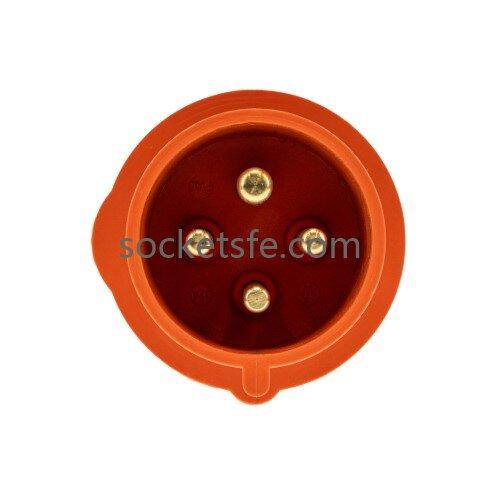
High-current electrical equipment requires connection components that can accommodate substantial power demands while maintaining stable electrical contact. In manufacturing plants, large workshops, industrial processing facilities, and temporary power distribution systems, connector selection has a direct influence on operational reliability. A 63 Amp Industrial Plug is designed for electrical applications requiring a rated current capacity of 63A, providing a connection interface between compatible power outlets and equipment. Its suitability depends on voltage, phase arrangement, cable specifications, and the electrical characteristics of the installation.
Unlike connectors intended for relatively small portable appliances, high-current industrial models must accommodate larger conductors and more demanding electrical loads. Their design needs to support appropriate contact dimensions, terminal arrangements, insulation, and mechanical retention. The complete assembly must be compatible with the connected socket and the electrical distribution circuit. A high current rating alone does not establish that a product is suitable for every industrial power application.
The contact configuration is one of the most important technical considerations. Three-phase industrial connections may use four-pole arrangements consisting of three phase contacts and protective earth, commonly identified as 3P+E. Other systems require five contacts, including three phases, neutral, and protective earth, identified as 3P+N+E. The correct configuration depends on the equipment's electrical design. Buyers should establish whether neutral is required before choosing a particular connector.
Voltage compatibility must also be confirmed independently of current capacity. Industrial connector systems may support different voltage categories and regional electrical standards. Even when two products share the same current rating, their voltage identification, contact positions, and mechanical configurations may differ. Selecting a connector based only on its amperage can result in an incompatible connection. Product markings and manufacturer documentation should always be checked before ordering.
The internal contacts play a central role in maintaining electrical continuity. They must provide an appropriate contact interface for the specified current and compatible mating components. Contact material, surface treatment, terminal structure, and assembly accuracy influence electrical resistance and connection stability. Poor contact conditions can cause localized heating, especially when equipment operates under substantial loads for extended periods. Proper assembly and regular inspection are therefore essential.
The housing provides electrical insulation and mechanical protection for the internal components. Industrial connectors commonly use robust insulating materials selected for their structural properties and suitability for workplace conditions. The enclosure must support the contact arrangement while allowing secure handling and cable installation. Its construction should also be appropriate for the expected mechanical exposure, including routine handling, equipment movement, and possible accidental impacts.
Cable selection becomes particularly important in high-current installations. The conductor cross-section must be appropriate for the expected current, cable length, installation method, ambient temperature, and applicable electrical regulations. Cable outer diameter must also match the connector's entry and clamping arrangement. Larger cables require suitable terminal capacity and mechanical retention. Incorrect conductor sizing or poor termination can contribute to overheating and electrical failure, even when the connector has an appropriate nominal rating.
Industrial applications for high-current connectors include large machinery, production equipment, industrial heating systems, power distribution panels, and certain temporary electrical installations. Manufacturing facilities may use them to supply equipment with substantial electrical requirements. Construction and infrastructure projects may require compatible connections for heavy-duty temporary power equipment. Maintenance departments may also use standardized high-current interfaces when replacing or relocating machinery.
Environmental protection should be evaluated according to the installation location. Industrial environments may expose connectors to dust, water splashing, moisture, and changing temperatures. IP44 products provide protection against splashing water and solid objects larger than 1 mm. IP67 products offer dust-tight protection and resistance to temporary immersion under specified testing conditions. These ratings should be considered together with cable entry design, sealing components, and the compatible socket.
For fixed industrial installations, the mechanical arrangement and mounting environment also deserve attention. The connector should be accessible for authorized personnel while avoiding unnecessary cable tension and physical obstruction. In temporary installations, cable routing should reduce the risk of crushing, abrasion, and accidental disconnection. Where equipment experiences vibration, the connection system should be reviewed to ensure that cables and terminals remain securely installed.
Procurement teams should establish a complete technical specification before purchasing. Important details include rated current, nominal voltage, phase configuration, pole arrangement, protection rating, conductor capacity, cable diameter, and mating compatibility. Buyers should also confirm the relevant IEC60309 or EN60309 requirements and request product-specific technical documentation. These details are particularly important for international distributors because different markets may use different electrical configurations and installation practices.
Quality assessment should include more than the external housing. Purchasing departments can evaluate contact construction, terminal accessibility, cable retention, enclosure consistency, product markings, and the availability of matching sockets. For distributors, clearly differentiated models help reduce ordering mistakes and simplify inventory management. Technical documentation should make it possible for customers to identify the correct configuration without relying solely on photographs or general product descriptions.
Routine inspection is essential when connectors operate under demanding electrical loads. Maintenance personnel should examine contact surfaces for discoloration, housings for damage, cable entries for looseness, and terminals for signs of overheating. Any damaged or deteriorated component should be removed from service and assessed by qualified electrical personnel. Installation, testing, and replacement must follow the relevant electrical safety procedures, with the supply isolated before work begins.
When sourcing a 63 Amp Industrial Plug, buyers should evaluate the actual load requirements, phase configuration, cable compatibility, environmental conditions, and mating equipment together. This approach helps prevent mismatched components and supports more reliable industrial power distribution. Importers and equipment manufacturers can explore compatible industrial electrical connectors, sockets, and related product solutions through https://www.socketsfe.com/.

 English
 French
 Spanish
 Portuguese
 Deutsch
 Turkish
 Dutch
 Italiano
 Russian
 Romaian
 Portuguese (Brazil)
 Greek