


How Does Chemical Peel Treatment Support Skin Renewal?
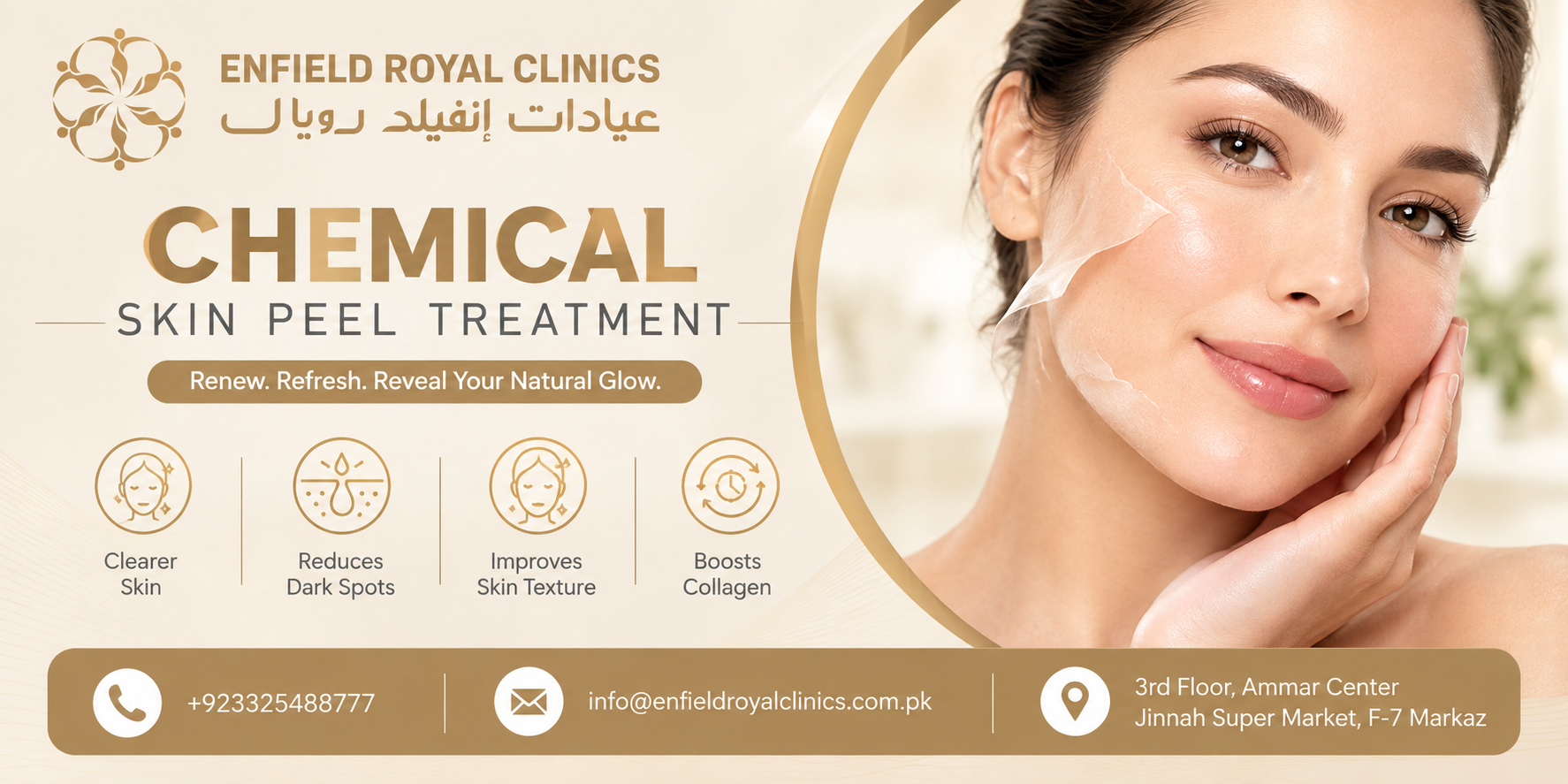
Healthy skin naturally renews itself by shedding old cells and replacing them with new ones. This process helps maintain a smooth texture, balanced complexion, and fresh appearance. However, factors such as aging, sun exposure, pollution, acne, and hormonal changes can affect the skin's natural renewal cycle. As a result, dead skin cells may accumulate, pigmentation can become more noticeable, and the complexion may appear dull or uneven.
Chemical peel treatment is a professional skin-resurfacing procedure designed to support this renewal process. It uses carefully selected chemical solutions to exfoliate damaged outer skin layers and encourage the development of fresher-looking skin. Depending on the formulation and treatment depth, it may also improve superficial pigmentation, rough texture, acne marks, and early signs of aging.
Many people exploring Chemical peel treatment in Islamabad want to understand how the procedure works and whether it can help maintain healthier-looking skin. Learning about the skin renewal process, available peel types, expected results, and aftercare can help individuals make informed decisions.
1. Understanding the Natural Skin Renewal Process
The skin continuously replaces old cells through a natural biological process. New cells develop in the deeper layers of the epidermis and gradually move toward the surface. As they reach the outer layer, older cells are shed and replaced.
In younger skin, this process generally happens more efficiently. With increasing age, cell turnover may slow down, making the skin appear less radiant. Dead skin cells can accumulate on the surface, contributing to roughness, uneven tone, and dullness.
Several factors can influence skin renewal:
-
Aging: Natural changes can slow the replacement of surface skin cells.
-
Sun exposure: Ultraviolet radiation can damage skin cells and contribute to pigmentation.
-
Environmental pollution: Exposure to pollutants may contribute to oxidative stress and skin damage.
-
Acne and inflammation: Breakouts can leave behind dark marks and uneven texture.
-
Dehydration: Insufficient moisture can make the skin appear dry and rough.
-
Harsh skincare products: Excessive exfoliation may irritate the skin and disrupt its protective barrier.
Chemical peels support surface-level renewal by removing some of the accumulated damaged cells. This helps reveal newer skin underneath and can improve the appearance of the complexion.
2. How Does Chemical Peel Treatment Encourage Skin Renewal?
Chemical peel treatment works through controlled exfoliation. A specially formulated solution is applied to the skin for a specific period under appropriate professional supervision. Its ingredients loosen the connections between dead skin cells, allowing the outer layer to shed.
The process varies according to the type and strength of the peel. Some treatments work mainly on the surface, while stronger formulations penetrate deeper into the skin.
As the treated skin heals, it gradually sheds damaged cells. This can make the complexion appear smoother and brighter. Certain peel ingredients may also influence processes involved in pigmentation and skin texture.
Chemical peels may support skin renewal by:
-
Removing accumulated dead skin cells.
-
Improving the appearance of rough and uneven texture.
-
Reducing the visibility of some superficial dark spots.
-
Helping improve dull-looking skin.
-
Softening the appearance of certain fine lines.
-
Improving the appearance of flat acne marks.
The procedure does not completely replace the skin's natural renewal system. Instead, it provides controlled exfoliation that may help improve specific surface-level concerns.
3. Which Chemical Peel Types Support Skin Renewal?
Different chemical peels work at different depths. Choosing the appropriate type depends on the skin condition, sensitivity, pigmentation, and desired outcome.
Superficial chemical peels
These are the mildest options and mainly affect the outermost skin layer. They may contain glycolic acid, lactic acid, mandelic acid, or salicylic acid.
Superficial peels are commonly considered for:
-
Mild dullness.
-
Uneven skin texture.
-
Superficial pigmentation.
-
Certain acne-related marks.
-
Mild congestion in acne-prone skin.
They usually involve less downtime than stronger peels, although temporary dryness, redness, or flaking can occur.
Medium-depth chemical peels
These penetrate further into the skin and may be considered for more noticeable sun damage, pigmentation, and fine lines. They generally require a longer recovery period and careful assessment.
Deep chemical peels
Deep peels reach deeper skin layers and are used for selected concerns. They involve a more intensive healing process and carry greater risks, including infection, scarring, and persistent pigment changes. They are not suitable for everyone.
For people considering Chemical peel treatment in Islamabad, the choice of peel should be based on professional skin evaluation rather than personal preference or treatment strength alone.
4. What Skin Improvements Can Result From Better Renewal?
When damaged surface cells are removed through an appropriate peel, the skin may gradually develop a fresher and more even appearance. The extent of improvement depends on the original skin concern and how the individual responds to treatment.
Smoother texture: Removing accumulated dead cells may reduce roughness and make the skin feel softer.
Brighter complexion: Exfoliation can help improve dullness and reveal fresher-looking surface skin.
Improved pigmentation: Selected peels may reduce the appearance of superficial dark spots and certain types of discoloration.
Softer fine lines: Some peels can improve the appearance of early fine lines by refining the outer skin surface.
Reduced appearance of acne marks: Flat dark marks left after breakouts may become less noticeable with suitable treatment.
It is important to remember that chemical peels are not a solution for every skin concern. Deep acne scars, significant wrinkles, and loose skin may require other treatments. Results are also not necessarily permanent, especially when the original cause of pigmentation or skin damage continues.
5. Is Chemical Peel Treatment Suitable for Every Skin Type?
Chemical peels can be considered for many skin types, but the same formula is not appropriate for everyone. Skin sensitivity, thickness, pigmentation tendencies, and existing skin conditions influence treatment suitability.
People with oily or acne-prone skin may be considered for certain formulations, while those with dry skin may need a gentler approach. Sensitive skin requires particular attention because aggressive exfoliation can cause irritation and damage the protective skin barrier.
People with darker skin tones may also need careful peel selection. In some cases, inflammation caused by an unsuitable treatment can trigger post-inflammatory hyperpigmentation, making dark marks more noticeable.
A professional assessment is especially important for individuals with:
-
Active skin infections or cold sores.
-
Eczema or rosacea.
-
Significant skin irritation.
-
A history of abnormal scarring.
-
Recent use of certain acne or prescription medications.
-
Previous complications from chemical peels.
Possible side effects include redness, dryness, peeling, temporary sensitivity, and changes in pigmentation. More serious complications, such as infection or scarring, can occur, particularly with deeper peels.
6. How Can Proper Aftercare Support the Skin Renewal Process?
Aftercare is essential because the skin may become temporarily sensitive following exfoliation. A suitable routine helps protect the recovering skin and reduces the risk of irritation.
The following practices can support recovery:
Use a gentle cleanser: Mild cleansing helps remove impurities without causing unnecessary irritation.
Apply a suitable moisturizer: Moisturizing supports the skin barrier and helps reduce dryness and tightness.
Protect the skin from sunlight: Broad-spectrum sunscreen with SPF 30 or higher is important after a chemical peel. Direct sun exposure should be limited during recovery.
Avoid picking or scratching: Peeling skin should shed naturally. Pulling it away can increase the risk of infection, irritation, and scarring.
Pause strong skincare ingredients: Retinoids, exfoliating acids, and harsh scrubs should be avoided until the skin has recovered and professional guidance allows their use.
Follow treatment instructions: The recovery routine should match the strength of the peel and the individual's skin response.
If severe pain, blistering, worsening redness, unusual swelling, or signs of infection develop, medical advice should be sought promptly.
7. Why Is Professional Assessment Important Before Treatment?
Although chemical peels are widely discussed in modern skincare, choosing the correct treatment requires more than identifying a skin concern. A professional assessment helps determine whether the problem is related to surface buildup, pigmentation, inflammation, or another condition.
The skin should be evaluated for sensitivity, hydration, pigmentation, medical history, and previous reactions to skincare products. This information helps establish an appropriate treatment plan and reduces the risk of unnecessary complications.
People exploring Chemical peel treatment in Islamabad should also discuss their expectations, possible side effects, recovery period, and the number of sessions that may be needed.
A carefully selected chemical peel can support surface-level skin renewal and improve the appearance of certain concerns. However, healthy skin also depends on consistent moisturizing, sun protection, and a skincare routine suited to individual needs.
Frequently Asked Questions
1. How does chemical peel treatment help renew the skin?
Chemical peels use selected chemical solutions to loosen and remove damaged outer skin cells. This controlled exfoliation helps reveal fresher-looking skin and may improve texture, dullness, and superficial pigmentation.
2. Does chemical peel treatment increase collagen production?
Some medium-depth and deeper resurfacing procedures may stimulate changes in the skin's repair response, which can support collagen remodeling. However, the effect varies according to the peel type and depth.
3. How often should someone get a chemical peel?
Treatment frequency depends on the formulation, strength, skin condition, and recovery response. Superficial peels may be repeated according to a professional schedule, while deeper peels require longer intervals.
4. Can chemical peels improve dull and rough skin?
Yes, suitable chemical peels can remove accumulated dead skin cells and improve the appearance of dullness and rough texture. The results depend on the skin's condition and treatment choice.
5. Is peeling always visible after chemical peel treatment?
No. Some superficial peels cause very little visible peeling, while others may produce noticeable flaking. The absence of visible peeling does not necessarily mean that the treatment has not worked.
6. Can chemical peel treatment damage the skin?
An unsuitable or overly aggressive peel can cause irritation, burns, pigmentation changes, infection, or scarring. Professional assessment, appropriate treatment selection, and correct aftercare help reduce these risks.

 Arabic
 French
 Spanish
 Portuguese
 Deutsch
 Turkish
 Dutch
 Italiano
 Russian
 Romaian
 Portuguese (Brazil)
 Greek