


Professional Wire Accessories for Metalworking Equipment
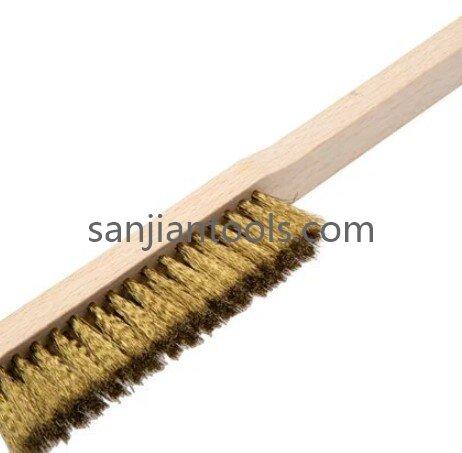
In metal fabrication and industrial maintenance, power-driven brushing tools are frequently used to remove surface contamination and prepare components for subsequent processing. A Stainless Steel Wire Brush For Grinder is designed for applications where stainless steel filaments and compatible rotary equipment are required to clean metal surfaces through controlled mechanical contact. Compared with manual brushing, grinder-mounted accessories can cover larger working areas or provide more consistent mechanical action when used with suitable equipment. For professional workshops and industrial purchasing teams, understanding wire material, attachment design, and operating requirements is essential before selecting this type of accessory.
The primary working component is a group of stainless steel wire filaments arranged around a supporting structure. These filaments contact the workpiece and loosen contaminants such as surface oxidation, dirt, and selected forms of residue. Stainless steel is often selected when users need a brush material with greater resistance to corrosion than ordinary carbon steel. It is particularly relevant when cleaning stainless steel workpieces because using an inappropriate carbon steel brush may introduce iron contamination that can contribute to surface rust.
Stainless steel wire is not a single universal specification. Wire composition, diameter, filament length, and construction influence the flexibility and cleaning characteristics of the finished product. Thinner filaments generally offer a different contact behavior from thicker ones, while shorter or denser arrangements can produce a firmer brushing action. The appropriate configuration depends on the surface condition, component geometry, and required level of cleaning. Buyers should confirm the actual wire grade and product specification rather than relying on the general material description alone.
The brush body and mounting system are equally important. Grinder accessories may be manufactured in different forms, including wheel brushes, cup brushes, and other rotary configurations. Each design provides a different contact pattern and is suited to particular working positions. A wheel-style design may be useful for linear surface work, while a cup configuration can provide a broader contact area on suitable flat or curved sections. The mounting interface must match the grinder spindle, arbor, or accessory system specified by the manufacturer.
Manufacturing quality involves more than attaching wire to a rotating base. The supporting structure must maintain its shape during intended operation, and the filaments must be secured appropriately. Consistent wire distribution helps reduce uneven contact, while reliable assembly supports predictable operation. Product inspection should consider the overall balance, attachment quality, wire retention, and physical condition. Any accessory showing damage, deformation, or loose components should not be used.
Metal fabrication is one of the main application areas. Workshops may use rotary wire brushes to clean welded components, remove loose scale, and prepare surfaces before further finishing. They can also assist with maintenance of stainless steel structures, metal fittings, fabricated frames, and selected industrial equipment. The actual cleaning result depends on the workpiece material, surface finish, brush configuration, and operating technique. For precision components or decorative finishes, less aggressive cleaning methods may be more appropriate.
Maintenance departments may also use suitable rotary brushes when cleaning equipment components that have accumulated surface deposits. In food-processing equipment maintenance, chemical processing facilities, and other environments where stainless steel is widely used, material compatibility is particularly important. The selected brush should be suitable for the workpiece and the applicable hygiene or maintenance procedures. A cleaning accessory alone does not establish compliance with any specific industrial or sanitary standard.
Correct equipment compatibility must be established before operation. Buyers and users should check the grinder type, mounting dimensions, maximum permitted rotational speed, and accessory manufacturer's operating instructions. A brush should never be installed on equipment with an incompatible mounting system or operated beyond its rated speed. The operator should also verify that the accessory is suitable for the intended direction of rotation and working conditions.
Safe working practices are essential because rotating wire accessories can release individual filaments or particles during operation. Operators should wear appropriate eye and face protection, gloves where required by workplace procedures, and other suitable personal protective equipment. The workpiece should be secured, and the grinder should be operated with its prescribed guard and safety features in place. Excessive pressure should be avoided because it can increase wear, generate unnecessary heat, and affect the quality of the surface. Testing on a small area helps establish whether the selected configuration is suitable.
For procurement professionals, product evaluation should include wire material, brush diameter, working width, mounting specification, rated operating speed, and intended application. Packaging should clearly identify the product configuration and compatibility information to reduce errors during distribution. Industrial buyers may also request product drawings, samples, and technical documentation before approving a new accessory for regular purchasing.
Wholesalers and importers should consider the needs of different customer groups when planning an assortment. Metalworking distributors may prioritize several rotary brush configurations, whereas general hardware retailers may focus on common grinder accessories. Reliable product identification, consistent specifications, and suitable packaging help simplify warehouse operations and reduce confusion between carbon steel and stainless steel products. Clear communication of application limitations is also important when supplying professional users.
When sourcing a Stainless Steel Wire Brush For Grinder, buyers should prioritize verified mounting compatibility, appropriate stainless steel wire specifications, secure construction, and clearly defined operating limits. These considerations help reduce purchasing errors and support more reliable use in metalworking environments. Zhejiang Pujiang Sanjian Tools Co., Ltd. provides a range of professional brushes and construction-related tools for international customers. Visit https://www.sanjiantools.com/ to explore its product categories and company information.

 English
 Arabic
 French
 Portuguese
 Deutsch
 Turkish
 Dutch
 Italiano
 Russian
 Romaian
 Portuguese (Brazil)
 Greek