


How to Start an Online Business A Step-by-Step Guide for Beginners
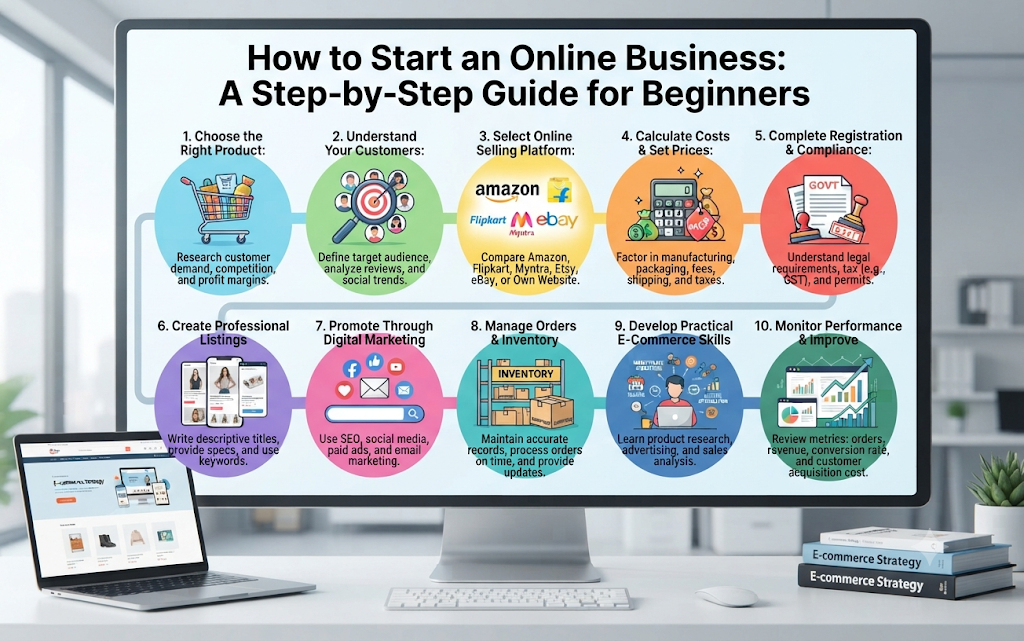
Starting an online business has become a popular opportunity for people who want to sell products and reach customers beyond their local area. With the growth of digital marketplaces and online shopping, entrepreneurs can introduce products, manage orders, and promote their businesses through digital platforms. Learning the basics of Ecommerce Business Training can help beginners understand the important steps involved in building and managing an online business.
1. Choose the Right Product or Business Idea
The first step in starting an online business is selecting a product or service that has a potential customer base. You can explore categories such as clothing, home decor, handmade products, beauty accessories, electronics, and lifestyle products.
Before finalizing your product, research customer demand, competition, product availability, and expected profit margins. Do not select a product only because it is trending. Consider whether you can maintain its quality, manage its supply, and sell it at a competitive price.
Questions to Consider Before Selecting a Product
- Who will be interested in purchasing this product?
- What problem does the product solve?
- Is there sufficient demand in the market?
- How many sellers are offering similar products?
- Can you maintain a reasonable profit margin?
- Can you arrange a reliable supply of products?
2. Understand Your Target Customers
Knowing your target audience helps you make better decisions about product selection, pricing, and marketing. Different customers have different expectations regarding quality, design, delivery, and product features.
You can understand customer requirements by studying marketplace reviews, competitor listings, social media discussions, and search trends. Pay attention to common customer questions and complaints. These can help you identify opportunities to improve your product or service.
For example, customers purchasing home decor products may look for unique designs, material details, and customization options. Buyers interested in electronics may focus on product specifications, compatibility, warranty, and performance.
3. Select a Suitable Online Selling Platform
After selecting your product, decide where you want to sell it. Different online marketplaces provide different features, customer groups, fees, and selling opportunities.
- Amazon: Offers opportunities to sell products across multiple categories.
- Flipkart: Provides access to customers across India.
- Myntra: Focuses mainly on fashion and lifestyle products.
- Etsy: Popular for handmade, vintage, and creative products.
- eBay: Supports selling across different product categories and markets.
- Own website: Gives businesses greater control over branding and the shopping experience.
Before registering as a seller, understand the platform's commission structure, payment terms, shipping requirements, return policies, and product listing guidelines. Select a platform that matches your products and business objectives.
4. Calculate Business Costs and Set Prices
Pricing plays an important role in online business profitability. A product may receive several orders, but the business can still lose money if the selling price does not cover all expenses.
Consider these costs before deciding your product price:
- Product manufacturing or purchasing cost
- Packaging and labeling expenses
- Marketplace commission and selling fees
- Shipping and fulfillment charges
- Advertising and promotional expenses
- Taxes and other applicable costs
- Returns and operational expenses
Compare your total expenses with competitor prices and customer expectations. Your pricing strategy should attract customers while allowing your business to generate a sustainable profit.
5. Complete Business Registration and Compliance
Before starting regular sales, understand the legal and tax requirements applicable to your business. These requirements may depend on your business structure, location, turnover, product category, and selling platform.
In India, entrepreneurs should review applicable business registration, GST, invoicing, consumer protection, and product-specific regulations. Some product categories may require additional approvals or documentation. Consult official government resources or a qualified professional when necessary.
Maintaining proper records of purchases, sales, expenses, and payments from the beginning can make business management easier.
6. Create Professional Product Listings
Product listings help customers understand what you are selling. A clear and informative listing can improve the shopping experience and help buyers make confident purchasing decisions.
Important Elements of a Product Listing
- Write descriptive and relevant product titles.
- Create original descriptions explaining product features.
- Upload clear and high-quality product photographs.
- Include accurate sizes, dimensions, materials, and specifications.
- Select the correct product category and attributes.
- Use relevant search keywords naturally.
- Provide accurate delivery and return information.
Avoid copying descriptions from competitors. Original content and accurate product information help customers understand what they are purchasing and reduce confusion.
7. Promote Your Online Business Through Digital Marketing
Uploading products to a marketplace or website does not automatically generate sales. Customers need to discover your products through suitable marketing channels.
Search engine optimization can help improve website visibility in search results. Social media platforms can introduce products to potential customers, while paid advertisements can provide additional reach. Email marketing can help businesses communicate with interested customers and encourage repeat purchases.
Choose marketing channels according to your target audience and budget. Track website visits, enquiries, conversions, and advertising expenses to understand which activities are delivering useful results.
8. Manage Orders, Inventory, and Customer Service
Once customers begin placing orders, reliable operations become essential. Sellers should maintain accurate inventory records, process orders on time, package products carefully, and provide delivery updates.
Customer service is another important part of online selling. Respond to customer questions politely, provide correct product information, and handle complaints according to the relevant platform policies.
As your business grows, consider using suitable software or organized spreadsheets to manage inventory, orders, expenses, and customer enquiries. This can help reduce mistakes and improve daily operations.
9. Develop Practical E-Commerce Skills
Running an online business requires knowledge of product research, marketplace operations, listing optimization, advertising, inventory management, and sales analysis. Learning these skills can help beginners make informed decisions and manage business activities more effectively.
A structured Ecommerce Training Course can introduce learners to marketplace processes and practical online selling activities. When selecting a course, review its curriculum, practical assignments, instructor experience, and real-world examples.
Practical learning can also help individuals understand how to create product listings, research keywords, plan advertising campaigns, and analyze marketplace performance. These skills can be useful for both entrepreneurs and people interested in e-commerce employment opportunities.
10. Monitor Performance and Improve Your Business
Starting an online business is only the beginning. Regularly reviewing performance helps you understand which products are selling, which marketing activities are effective, and where improvements are needed.
Important business metrics include:
- Total orders and sales revenue
- Product conversion rate
- Average order value
- Customer acquisition cost
- Product return rate
- Inventory turnover
- Net profit
Use these insights to improve product descriptions, pricing, customer service, inventory planning, and promotional campaigns. Start with manageable changes and expand your operations as your business becomes more stable.
Conclusion
Starting an online business requires proper planning, product research, financial management, and consistent effort. From choosing the right product to managing orders and promoting listings, every activity contributes to the development of a successful online store. With practical knowledge and continuous improvement, entrepreneurs can build a strong foundation for long-term growth. Learning through Ecommerce Career Training can also help individuals develop useful skills for working in the growing e-commerce industry.

 English
 Arabic
 French
 Spanish
 Portuguese
 Deutsch
 Turkish
 Dutch
 Italiano
 Russian
 Portuguese (Brazil)
 Greek