


Cerium Price History: Northeast Asia Prices Fall to USD 3.87/KG
Global Cerium Prices Outlook – November 2026
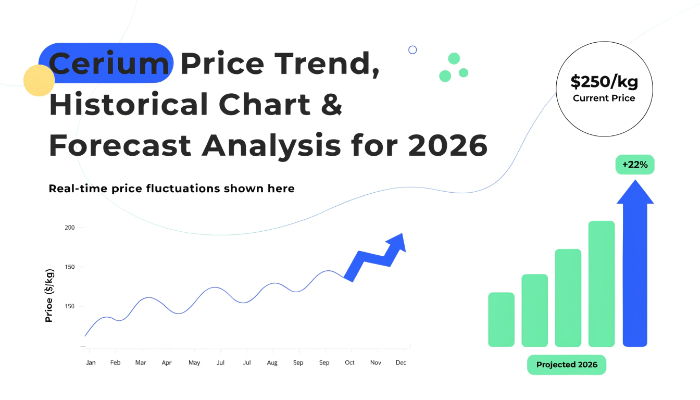
The Cerium Price Chart showed a decline of 1.3% in Northeast Asia during November 2026, with prices reaching USD 3.87/KG. The downward movement reflected changing purchasing activity, inventory conditions, and demand from industrial applications. Cerium is an important rare earth metal used in glass polishing, automotive catalysts, electronics, and specialty chemical manufacturing, making its pricing sensitive to developments across these industries.
Northeast Asia remained the key regional reference point in the available November assessment. Changes in rare earth processing costs, raw material availability, and downstream manufacturing requirements continued to influence market sentiment. For procurement managers and industrial buyers, monitoring the Cerium Price History helps evaluate historical cost movements, compare purchasing periods, and understand potential changes in supplier quotations.
Cerium Price Chart: Regional Price Snapshot – November 2026
The November 2026 regional assessment highlights the following movement:
- Northeast Asia: USD 3.87/KG, down 1.3%.
The available assessment indicates a modest decline in Northeast Asian cerium prices during November. At USD 3.87/KG, the regional quotation provides a useful reference for buyers monitoring rare earth procurement expenses. Since no additional regional prices were supplied, international price differences cannot be established. Procurement teams should monitor rare earth feedstock availability, processing costs, and downstream industrial demand when evaluating future purchasing requirements.
Get A Sample Report Today - https://www.imarcgroup.com/cerium-pricing-report/requestsample
Country-Level Cerium Price Analysis
The November 2026 dataset provides a Northeast Asian regional assessment rather than individual country quotations.
- Asia-Pacific: Northeast Asia recorded USD 3.87/KG, declining by 1.3%. Changes in rare earth processing activity, inventory availability, and downstream demand may influence regional pricing.
- North America: No verified regional price or monthly movement is available for November 2026.
- South America: No separate regional assessment is available for this period.
Individual prices for China, Japan, and India should be included only when verified country-level data becomes available.
Cerium Supply and Demand Overview – November 2026
Cerium supply remained closely connected to rare earth mining, mineral processing, and separation activities. It is commonly recovered from rare earth mineral deposits, including bastnäsite and monazite, alongside other rare earth elements.
China plays an important role in global rare earth processing and supply chains. Consequently, changes in mining output, processing capacity, environmental regulations, and export conditions can influence international availability.
On the demand side, cerium consumption is supported by several industrial applications. Glass polishing compounds, automotive catalytic converters, and specialty glass manufacturing represent important end-use segments. Demand from electronics and other advanced manufacturing applications also contributes to procurement requirements.
Changes in downstream production and inventory management can influence buying activity, particularly when manufacturers adjust purchasing volumes in response to changing raw material costs.
Cerium Price Index & Historical Analysis
IMARC Group's November 2026 price-tracking database recorded a 1.3% monthly decline in Northeast Asian cerium prices, bringing the assessment to USD 3.87/KG.
Historical pricing assessments help procurement teams evaluate changes in rare earth material costs and understand how processing expenses and industrial demand influence supplier quotations. The cerium price history chart also supports cost benchmarking, budgeting, and purchasing decisions.
For quarterly comparisons, buyers should assess November prices against verified previous-quarter averages. As previous-quarter figures have not been provided, a numerical quarter-on-quarter comparison cannot be established reliably.
Cerium Price Forecast: Next 12 Months
Over the next 12 months, cerium prices are expected to remain influenced by rare earth supply conditions, processing capacity, industrial consumption, and international trade policies.
Key factors likely to influence future pricing include:
- Rare earth production: Changes in mining and processing output may affect cerium availability.
- Chinese supply: Production regulations and export conditions could influence international procurement.
- Automotive demand: Catalytic converter manufacturing will remain an important source of cerium consumption.
- Glass manufacturing: Demand for polishing compounds and specialty glass will influence industrial requirements.
- Processing costs: Energy expenses, chemical inputs, and refining costs may affect supplier quotations.
- Trade conditions: Export policies and logistics expenses could influence regional availability.
Improved supply and weaker downstream purchasing could place pressure on prices. Conversely, production restrictions, higher processing expenses, or stronger industrial demand may support price increases.
Key Factors Affecting Cerium Prices: November Market Perspective
Several factors influence cerium pricing and procurement costs:
- Rare earth mining: Mining output and mineral availability determine the supply of cerium-bearing raw materials.
- Processing costs: Separation, refining, and purification expenses influence finished product pricing.
- Energy expenses: Electricity and fuel costs affect mining and processing operations.
- Automotive demand: Catalytic converter production influences consumption requirements.
- Glass industry: Demand for polishing powders and specialty glass applications supports cerium consumption.
- Freight charges: Shipping costs and transportation availability affect delivered prices.
- Trade regulations: Export controls and international trade policies can influence supply chains.
These factors determine how changes in rare earth production and industrial consumption translate into cerium procurement costs.
What Is Cerium and Where Is It Used?
Cerium is a silvery-white metallic element belonging to the rare earth group, with the chemical symbol Ce and atomic number 58. It is one of the more abundant rare earth elements and is commercially recovered from minerals such as bastnäsite and monazite.
Its important applications include:
- Glass polishing: Cerium oxide is widely used for polishing optical glass, mirrors, and precision glass products.
- Automotive: Used in catalytic converters to support emission-control processes.
- Electronics: Applied in selected electronic and optical manufacturing processes.
- Specialty glass: Used in glass formulations to improve specific optical and chemical properties.
- Chemical manufacturing: Incorporated into selected catalysts and industrial formulations.
Its diverse industrial applications make cerium an important material for automotive, glass, electronics, and advanced manufacturing supply chains.
Recent Cerium Market Developments – November 2026
Several industry indicators remained important for cerium buyers during November:
- Rare earth processing: Processing capacity and separation activities continued to influence the availability of cerium products.
- Chinese supply: Production regulations and trade policies remained important considerations for international rare earth procurement.
- Automotive applications: Catalytic converter manufacturing continued to support cerium consumption.
- Glass manufacturing: Demand for polishing compounds and specialty glass remained relevant to downstream purchasing.
- Supply chain costs: Energy, processing, and transportation expenses remained important factors for suppliers.
These developments highlight the importance of monitoring rare earth production, industrial demand, and trade conditions when evaluating future cerium procurement costs.
Frequently Asked Questions About Cerium Prices
What does the Cerium Price Index indicate in November 2026?
The November assessment indicates a 1.3% decline in Northeast Asian cerium prices, bringing the regional price to USD 3.87/KG. Changes in purchasing activity, processing costs, and industrial demand influence market conditions.
What does the Cerium Price Chart show for November 2026?
The available regional assessment shows Northeast Asia at USD 3.87/KG, down 1.3%. No additional verified regional prices were provided for comparison.
What factors will influence the Cerium price forecast?
Rare earth mining output, processing capacity, automotive demand, glass manufacturing, energy expenses, and international trade policies will influence future cerium prices.
How IMARC Group Helps Businesses Track Cerium Prices
IMARC Group provides cerium pricing insights covering historical assessments, regional movements, and market developments. Its analysis helps businesses monitor raw material costs, compare supplier quotations, and understand changing industrial demand. Historical pricing information also supports procurement planning and cost benchmarking. Over the next 12 months, rare earth supply availability, processing costs, and automotive and glass industry demand will remain important indicators influencing cerium prices.
Contact Us:
IMARC Group
134 N 4th St., Brooklyn, NY 11249, USA
Email: sales[@]imarcgroup.com
Tel No:(D) +91 120 433 0800
United States: +1-201971-6302

 English
 Arabic
 French
 Spanish
 Portuguese
 Deutsch
 Turkish
 Italiano
 Russian
 Romaian
 Portuguese (Brazil)
 Greek