


Kitchen Cabinets Accessories That Make Your Kitchen Easier to Use Every Day
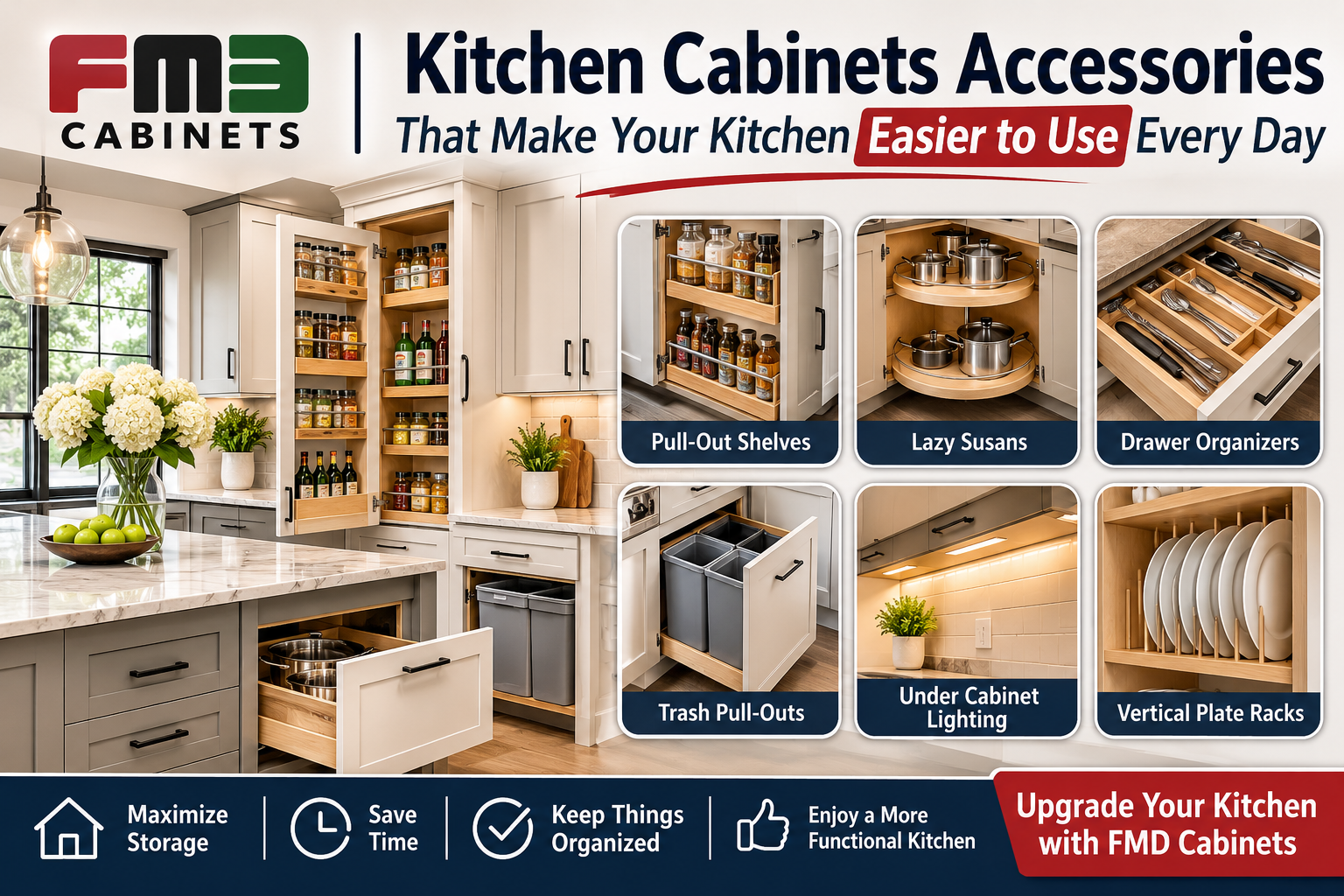
The right kitchen cabinet accessories can change how a kitchen feels without changing a single door or countertop. A standard cabinet is basically an empty box with one or two shelves, and that simple design forces you to stack items, reach into dark corners, and move three things to get to the one you need. Accessories solve this problem by dividing the empty space into organized zones that match the way you actually cook, clean, and store food. This guide explains which accessories deliver the most value, how to judge quality before you buy, and how to plan them into either a full remodel or a smaller upgrade to the cabinets you already own.
Why Small Additions Make a Big Difference
Most kitchens do not fail because they lack storage. They fail because the storage they have is hard to use. Items pile up at the back of deep cabinets, lids slide around in drawers, and the space under the sink turns into a place where things disappear. When storage is awkward, people leave items on the counter, and the room starts to feel cluttered even when the cabinets are half empty.
Accessories fix the real problem, which is access. They bring items toward you, separate them into logical groups, and protect the cabinet itself from the wear that comes from forcing things in and out. A well organized kitchen also saves time. When you can find the right pan or ingredient in a few seconds, cooking feels calmer, cleanup moves faster, and the entire room becomes more enjoyable to work in.
Begin With an Honest Look at Your Daily Habits
Before you buy anything, spend a few days noticing where your kitchen slows you down. Pay attention to what you reach for most often, which cabinets you avoid opening, and where clutter collects on the counter. Write down the items that never seem to have a proper home, such as baking sheets, cutting boards, small appliances, or cleaning supplies.
This short exercise gives you a clear list of problems, and each problem usually matches a specific accessory. A family that bakes often may need vertical tray storage, while someone who cooks with many spices may benefit more from a narrow rack beside the stove. Households with young children might want a dedicated low drawer for plastic dishes, and anyone who recycles heavily will appreciate a built-in sorting system. Buying accessories that solve your own frustrations is far more effective than buying a random set of popular products that do not fit your routine.
Sliding Storage for Deep Base Cabinets
Deep base cabinets are the biggest source of lost storage in most kitchens. Anything placed at the back requires you to kneel, empty the front, and search by flashlight. Pull out shelves remove that problem by gliding the entire contents toward you, so every item is visible and reachable from a standing position.
They are especially helpful for heavy items such as mixing bowls, small appliances, and cast iron cookware, because you never have to lift them over a lip or reach deep to retrieve them. When shopping, look for full extension glides, a clearly stated weight rating, and sturdy side rails that stop items from sliding off. A soft closing feature is a useful bonus since it prevents the tray from slamming into the back of the cabinet. Many sliding units are made in standard widths, so they can often be added to existing cabinets with simple tools and a careful measurement of the opening.
Drawer Dividers and Inserts That End the Junk Drawer
Drawers are the most used storage in the kitchen, and they are also the first place where chaos begins. Without structure, utensils tangle, knives dull against each other, and small tools disappear under larger ones. Drawer inserts bring order by giving every item a defined spot.
Start with a utensil tray sized to your drawer width, then add a separate zone for knives, either as a built in block or a slotted insert that protects the blades. Adjustable peg systems are excellent for plates and bowls because you can reposition the pegs as your dishes change. Vertical dividers turn a deep drawer into a filing system for baking sheets, cutting boards, and platters, which saves the shelf space those items used to occupy. Shallow trays near the stove can hold spices in labeled rows, so the right jar is always visible at a glance. Wood inserts look beautiful and feel durable, while metal and high quality plastic versions are easier to wipe clean.
Turning Corners Into Usable Space
Corner cabinets are famous for wasting space. A blind corner can hide a large portion of its interior behind a wall, and without help, that area becomes a storage black hole. Fortunately, there are several proven fixes.
Swing out shelves pivot from the door and bring items from deep inside the corner out into the open. Lazy susans rotate so you can spin the contents until the item you need faces you. Pull out corner systems use two sets of baskets that slide out together, giving access to both the front and the back of the corner. Each option works slightly differently, so measure your corner opening and door type before ordering. Because corners are hardest to fix after installation, they deserve special attention during planning. If you are designing a new layout, discuss corner solutions early so the cabinet size and door style can be chosen to suit the accessory rather than the other way around.
Organizing Doors and the Space Under the Sink
The inside of a cabinet door is often completely unused. Slim racks mounted there can hold cutting boards, foil, wraps, and cleaning sprays, keeping them close and visible. The cabinet under the sink is even more challenging because plumbing cuts through the middle of it, leaving awkward gaps.
Well chosen cabinet organizers can turn this problem area into a tidy zone. U shaped trays wrap around the pipes, tiered shelves create levels for bottles and sponges, and pull out bins make waste sorting simple. A waterproof tray at the bottom adds a useful layer of protection against small leaks, which can save the cabinet floor from swelling. If you keep cleaning chemicals here, consider a lockable option or a higher mounted rack when children are in the home.
Tall Pantry Storage and Spice Racks
A tall pantry cabinet becomes dramatically more useful with the right interior. Instead of fixed shelves that hide items in the back, install sliding shelves that bring each level forward. Door mounted racks add space for jars, bags, and snacks, and adjustable shelving lets you change heights as your food storage changes through the year.
Spices deserve their own system. A narrow roll out rack next to the stove keeps seasonings within arm's reach while cooking, and tiered inserts in a nearby drawer allow you to read every label without lifting a single jar. Group spices by cuisine or by use, and place the ones you reach for daily at the front. When your most used ingredients are easy to find, cooking becomes faster and more enjoyable, and food waste goes down because nothing gets forgotten at the back of a shelf.
Quiet and Smooth Hardware Upgrades
Accessories are not limited to items placed inside the cabinet. Hinges and drawer glides are used hundreds of times each week, so small improvements here are felt every day. Soft close hinges use a built in damper that slows the door during the last few inches of travel. The result is a quiet, controlled closing motion that protects the door, the frame, and the items inside from repeated impact.
Drawer glides offer the same benefit. A full extension, quiet closing glide lets you open a drawer completely and reach items at the back without the loud bang that cheap hardware often produces. Many existing kitchens can be upgraded by replacing the hinge or adding a small damper device, so you do not always need new cabinets to enjoy this improvement. Households with children benefit twice, since slower closing doors also reduce the risk of pinched fingers.
Smart Choices for Small Kitchens
Small kitchens benefit from accessories more than large ones because every inch matters. Vertical dividers let you store baking sheets and cutting boards on edge instead of stacking them. Tiered shelves inside cabinets double the usable surface for cans and jars. Narrow slide out units can fit into spaces as slim as six inches, such as the gap beside a refrigerator or between the stove and a wall. Hooks under upper cabinets hold mugs or utensils, and a magnetic strip mounted on the backsplash keeps knives within reach without using drawer space. In a compact room, choose accessories that serve more than one purpose, and avoid bulky products that eat into the very space you are trying to gain. Light colored inserts also keep the interior bright, which makes it easier to see what you own.
Comparing the Most Useful Accessories
The table below summarizes where each accessory works best, what it improves, and how difficult it usually is to install. Use it as a quick reference while you plan your upgrades.
|
Accessory |
Best location |
Main benefit |
Typical installation effort |
|
Sliding base trays |
Deep base cabinets |
Full visibility and easy reach |
Moderate |
|
Drawer dividers |
Utensil and cookware drawers |
Order and faster searching |
Very easy |
|
Corner swing shelves |
Blind corner cabinets |
Access to unused space |
Moderate to advanced |
|
Door mounted racks |
Inside cabinet doors |
Extra storage for small items |
Easy |
|
Under sink trays |
Sink base cabinet |
Works around plumbing |
Easy |
|
Tall pantry racks |
Pantry cabinets |
Clear view of food supplies |
Moderate |
|
Damped hinges |
Doors on any cabinet |
Quiet, gentle closing |
Easy to moderate |
What Separates Quality Accessories From Cheap Ones
Price alone does not tell you whether an accessory will last. Because these products move every day, construction details matter more than appearance. Check the following points before you decide.
-
A clearly stated weight rating that matches how you plan to use the accessory
-
Full extension glides so the entire tray or drawer comes out
-
Metal or thick composite construction instead of thin plastic
-
Smooth, quiet movement without wobbling or sticking
-
Finishes that resist moisture, grease, and regular cleaning
-
Dimensions that fit your actual opening, including the space taken by hinges and frames
An accessory that meets these standards usually costs a little more at first, but it avoids the frustration and replacement cost of a cheap product that sags, rattles, or breaks within a year.
Fitting Accessories Into the Cabinets You Already Own
You do not need a full remodel to benefit from better storage. Start by measuring the inside width, depth, and height of the cabinet. For framed cabinets, measure the actual door opening, since the frame can reduce usable width by an inch or more. For frameless cabinets, you often have a wider opening, which allows slightly larger accessories to fit. Pay attention to hinge placement, because a hinge that sticks into the opening can block a tray from sliding out.
Take photographs and write your measurements down before you shop. Many manufacturers list the minimum cabinet size for each product, and following that guidance saves time and returns. If you are installing pull out shelves in an older kitchen where the cabinet floor is slightly uneven, use a level and shims during installation so the glides move smoothly instead of drifting to one side.
Installing Accessories Without Mistakes
Gather a drill, a level, a tape measure, a pencil, and the screws recommended by the manufacturer. Empty the cabinet fully and remove existing shelves if necessary. Mark the mounting positions using the instructions, and drill pilot holes before inserting screws to prevent the wood from splitting, especially in particleboard or thin panels. Attach the glides first, then the tray or basket, and test the movement with the cabinet door open and closed. Adjust until the unit slides smoothly without touching the door or frame. Finally, load the accessory with a few items and run another test, because a unit that moves well when empty can behave differently under weight.
Mistakes to Avoid When Buying Accessories
The most common mistake is buying before measuring. Even a quarter inch difference can stop a tray from sliding or a door from closing. Another is choosing based on appearance alone, without checking weight ratings and glide quality. Some homeowners fill every cabinet with organizers at once, only to discover that their habits require different arrangements. It is wiser to start small, live with the changes for a few weeks, and adjust. Buying large sets that include many items you do not need is another trap. Finally, avoid installing accessories without reading the instructions, since incorrect mounting can damage the cabinet floor, loosen screws, or affect warranties. A little patience at the planning stage protects both your cabinets and your budget.
Budgeting and Prioritizing Your Upgrades
The most effective way to spend money on kitchen cabinet accessories is to start with your biggest daily frustration rather than trying to upgrade everything at once. If you dread the deep cabinet beside the stove, begin there. If the drawer next to the dishwasher is in chaos, fix it first. Cabinet organizers are among the most affordable improvements and often deliver the fastest sense of progress, so they make a good starting point for any budget.
Mid range investments include sliding shelves and corner systems, which cost more but solve larger problems. Premium options include custom interior systems built to the exact dimensions of your kitchen. If you are planning a full remodel, ask for accessories to be included in the order, since factory installation is usually cleaner and sometimes more cost effective than retrofitting later.
Keeping Accessories Clean and Working
A quick wipe keeps most accessories in good condition. Remove crumbs from drawer inserts, clean tracks and glides with a dry or slightly damp cloth, and avoid heavy lubricants that attract dust. Check screws every few months, since constant movement can loosen them over time. Test soft close hinges at the same time, and adjust them if a door begins to close unevenly or too quickly. Taking five minutes each season to inspect hardware prevents small problems from becoming expensive repairs.
Final Thoughts
Thoughtful accessories are one of the smartest investments you can make in a kitchen because they improve daily life without requiring a major renovation. They bring hidden items into view, keep drawers organized, make corners useful, and add quiet precision to everyday movements. Begin with your biggest frustration, choose products with solid construction, measure carefully, and install each piece with care. Over time, you can build a kitchen that works as well as it looks, and one that continues to feel easy to use for many years.
FAQs
Q: Which accessory should I install first?
A: Start with whatever solves your biggest daily frustration. For many homeowners, that means sliding trays in a deep base cabinet or dividers in a crowded utensil drawer, because both create an immediate improvement in access and organization.
Q: Can I add accessories without replacing my cabinets?
A: Yes. Many trays, racks, and inserts fit standard openings. Measure the inside width, depth, and height of each cabinet, account for hinges and frames, and check the manufacturer's minimum size guidance before ordering to avoid returns.
Q: Are damped hinges worth the extra cost?
A: For most households, yes. They reduce noise, protect doors and frames from impact, and lower the risk of pinched fingers. The small price difference usually feels worthwhile once you notice how much quieter the kitchen becomes.
Q: How do I organize a blind corner cabinet?
A: Use a swing out shelf, a lazy susan, or a pull out corner system. These bring items from the hidden back area into reach. Choose the type that matches your door style and the size of your corner opening.
Q: What material is best for drawer inserts?
A: Wood looks beautiful and feels durable, while metal and quality plastic are easier to clean. Choose based on use, and avoid thin materials that bend or crack, especially in drawers that hold heavy cookware or knives.

 English
 Arabic
 French
 Spanish
 Portuguese
 Deutsch
 Dutch
 Italiano
 Russian
 Romaian
 Portuguese (Brazil)
 Greek