


Bamboo Flooring San Jose CA Pros, Cons, and Care
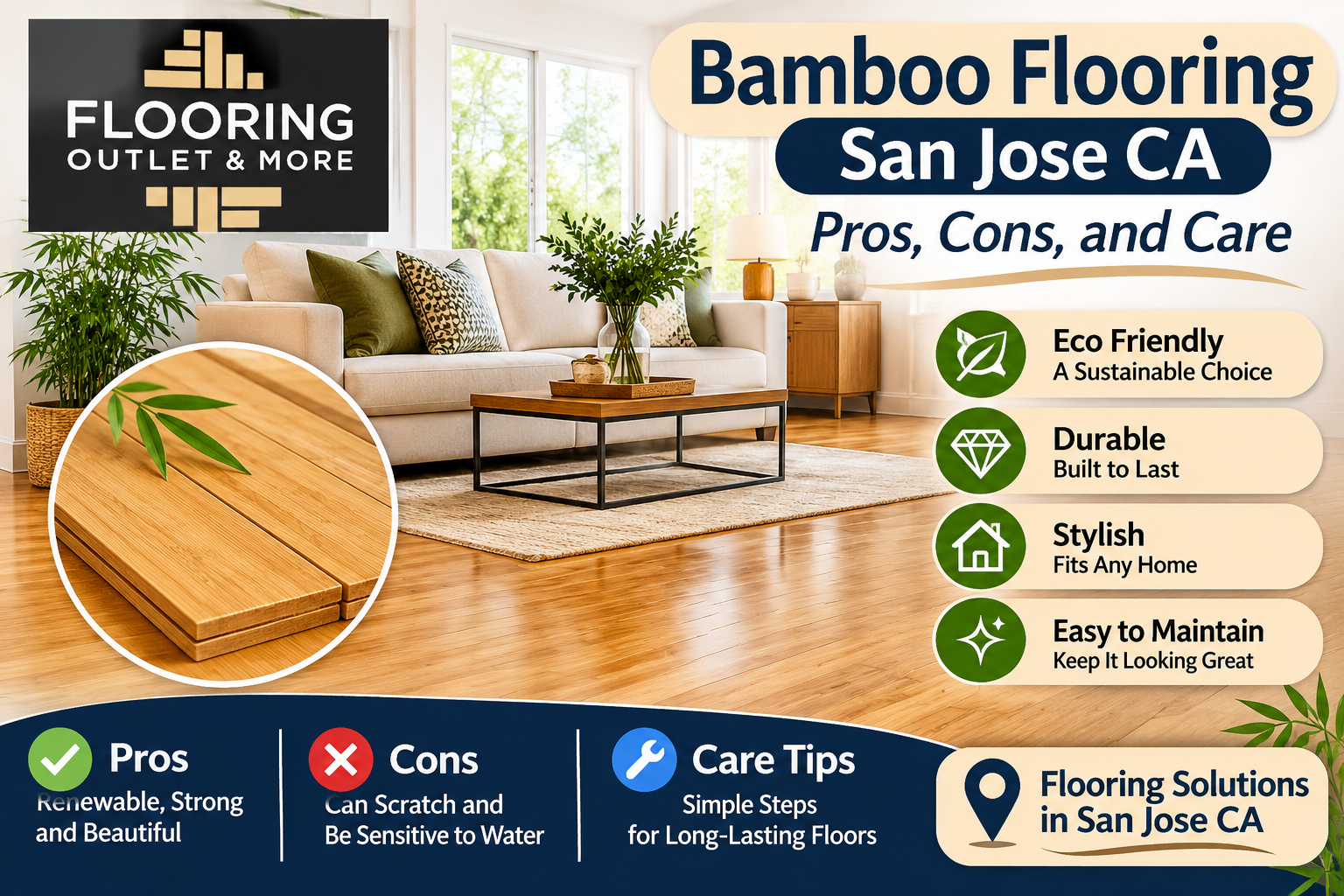
Bamboo flooring has a devoted following among homeowners who want a modern look, a lighter environmental footprint, and a surface that feels a little different from traditional oak or maple. It is not a tree but a fast growing grass, and that fact shapes both its appeal and its limits. If you are exploring bamboo flooring San Jose CA homeowners can choose from, begin with this overview of the benefits of bamboo flooring for sustainability and style, then use the rest of this guide to understand construction types, hardness, moisture, installation, cost, and care. Whether bamboo turns out to be the right choice or simply a good option to compare against wood, you will finish with a clearer sense of what to ask and what to expect.
What Bamboo Flooring Really Is
Bamboo flooring is made by cutting mature bamboo stalks into strips, treating them, and bonding them together under heat and pressure. The result is a plank that looks and installs much like hardwood. Because the material comes from a grass that regrows quickly, many buyers see it as a renewable option.
Not every bamboo plank is the same. The way the strips are arranged, the adhesive used, the treatment process, and the finish all affect performance. That is why two bamboo floors with a similar look can differ in hardness, stability, and durability. Understanding the main construction types helps you sort through options with confidence.
Main Types of Bamboo Flooring
Horizontal bamboo lays the strips flat and glues them together, showing the familiar knuckle pattern of the plant. It has a distinctive, clean appearance. Vertical bamboo stands the strips on edge, creating a finer, more uniform grain.
Strand woven bamboo shreds the fibers, mixes them with resin, and compresses them into dense blocks. This method is known for producing very hard planks, though hardness varies from one manufacturer to another. Engineered bamboo bonds a bamboo top layer to a stable core, offering more dimensional stability in areas with humidity swings. Ask which type you are looking at and request the specifications, since the label bamboo alone does not tell you much.
Bamboo Flooring Pros and Cons
Before you fall for the look, weigh the bamboo flooring pros and cons honestly.
On the positive side, bamboo offers a clean, contemporary appearance, comes from a quickly renewable plant, can be quite hard when made with strand woven methods, and often costs less than premium hardwood. It also installs with familiar methods such as floating, glue down, or nail down, depending on the product.
On the other hand, quality varies widely, so a low priced plank may be softer or less stable than expected. Bamboo can dent or scratch, especially in lighter constructions. Darker carbonized bamboo is typically softer than natural colors because the heating process changes the fibers. It also reacts to humidity and can fade in strong sunlight. None of these are deal breakers, but they are good reasons to inspect samples and ask questions.
Why Sustainability Deserves a Closer Look
Bamboo is often marketed as sustainable flooring, and there is truth to that, because the plant grows quickly and can be harvested without killing the root system. Still, sustainability depends on more than the plant. Harvesting practices, transport distance, adhesives, and manufacturing energy all matter.
If this is important to you, ask for documentation. Certifications such as FSC for wood products or Greenguard for low chemical emissions can help you compare. Flooring Outlet and More says its staff can share details on certifications and lists CARB2 emission standards and Greenguard Gold among its product credentials. You can also explore eco-friendly flooring options across materials, and it is worth reading about the environmental benefits of white oak flooring if you want to compare bamboo with a responsibly sourced hardwood.
Hardness and Durability in Real Life
Hardness is often measured with the Janka scale, and some strand woven bamboo products rate higher than many common hardwoods. But manufacturer claims are only as useful as the testing behind them. Ask which test was used, what the rating is for the actual product, and how the finish is warrantied.
Real world durability also depends on the finish and the wear layer. Homes with children, pets, or heavy foot traffic benefit from a tougher surface and a matte or textured finish that hides small marks. Felt pads, area rugs in busy paths, and trimmed pet nails all help. To think through pets and floors together, see this guide to pet friendly flooring, scratches, and accidents.
Moisture and Humidity Considerations
Bamboo is a natural fiber and reacts to humidity, though often less dramatically than solid hardwood. Very damp rooms such as bathrooms and laundry rooms are usually poor choices for bamboo. Basements need a proper moisture barrier and an approved product.
Indoor humidity should stay within the manufacturer's recommended range to limit gaps and cupping. Many of the same rules that apply to wood floors apply to bamboo, so it helps to read about the ideal humidity for hardwood floors and their lifespan. A simple hygrometer costs little and gives useful information.
Where Bamboo Works Best
Bamboo suits living rooms, bedrooms, dining rooms, hallways, and home offices. Its clean look pairs well with modern, coastal, and minimalist styles. In kitchens, it can work if you clean spills quickly and choose a well finished product.
Because bamboo is not waterproof, damp areas call for a different material. If you love the look but need waterproof performance, you can compare it with wood look options in the waterproof flooring collection. For a broader guide on materials, this article on how to choose the right flooring for your home helps you match each room to a suitable floor.
Availability and Special Orders
Product ranges change, and some categories may not have items on display at every moment. Flooring Outlet and More has a bamboo flooring category on its site, but selection and availability can vary. Since the company describes its offerings as in stock, custom, and vendor sourced, it is worth asking the team what bamboo options are available now or can be ordered.
When you inquire, bring your room measurements, your preferred color range, and any questions about certifications and warranties. That helps the team give you accurate answers quickly.
Installation Basics
Bamboo installs in several ways. Floating floors use click lock or glued edges, glue down works well over concrete, and nail down suits wood subfloors. The method depends on the product and the manufacturer's rules.
Like wood, bamboo needs time to acclimate in your home before installation. Store the boxes flat in the room where they will be installed, and keep the space at normal living conditions. Read this guide on how to acclimate solid hardwood flooring, because the same principles apply to bamboo. A flat, dry, clean subfloor is essential, and a moisture barrier is often needed over concrete.
If you want professional help, Flooring Outlet and More provides flooring installation services with licensed contractors and old floor removal.
Cost and Value
Bamboo prices range widely. Budget planks may cost less than mid range hardwood, while premium strand woven or engineered bamboo can approach hardwood pricing. Installation adds to the total, along with underlayment or adhesive, trim, and furniture moving.
Consider long term value along with the sticker price. A well made bamboo floor can serve for many years, while a poorly made one may dent, fade, or gap early. Ask for warranty details in writing and compare them across products. Also consider whether the floor can be refinished, since that varies by construction.
Cleaning and Care
Bamboo care is straightforward. Sweep or vacuum with a soft brush attachment, and wipe spills quickly. Clean with a product recommended for the finish, and avoid soaking the floor or using steam mops. Use felt pads under furniture, place mats at entrances, and keep direct sunlight in check with curtains or window film to reduce fading.
For a general routine that works for most hard surfaces, follow this flooring maintenance checklist for long lasting floors. Regular light care prevents most problems.
Bamboo Buying Checklist
-
Which construction type is it, and what is the plank thickness?
-
What hardness rating is reported, and how was it tested?
-
Is the color natural or carbonized?
-
What certifications or emission standards apply?
-
Is the product approved for my subfloor and installation method?
-
What does the warranty cover?
-
Can it be refinished, and how many times?
-
Have I viewed a large sample in my own lighting?
Final Thoughts
Bamboo can be a lovely, modern, and thoughtful choice when you pick a quality product and use it in the right room. Understand the construction, ask for specifications and certifications, control humidity, and care for the surface with simple habits. If you are still deciding whether bamboo flooring San Jose CA shoppers consider is right for you, compare a few samples in your own lighting and talk with a knowledgeable team. You can contact Flooring Outlet and More to ask about current options and schedule a free consultation.
FAQs
Q: Is bamboo flooring harder than hardwood?
A: It can be, especially strand woven products, but hardness varies widely by manufacturer and color. Carbonized bamboo is often softer. Ask for the tested hardness rating and compare it with the wood species you are considering.
Q: Is bamboo flooring waterproof?
A: No. Bamboo is a natural fiber and can swell or stain with standing water. It suits dry rooms better than bathrooms or laundry rooms. Wipe spills quickly and keep indoor humidity steady.
Q: Can bamboo flooring be refinished?
A: Sometimes. Solid bamboo planks can often be sanded a limited number of times, while engineered bamboo depends on the thickness of the top layer. Check the manufacturer's guidance before planning any sanding work.
Q: Is bamboo really eco friendly?
A: Bamboo grows quickly and is renewable, but sustainability also depends on harvesting, adhesives, and manufacturing. Ask for certifications and emission standards, and compare documentation across products before you decide.
Q: Does bamboo flooring fade in sunlight?
A: It can. Strong sunlight may lighten or change bamboo color over time. Use curtains, blinds, or window film, and rearrange rugs occasionally so the floor changes evenly rather than in patches.

 English
 Arabic
 French
 Spanish
 Portuguese
 Turkish
 Dutch
 Italiano
 Russian
 Romaian
 Portuguese (Brazil)
 Greek