


What to Know About Cat Laser Therapy for Pain and Recovery
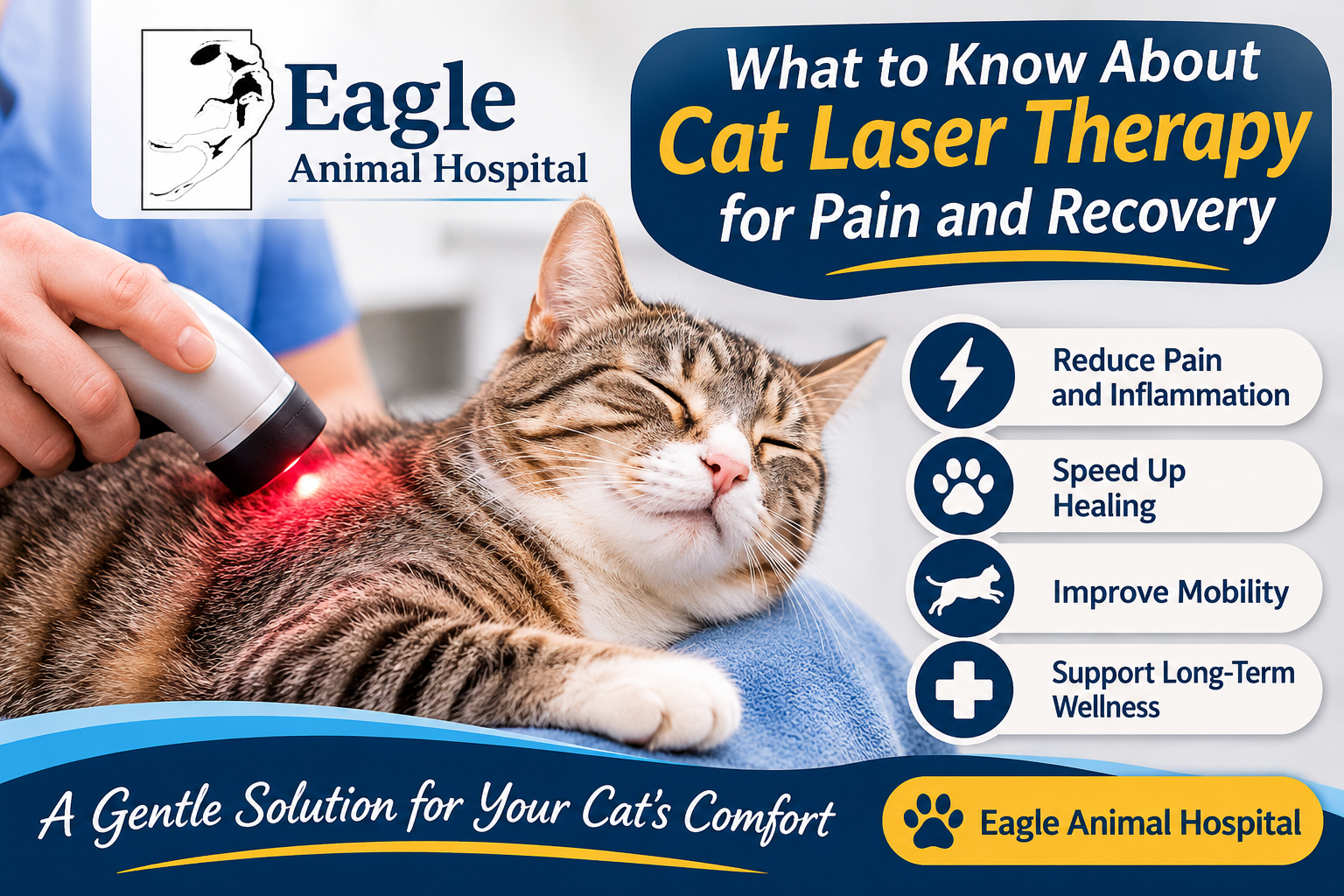
Cat laser therapy offers a calm, painless way to manage pain and support healing in cats, a species that often hides discomfort so effectively that conditions like arthritis go unnoticed for far too long. Because cats tend to be more sensitive to unfamiliar handling and stressful environments than dogs, a gentle, quick treatment like laser therapy fits particularly well into feline care.
At Eagle Animal Hospital, cat laser therapy is used to support comfort and recovery across a range of conditions, always adjusted to each individual cat's temperament and specific needs.
Why Laser Therapy Suits Cats Particularly Well
Cats are known for masking pain instinctively, a trait that made sense for their wild ancestors but makes detecting discomfort in modern house cats genuinely difficult. By the time a cat shows obvious signs of pain, such as vocalizing or significant limping, the underlying condition has often been present for some time. Laser therapy offers a treatment that is both effective and minimally stressful, which matters enormously for a species that can become anxious or shut down entirely in unfamiliar or uncomfortable situations.
Sessions are brief, require no sedation, and involve no needles or uncomfortable handling, making the treatment far easier for cats to tolerate compared to some other therapeutic options.
How Laser Treatment Works
The treatment delivers specific wavelengths of light into tissue, stimulating cellular activity that increases blood flow, reduces inflammation, and promotes the body's own natural healing processes. This happens without generating the heat associated with surgical lasers, meaning the treatment is entirely painless. Most cats experience the sensation as a gentle warmth, often becoming calm or even drowsy during longer sessions as the treated area warms gently.
Common Conditions Treated With Laser Treatment
Feline Arthritis
Arthritis affects a significant portion of senior cats, though it frequently goes undiagnosed due to how subtly cats display joint discomfort. Reduced jumping, a less active grooming routine, and increased time spent resting are common, easily overlooked signs. Laser therapy reduces inflammation around affected joints, often resulting in noticeably improved mobility and comfort.
Post Surgical Healing
Following spay, neuter, or other surgical procedures, laser therapy helps reduce swelling and supports faster healing around the incision site. This can be especially valuable for cats, who sometimes struggle more than dogs with the restricted movement and Elizabethan collar required during standard recovery.
Chronic Wounds and Abscesses
Cats healing from wounds, bite abscesses, or persistent skin irritation often see faster tissue repair when laser therapy supports healing directly at the affected site, working alongside any medication prescribed to address the underlying cause.
Dental Recovery
Cats recovering from dental extractions or oral surgery sometimes receive laser therapy to support gum healing and ease discomfort during the days immediately following the procedure.
What a Session Looks Like
A typical session lasts only a few minutes per treatment area, keeping the experience brief and manageable for cats who may not tolerate longer appointments comfortably. Your cat rests on a soft surface while the veterinary technician moves the laser handpiece over the affected area in a steady, gentle pattern. No sedation or special preparation is required, and many cats, once familiar with the process, settle into the treatment with noticeable ease.
How Laser Therapy Fits Into a Broader Care Plan
Laser treatment is often used as a form of companion laser therapy, supporting other treatments rather than replacing them entirely. For a cat managing arthritis, this might include combining laser sessions with joint supplements and simple environmental changes at home, such as adding ramps or low sided litter boxes that reduce strain on sore joints. For a cat recovering from surgery, laser therapy typically works alongside prescribed pain medication and a period of restricted activity.
Building the Right Treatment Schedule
The ideal number of sessions depends on the condition being treated. Acute situations, like post surgical recovery, often call for a short series of sessions scheduled closely together during the initial healing period. Chronic conditions such as arthritis usually benefit from an ongoing maintenance schedule, frequently starting with weekly sessions before tapering to monthly visits once symptoms stabilize. Your veterinarian will adjust this plan based on how your cat responds over the first several sessions.
Recognizing When Your Cat Might Benefit
Subtle changes are often the clearest signal that a cat could benefit from laser therapy, including reduced interest in jumping to favorite spots, a noticeably less thorough grooming routine, increased time spent sleeping in one place, or visible stiffness after waking. A laser therapy for cats consultation can help determine whether these changes point to arthritis or another condition that would respond well to treatment.
Helping Nervous Cats Through Treatment
Many cats feel anxious during any veterinary visit, and a few strategies can help laser therapy sessions go more smoothly. Bringing a familiar blanket or towel from home, transporting your cat in a covered, secure carrier, and scheduling appointments during quieter times at the hospital can all help reduce stress. Most cats grow noticeably more comfortable with the process after a session or two, once they understand the treatment is painless and brief.
Why Early Detection Makes Treatment More Effective
Cats whose conditions are identified early, before significant joint damage or chronic inflammation has set in, tend to respond more noticeably to laser therapy than those whose conditions have progressed for years without treatment. This is one more reason regular wellness exams matter so much for cats specifically, since these visits often catch the subtle early signs of arthritis or other chronic conditions that owners might otherwise miss entirely at home.
Combining Laser Therapy With Environmental Changes
Alongside professional treatment, small changes at home can meaningfully support a cat managing arthritis or recovering from surgery. Providing soft, easily accessible bedding, placing food and water bowls at a comfortable height, and avoiding the need for cats to jump to reach favorite resting spots all reduce daily strain on sore joints. These adjustments work well alongside laser therapy, supporting comfort both during and between treatment sessions.
Is Laser Treatment Safe
Laser therapy is considered very safe for the vast majority of cats, carrying minimal risk of side effects. It requires no sedation and does not interact with other medications, making it a practical option even for cats already managing multiple health conditions. Your veterinarian will evaluate your cat's specific situation to confirm the treatment is appropriate before beginning.
What Results Typically Look Like
Many owners notice gradual improvement over the first several sessions, particularly increased willingness to jump, climb, or move around comfortably. Chronic conditions tend to show results that build steadily over several weeks of consistent treatment rather than appearing immediately, which is why following the recommended schedule closely tends to produce the best long term outcome for cats managing ongoing conditions like arthritis.
Closing Thoughts for Cat Owners
Supporting a cat through pain or recovery requires patience and the right tools. Laser therapy, with its calm and painless approach, fits naturally into that kind of thoughtful, attentive care.
A Treatment That Respects Your Cat's Nature
Cats thrive with predictability and gentleness, and laser therapy delivers both while still providing genuine therapeutic benefit. For owners looking for a way to support their cat's comfort without added stress, it offers a dependable, well tolerated option.
Keeping Your Veterinarian Informed Between Visits
If you notice any new symptoms, a change in how your cat is responding to treatment, or anything else unusual between scheduled sessions, let your veterinary team know rather than waiting until the next appointment. Early communication allows adjustments to be made promptly, keeping your cat's treatment plan aligned with their actual day to day condition.
Recognizing When a Treatment Plan Needs Adjusting
If your cat does not seem to be responding to laser therapy after several sessions, this is worth discussing openly with your veterinarian rather than assuming the treatment simply does not work. Sometimes a different treatment frequency, a reassessment of the underlying condition, or the addition of a complementary therapy produces better results than continuing the original plan unchanged. Open communication throughout the treatment course helps ensure your cat's plan stays genuinely effective.
How Multi Cat Households Can Manage Ongoing Treatment
Households with more than one cat sometimes find it easiest to schedule laser therapy sessions for an affected cat during a quieter part of the day, away from the stimulation of other pets at home beforehand. Keeping a treated cat calm both before and after a session, separate from more boisterous housemates, can help maximize the relaxing benefit of each appointment and support a smoother overall treatment course.
A Comfortable Path Forward
For cats managing pain or healing from a procedure, laser therapy offers a path forward that respects their need for a calm, low stress experience while still delivering real, measurable benefits for comfort and recovery.
Why Early Treatment Helps
Cats whose discomfort is addressed early tend to keep more of their mobility and daily routine. Small changes such as hesitating before a jump or choosing a lower perch are easy to miss, so it helps to mention them at your cat's next visit. Earlier treatment is also usually simpler, and laser sessions can be adjusted as your cat's comfort improves over time.
Quick Reference
Laser therapy for cats is used for several common feline conditions, and it often works as companion laser therapy, supporting other treatments instead of replacing them. The table below summarizes how it is typically used.
|
Condition |
How It May Help |
What to Expect |
|
Arthritis |
Reduces inflammation around sore joints |
Often weekly at first, then monthly |
|
Post surgical healing |
Reduces swelling at the incision site |
A short series of sessions |
|
Chronic wounds |
Supports tissue repair |
Sessions until healing progresses |
|
Dental recovery |
Eases gum discomfort after procedures |
A short series after the procedure |
Key Points to Remember
-
Treatment is painless, and most cats find the gentle warmth soothing
-
Sessions take only a few minutes per area and need no sedation
-
Subtle signs such as less jumping or reduced grooming can point to joint pain
-
Laser sessions work best alongside medication, supplements, and home changes like ramps
-
Your veterinarian should examine your cat first to confirm the cause of discomfort
Talking to Your Veterinarian About Laser Therapy
If your cat shows signs of joint discomfort, is recovering from surgery, or is healing from a chronic wound, it is worth bringing up laser therapy at your next wellness visit. The team at Eagle Animal Hospital can assess your cat's specific needs and build a treatment plan suited to their condition and temperament.
Request an appointment online to discuss laser treatment for your pet.
Frequently Asked Questions
Q: Is laser treatment painful?
A: No. The treatment is completely painless, and most cats experience it as a gentle warmth. Sessions are brief and require no sedation, making the process far less stressful than many other treatment options.
Q: How can I tell if my cat has arthritis?
A: Cats hide joint pain well, so watch for reduced jumping, a less thorough grooming routine, or increased time resting in one spot. A veterinary exam can confirm arthritis, and laser therapy often becomes part of managing it.
Q: How long does a typical session take?
A: Most sessions last only a few minutes per treatment area, keeping the experience brief and manageable, especially for cats who find longer veterinary visits stressful. No special preparation is needed beforehand.
Q: Can laser therapy help my cat recover from dental surgery?
A: Yes. Laser therapy is sometimes used after dental extractions or oral procedures to support gum healing and ease discomfort during recovery, often working alongside any pain medication prescribed by the veterinarian.
Q: Will my anxious cat tolerate laser therapy well?
A: Most cats tolerate it well due to the brief, painless nature of each session. Bringing a familiar blanket, using a secure carrier, and scheduling quieter appointment times can help anxious cats adjust more easily.

 English
 Arabic
 French
 Spanish
 Portuguese
 Deutsch
 Turkish
 Italiano
 Russian
 Romaian
 Portuguese (Brazil)
 Greek