


What to Do in the First Minutes of a Pets Emergency
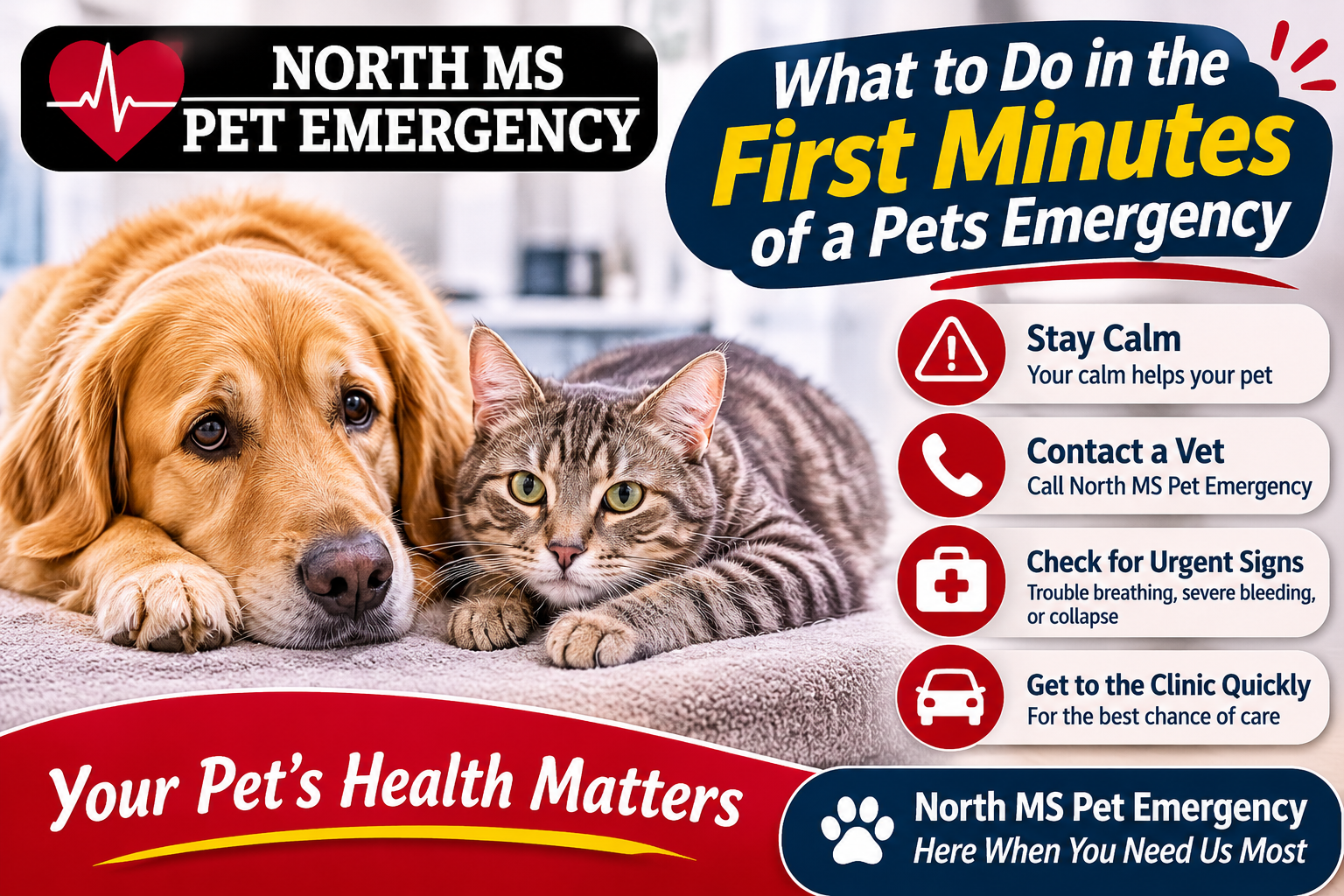
When something goes wrong with your animal, the first few minutes shape everything that follows. A pet's emergency rarely announces itself politely. It can start as a cough that will not stop, a stumble in the yard, a wrapper missing from the bin or a cat that keeps visiting the litter tray and produces nothing. Owners who respond calmly and in the right order tend to get their pets to treatment faster, and speed is often the most important factor in the outcome. This guide walks through the first minutes of a crisis, from recognizing that something is serious to moving your pet safely and handing over the right information at the clinic. It is written to be read before you need it, so that the steps feel familiar when you do.
Recognizing That the Situation Is Serious
Signs That Should Never Be Watched Overnight
Some presentations are always urgent. Difficulty breathing, collapse, seizures that last more than a few minutes, uncontrolled bleeding, a swollen and painful abdomen, repeated unproductive retching, suspected poisoning, inability to urinate and severe trauma all call for immediate professional care. In cats, open mouth breathing is a particular red flag because cats rarely do it unless they are in real distress.
Pale or bluish gums, a very fast or very weak pulse and cold paws or ears point to shock and deserve urgent attention too. Our guide to pet emergency signs every owner should know lists these signs in more detail and is worth saving to your phone.
When You Are Not Sure
If you are unsure, call. A short phone conversation with an emergency veterinarian costs nothing and allows a trained person to ask the right questions. They can tell you whether to come in at once, what to do on the way and what to watch for if monitoring at home is reasonable. Trusting your instincts is sensible. Owners who know their pets well are usually right when they feel that something is not normal.
The First Ten Minutes
Step One Is Safety
An injured or frightened animal can bite or scratch even if it is normally gentle. Approach slowly, speak quietly and avoid sudden movements. If there is a hazard such as traffic, a fire or a broken window, secure the area before handling your pet. A towel or blanket can be used to wrap a cat or a small dog and reduce the risk of injury to both of you. A soft muzzle can help with a dog in pain, but do not use one on an animal that is vomiting or struggling to breathe.
Step Two Is a Phone Call
Call the emergency clinic before you leave, even if you are only a short drive away. Describe what has happened, your pet's species, age and approximate weight, and the main signs you can see. The team can prepare oxygen, fluids or surgical space and give advice for the journey. If another person is with you, ask them to make the call while you handle your pet.
Step Three Is Basic Stabilization
What you can safely do depends on the problem, and it is always limited. The goal is to avoid making things worse.
For bleeding, apply firm and steady pressure with a clean cloth and do not lift it to check. If blood soaks through, add more cloth on top. Our guide on how to control severe bleeding in pets until help arrives explains the technique in more detail.
For suspected poisoning, do not induce vomiting unless a veterinarian tells you to. Some substances cause more damage coming back up. Keep the packaging, note the time and the amount, and bring everything with you.
For breathing trouble, keep your pet calm, allow it to choose a position that is comfortable and avoid anything that restricts the chest or neck. Keep the car cool and the journey short.
For suspected fractures or spinal injury, minimize movement. Slide a large dog onto a flat board or a thick blanket used as a stretcher. Support the whole body and keep the neck and back in a straight line. Further advice is available in our guide on how to handle pet trauma before reaching emergency care.
Matching Common Emergencies to the Right First Response
The table below summarizes common emergencies, the first action that helps and the mistakes to avoid.
|
Emergency |
Helpful First Action |
Common Mistake to Avoid |
|
Heavy bleeding |
Firm pressure with a clean cloth and keep it in place |
Removing the cloth repeatedly to check |
|
Suspected poisoning |
Call at once, bring the packaging |
Forcing vomiting without advice |
|
Breathing difficulty |
Keep calm and cool, call ahead, transport quickly |
Restraining the animal or forcing it to lie flat |
|
Seizure |
Move hazards away, time the seizure, keep hands away from the mouth |
Putting anything in the mouth or restraining the pet |
|
Heat stroke |
Move to shade, cool with tepid water, transport quickly |
Using ice cold water, which can worsen shock |
|
Suspected bloat in a dog |
Go straight to the clinic |
Waiting to see if it passes |
|
Male cat straining to urinate |
Go straight to the clinic |
Assuming it is simple constipation |
|
Vehicle strike or fall |
Minimize movement and transport on a flat surface |
Letting the pet walk because it seems fine |
Getting Your Pet to Care Safely
Transport Basics
Place small animals in a secure carrier lined with a towel. For dogs that cannot be carried, use a board or blanket stretcher and ask for help. If you can, have a second person ride with your pet so that the driver can concentrate on the road. Keep the car temperature comfortable. Drive carefully and calmly, because a crash on the way helps no one.
What to Bring
Bring any medication your pet takes, a list of doses, vaccination records if they are easy to find and the packaging of anything that may have been eaten. If your pet has vomited or passed stool that looks abnormal, a photo or a small sample in a sealed bag can help. Do not delay leaving to gather paperwork. The clinic can obtain history later.
What Happens at an Emergency Animal Hospital
Triage
On arrival, a nurse or technician will assess your pet's vital signs and decide who needs to be seen first. This is the same logic used in human emergency departments. A pet with an airway or circulation problem will be treated before one with a stable injury, even if the second pet arrived earlier. If you wait, it usually means that a more critical patient is being stabilized.
Stabilization and Diagnosis
An emergency animal hospital will usually place an intravenous catheter early so fluids and medications can be given quickly. Oxygen, pain relief and warming or cooling may all begin before a full diagnosis is made. Blood tests, imaging such as radiographs or ultrasound and other diagnostics are chosen according to the signs. Because many emergencies are time sensitive, results from in house equipment can guide treatment within minutes.
Treatment and Monitoring
Depending on the diagnosis, treatment may include surgery, a transfusion, medications to control seizures or heart rhythm, wound care or antidotes for toxins. Many critical patients need monitoring through the night, which is why a facility staffed around the clock makes a difference. After stabilization, the team will discuss options, expected costs and the likely outlook. You should receive written discharge instructions and a summary for your regular veterinarian.
Preparing Before a Crisis
Build a Simple Plan
Decide now which emergency clinic you would use and save its number and address in your phone. Drive the route once during daylight. Make sure everyone in the household, including pet sitters, knows where the contact details are kept and which signs mean you should leave straight away. Our article on managing pet emergencies during holidays and weekends explains why this planning is especially important when regular clinics are closed.
Keep a Small Kit
A basic kit might include sterile saline, gauze pads, self adhesive bandage, blunt tipped scissors, tweezers, a digital thermometer, a clean towel, a muzzle suited to your dog and a list of emergency numbers. Check it twice a year and replace anything that has expired.
Plan for the Cost
Emergency treatment can be expensive, and worry about cost is one of the main reasons owners delay. Pet insurance, a savings fund set aside for your pet and veterinary payment plans can all reduce the pressure. Speak openly with the clinic about your budget at the start so that the team can prioritize what is most urgent. Waiting almost always makes treatment more complex and more costly.
|
Preparation Step |
Why It Helps |
When to Do It |
|
Save the emergency clinic number and address |
Removes search time in a crisis |
Today |
|
Drive the route once |
Avoids confusion at night |
This month |
|
Build a small first aid kit |
Allows immediate basic care |
This month |
|
Record medications and doses |
Speeds safe treatment decisions |
Update after every vet visit |
|
Review payment options or insurance |
Reduces cost related delay |
Before a crisis occurs |
|
Brief all caregivers |
Ensures anyone can act |
Every six months |
Recovery After the Emergency
Follow discharge instructions closely, including medication schedules, rest and diet. Keep follow up appointments with your regular veterinarian and bring the paperwork from the emergency visit. Watch for warning signs that the instructions describe, and call if anything worsens. Many pets need quiet rest for days or weeks, and emotional support matters too. Our guide on how to help your pet recover from a traumatic event offers practical ideas for helping an animal settle after a frightening experience.
Conclusion
A pets emergency is stressful, but a clear sequence of actions makes it more manageable. Recognize the signs, call an emergency veterinarian, make your pet safe, transport it carefully and bring the information the team needs. Preparing your plan, your kit and your finances in advance gives you the best chance of acting without hesitation. Timely pet emergency care often means a simpler treatment, a shorter stay and a better recovery.
At North MS Pet Emergency, we provide overnight and weekend emergency care for small animals across North Mississippi including Tupelo and Starkville as well as Northwest Alabama and Southwest Tennessee. If your pet is in trouble right now, contact us and our team will guide you.
FAQs
Q: What should I do first when my pet has a sudden emergency?
A: Make sure the area is safe, call the emergency clinic and describe the signs. Follow their advice on first aid and travel. Calling before you leave lets the team prepare equipment and gives you guidance for the journey.
Q: Can I give my pet human pain medication during an emergency?
A: No. Many human medicines, including ibuprofen and paracetamol, are toxic to dogs and cats. Giving them can cause kidney, liver or stomach damage. Wait for veterinary advice before giving any medication.
Q: How do I know whether my pet needs an emergency veterinarian or a regular appointment?
A: Breathing difficulty, collapse, heavy bleeding, seizures, suspected poisoning, a swollen abdomen and inability to urinate need immediate care. If you are unsure, call the emergency clinic and describe what you see.
Q: Why do I have to wait at an emergency animal hospital?
A: Patients are seen in order of medical urgency, not arrival time. A longer wait usually means that a more critical pet is being stabilized. Staff will keep you informed and reassess if your pet's condition changes.
Q: How can I afford emergency care for my pet?
A: Options include pet insurance, a dedicated savings fund and veterinary payment plans. Discuss your budget with the team at the start so treatment can be prioritized. Early care is generally less expensive than treating a condition that has worsened.

 English
 Arabic
 French
 Spanish
 Portuguese
 Deutsch
 Dutch
 Italiano
 Russian
 Romaian
 Portuguese (Brazil)
 Greek