


How to Pick the Right Small Dog Leash for Comfortable Controlled Walks
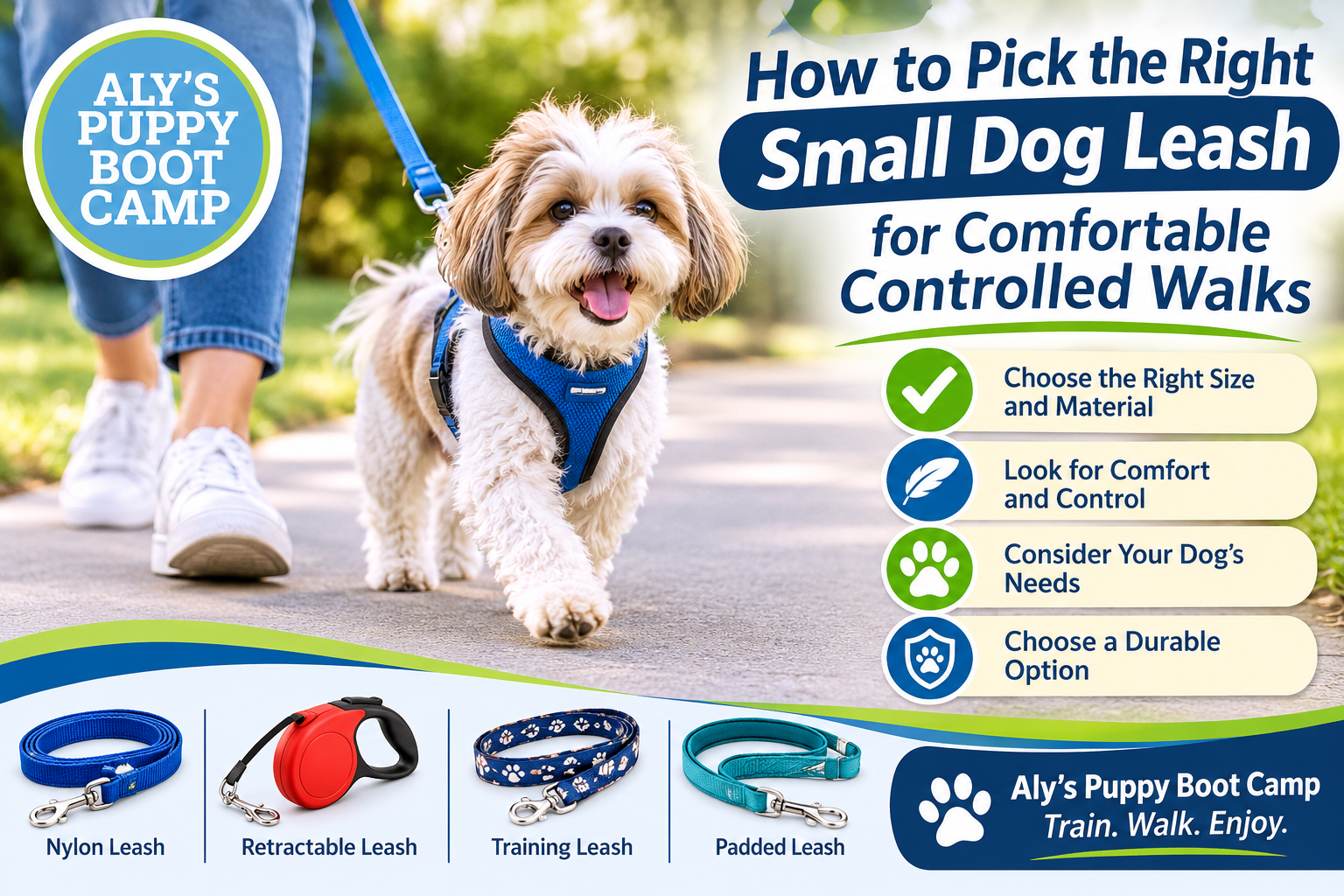
Small dog owners face a leash selection challenge that is unique in one specific and important way. The dog is physically small enough that almost any leash will technically contain them without creating the immediately obvious management problems that arise when a large powerful dog is connected to inadequate equipment. That absence of immediate obvious problems is precisely what makes leash selection for small dogs so often done carelessly and why the results of careless leash selection for small dogs are so commonly seen in the form of tiny dogs that charge ahead of their owners on sidewalks, bark at every passing dog and have generally convinced their owners that this is simply what small dogs do. Choosing the right small dog leash and using it with consistent technique is what separates the small dog owner who struggles with these patterns from the one whose dog walks calmly and responsively regardless of their small stature.
This post provides a complete framework for small dog leash selection including the specific features that matter, the proportionality principles that separate appropriate small dog equipment from oversized alternatives that look functional but perform poorly and the training techniques that make any quality small dog leash most effective in daily use.
The Proportionality Principle for Small Dog Equipment
Why Size Matching Is a Functional Requirement
Physical Impact of Mismatched Equipment
A leash built for a forty pound dog attached to a ten pound dog creates a series of specific physical problems that affect both the dog's comfort and the quality of leash communication throughout every walk. The clip weight at the collar attachment point pulls downward continuously creating low level neck strain and distorting the dog's natural head and neck carriage. The cord or webbing width is disproportionate to the size of the dog creating a visual and physical bulkiness that makes the leash clumsier in the handler's hand than it needs to be. The overall weight of the line in the handler's hand is higher than it needs to be which makes subtle corrections feel cruder than appropriate and reduces the responsiveness that makes communication precise.
Every one of these problems is avoided by choosing a small dog leash that is actually proportioned for a small dog. This sounds obvious but the majority of leashes sold as appropriate for small dogs in general retail settings are simply standard leashes in slightly shorter lengths without meaningful changes to the hardware weight, material width or overall construction weight that would actually make them appropriate for small breed use.
The Specific Measurements That Matter
Width, Weight and Hardware Sizing
For dogs under fifteen pounds the ideal leash material width is three eighths of an inch or slightly less in a soft flexible material. For dogs between fifteen and thirty pounds a half inch width in a moderately flexible material provides the right balance of appropriate strength and communicative responsiveness. These are the width ranges that feel proportional in the handler's hand and that sit naturally at the dog's collar point without the dragging or pulling that wider heavier materials create.
Hardware sizing matters equally. The clip should be small enough that when attached to the collar or harness it sits flush without dangling or creating significant downward pull. Test the clip weight specifically by holding the leash with the clip at one end hanging freely. The clip should feel minimal rather than obviously weighty. A clip that feels heavy to you will feel proportionally heavier to a small dog.
What Distinguishes a Quality Small Dog Leash
The following table organizes the key features that distinguish appropriate small dog leash options from general purpose leashes that are marketed toward small dogs without meaningful construction differences.
|
Feature |
Appropriate Small Dog Leash |
General Purpose Leash Used for Small Dogs |
|
Material Width |
3/8 to 1/2 inch |
Often 5/8 inch or wider |
|
Material Weight |
Very light and flexible |
Moderate to heavy |
|
Clip Construction |
Small lightweight swivel clip |
Standard or heavy duty clip |
|
Clip Weight |
Minimal noticeable |
Noticeably weighted |
|
Overall Line Weight |
Near imperceptible to dog |
Noticeably present |
|
Handle Construction |
Sized for comfortable small breed use |
Sized for medium to large breed |
|
Communication Responsiveness |
High subtle adjustments transmitted |
Moderate delays in subtle adjustments |
Using this comparison when evaluating specific products gives you a faster and more reliable way to distinguish genuinely appropriate small dog leashes from oversized alternatives than relying on product descriptions that simply claim suitability for small breeds.
Building Good Leash Habits in Small Dogs
Why Small Dogs Can Be Excellent Leash Walkers
The Potential That Is Often Missed
Small dogs are frequently undertrained on the leash not because they are incapable of excellent leash behavior but because the behavioral consequences of poor leash behavior are tolerable enough in a small dog that owners simply do not prioritize addressing them. A Chihuahua that pulls is not physically dangerous to most adult handlers in the way that a pulling Great Dane is. But the Chihuahua that pulls all day every day is developing a behavioral habit pattern that communicates something important about the relationship dynamic between dog and handler and that pattern extends beyond the walk into other aspects of the dog and owner relationship.
Small dogs that are given clear expectations, consistent corrections and a quality training leash for dog use in a proportional size are entirely capable of the same quality leash behavior that well trained large dogs demonstrate. The training process is the same. The technique is the same. The results are the same. The only difference is that the urgency to create those results is perceived as lower because the physical consequences of not having them are less dramatic.
The Techniques That Work With Small Dogs
Stop and Direction Change as the Core Tools
The stop technique and the direction change are the two core tools for developing good leash behavior in small dogs using a well chosen small dog leash. Stop the moment forward tension appears on the leash. Do not move forward. Wait for the tension to be released either by the dog stopping and stepping back or by the dog sitting. When the leash is relaxed, restart walking. Repeat this without exception on every walk.
Direction changes complement the stop technique by keeping the dog's attention on the handler rather than fixed on whatever is ahead. Making unexpected turns frequently encourages the dog to watch the handler's movement rather than pulling ahead toward self selected destinations. This habit of watching the handler is one of the most valuable behavioral habits a small dog can develop and it is specifically built through consistent direction change practice during daily walks.
You can read more about building these habits effectively in this post on leash control tips which covers the foundational techniques in practical detail.
Supporting Leash Work With Foundation Training
Impulse Control Transfers to the Leash
The most effective leash training for small dogs is supported by foundation impulse control work done during structured training sessions away from the walk context. Small dogs that practice PLACE regularly develop the same behavioral self regulation that PLACE develops in dogs of all sizes and that self regulation transfers directly to leash behavior in the form of a dog that manages the pull of environmental distractions more effectively.
A small dog with solid PLACE practice recovers from distractions on the walk faster, responds to directional changes with less resistance and maintains attention on the handler more naturally than a small dog with no impulse control development. That difference is not about the dog's natural personality. It is about the behavioral skill that structured training has built. Read more about developing this foundational skill in this post on how to teach PLACE.
Special Considerations for Small Dog Leash Use
Managing Overstimulation in Small Dogs
When Small Dogs Hit Their Threshold
Small dogs are just as capable of overstimulation as large dogs and the behavioral consequences of that overstimulation are just as real even if the physical expression looks different. A small dog that is over threshold may bark persistently, lunge at the end of their leash, freeze and refuse to move or become generally erratic in their behavior in ways that can be puzzling to owners who expect the level of arousal to be proportional to the dog's physical size.
The management principles for overstimulation are the same regardless of size. Increase distance from the triggering stimulus. Give the dog time and space to settle below threshold. Work back toward the stimulus gradually and at a pace that keeps the dog in a manageable state of mind. You can read more about proactively managing overstimulation in this post on dog overstimulation.
When to Seek Professional Support
Recognizing When Independent Work Needs Supplement
Small dog owners who have been applying consistent technique with an appropriate small dog leash and are not seeing meaningful improvement in leash behavior over several weeks of consistent effort should consider seeking professional guidance rather than continuing to repeat the same approach without result.
Poor progress despite consistent technique usually indicates either a specific behavioral issue that needs more targeted intervention than general leash training provides or a gap in the handler's technique that an experienced eye can identify and correct far faster than continued independent practice. Aly's Puppy Boot Camp provides professional in person training support that works with dogs of all sizes and that can identify and address the specific factors limiting progress in any individual case.
For ongoing learning support that helps small dog owners build their handling skills and maintain their dog's behavioral progress Aly's Academy provides practical structured education that covers small dog specific considerations within its broader training curriculum.
Final Thoughts
The right small dog leash chosen with genuine attention to proportionality and communicative quality combined with consistent technique and a daily walk routine built on clear expectations produces small dogs that are a genuine pleasure to walk every single day. Small dogs are capable of exactly this quality of leash behavior when given the tools, the technique and the consistent expectations that build the habits over time. Give them those three things and the walk becomes one of the most enjoyable parts of every day rather than a daily demonstration of why small dogs have a reputation for behavior that their size does not explain.
FAQs
Q: What is the most important feature in a small dog leash for everyday use?
A: Proportional hardware weight is the most important feature in a small dog leash for everyday use. A clip that is too heavy creates continuous downward pull at the collar point, causes discomfort during extended walks and introduces unnecessary weight into the handler's hand that reduces the communicative responsiveness of every correction and direction change.
Q: Can a training leash for dog use with a small breed be the same as a standard leash?
A: A training leash for dog use with small breeds should be specifically sized for the dog's weight and proportions. A standard leash designed for medium or large breeds is not an appropriate training leash for small dogs because the material weight, clip size and overall construction weight are disproportionate to the small dog's size and reduce the precision and responsiveness that effective training leash use requires.
Q: How do I stop my small dog from pulling without using excessive force?
A: Use the stop technique consistently. The moment forward tension appears on the leash, stop walking completely and wait for the dog to release the tension before resuming. Apply no additional force beyond the natural resistance of stopping. Consistent repetition of this technique across every walk communicates that pulling ends the walk without requiring physical correction or additional force from the handler.
Q: Is a small dog leash with a retractable mechanism a good option for training?
A: No. A retractable mechanism on any leash including a small dog leash actively reinforces pulling by rewarding forward pressure with additional leash length. For any owner who wants to develop good leash behavior in a small dog, a fixed length leash in the appropriate proportional sizing for the dog's weight is the only format that supports rather than undermines the training goal.
Q: Should I buy a dog leash for a small breed specifically or can any lightweight leash work?
A: Look specifically for a leash designed with small breed proportions in mind rather than simply any lightweight leash. Key criteria include clip weight appropriate for a small dog, material width of three eighths to half inch maximum and overall construction that communicates responsively in the hand without the lag that heavier general purpose materials introduce. These criteria together define small breed appropriate rather than simply lightweight.

 English
 Arabic
 French
 Spanish
 Portuguese
 Deutsch
 Turkish
 Dutch
 Russian
 Romaian
 Portuguese (Brazil)
 Greek