


Ready-to-Eat Packaged Salad Market to Reach USD 35.1 Billion by 2036, Registering 7.7% CAGR
NEWARK, Del., November 23, 2026 — The global packaged salad market is witnessing significant growth as consumers increasingly prioritize convenience, fresh ingredients and healthier meal options. Rising demand for pre-washed leafy greens, organic vegetables and ready-to-eat salad kits is encouraging manufacturers to expand product portfolios, strengthen cold-chain capabilities and introduce innovative packaging formats. Growing urbanization, time-constrained lifestyles and increasing retail availability are further supporting the adoption of packaged salads across international markets.
According to the latest market intelligence report published by Future Market Insights (FMI), the global packaged salad market is estimated at USD 16.7 billion in 2026 and is projected to reach USD 35.1 billion by 2036, registering a compound annual growth rate (CAGR) of 7.7% during the forecast period. The market is expected to create an incremental opportunity of approximately USD 18.4 billion between 2026 and 2036.
The expansion reflects increasing consumer preference for convenient fresh-food solutions, growing adoption of organic packaged greens and expanding supermarket distribution networks. Manufacturers are also investing in controlled-environment agriculture, modified atmosphere packaging and improved food-safety technologies to extend product shelf life and strengthen supply-chain efficiency.
Get Detailed Market Forecasts, Competitive Benchmarking & Industry Insights: Request a Sample Report https://www.futuremarketinsights.com/reports/sample/rep-gb-36233
Market Size & Growth Forecasts
The packaged salad market is projected to expand steadily through 2036 as demand for convenient, fresh and organic food products supports industry revenues.
- Market Size (2026): USD 16.7 Billion
- Forecast Value (2036): USD 35.1 Billion
- CAGR (2026–2036): 7.7%
- Incremental Opportunity: Approximately USD 18.4 Billion
- Leading Product Segment: Vegetarian
- Leading Processing Segment: Organic
- Leading Product Type: Packaged Greens
- Leading Distribution Channel: Offline
FMI's report identifies vegetarian packaged salads as the dominant product segment, supported by widespread consumer preference for plant-based meal options. Organic processing also maintains a leading position as shoppers increasingly seek certified organic and pesticide-free leafy greens.
Key Market Takeaways
- Market Valuation: The packaged salad market is estimated at USD 16.7 billion in 2026.
- Future Opportunity: The market is forecast to reach USD 35.1 billion by 2036.
- Growth Rate: The industry is projected to expand at a 7.7% CAGR from 2026 to 2036.
- Leading Product Segment: Vegetarian products account for approximately 63.0% of 2026 market revenue.
- Leading Processing Segment: Organic products represent approximately 63.0% of processing segment revenue.
- Leading Product Type: Packaged greens account for approximately 63.0% of type segment revenue.
- Leading Distribution Channel: Offline distribution represents approximately 63.0% of market revenue.
- Largest National Market: The United States accounts for approximately 40.7% of global revenue in 2026.
- Fastest-Growing Country: China is projected to record a 9.0% CAGR through 2036.
What Is Driving Growth in the Packaged Salad Market?
- Rising Demand for Convenient and Ready-to-Eat Food Products
Consumers are increasingly purchasing pre-washed, chopped and packaged salad products to reduce meal preparation time. Ready-to-eat salad mixes and complete salad kits offer convenience to working professionals, urban households and health-conscious consumers. Manufacturers are responding with portion-controlled packaging, pre-mixed vegetables and combination kits containing dressings, toppings and other ingredients.
- Growing Preference for Organic and Clean-Label Produce
Increasing consumer awareness regarding food quality, pesticide exposure and ingredient transparency is encouraging demand for organic packaged salads. Certified organic leafy greens, spinach, arugula and mixed vegetable products are gaining shelf space across supermarkets and specialty grocery stores. Producers are strengthening organic sourcing and cultivation practices to differentiate their products.
- Expansion of Controlled-Environment Agriculture
Hydroponic farming, vertical agriculture and greenhouse cultivation are improving the availability of fresh leafy greens throughout the year. Controlled-environment production allows suppliers to manage growing conditions, reduce exposure to certain environmental risks and locate production closer to major retail distribution centers. These developments are supporting more reliable supplies of packaged greens.
- Innovation in Packaging and Cold-Chain Technologies
Modified atmosphere packaging (MAP), breathable films and resealable containers are helping manufacturers preserve freshness and improve product presentation. Investments in refrigerated transportation, automated washing and packaging systems, and improved temperature monitoring are further supporting the distribution of perishable salad products.
Segment Analysis: Product, Processing, Type and Distribution Channel
By Product: Vegetarian Packaged Salads Maintain a Dominant Position
Vegetarian packaged salads account for approximately 63.0% of the product segment in 2026. Their leadership reflects broad consumer acceptance, versatility across meal occasions and increasing demand for plant-forward food products.
Key product categories include:
- Vegetarian
- Other Segment Combined (Non-Vegetarian)
Vegetarian packaged salads include leafy greens, spinach, romaine, kale, cabbage and mixed vegetable combinations. These products are widely used in household meals, workplace lunches and foodservice applications.
Non-vegetarian packaged salads provide additional opportunities through products incorporating chicken, bacon and other protein ingredients. These combinations appeal to consumers seeking convenient, complete meal solutions.
By Processing: Organic Products Lead Market Demand
Organic packaged salads represent approximately 63.0% of processing segment revenue in 2026. Increasing interest in certified organic produce, pesticide-free cultivation and transparent sourcing practices supports the segment's leading position.
The processing segment includes:
- Organic
- Other Segment Combined (Conventional)
Organic packaged greens are benefiting from premium retail positioning and expanding availability across supermarket chains. Manufacturers are also exploring regenerative agricultural practices and sustainable sourcing initiatives to strengthen product differentiation.
By Type: Packaged Greens Account for the Largest Share
Packaged greens account for approximately 63.0% of the type segment in 2026. Their popularity is supported by frequent household consumption, convenient preparation and versatility across salads, sandwiches and other meals.
The market includes:
- Packaged Greens
- Other Segment Combined (Packaged Kits)
Packaged greens primarily include pre-washed spinach, romaine, iceberg lettuce, arugula, kale and mixed leafy vegetables.
Packaged salad kits are creating additional opportunities through differentiated combinations of vegetables, dressings, croutons, cheese and other toppings. These products appeal to consumers seeking convenient meal preparation and restaurant-style salad experiences at home.
By Distribution Channel: Offline Retail Maintains Market Leadership
Offline distribution accounts for approximately 63.0% of packaged salad market revenue in 2026. Supermarkets, hypermarkets, grocery stores and other physical retail outlets remain important sales channels because consumers can directly inspect product freshness, packaging conditions and expiration dates.
Key distribution channels include:
- Offline Retail
- Online Retail
Supermarkets and grocery retailers are expanding refrigerated display space for packaged greens and ready-to-eat salad kits. Online grocery platforms are also creating opportunities through scheduled deliveries, subscription services and convenient access to fresh food products.
Regional Growth Outlook
North America remains a major market for packaged salads, supported by established consumption patterns, extensive supermarket distribution and strong availability of fresh-cut vegetable products. Europe offers opportunities through organic produce adoption, sustainability initiatives and growing demand for convenient fresh meals.
Asia-Pacific is emerging as an important growth region as urbanization, changing dietary preferences and modern retail infrastructure encourage adoption of ready-to-eat vegetables.
Country-Level Growth Forecasts (2026–2036)
United States: The United States represents the largest national market, accounting for approximately 40.7% of global packaged salad revenue in 2026. Established fresh-cut vegetable consumption, supermarket penetration and demand for convenient meal solutions support its leading position. Growth opportunities include organic greens, chef-crafted salad kits and controlled-environment agriculture.
United Kingdom: The United Kingdom is projected to expand at a 7.7% CAGR through 2036. Demand for pre-packed leafy greens, convenient lunch solutions and ready-to-eat salad products is supporting market development. Supermarket availability and increasing consumer interest in fresh meal alternatives are creating opportunities for suppliers.
France: France is expected to record an 8.1% CAGR through 2036. Established consumption of fresh vegetables, demand for convenient packaged produce and growing interest in organic food products are supporting category expansion. Manufacturers are also focusing on operational efficiency and specialized packaged salad offerings.
Germany: Germany is projected to grow at an 8.4% CAGR through 2036. Increasing demand for organic leafy greens, fresh-cut vegetables and convenient food products is supporting market growth. Retailers are strengthening their packaged produce portfolios while suppliers invest in food-safety controls and cold-chain capabilities.
Japan: Japan is expected to register an 8.7% CAGR through 2036. Single-person households, convenience-store distribution and demand for portion-controlled food products are encouraging adoption of packaged salads. Single-serve vegetable mixes and ready-to-eat salad formats are creating additional opportunities.
China: China is projected to record the fastest growth among the major country markets, with a 9.0% CAGR through 2036. Urbanization, expanding modern retail infrastructure and increasing adoption of convenient food products are supporting market development. Online grocery platforms and cold-chain investments are further improving packaged salad availability.
Canada: Canada is expected to expand at an 8.4% CAGR through 2036. Growing demand for fresh vegetables, organic produce and year-round availability is encouraging investment in greenhouse cultivation and packaged salad processing. Domestic controlled-environment agriculture is also creating opportunities to strengthen supply reliability.
Key Companies in the Packaged Salad Market
The competitive landscape includes major fresh-cut vegetable processors, organic produce suppliers and controlled-environment agriculture companies. Market participants compete through product innovation, retail partnerships, organic sourcing, packaging improvements and distribution capabilities.
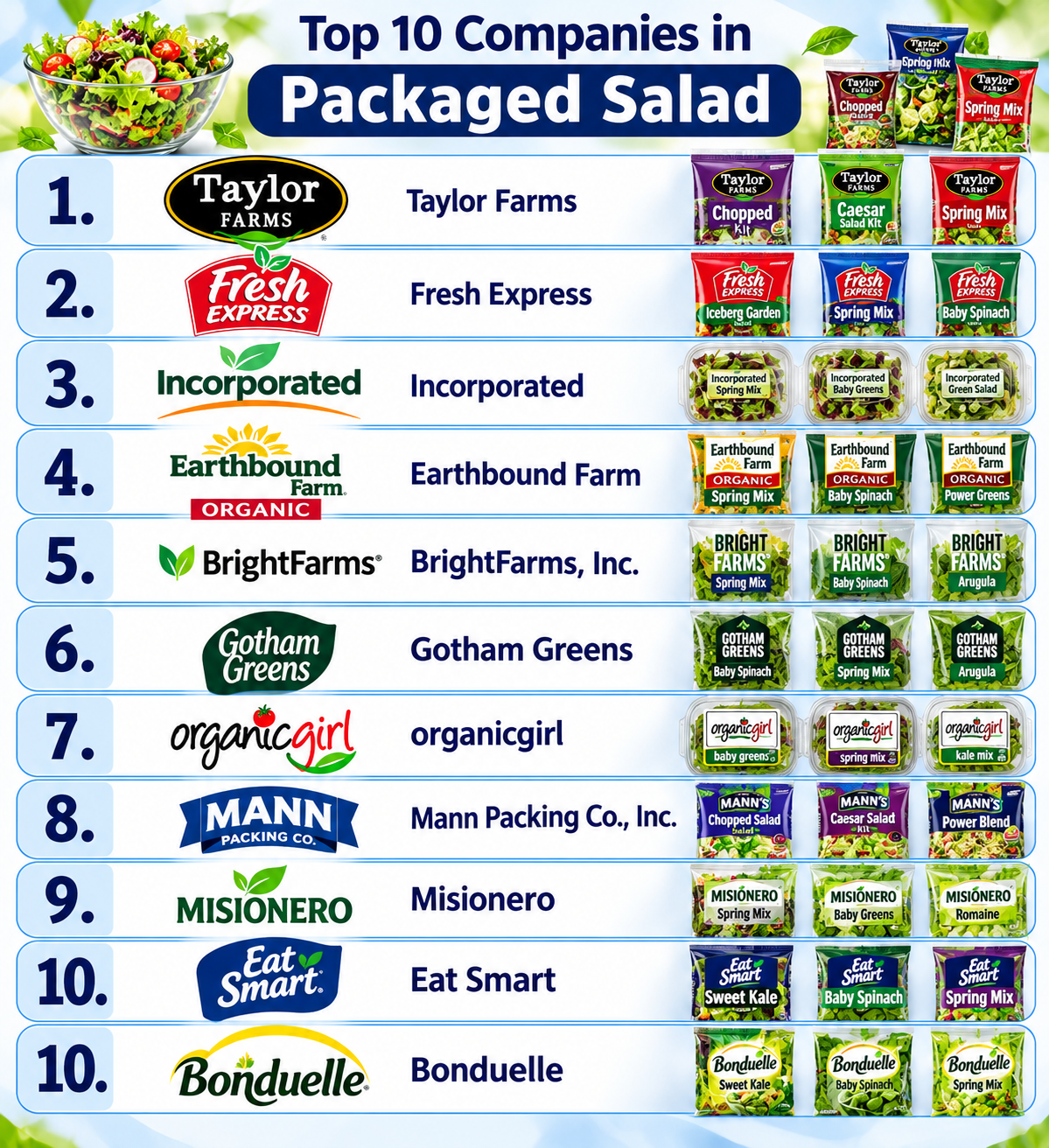
Key companies profiled include:
- Taylor Farms
- Fresh Express, Incorporated
- Earthbound Farm
- BrightFarms, Inc.
- Gotham Greens
- organicgirl
- Mann Packing Co., Inc.
- Misionero
- Eat Smart
- Bonduelle
These companies participate across different product categories, including packaged leafy greens, organic salad mixes, ready-to-eat salad kits and greenhouse-grown vegetables. Their competitive strategies increasingly emphasize product freshness, supply-chain efficiency, sustainable cultivation and premium retail positioning.
Growth Opportunities and Industry Challenges
Opportunities
- Organic Product Development: Increasing demand for certified organic and pesticide-free leafy greens creates opportunities for premium product portfolios.
- Ready-to-Eat Salad Innovation: Complete salad kits and portion-controlled products can address demand for convenient meal solutions.
- Controlled-Environment Agriculture: Hydroponic and greenhouse cultivation can improve year-round availability and reduce transportation distances.
- Emerging Market Penetration: Expanding modern retail and cold-chain infrastructure in Asia-Pacific creates opportunities for international suppliers.
- Sustainable Packaging: Recyclable materials, lightweight packaging and improved shelf-life technologies can strengthen product differentiation.
- Retail and Foodservice Partnerships: Collaboration with supermarkets, restaurants and institutional foodservice providers can improve market reach.
Challenges
- Food Safety Risks: Microbiological contamination and inadequate sanitation controls can affect consumer confidence and product availability.
- Short Product Shelf Life: Fresh-cut vegetables require efficient refrigeration, transportation and inventory management.
- Raw Material Price Volatility: Seasonal production variations and weather conditions can influence procurement costs.
- Cold-Chain Infrastructure: Maintaining appropriate storage temperatures throughout distribution increases operational expenses.
- Competitive Pressure: Established brands, private-label retailers and regional processors compete for shelf space and consumer attention.
- Packaging Sustainability: Manufacturers must balance freshness preservation, packaging costs and environmental requirements.
Recent Developments in the Packaged Salad Market
- August 2025: Dole plc completed the USD 140 million sale of its Fresh Vegetables Division to OG Holdco, the parent company of organicgirl, under Arable Capital Partners. The transaction included three U.S. processing facilities and expanded the buyer's fresh vegetable operations.
- July 2026: Earthbound Farm introduced its first Regenerative Organic Certified Spring Mix, reflecting growing interest in regenerative agriculture and premium organic leafy greens.
- October 2026: Fresh Express expanded its chef-crafted chopped salad kit portfolio with new varieties, including Tropical Mango Crunch, Zesty Hawaiian Crunch and Creamy Mushroom Caesar, strengthening its focus on differentiated convenience products.
- 2025: BrightFarms expanded its controlled-environment agriculture operations through commercial shipments from its Macon, Georgia greenhouse facility, supporting regional availability of greenhouse-grown leafy greens.
Explore the Full Packaged Salad Market Report: https://www.futuremarketinsights.com/reports/packaged-salad-market
Future Market Outlook
The packaged salad market is expected to maintain a strong growth trajectory through 2036 as consumers increasingly seek convenient, fresh and nutritious food products. Rising demand for organic produce, ready-to-eat salad kits and pre-washed leafy greens is creating opportunities for manufacturers across established and emerging markets.
Vegetarian products, organic processing and packaged greens are likely to maintain their leading positions, while salad kits and controlled-environment agriculture can provide additional avenues for product differentiation and market expansion.
Companies that prioritize food safety, cold-chain efficiency, sustainable packaging and innovative product development may be better positioned to capture future opportunities.
With the market forecast to reach USD 35.1 billion by 2036, the next decade is expected to bring continued competition around product freshness, organic sourcing, packaging innovation and retail distribution.
Related Food & Beverage Industry Reports
About Future Market Insights (FMI)
Future Market Insights (FMI) is a market research and consulting organization providing industry intelligence, market forecasts and strategic insights to businesses across global markets. FMI's research supports manufacturers, investors, suppliers and decision-makers in evaluating market opportunities, understanding competitive environments and developing informed business strategies.
Media Contact
Rahul Singh
AVP – Marketing and Growth Strategy
Future Market Insights (FMI)
Phone: +91 8600020075
Sales: sales@futuremarketinsights.com
Media: Rahul.singh@futuremarketinsights.com
Website: https://www.futuremarketinsights.com

 English
 Arabic
 French
 Spanish
 Portuguese
 Deutsch
 Turkish
 Dutch
 Italiano
 Russian
 Romaian
 Greek