


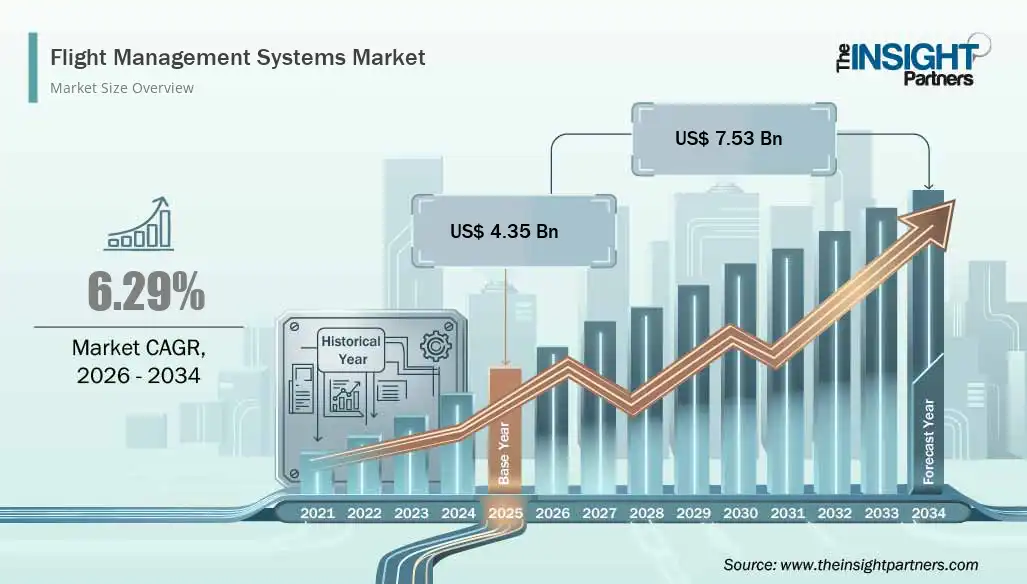
Global Flight Management Systems Market to Expand at a CAGR of 6.29% During 2026–2034
Flight Management Systems help improve pilot workload management during different flight phases. They automate several flight planning and navigation tasks. These capabilities allow pilots to focus on critical operational decisions. Growing interest in cockpit automation is supporting technology adoption.
Flight Management Systems Market Overview
The Global Flight Management Systems Market is experiencing significant growth due to increasing air traffic, rising demand for advanced avionics, and the growing adoption of automated flight technologies across commercial and military aviation. Flight Management Systems (FMS) are essential aircraft avionics systems that assist pilots in planning, managing, and executing flight operations. These systems integrate navigation, flight planning, performance optimization, and guidance functions to improve aircraft efficiency, safety, and operational accuracy.
The Flight Management Systems market size is expected to reach US$ 7.53 Billion by 2034 from US$ 4.35 Billion in 2025. The market is anticipated to register a CAGR of 6.29% during the forecast period 2026–2034. The growing production of commercial aircraft, increasing investments in aviation infrastructure, and rising demand for fuel-efficient flight operations are among the major factors driving market expansion.
Get a PDF Sample: https://www.theinsightpartners.com/sample/TIPRE00008247
Modern aircraft increasingly depend on advanced flight management technologies to optimize flight routes, reduce fuel consumption, and support accurate navigation. Furthermore, the integration of satellite-based navigation, artificial intelligence, and advanced avionics technologies is creating new opportunities for market participants.
Key Market Drivers and Emerging Trends
One of the major factors driving the Flight Management Systems Market is the increasing demand for improved flight safety and operational efficiency. Airlines are focusing on technologies that help pilots optimize flight paths, manage aircraft performance, and reduce unnecessary fuel consumption. Flight management systems support these requirements by providing automated navigation and flight guidance capabilities.
The expansion of the global commercial aviation industry is another important growth driver. Increasing passenger traffic and expanding airline fleets are encouraging aircraft manufacturers to integrate advanced avionics systems into new aircraft. In addition, military modernization programs are generating demand for sophisticated flight management technologies that support complex mission requirements.
Technological advancements are also shaping the market. The integration of GPS, satellite navigation, digital flight databases, and advanced cockpit displays is improving flight management capabilities. Furthermore, the adoption of connected aircraft technologies and software-based navigation solutions is expected to strengthen market development.
Flight Management Systems Market Segmentation
The Flight Management Systems Market is segmented based on fit, aircraft type, hardware, and end-user.
By Fit
-
Line Fit
-
Retrofit
By Aircraft Type
-
Narrow Body Aircraft
-
Wide Body Aircraft
-
Regional Transport Aircraft
By Hardware
-
Visual Display Unit
-
Control Display Unit
-
Flight Management Computers
By End-User
-
Commercial
-
Military
Based on fit, the line-fit segment benefits from increasing aircraft production and the integration of advanced avionics into newly manufactured aircraft. Meanwhile, the retrofit segment is gaining attention as airlines and military operators upgrade existing aircraft with modern flight management technologies.
By aircraft type, narrow-body aircraft represent an important segment due to their extensive use in domestic and short-haul international routes. Wide-body aircraft also contribute significantly because of their advanced navigation and flight optimization requirements.
In terms of hardware, flight management computers play a central role by processing flight plans, navigation information, and aircraft performance data. Commercial aviation represents a major end-user segment, supported by increasing airline operations and fleet expansion.
Leading Companies in the Flight Management Systems Market
The global Flight Management Systems Market consists of established aerospace, avionics, and technology companies focusing on product innovation, strategic partnerships, and advanced navigation solutions.
Key players operating in the market include:
- Honeywell International Inc.
- Esterline Technologies Corporation
- Garmin Ltd.
- General Electric Company
- Jeppesen Sanderson, Inc.
- Leonardo-Finmeccanica Spa
- Lufthansa Systems GmbH and Co. Kg
- Navtech, Inc.
- Rockwell Collins
- Thales Group
- Universal Avionics Systems Corporation
These companies are investing in research and development to introduce advanced flight management solutions with improved navigation accuracy, automation, and fuel optimization capabilities. Their focus on integrated avionics technologies and next-generation cockpit systems is expected to strengthen competition in the global market.
Future Outlook of the Flight Management Systems Market
The future of the Flight Management Systems Market looks promising, supported by increasing aircraft production, technological advancements, and the growing demand for automated aviation solutions. The adoption of next-generation avionics, satellite-based navigation, and advanced flight planning technologies is expected to create substantial growth opportunities.
Furthermore, the increasing emphasis on reducing aviation fuel consumption and carbon emissions will encourage airlines to adopt flight management systems that support optimized routes and efficient aircraft operations. The growing modernization of existing aircraft fleets is also expected to drive demand for retrofit solutions.
Advancements in artificial intelligence, digital cockpit technologies, and connected aircraft platforms may further improve flight management capabilities. Overall, rising air passenger traffic, military aircraft modernization, and continuous innovation in avionics technologies are expected to support the global Flight Management Systems Market throughout the 2026–2034 forecast period.
Related Reports:
Flight Information Display System Market
Electronic Flight Instrument System (EFIS) Market
In-Flight Autopilot Systems Market
About Us
The Insight Partners is a leading market research and consulting firm delivering actionable insights through in-depth industry analysis and strategic intelligence. The firm supports clients across various industries in making informed decisions by providing comprehensive market forecasts, competitive assessments, and growth opportunities.
Contact Us:
If you have any queries about this report or if you would like further information, please contact us:
Contact Person: Ankit Mathur
E-mail: sales@theinsightpartners.com
Also Available in : Korean | German | Japanese | French | Chinese | Italian | Spanish

 English
 Arabic
 French
 Spanish
 Portuguese
 Deutsch
 Turkish
 Dutch
 Italiano
 Russian
 Romaian
 Portuguese (Brazil)