


Global Biopharma Plastic Market to Reach USD 34.79 Billion by 2035
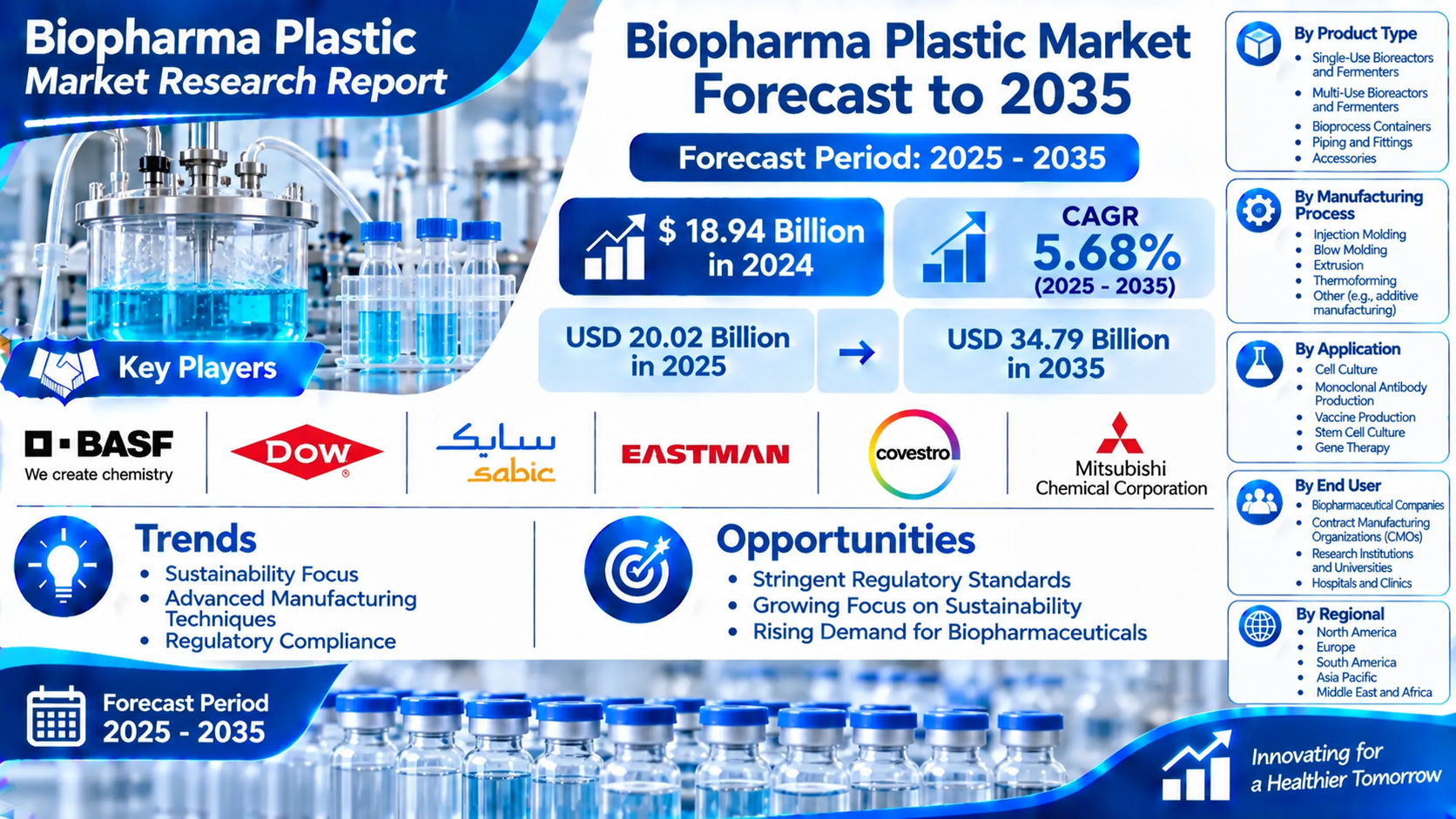
According to Market Research Future® (MRFR), the Biopharma Plastic Market is projected to grow from USD 20.02 billion in 2025 to USD 34.79 billion by 2035, registering a compound annual growth rate (CAGR) of 5.68% during the forecast period from 2025 to 2035. The market was valued at USD 18.94 billion in 2024. Its development is linked to demand for plastic products used in bioprocessing, including bioreactors, fermenters, containers, piping, fittings, and accessories. Sustainability, advanced manufacturing techniques, regulatory compliance, and rising demand for biopharmaceuticals are among the factors shaping the industry's outlook.
Market Overview and Growth Outlook
Plastic products are used across several stages of biopharmaceutical production and research. The biopharma plastic market covers equipment and components that support activities such as cell culture, monoclonal antibody production, vaccine production, stem cell culture, and gene therapy. Its scope includes single-use and multi-use systems, bioprocess containers, piping, fittings, and related accessories.
The market's financial outlook indicates sustained expansion over the forecast period. Following a valuation of USD 18.94 billion in 2024, the market is expected to reach USD 20.02 billion in 2025. By 2035, its value is projected to increase to USD 34.79 billion. The reported CAGR of 5.68% reflects the anticipated growth between 2025 and 2035. This trajectory highlights the continuing relevance of plastic-based products within biopharmaceutical manufacturing and research environments.
Product Types and Bioprocessing Requirements
The product segmentation includes single-use bioreactors and fermenters, multi-use bioreactors and fermenters, bioprocess containers, piping and fittings, and accessories. These categories represent the range of products covered by the market and their role in supporting bioprocessing activities.
Single-use bioreactors and fermenters form one major product category, while multi-use bioreactors and fermenters represent another. The distinction between these systems gives the market a varied equipment structure. Bioprocess containers provide an additional product segment, alongside piping and fittings used within bioprocessing operations.
Accessories complete the product classification. Their inclusion reflects the broader range of components associated with biopharma plastic products. Together, these categories demonstrate that the market extends beyond individual equipment items to cover a wider set of products used in biopharmaceutical production and related activities.
Manufacturing Processes and Technology
The market is segmented by manufacturing process into injection molding, blow molding, extrusion, thermoforming, and other processes, including additive manufacturing. These methods represent the production approaches covered in the industry assessment.
Injection molding and blow molding form two of the specified manufacturing categories. Extrusion and thermoforming add further production methods, while other processes include additive manufacturing. The variety of processes reflects the range of product types and component requirements within the biopharma plastic industry.
Advanced manufacturing techniques are identified as a key market trend. Manufacturing capabilities are important to suppliers serving biopharmaceutical customers, particularly when product requirements differ across equipment, containers, fittings, and accessories. Continued attention to manufacturing methods may support the development of products suited to changing industry needs.
Applications Across Biopharmaceutical Activities
The application segmentation includes cell culture, monoclonal antibody production, vaccine production, stem cell culture, and gene therapy. These applications represent important areas of activity within the biopharmaceutical sector.
Cell culture is one of the specified application categories, while monoclonal antibody production represents another. Vaccine production adds a further area of demand for products used in bioprocessing. Stem cell culture and gene therapy complete the application segmentation, extending the market's scope across several areas of biological research and therapeutic development.
The diversity of these applications gives the market exposure to different biopharmaceutical activities. Suppliers must serve customers with varied production and research requirements, making product availability and manufacturing capabilities important considerations.
End Users and Customer Landscape
The market's end-user segmentation comprises biopharmaceutical companies, contract manufacturing organizations (CMOs), research institutions and universities, and hospitals and clinics.
Biopharmaceutical companies represent a direct customer group for products used in production processes. Contract manufacturing organizations provide another important end-user category, reflecting the role of outsourced manufacturing within the market's structure. Research institutions and universities are also included, connecting demand with scientific research and development activities.
Hospitals and clinics complete the end-user segmentation. Their inclusion broadens the market's customer landscape beyond manufacturing and academic research. The combination of these groups illustrates the different settings in which biopharma plastic products are used.
Key Trends Shaping the Market
Sustainability focus is one of the major trends influencing the industry. Environmental considerations are increasingly relevant to manufacturing and product development, making sustainability an important issue for suppliers and customers. The growing focus on sustainability is also identified as a market opportunity.
Advanced manufacturing techniques form another key trend. The use of different production processes, including injection molding, extrusion, thermoforming, and additive manufacturing, highlights the importance of manufacturing capabilities in this market.
Regulatory compliance is the third identified trend. Biopharmaceutical production operates within a regulated environment, making compliance an important consideration for companies supplying products used in manufacturing and research activities. Suppliers must account for applicable requirements when developing and providing products for this industry.
Opportunities and Competitive Landscape
The market's identified opportunities include stringent regulatory standards, a growing focus on sustainability, and rising demand for biopharmaceuticals. Regulatory standards create an environment in which suppliers must pay close attention to product and manufacturing requirements. Sustainability offers another area for development, while increasing biopharmaceutical demand supports the need for products used in production and research.
The key players identified in the market are BASF SE, Dow Inc., SABIC, Eastman Chemical Company, Covestro AG, and Mitsubishi Chemical Corporation. These companies form part of the competitive landscape for biopharma plastics. Competition is influenced by product portfolios, manufacturing processes, and the ability to address requirements across different applications and end-user groups.
Regional Market Outlook
The regional segmentation covers North America, Europe, South America, Asia Pacific, and the Middle East and Africa. These regions define the geographic scope of the market assessment. Demand across them is connected to biopharmaceutical manufacturing, research activity, and the use of plastic products in relevant production processes.
Future Outlook
The biopharma plastic market is projected to reach USD 34.79 billion by 2035, growing at a CAGR of 5.68% from 2025 to 2035. Its product range, manufacturing processes, and applications across biopharmaceutical activities provide a broad foundation for continued development. Sustainability, advanced manufacturing techniques, and regulatory compliance are expected to remain important considerations. Opportunities linked to stringent regulatory standards and rising demand for biopharmaceuticals may further influence the market over the forecast period.

 English
 Arabic
 French
 Portuguese
 Deutsch
 Turkish
 Dutch
 Italiano
 Russian
 Romaian
 Portuguese (Brazil)
 Greek