


Customized Cosmetic Packaging for Growing Beauty Brands
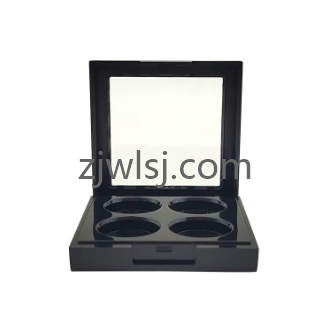
Product differentiation is an important consideration for beauty brands competing in international cosmetic markets. A Custom Eyeshadow Palette allows businesses to develop packaging around their own color collections, visual identity, and product requirements rather than relying entirely on standard container designs. Customization can involve the external shape, internal compartment arrangement, material selection, decorative finish, and logo presentation. For importers, distributors, and cosmetic brands, the development process should balance creative ideas with technical feasibility, production consistency, and commercial requirements.
The first stage of development is defining the intended product structure. Buyers should identify how many cosmetic shades the package needs to accommodate and determine the dimensions of the individual pans. The overall shape may be square, rectangular, round, or specially designed according to the product concept. Internal compartment spacing should provide sufficient support for each pan while allowing the complete package to close correctly. These details influence the dimensions of the outer housing and the design of the mold.
Mold development is particularly important when a brand requires a structural design that differs from existing packaging. The mold must reproduce the intended shape, dimensions, surface details, and assembly features. Before manufacturing begins, product designers and manufacturers should review technical drawings and discuss possible production limitations. Some modifications may be relatively straightforward, while others can require more extensive mold adjustments. Early technical evaluation helps reduce unnecessary revisions and supports a more efficient development process.
Material selection should be based on the function of each packaging component. ABS, AS, and PS are commonly considered in plastic cosmetic packaging applications. Their properties differ in terms of rigidity, transparency, processing characteristics, and surface appearance. A brand may prefer an opaque housing for a particular decorative effect or transparent components for a different visual concept. The selected material should be evaluated in relation to the component structure, finishing requirements, and intended production method.
Injection molding is widely used for manufacturing plastic packaging parts. During production, molten material is injected into a mold cavity and forms the required component after cooling. The quality of the finished part depends on several factors, including mold design, material selection, processing conditions, and dimensional control. Customized packaging may contain additional structural details or unusual shapes, making sample evaluation particularly important. Buyers should inspect the molded parts for surface appearance, dimensional accuracy, and component fitting before approving production.
Internal layout customization can make a product more suitable for a specific cosmetic collection. Some brands prefer equal-sized compartments for a consistent arrangement, while others require different pan dimensions for base colors, transition shades, and accent colors. Additional space may be needed for mirrors or application accessories. The layout should consider the actual cosmetic pans rather than being developed independently of the filling requirements. Proper coordination helps avoid unnecessary gaps and assembly problems.
Decoration is another major area of customization. Depending on the selected material and structure, options may include spray painting, electroplating, screen printing, hot stamping, and 3D printing. These processes can support different surface appearances, logo presentations, and graphic elements. Brands may choose colors that correspond with their existing visual identity or create a separate design for a new collection. Surface treatment should be confirmed through physical samples because the final appearance can differ depending on material and production conditions.
Packaging usability should not be overlooked during customization. A visually distinctive case still needs to open and close conveniently, protect the cosmetic pans, and remain suitable for normal storage and transportation. Closure structures should be evaluated for alignment and ease of operation. The overall dimensions and weight should also correspond with the intended consumer experience. If the product is designed for travel or frequent daily use, portability may be an important design consideration.
International buyers should prepare clear requirements before requesting customized production. Useful information includes product drawings, reference samples, pan dimensions, desired materials, color references, decoration methods, expected quantities, and target delivery arrangements. Buyers should also clarify whether the project requires an existing mold adaptation or a new mold. A clear development brief allows manufacturers to evaluate feasibility and provide more relevant production recommendations.
Production planning involves more than approving the external appearance. Purchasing teams should consider sampling, mold preparation, component manufacturing, secondary finishing, assembly, inspection, and packaging arrangements. The approval process should establish clear standards for dimensions, surface quality, colors, and component fitting. For repeat orders, maintaining approved samples and consistent specifications can help reduce differences between production batches.
Quality management is especially important when several customized components are combined into one package. Inspection should cover molded parts, decorative surfaces, internal compartment dimensions, closure performance, and assembly accuracy. Buyers should also verify that the container is appropriate for the intended cosmetic formulation and filling process. Zhejiang Weili Plastic Co., Ltd. provides plastic cosmetic packaging solutions supported by mold development, injection molding, and secondary processing, helping customers evaluate packaging concepts according to their design and manufacturing requirements.
A successful Custom Eyeshadow Palette project depends on coordination between the brand, cosmetic product developer, and packaging manufacturer. Clear specifications, realistic sample evaluation, and careful production planning help turn a design concept into a practical commercial product. Buyers should compare structural feasibility, customization requirements, manufacturing costs, and expected order volumes before confirming their final design. To explore available cosmetic packaging structures and discuss possible product development directions, visit https://www.zjwlsj.com/product/eye-shadow-palette/shadow-palette-1-grid/.

 English
 Arabic
 French
 Spanish
 Portuguese
 Deutsch
 Turkish
 Dutch
 Italiano
 Russian
 Romaian
 Greek