


How Holistic Learning Supports Overall Child Development
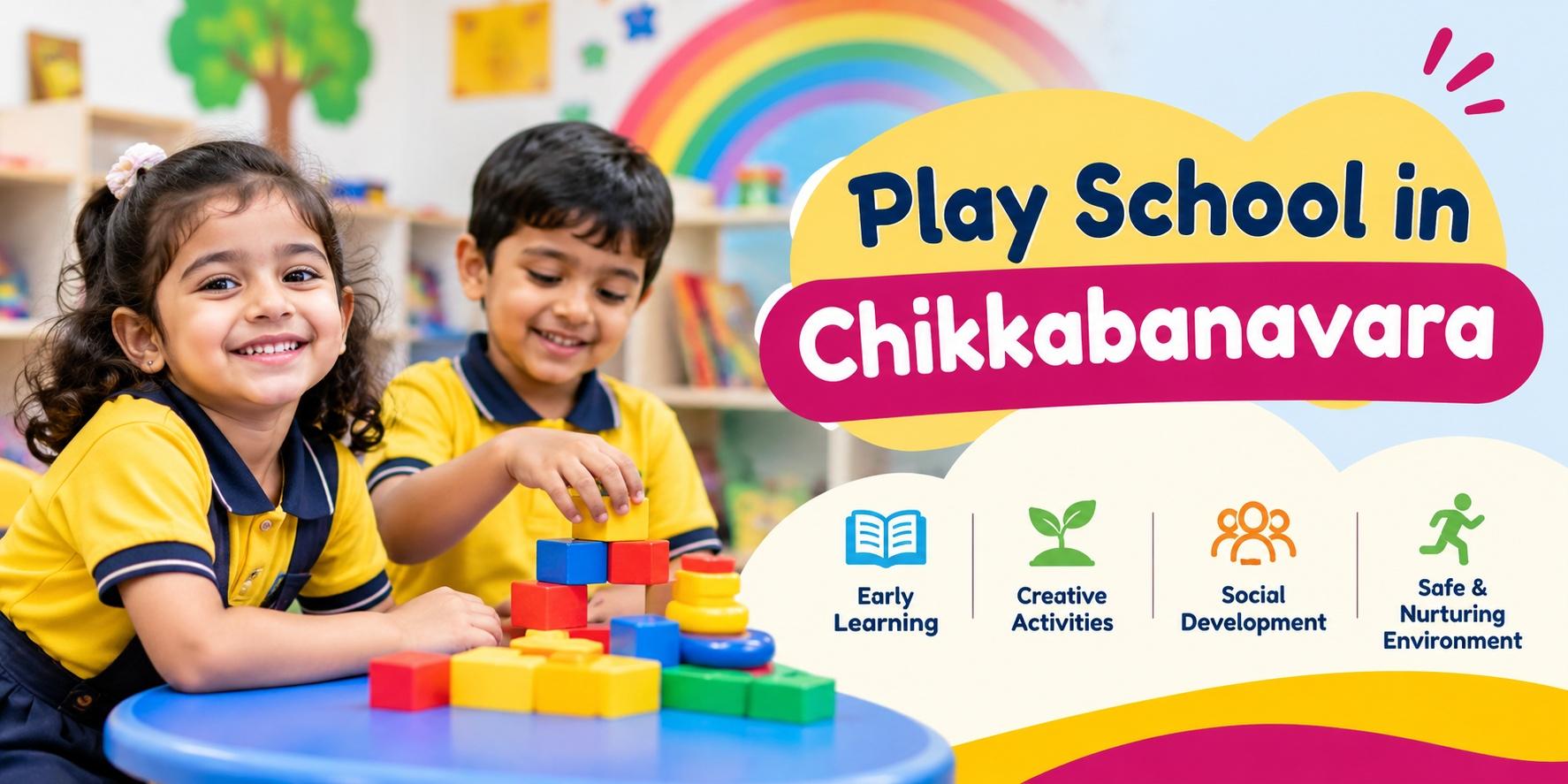
Children need more than academic knowledge to grow into confident, capable, and independent individuals. Along with reading, writing, and mathematics, they need opportunities to develop emotional awareness, creativity, communication, physical abilities, and social skills. Holistic learning focuses on all these areas together, helping children develop through meaningful experiences both inside and outside the classroom.
For parents exploring Holistic Learning for Kids in Chikkabanavara, understanding this approach can help them choose a school that supports their child's overall growth. A balanced learning environment encourages children to explore their interests, express their thoughts, build relationships, and develop essential life skills at their own pace.
What Is Holistic Learning in Early Childhood Education?
Holistic learning is an educational approach that supports different areas of a child's development rather than concentrating only on academic performance. It recognises that physical, emotional, social, creative, and intellectual development are connected.
For example, a group art activity does more than encourage drawing. Children may learn to share materials, communicate ideas, make decisions, improve hand coordination, and express their feelings.
A holistic learning programme may include:
· Storytelling and language activities
· Drawing, painting, and creative projects
· Music, dance, and movement
· Outdoor games and physical activities
· Group discussions and collaborative play
· Problem-solving and exploration
· Activities that encourage independence
These experiences help children develop different abilities through practical participation.
How Holistic Learning Supports Overall Child Development
1. Encourages Emotional Development
Emotional development helps children recognise, understand, and express their feelings. During early childhood, children gradually learn how to communicate happiness, sadness, frustration, excitement, and other emotions.
A supportive classroom provides opportunities to practise these skills through everyday interactions.
For example, when children participate in group games, they may experience excitement, disappointment, or the need to wait for their turn. Teachers can guide them towards understanding their feelings and responding appropriately.
Holistic learning supports emotional development by encouraging:
· Confidence and self-expression
· Recognition of different emotions
· Patience and self-control
· Positive relationships with others
· Independence in everyday activities
Teachers should create an environment where children feel comfortable asking questions, making mistakes, and expressing their thoughts without fear of embarrassment.
2. Develops Creativity Through Practical Activities
Creative learning allows children to explore ideas and express themselves in different ways. Activities such as painting, drawing, clay modelling, music, storytelling, and pretend play encourage imagination and independent thinking.
For instance, when children create artwork, they choose colours, experiment with shapes, and decide how to represent their ideas. There does not need to be one correct result.
Creative activities help children develop:
· Imagination and original thinking
· Decision-making abilities
· Visual observation
· Hand-eye coordination
· Confidence in expressing ideas
A good learning environment gives children access to age-appropriate materials and allows them to experiment instead of expecting every child to produce identical work.
3. Supports Physical Growth and Coordination
Physical development is another important part of holistic education. Children need regular opportunities to move, explore, and practise different physical activities.
Running, jumping, dancing, balancing, and playing with balls help children develop movement control and coordination.
Activities such as drawing, colouring, building blocks, and simple craftwork also support fine motor development.
A balanced programme may include:
· Outdoor games and supervised play
· Dance and movement exercises
· Balance and coordination activities
· Simple sports and ball games
· Drawing and craftwork
· Age-appropriate physical challenges
These activities support physical growth while helping children become more comfortable using their bodies in different ways.
4. Improves Social Skills and Communication
Children develop social abilities by interacting with teachers, classmates, and other people. Group activities create opportunities to communicate, share, cooperate, and understand different perspectives.
For example, children working together on a simple building activity learn to exchange ideas, share materials, and take turns.
Holistic learning encourages social development through:
· Group games and activities
· Storytelling and classroom conversations
· Collaborative art projects
· Role-playing and pretend play
· Sharing and turn-taking exercises
These experiences gradually help children become more comfortable in social situations and develop respectful relationships.
5. Builds Cognitive Skills and Problem-Solving Abilities
Cognitive development involves how children think, remember, observe, understand, and solve problems.
Holistic learning provides opportunities to develop these abilities through hands-on experiences.
Sorting objects by colour, completing puzzles, arranging shapes, and building structures encourage children to observe patterns and make decisions.
Teachers can also introduce simple questions that encourage children to think independently. Instead of immediately providing answers, they can guide children towards exploring possible solutions.
These activities help develop concentration, memory, logical thinking, and curiosity.
Why Creative Learning Should Be Part of Everyday Education
Creative learning is not limited to art or music lessons. It can be included in different subjects and classroom experiences.
For example, children can learn basic mathematics through counting objects, understand language through storytelling, and explore science through simple observations.
This approach makes learning more interactive because children get opportunities to participate rather than only listen to instructions.
Parents considering Holistic Learning for Kids in Chikkabanavara should look for schools that provide a variety of creative experiences throughout the week.
A good programme should allow children to:
· Explore different materials and activities.
· Ask questions and share ideas.
· Learn through observation and experimentation.
· Participate in individual and group projects.
· Develop skills without unnecessary academic pressure.
How to Identify a School That Follows Holistic Learning
Choosing a school requires understanding how its educational approach works in everyday classroom activities. Parents should look beyond general statements about overall development and ask how children actually experience this approach.
1. Check the Variety of Learning Activities
Ask whether the school includes storytelling, music, art, outdoor games, group projects, and practical learning experiences.
A balanced schedule should provide opportunities for both structured lessons and free exploration.
2. Understand the Teachers' Approach
Teachers should encourage participation, answer children's questions, and recognise that children learn at different speeds.
Observe whether teachers provide individual attention and create a positive classroom environment.
3. Inspect Classrooms and Play Areas
Classrooms should be clean, organised, and suitable for children's age groups. Check whether learning materials, toys, furniture, and outdoor equipment are maintained properly.
Children should have enough space to participate in activities safely.
4. Ask About Individual Development
Every child has different strengths, interests, and learning needs. Ask how the school observes progress and supports children who need additional guidance.
A suitable learning environment should encourage improvement without comparing children unnecessarily.
5. Understand Parent-Teacher Communication
Regular communication helps parents understand their child's progress in academic, social, emotional, and physical activities.
Ask whether the school shares updates about classroom participation, strengths, and areas where additional support may be helpful.
How Parents Can Support Holistic Learning at Home
Holistic development continues beyond school hours. Parents can support their children's growth through simple daily activities.
Some useful ideas include:
· Read picture books and discuss the stories.
· Encourage drawing, painting, and creative play.
· Play outdoor games in safe surroundings.
· Allow children to help with simple household tasks.
· Encourage conversations about feelings and experiences.
· Play puzzles and matching games together.
· Give children opportunities to make small decisions.
Parents should allow children enough time to explore and learn independently. Regular encouragement is more helpful than expecting perfect results.
Frequently Asked Questions
1. What is holistic learning for kids?
Holistic learning is an educational approach that supports a child's academic, emotional, social, creative, and physical development through different learning experiences.
2. Why is emotional development important in early childhood?
Emotional development helps children recognise feelings, express themselves, build confidence, manage everyday challenges, and develop healthy relationships.
3. How does creative learning benefit children?
Creative learning encourages imagination, independent thinking, decision-making, communication, and confidence through activities such as art, music, storytelling, and pretend play.
4. Does holistic learning support physical growth?
Yes. Movement activities, outdoor games, dance, and coordination exercises provide opportunities to develop balance, body control, and physical abilities.
5. How can parents identify a school that follows holistic learning?
Parents should check the variety of activities, teaching methods, classroom environment, opportunities for individual attention, safety arrangements, and parent-teacher communication.
Conclusion
Holistic learning supports children's overall development by bringing academic learning, emotional development, creative learning, social interaction, and physical growth together. It gives children opportunities to explore their interests, develop confidence, and build essential skills through meaningful experiences.
When choosing Holistic Learning for Kids in Chikkabanavara, parents should look for a school that values individual abilities, encourages active participation, and provides a balanced learning environment. The right approach can help children develop a strong foundation for future education and everyday life.

 Arabic
 French
 Spanish
 Portuguese
 Deutsch
 Turkish
 Dutch
 Italiano
 Russian
 Romaian
 Portuguese (Brazil)
 Greek