


Can Networking Fundamentals Help You Build a Successful Career in Cloud Computing?
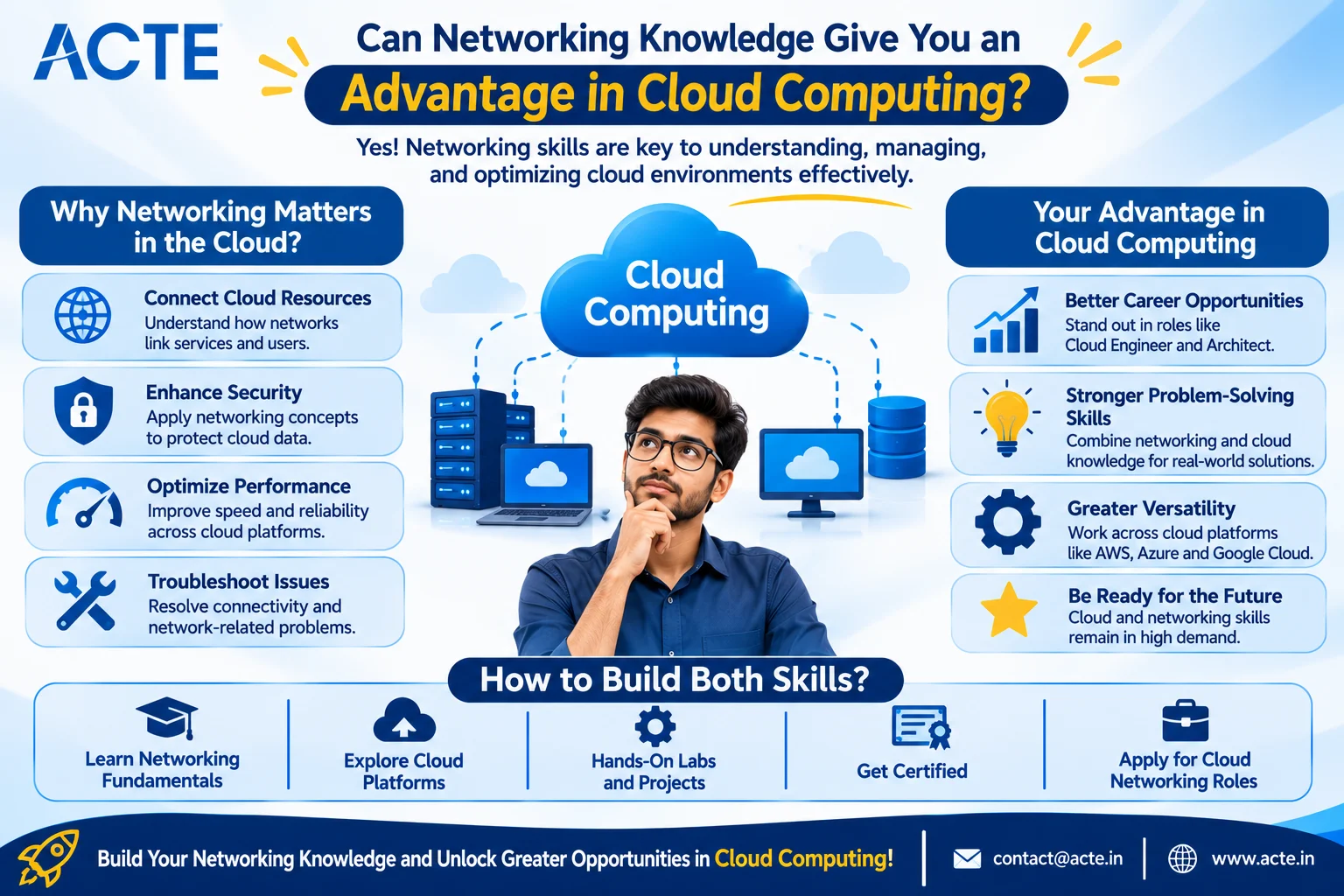
Cloud computing has changed the way organizations manage their IT infrastructure, deploy applications, and handle business information. Businesses increasingly depend on cloud platforms to access computing resources, improve operational efficiency, and support digital growth. However, cloud services cannot function effectively without networking technologies that connect servers, applications, databases, and users. This makes networking knowledge an important foundation for individuals interested in developing cloud computing expertise. Understanding concepts such as IP addressing, subnetting, routing, DNS, firewalls, and network security helps professionals configure cloud resources and maintain smooth communication. Developing these technical capabilities alongside cloud computing knowledge can improve professional skills and create opportunities in the expanding IT industry.

How Does Networking Knowledge Help Professionals Understand Cloud Technology?
Networking is responsible for establishing communication between different components of cloud infrastructure. Cloud platforms use network connections to link virtual machines, databases, storage services, applications, and end users. Understanding these connections helps professionals manage cloud resources, configure services, and resolve connectivity problems. Beginners who learn network architecture, communication protocols, data transmission, and network management can develop a clearer understanding of cloud operations. These concepts also support effective infrastructure monitoring and technical troubleshooting. Pursuing a Cloud Computing Course in Chennai can help aspiring professionals understand essential cloud technologies and the networking principles behind them.
Why Are IP Addressing and Subnetting Essential for Cloud Network Administration?
IP addressing and subnetting are important for identifying devices and organizing communication within cloud infrastructure. Every network-connected resource requires an IP address to exchange information with other systems. Cloud platforms use public and private IP addresses to establish communication between internal resources and external networks. Subnetting separates larger networks into smaller logical groups, helping administrators manage resources, organize traffic, and control access. Understanding subnet masks, CIDR notation, default gateways, and IP allocation is valuable when configuring virtual networks. These skills help cloud professionals design organized infrastructure and maintain effective communication between cloud services.
How Can Routing and Switching Knowledge Support Cloud Infrastructure Operations?
Routing and switching are fundamental networking concepts that control how information moves between connected systems. Routing determines the path through which data travels, while switching enables communication between devices within a local network. Cloud platforms use routing tables, virtual gateways, and network configurations to direct traffic between subnets, virtual machines, and external networks. Professionals who understand routing methods and traffic management can identify connectivity issues and maintain reliable network operations. These concepts are especially useful when working with hybrid cloud environments that connect traditional infrastructure with cloud-based services. Learners can strengthen their technical foundation through a Cloud Computing Course in Bangalore, gaining knowledge of networking technologies and cloud infrastructure management.
How Does Network Security Contribute to a Safer Cloud Environment?
Network security is an essential part of cloud computing because organizations must protect their applications, infrastructure, and sensitive information from cyber threats. Technologies such as firewalls, VPNs, security groups, network access control lists, and encryption help control access and protect network communication. Networking knowledge allows professionals to understand how these security mechanisms manage incoming and outgoing traffic. It also helps them identify vulnerabilities, configure access policies, and establish secure connections between cloud resources. Understanding network protocols, ports, segmentation, and secure communication methods can improve infrastructure protection. Combining networking fundamentals with cloud security knowledge helps professionals manage secure and dependable cloud environments.
What Makes DNS and Load Balancing Important for Cloud-Based Applications?
DNS and load balancing help maintain the accessibility, availability, and performance of cloud applications. The Domain Name System translates domain names into IP addresses, allowing users to reach websites and online services conveniently. Load balancing distributes incoming requests across multiple servers to prevent excessive workloads on individual systems. Cloud service providers offer managed DNS and load-balancing solutions to support application performance and scalability. Understanding DNS records, domain resolution, traffic distribution, server health checks, and failover configurations helps professionals manage application connectivity. These technologies are particularly important for businesses operating online platforms, enterprise applications, and websites that experience changing traffic levels.
How Can Practical Projects Strengthen Cloud Networking Capabilities?
Working on practical projects helps learners understand how networking concepts are applied in real cloud environments. Beginners can practise creating virtual networks, configuring subnets, managing routing tables, setting up firewalls, and establishing VPN connections. They can also use network monitoring tools to examine traffic patterns and troubleshoot connectivity problems. Projects involving secure application deployment, hybrid cloud networking, and multi-tier infrastructure provide opportunities to apply technical knowledge to realistic requirements. Exploring networking services available through AWS, Microsoft Azure, and Google Cloud can further improve practical understanding. Enrolling in a Cloud Computing Certification Course can support this learning journey through structured instruction, hands-on exercises, and certification preparation.
Which Professional Roles Can You Pursue with Cloud and Networking Skills?
Developing expertise in both networking and cloud computing can open different career paths in the technology sector. Professionals can explore positions such as cloud engineers, network administrators, cloud infrastructure engineers, cloud support specialists, and cloud security professionals. These roles involve configuring network resources, monitoring infrastructure, resolving connectivity problems, and maintaining secure cloud operations. Employers also value candidates who understand platforms such as AWS, Microsoft Azure, and Google Cloud. Aspiring professionals can develop industry-relevant capabilities through a Cloud Computing Course in Hyderabad, which can provide exposure to cloud technologies and practical infrastructure applications. Building project experience and obtaining relevant certifications can further improve career preparation.
Conclusion:
Networking fundamentals play a significant role in helping professionals develop successful cloud computing careers. Knowledge of IP addressing, subnetting, routing, switching, DNS, load balancing, and network security makes it easier to understand cloud communication and infrastructure management. Combining these concepts with hands-on experience in cloud platforms can improve technical confidence, troubleshooting abilities, and security awareness. Beginners who continuously strengthen their networking and cloud computing knowledge can prepare for opportunities in cloud administration, infrastructure engineering, and security management. Regular practice, industry-focused projects, and professional certifications can help establish a strong foundation for long-term career development in the cloud computing industry.

 English
 Arabic
 French
 Portuguese
 Deutsch
 Turkish
 Dutch
 Italiano
 Russian
 Romaian
 Portuguese (Brazil)
 Greek