


What Quality Control Measures Are Used in a Cardiac Modular Operation Theatre?
Introduction
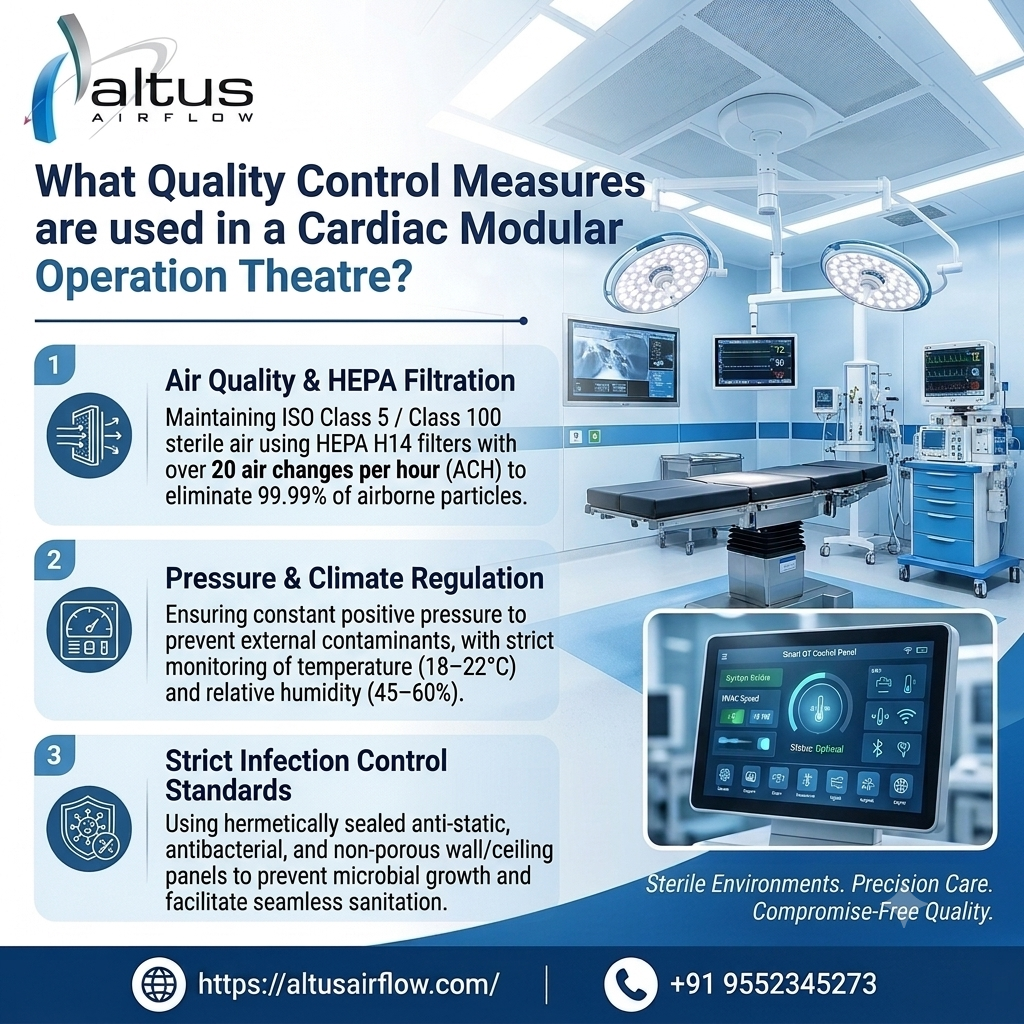
Altus Airflow focuses on developing advanced healthcare infrastructure that supports safe, hygienic, and efficient surgical environments. A Cardiac Modular Operation Theatre requires carefully planned quality control measures to maintain sterile conditions, regulate airflow, and support complex cardiac procedures. Every component, from modular wall panels and flooring to HVAC systems and surgical equipment, must meet appropriate technical and hygiene standards.
Quality control involves systematic inspections, performance testing, validation, and regular monitoring. These measures help hospitals maintain consistent operating conditions, reduce contamination risks, and provide a reliable environment for surgeons and medical professionals.
1. Inspection of Modular Infrastructure
The quality of a cardiac operation theatre begins with its physical infrastructure. Modular construction components must be inspected before installation and again after project completion.
Important inspection areas include:
-
Wall panels: Check whether panels have smooth, non-porous, and easy-to-clean surfaces.
-
Ceiling systems: Ensure proper sealing, structural stability, and compatibility with medical equipment.
-
Flooring: Verify that flooring is seamless, durable, anti-static where required, and resistant to commonly used cleaning chemicals.
-
Doors: Inspect airtight or appropriately sealed doors, smooth operation, and proper closing mechanisms.
-
Joints and corners: Confirm that gaps and unnecessary crevices are minimized to prevent dust accumulation.
These inspections help identify construction defects that could affect hygiene, durability, or operational performance.
The materials used should also be suitable for healthcare environments. Their resistance to moisture, disinfectants, and repeated cleaning is important for maintaining long-term quality.
2. HVAC System Performance Testing
Heating, ventilation, and air conditioning systems are among the most important components of a cardiac surgical environment. The HVAC system must maintain suitable temperature, humidity, filtration, and airflow conditions.
Quality control measures generally include:
Airflow measurement: Technicians measure airflow velocity and distribution to determine whether the system delivers the required ventilation performance.
Air changes per hour: The air change rate is checked against the applicable healthcare ventilation standards and project specifications.
Temperature monitoring: Temperature sensors are tested to confirm accurate readings and consistent environmental conditions.
Humidity control: Humidity levels are monitored to maintain the specified operating range and prevent excessive moisture.
Pressure differential testing: Pressure relationships between the operating theatre and adjoining spaces are verified according to the approved ventilation design.
Proper HVAC testing helps maintain environmental stability and supports infection prevention procedures.
3. HEPA Filter Efficiency and Integrity Testing
High-efficiency particulate air filtration is an important quality consideration in cardiac operation theatres. HEPA filters help remove airborne particles and support the required cleanliness conditions.
Quality control involves several checks:
-
Filter installation inspection: Confirm that filters are correctly positioned and securely fitted.
-
Leak testing: Conduct appropriate integrity tests to identify leaks around filter media, frames, and sealing arrangements.
-
Airflow verification: Measure airflow to ensure that the filtration system performs according to design requirements.
-
Pressure drop monitoring: Check filter pressure differences to identify loading or possible performance deterioration.
-
Maintenance records: Maintain documentation of filter inspections, replacement dates, and test results.
Periodic filter integrity testing is particularly important because even a small leakage can affect the effectiveness of the filtration system.
Testing should follow the applicable standards and the filtration system manufacturer's recommendations.
4. Laminar Airflow and Air Distribution Validation
Air distribution is another important quality control area in cardiac surgical environments. Where laminar or unidirectional airflow systems are specified, their performance must be validated.
The validation process may include:
Air velocity testing: Measurements are taken at specified locations to confirm that airflow meets the approved design criteria.
Airflow visualization: Smoke studies or other suitable visualization methods help identify turbulence, stagnant areas, and unwanted airflow patterns.
Uniformity assessment: Technicians examine whether air is distributed consistently across the intended protected area.
Equipment obstruction checks: Surgical lights, pendants, and other ceiling-mounted equipment are evaluated to understand their impact on airflow patterns.
These tests help determine whether the ventilation arrangement performs as intended under actual operating conditions.
Airflow validation should be performed during commissioning and repeated whenever significant changes are made to the ventilation system or theatre layout.
5. Environmental Monitoring and Control
Maintaining stable environmental conditions is essential for surgical activities. A quality control programme should include continuous or scheduled monitoring of important environmental parameters.
The main monitoring activities include:
-
Temperature monitoring: Ensure that temperature remains within the approved operating range.
-
Relative humidity checks: Monitor humidity to prevent unwanted moisture-related issues.
-
Air pressure monitoring: Verify pressure differences between controlled and adjoining areas.
-
Air quality assessment: Conduct particle monitoring where required by the facility's cleanliness programme.
-
Sensor calibration: Check monitoring devices periodically to maintain measurement accuracy.
Modern environmental monitoring systems can display operating conditions through centralized control panels.
These systems may provide alerts when monitored parameters move outside approved limits. However, alarms must be supported by documented response procedures so that technical teams can investigate and correct problems promptly.
6. Electrical Safety and Power Supply Testing
Cardiac procedures depend on several electrical systems, including surgical lights, patient monitoring equipment, imaging systems, and other medical devices.
Electrical quality control helps ensure that these systems operate safely and reliably.
Important checks include:
Electrical wiring inspection: Examine wiring connections, distribution boards, cable routing, and protective arrangements.
Earthing verification: Confirm that electrical earthing and bonding arrangements comply with applicable electrical safety requirements.
Emergency power testing: Verify the operation of backup power systems and their ability to support designated critical loads.
Isolation and protection checks: Test the electrical safety arrangements specified for the operating theatre.
Lighting performance: Check surgical lighting intensity, positioning, movement, and functional controls.
Testing should be conducted by qualified electrical professionals using appropriate instruments and approved procedures.
Hospitals should also maintain inspection reports and schedules for preventive electrical maintenance.
7. Surgical Equipment and Medical Gas System Validation
Medical equipment and gas supply systems must undergo appropriate inspection before the theatre becomes operational.
Quality control measures include:
-
Surgical pendants: Inspect mounting stability, movement, locking mechanisms, and utility connections.
-
Medical gas outlets: Verify correct identification, connection integrity, and gas-specific functionality.
-
Equipment positioning: Confirm that devices are accessible without obstructing essential staff movement.
-
Patient monitoring systems: Check functional performance and arrange calibration according to manufacturer requirements.
-
Emergency equipment: Verify the availability and readiness of essential emergency support equipment.
Medical gas pipelines require appropriate pressure, leakage, cross-connection, and gas identity testing.
These checks help ensure that equipment and utility systems are suitable for their intended clinical applications.
8. Infection Control and Surface Hygiene Inspection
Infection prevention is a major objective of quality control in cardiac operation theatres. The physical design and maintenance of the environment should support effective cleaning and disinfection.
Quality inspections should cover:
Surface cleanliness: Check walls, floors, ceilings, worktops, and equipment surfaces for visible contamination or damage.
Sealing arrangements: Inspect joints, corners, and service penetrations to identify gaps where dust or moisture could accumulate.
Cleaning compatibility: Confirm that modular materials can withstand the disinfectants and cleaning methods approved by the hospital.
Cleaning procedures: Review documented cleaning schedules and ensure that staff follow the required protocols.
Waste management: Verify that appropriate waste segregation and disposal arrangements are maintained.
Staff training is equally important. Cleaning personnel should understand the correct use of disinfectants, cleaning sequences, and precautions for maintaining controlled environments.
9. Door Interlocking and Pressure Control Testing
Doors play an important role in maintaining the environmental conditions of a modular surgical theatre. Improper door operation can disturb pressure relationships and allow unwanted air movement.
Quality control inspections should include:
-
Checking automatic door operation.
-
Testing door-closing mechanisms.
-
Inspecting perimeter seals and gaskets.
-
Verifying interlocking systems where specified.
-
Confirming that door opening does not compromise required pressure relationships.
-
Checking access control and emergency release functions.
Door interlocking systems may prevent two controlled doors from opening simultaneously, depending on the approved design.
These systems should be tested under normal operating conditions and during emergency scenarios to confirm that safety requirements are maintained.
10. Commissioning and Documentation
Commissioning is the final stage of quality control before the theatre is handed over for clinical use.
It involves checking the performance of individual systems as well as their combined operation.
Important commissioning activities include:
-
Reviewing approved architectural and engineering drawings.
-
Inspecting completed modular installations.
-
Testing HVAC and filtration performance.
-
Verifying electrical and medical gas installations.
-
Checking environmental monitoring systems.
-
Conducting applicable safety and functional tests.
-
Recording test results and resolving identified defects.
-
Preparing final commissioning and handover documents.
Documentation is essential because it provides evidence that the installed systems have been inspected and tested.
Hospitals should maintain equipment manuals, calibration certificates, filter test reports, electrical inspection records, HVAC validation documents, and maintenance schedules.
A structured documentation process also helps technical teams identify recurring issues and plan future maintenance activities.
11. Compliance with Healthcare Standards and Regulations
Quality control should follow applicable healthcare engineering standards, building regulations, electrical safety requirements, and infection prevention guidelines.
Depending on the project location and design, relevant references may include:
-
HTM 03-01: Guidance on specialised ventilation for healthcare premises in the United Kingdom.
-
ASHRAE Standard 170: Ventilation requirements for healthcare facilities.
-
ISO 14644: Standards relating to cleanroom classification and testing, where applicable.
-
NFPA 99: Healthcare facilities code, where applicable.
-
National healthcare regulations: Applicable Indian building, electrical, fire safety, and healthcare requirements.
It is important to select standards according to the facility's location, project scope, and intended clinical use. Not every standard applies to every operating theatre.
Compliance reviews should be conducted by qualified professionals to ensure that design specifications, installation practices, and commissioning procedures meet the relevant requirements.
12. Preventive Maintenance and Periodic Quality Audits
Quality control does not end after commissioning. Continuous maintenance and periodic audits are necessary to preserve system performance throughout the theatre's operational life.
Preventive maintenance activities include:
-
Inspecting HVAC components and air handling units.
-
Monitoring HEPA filter performance.
-
Checking pressure sensors and environmental monitoring devices.
-
Inspecting modular panels, flooring, and sealing arrangements.
-
Testing emergency power systems.
-
Reviewing surgical lighting and medical equipment functionality.
-
Checking medical gas systems according to approved schedules.
Periodic quality audits help identify equipment deterioration, maintenance gaps, and deviations from established operating procedures.
Hospitals should maintain a clear maintenance calendar and assign responsibilities to qualified technical teams. Any corrective action should be documented, reviewed, and verified after completion.
Conclusion
Quality control in a cardiac surgical environment requires a systematic approach covering modular infrastructure, ventilation, HEPA filtration, electrical safety, medical gas systems, infection prevention, and commissioning. Regular inspections and preventive maintenance help hospitals maintain reliable operating conditions and support safe surgical practices.
Altus Airflow emphasizes the importance of properly planned modular infrastructure, technical validation, and quality-focused installation practices. By following appropriate standards and maintaining detailed inspection records, hospitals can ensure that their surgical facilities remain efficient, hygienic, and operationally dependable. Investing in quality control from the design stage through long-term maintenance helps protect infrastructure performance and supports better healthcare delivery.
Frequently Asked Questions (FAQs)
1. What quality checks are performed in a Cardiac Modular Operation Theatre?
A Cardiac Modular Operation Theatre undergoes checks for HVAC performance, HEPA filtration, airflow distribution, temperature, humidity, electrical safety, medical gas systems, and surface hygiene.
2. Why is HEPA filter testing important?
HEPA filter testing identifies leakage and verifies filtration performance, helping maintain the required air cleanliness conditions.
3. How often should HVAC systems be inspected?
HVAC systems should be inspected according to the approved preventive maintenance schedule, manufacturer recommendations, and applicable healthcare ventilation standards.
4. What is the purpose of laminar airflow validation?
It evaluates airflow direction, velocity, and distribution to confirm that the system performs according to its approved design.
5. Why is pressure differential testing necessary?
It verifies pressure relationships between controlled spaces and adjoining areas to support the theatre's contamination-control strategy.
Read Our Previous Blog --------------->How is sterile storage managed in a Modular Cardiac Operation Theatre?

 English
 French
 Spanish
 Portuguese
 Deutsch
 Turkish
 Dutch
 Italiano
 Russian
 Romaian
 Portuguese (Brazil)
 Greek